A small business referral program gives your happy customers an easy way to send friends your way, and thanks them when a friend becomes a customer. Most small businesses (or SMEs, in some countries) already grow on word of mouth. A program turns those occasional, unpredictable mentions into a steady flow you can count on.
This guide covers how to tell if you're ready and how to run a program in 8 steps. It ends with an overview of 10 real programs, from a landscaper and two spas to an office equipment dealer.
Why referrals fit small businesses
People pick a plumber, a spa or a photographer the way they pick a doctor: they ask someone they know. And customers want to recommend you. But they don't always act on that desire. In a well-known study of telecom customers, 81% said they would refer, but only 30% did.
A program closes that gap, because what a program does, from the ask and the reward to the wording and the reminders, changes how many customers refer.
As a small business, you also have an edge that big companies don't. The owner often knows customers by name, and the person at the front desk or on the job is someone they trust. That's who should do the asking.
What a new customer is worth tells you how much room you have to reward sharers and their friends, not the exact amount. A lawn care customer who stays for years, or a spa client who comes back every month, leaves room for a thank-you people notice.
SIR Glass, an auto glass shop in Portland, gets 30+ new sales a month from referrals.
6 signs you're ready for a referral program
A referral program amplifies the word of mouth you already have. It can't create it. So check these 6 signs first.
| Sign | What it looks like for a small business |
|---|---|
| 1. Word of mouth | New customers already say "my neighbor told me about you" |
| 2. Easy to talk about | Customers can say in one sentence what you did for them |
| 3. Community | Your customers know each other: neighbors, members, parents, local groups |
| 4. A service team | You or your staff follow up and fix problems fast |
| 5. Business software | Customers, bookings and jobs live in one place, like Jobber, QuickBooks or a booking app |
| 6. Steady marketing | New customers arrive every month, so there's always someone new to ask |
If several are missing, start there. Better service and a steady trickle of new customers will do more for you than any reward.
How to run a small business referral program in 8 steps
Creating a program comes down to 8 decisions. We walk through them with every new program, in this order.
1. Invite every customer, not a chosen few
Give every customer a link or code by default, with no form to fill out first. Each signup step loses people who would have shared. You'll also find fans you would never have picked.
2. Give the friend something too
Your customer is asking a favor of a friend, and a welcome offer turns that ask into a gift.
When the referral is framed as a valuable gift, the dynamic shifts. The sharer isn’t “selling out” a friend just to earn a payout. Instead, they’re genuinely helping someone they know.
Yet in our November 2024 review of 339 referral programs, 54% gave the friend nothing. The friend's reward does the most work: in one field test, a free month for the friend brought in nearly 3 times as many customers as the same reward for the referrer.
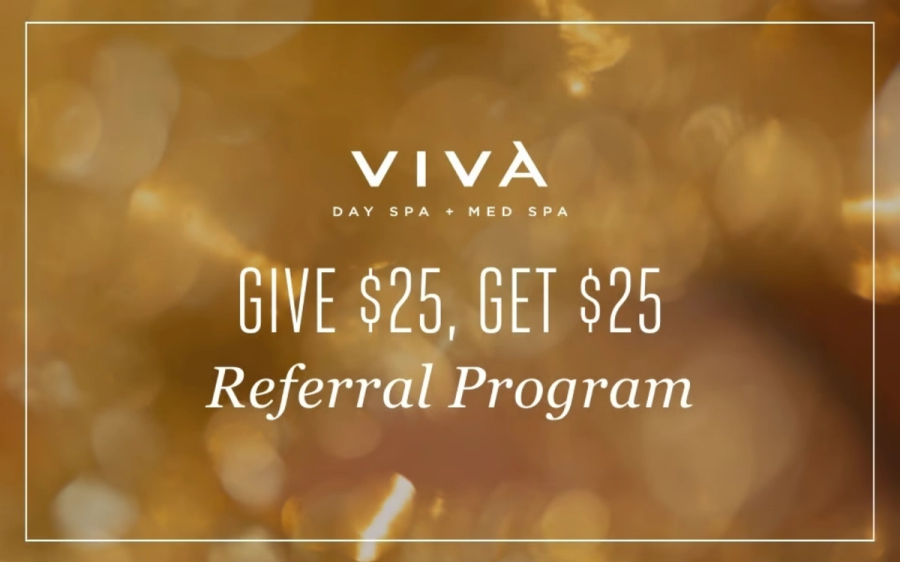
Credit toward your own service, like Viva Day Spa's $25 for both people, costs you less than cash, as it gives the friend a reason to try your business out and gives the sharer a reason to come back. More options are in our guide to referral rewards.
3. Make the friend feel welcome
Send the friend to a page on your website that greets them by the referrer's name and shows their offer (don't just drop them off on your homepage with no context). That personal connection makes the friend feel like a VIP, not a cold lead.
Then make sure the referral reaches whoever is in charge of booking, by phone, form or booking app, with the referrer's name attached.
A share carries further when it feels personal at every step, from the message sharers send friends, to the page the friend lands on.
4. Pay when the friend becomes a customer
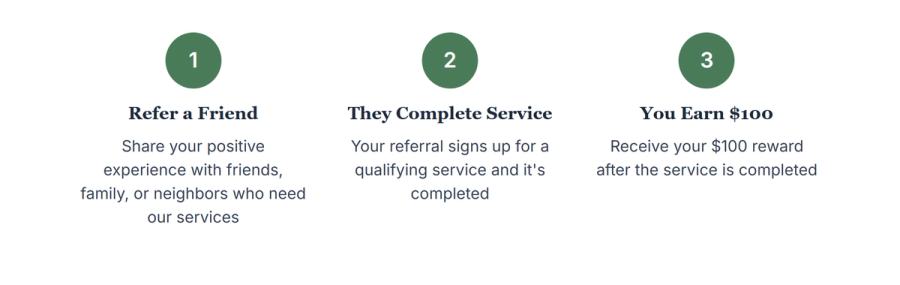
Pick the moment that counts: the first visit, the finished job or the signed contract. Tomlinson Bomberger, a landscaper, pays $100 once the friend's project is done. Tell your customer when their friend becomes a customer, and again when the reward goes out.
5. Ask early, then follow up
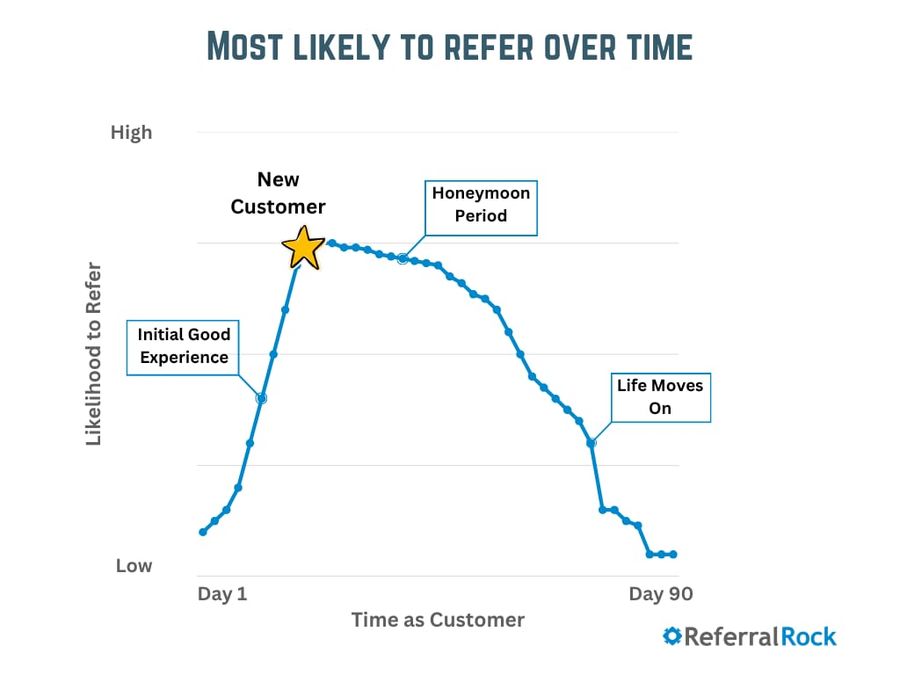
There's no one perfect moment to ask, but there is a window. It opens right after a great visit or a finished job, and it fades. One Referral Rock customer saw 86% of its referrals arrive within 90 days. Ask early, then send a reminder or two while the window is open.
6. Put it where customers already look
Add the program to receipts, invoices, booking confirmations and follow-up emails, and leave a card after the job. Start with 3 to 5 places and keep them going, because a link that shows up just once at launch is soon forgotten.
7. Have your team ask
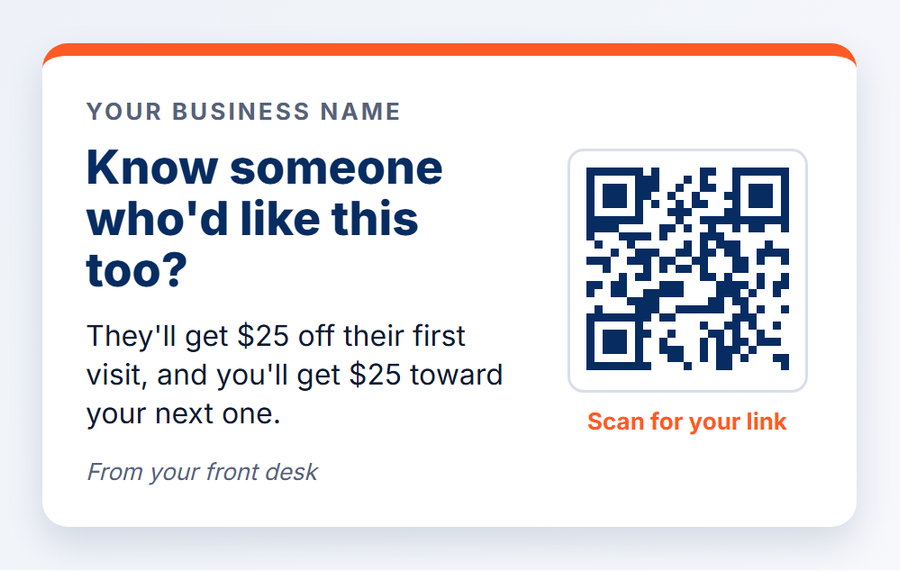
The person who did the work is the one customers trust. Give your staff a short line to say at the end of a visit, and a card to hand over. Count each person's referrals, and thank them too. Your team starts the ask; the program's emails follow up, so nobody has to remember.
A script template your team can use: "If you know anyone who'd like this too, here's a card. They get $25 off their first visit, and you get $25 toward your next one."
8. Watch shares, then referrals
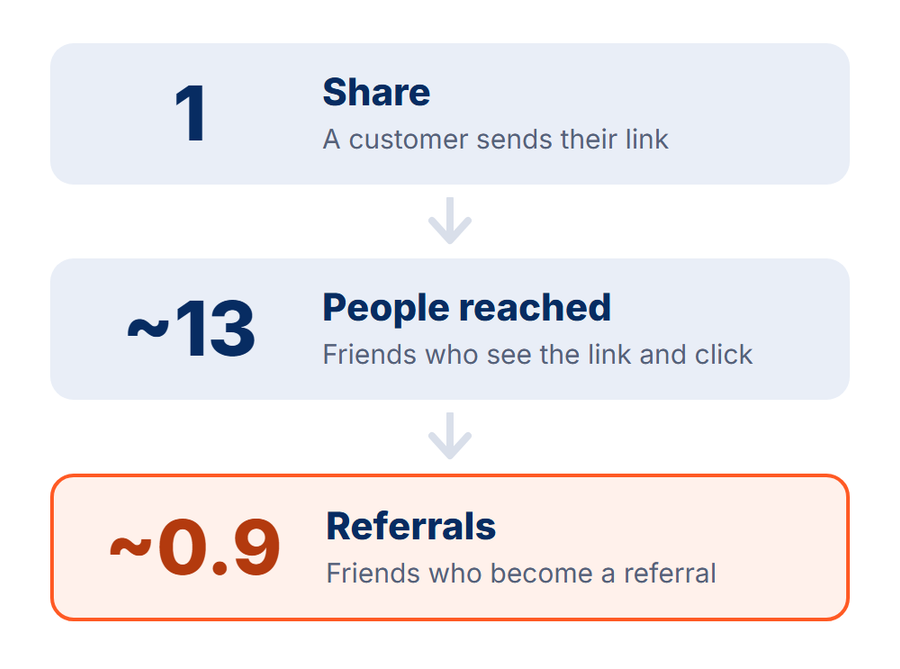
Referrals come last, after shares and clicks. So, first check that customers are sharing, then that friends click through, then that they book. In our data, each share brings close to 1 referral across all program types on our platform. If sharing stalls, promote more: most programs that stall stopped promoting after launch.
10 small business referral program examples
These 10 successful small business referral programs show what a program looks like at your size. Offers are as listed on each company's own page in November 2026.
| Business | The referrer gets | The friend gets | When it pays | Trade guide |
|---|---|---|---|---|
| NW Maids (cleaning) | $50, no limit | $50 off the first cleaning | When the friend books | Cleaning |
| Hiatus Day Spa | $50 credit | 25% off the first service | After the friend's first service | Spas |
| Viva Day Spa | $25 credit | $25 credit | After the friend's first visit | Spas |
| Ashley MacMillan Photography | $25 credit, plus a giveaway entry | $25 off the session | When the friend books a session | Photography |
| Tomlinson Bomberger (landscaping, Pennsylvania) | $100 | Not stated | After the friend's project of $500+ is done | Landscaping |
| Turner Pest Control (Florida) | $50 credit, no limit | Not stated | After the friend's first service | Pest control |
| Moncrief Heating & Air (Atlanta) | A hardware store card: $25 to $100 by job | Not stated | When the friend books and names you | HVAC |
| Bakeris Roofing (Iowa) | $100 per roof, $50 per repair | Not stated | When the job is done | Roofing |
| Datamax (office equipment, Texas) | $125 | Not stated | After the friend's equipment is installed | B2B |
| Irwin Automotive Group (New Hampshire) | $100 | Not stated | When the friend buys | Car dealers |
Most of these pay in credit toward their own service: the spas, the photographer, Turner. It's the cheapest reward to give, and it brings the referrer back too. Cash makes more sense when the purchase is big and rare, like a roof, a car or a copier.
The photographer adds something small businesses can borrow: each referral also earns an entry in a quarterly giveaway of gifts from other local shops. It costs little, and it ties the program to the neighborhood.
Referral software for small businesses
You can run a program by hand, build your own, or use software. The first three options below are free tools of ours.
| Option | Good for | The catch |
|---|---|---|
| Manual referral tracker | When you're only getting a few referrals a month | Logging, follow-ups and rewards are all by hand |
| Referral code and link generators | Giving each customer something to share | No tracking or rewards on their own |
| Referral program workbook and fee calculator | Planning the reward before you start | They plan the program; they don't run it |
| Building it yourself | Rarely good for a small business; it needs a developer | You build and maintain every part, payouts included |
| Referral software | Running your program every week without the busywork | A monthly cost |
How Referral Rock runs it for small businesses
The feature that fits most small businesses is referral program recruiters. Each person on your team gets their own link and portal. They hand it out at the end of a visit or job, and every referral that follows is credited to them.
The rest runs in the background. Every customer gets a link without signing up. Referrals land in tools like QuickBooks, Jobber, Housecall Pro, Shopify or Mailchimp. Rewards go out as gift cards, cash or discounts once the friend becomes a customer.
Every plan includes a program advisor who helps set it up. See how it works for small businesses.
Start with this week's customers
You don't need a big launch. Pick a reward for both sides and give this week's customers a link or a card. Have your team ask at the end of every visit, and keep asking every month. For more ways to keep it going, see these referral program ideas, and for the full setup, how to build a referral program.
Not sure you're ready yet? The readiness check takes a few minutes.
About the author
Referral Rock Editorial is the team behind Referral Rock's guides and templates on referral, affiliate, partner and brand ambassador programs. Today's team writes, reviews and updates them, building on work by former staff and freelance writers over the years.