Wasps, termites, and roaches – oh my! When people have pests bugging them, they don’t have the expertise to make these uninvited guests bug off on their own. That’s where your pest control company comes in. But how to make sure they choose you over a competitor?
Here’s the thing: your happiest customers are already telling their neighbors about you. Reliable service, showing up on time, actually solving the problem, that’s the kind of work people mention over the fence. A pest control referral program doesn’t manufacture that word of mouth. It captures it, makes it easy, and rewards the people doing it. Here’s how to build one.
What is a pest control referral program? (How it works)
A pest control referral program allows you to tap into your current customer connections to attract new clients. By rewarding your existing pest control customers for referring friends, family members, or co-workers to your pest control or extermination business, you create a win-win situation.
By setting up a structured customer referral program with referral program software, you can keep track of the referrals your customers make. That tracking shows you who your best referrers are, which referrals turn into paying jobs, and where the program is working, so you can do more of what’s already happening.
What it looks like on the doorstep
The abstract version is easy to nod along to. Here’s the concrete one, because in pest control the program lives or dies in a 30-second window most operators walk right past.
Marcus runs a residential pest control operation, mostly general pest, some rodent exclusion, and seasonal mosquito work. His business was built on good work and word of mouth, but the referrals were random. Sometimes they happened, sometimes they didn’t. There was no system to it.
So he built one. He printed a small card for each tech to carry: “Give $25, Get $25” on one side, a QR code tied to each customer’s account on the other. When a referred friend scans it and books, the discount applies automatically and the referrer’s credit triggers on its own, no phone tag, no manual tracking. Then he trained his techs on a single sentence to say at the end of every visit.
It’s a Tuesday morning. His tech, Dave, just finished a general pest treatment for a homeowner named Janet, interior, garage, foundation perimeter. Janet walks him out. On his way to the truck, Dave says:
“Everything looks good, we treated all the main entry points. Before I go, if you know any neighbors dealing with the same stuff, this card gets them $25 off their first service, and we’ll put a $25 credit on your account when they book. The QR code ties it to you, so it tracks automatically.”
He hands her the card. She glances at it: “Oh, that’s easy, I’ll send this to my neighbor, she was just complaining about mice.” Dave thanks her and heads to the next job. The whole exchange took 25 seconds.
That afternoon, Janet texts a photo of the card to her neighbor Lisa: “This is who we use, totally worth it, and you’ll get $25 off.” The next day, Lisa scans the code on her lunch break, lands on a booking page with the discount already applied, and books a treatment for Saturday. No code to type, no call to make. Dave runs the job Saturday morning, and because a neighbor vouched for him and Lisa already got a deal before he knocked, she’s a friendly, easy customer from the start. That evening, the system credits Janet’s account and texts her: “Your neighbor just completed her first treatment, your $25 credit is on your account. Thanks!” A few weeks later, after Lisa’s second service, she gets her own card. The cycle starts over.
That’s the whole program. One sentence, one card, one scan. The 25 seconds Dave spent at Janet’s door isn’t a sales pitch, it’s a system doing its job.
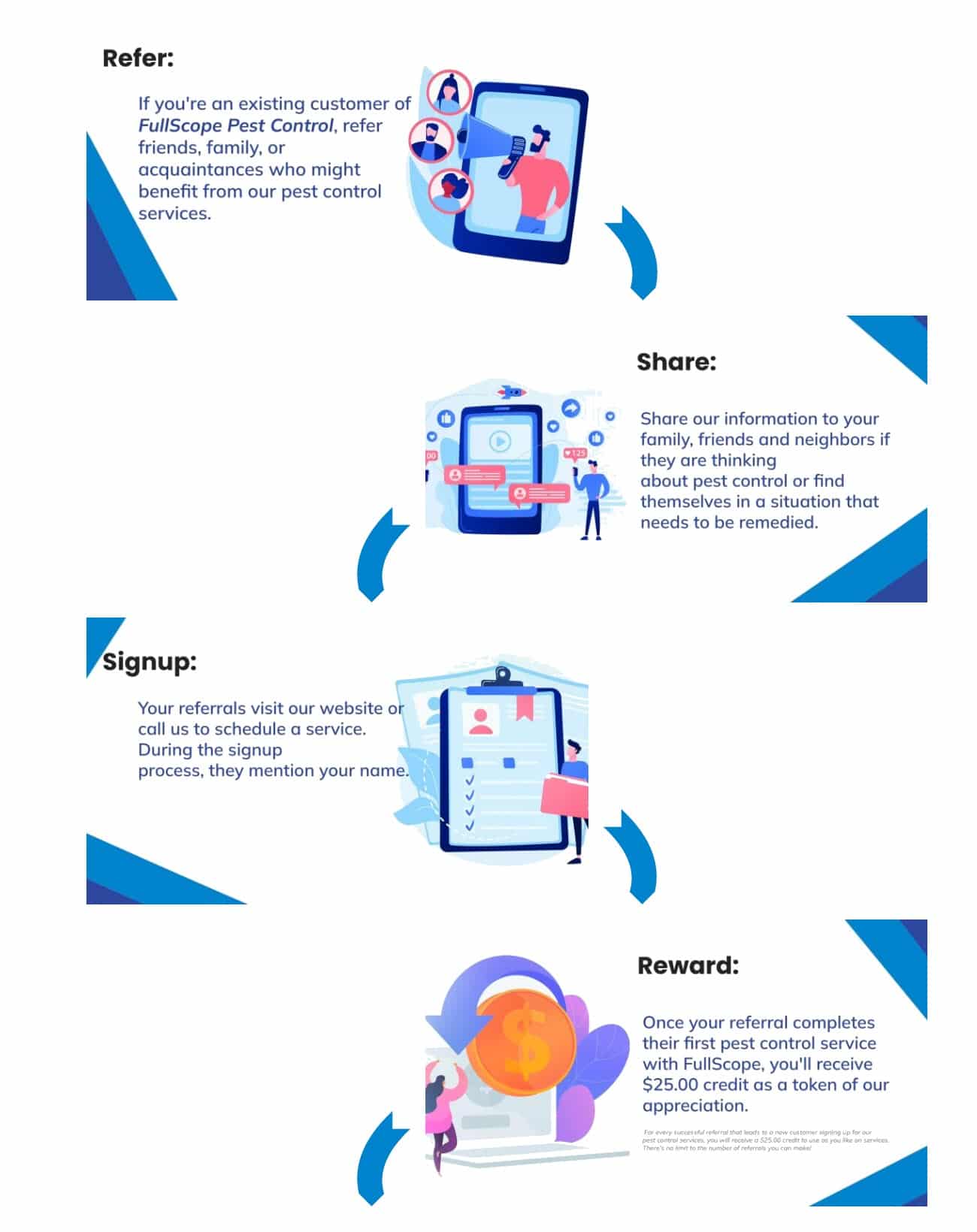
The referral flow, step by step
Here’s the same thing broken into its moving parts, so you can map it onto your own operation:
- The ask (on-site, end of visit). Right after the walkthrough, while satisfaction is at its peak, your tech mentions the program in one natural sentence and hands over a card. Under 30 seconds, every time.
- The card goes to work. The customer now holds a physical card with their unique QR code, a short share link, and the offer (“Give $25, Get $25”). They can leave it on a neighbor’s door, text a photo of it, or drop the link into a Nextdoor or neighborhood Facebook thread. Same code, same tracking, everywhere.
- The friend engages. They scan the code or tap the link and land on a booking page with the discount already applied and the referrer already attributed. No coupon to type, no one to call, far fewer drop-offs.
- The friend’s first visit. Your tech runs the treatment. The discount was applied at booking, so there’s no awkward conversation about money at the door, and the friend already feels like they got a deal through someone they trust.
- Rewards trigger. Once that first service is complete, the referrer’s credit posts automatically, and both people get a confirmation: “Your friend just completed their first service, you’ve earned $25.”
- The follow-up nudge. A few days later, the system reminds the referrer their credit is live and their link still works, re-activating them without any effort on your end.
- The cycle repeats. The new customer gets their own card after their next service, and one happy customer can seed several referrals over time.
The QR code is what holds all of this together. It ties the offline moment, a card handed over at the door, to the online system, so tracking, discounts, credits, and notifications all happen without anyone managing them by hand. That’s the difference between a casual “tell your friends” and a program that actually compounds.
Why start a pest control referral program?
People don’t make impulse decisions about which pest control expert to rely on. Whether they have a sudden infestation to stop or want ongoing maintenance to stay pest-free, they spend significant time researching and comparing different service providers in their area.
That research process is exactly where a recommendation from a friend short-circuits the competition. People are far more inclined to trust a business a friend vouches for. In fact, referred friends are four times more likely to choose your business than other leads. A referral program doesn’t create that trust, your good work does. What the program does is make those recommendations easy to give, easy to track, and worth repeating.
It also brings you better leads, not just more of them. You won’t waste budget casting a wide but irrelevant net the way you would with typical ads. Referrals are hand-selected: people only refer friends who could actually use your help, who live in your service area, and who are already looking for local pest control. According to 54% of marketers, a referral program significantly lowers cost per lead, and most marketers rank referral-generated leads among their top three sources.
The math is especially kind in pest control because so much of the work is recurring. Say you spend $50 to land a new customer, $25 off their first treatment and a $25 credit to the neighbor who sent them. If that customer signs onto a quarterly plan, they’re worth several hundred dollars a year, and often well over a thousand across the life of the relationship. That’s an acquisition cost paid advertising rarely comes close to. And because referred customers arrive already trusting you, they tend to convert faster, cancel less, and complain less than leads from cold advertising.
Unlike traditional advertising like Google Ads, referral programs are low-risk and require minimal upfront investment. You make a one-time payment for referral software, and after that, you mostly pay only when a referral leads to a sale. You’re not spending money without a clear return.
Referral software for pest control businesses [Free Tools]
These referral tools for pest control businesses are a free and easy way to help you start your referral program.
Free Tools + Services:
- Create your own referral codes - [Referral Code Generator]
- Track referrals manually - [Manual Referral Tracker - Spreadsheet]
- Build referral links - [Referral Link Generator]
- Get best practices and actionable guidance - [Referral Program Workbook]
- Readiness Assessment - [Free Consult]
- Online referral software - [Free Trial]
Want a automated referral system for your pest control business? Uncover referrals in plain sight to smooth out business lulls, without losing focus on your real day to day work helping customers.
Check out our referral program software - done right.
Are you ready for a pest control referral program?
A referral program captures word of mouth, it doesn’t create it. So before you launch one, the real question is whether there’s already word of mouth worth capturing. The clearest signal you’re ready: customers already refer you sometimes, but there’s no system to make it easy, track it, or thank them. That’s money being left on the table.
To make sure your program thrives, you should have these key elements in place before you get started:
- A group of satisfied customers who appreciate your work – preferably, some should already be spreading the word about your services on their own.
- An exceptional customer care experience that makes people want to recommend you, from the initial phone call to the final wrap-up.
- A strong level of customer satisfaction, reflected in positive user reviews and high ratings.
- A website ready to receive the leads you get from referrals.
If those boxes aren’t checked yet, a referral program won’t fix it. The reliable service comes first; the program comes second, to capture and scale what that service earns.
Pest control referral program best practices
Choose rewards that feel like a gift
The rewards you offer are what draw people into your program, but how you frame them matters more than the dollar amount. The instinct is to focus on what the referrer earns. Flip it: the strongest referral feels like a gift the customer is giving their friend, not a payout they’re collecting for themselves. When the friend’s reward is the headline, sharing feels generous instead of transactional, and your customer never feels like they’re “selling out” their neighbor just to score something for themselves.
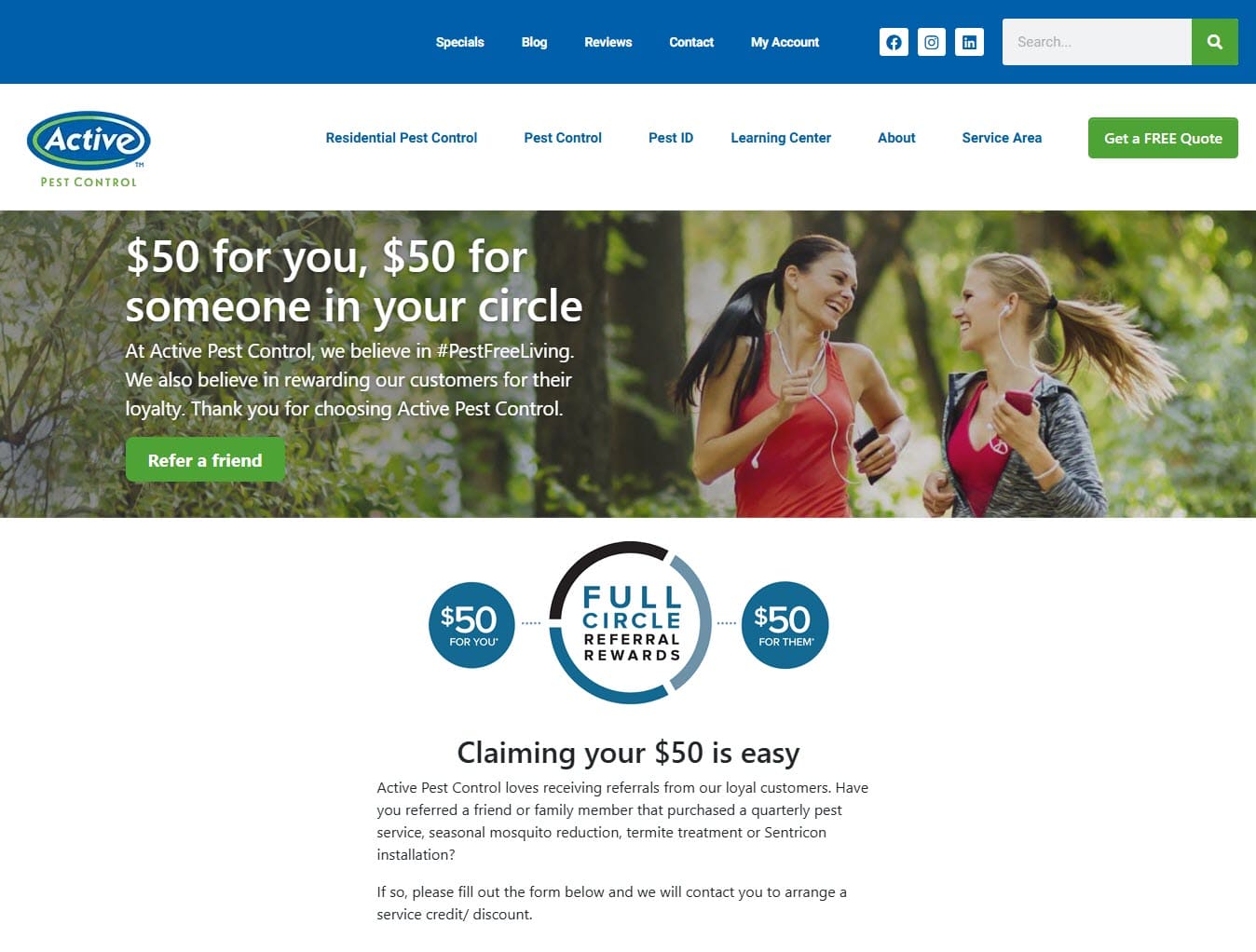
So make the reward to the referred friend something tied directly to your services, to encourage them to book that first job: a discount coupon, credit toward their first service, or cash back after the initial payment. That’s the reward your customer gets to talk about when they share.
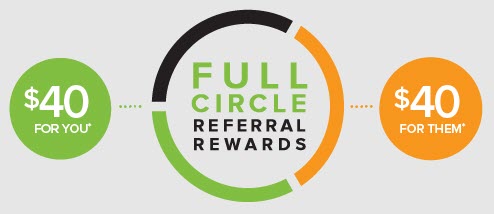
The referrer’s reward still matters, it just lives in the background. The right one depends on your service model. For advocates who pay for recurring maintenance, credit toward their next service is a natural fit. If the extermination was a one-off, cash, Visa gift cards, or gift cards to other businesses work better. A double-sided reward, where both the friend and the referrer get something, is the best call: it motivates more referrals while keeping the gift front and center.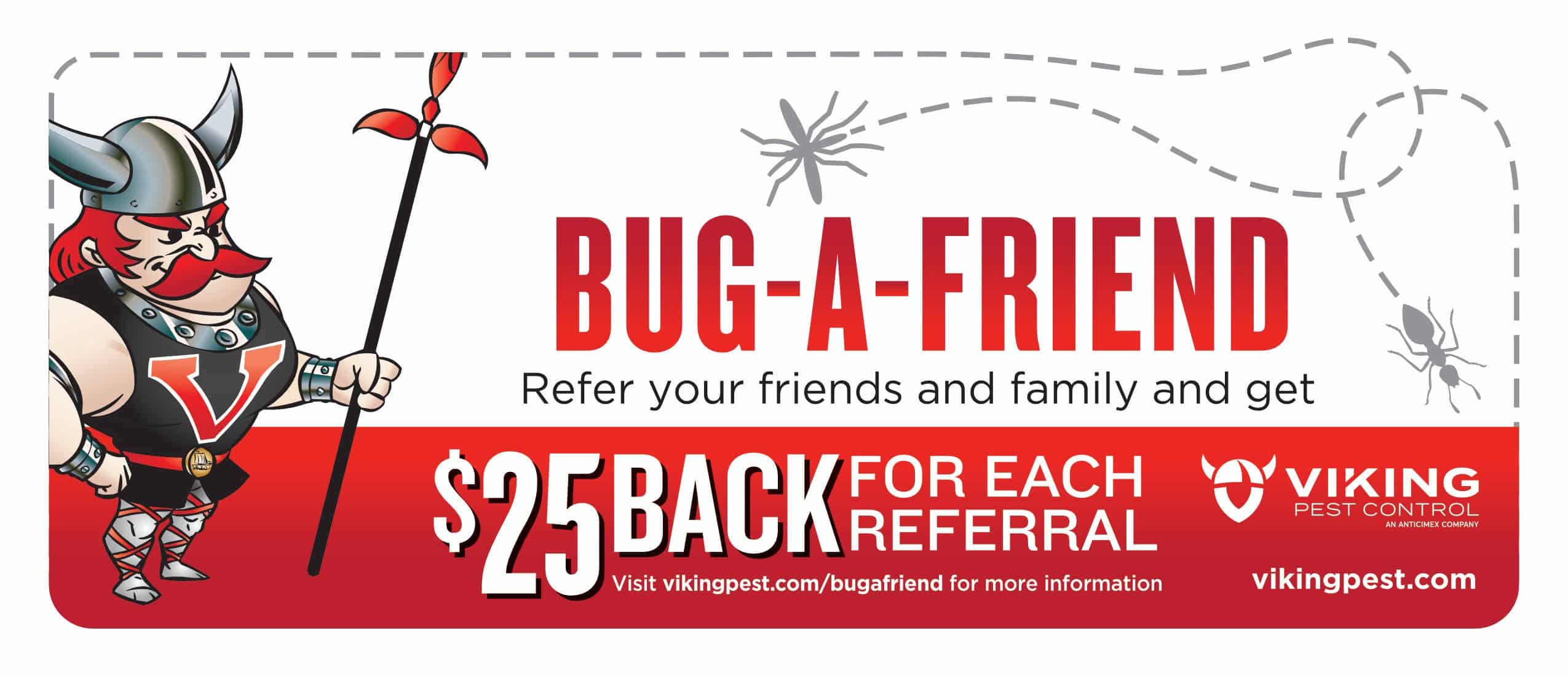
You can also scale rewards to job value. If you serve both homeowners and commercial clients, larger rewards for commercial referrals make sense, since those jobs are worth more to your business. The same goes for monthly plans versus one-time treatments. And wherever you can, don’t cap what sharers can earn, so your best advocates stay motivated to keep referring.
Use our referral reward calculator to determine the reward values you should offer the sharer and their friend, for the best ROI.
Skip the signup hoops
Every form, login, and signup step you put between “I want to refer someone” and “here’s my link” is a step where you lose people. The best referral programs have no join button at all. Every customer is already a member.
That’s what automated enrollment tools and One Click Access links do in Referral Rock. They let customers start promoting your business instantly, with no sign-up or long referral form. All they do is add a few details about their friend. Include these links everywhere you talk to customers, not just in emails about the program, but in newsletters and transactional emails too. Customers can also log into their referral portal with social logins like Google and Facebook, so there’s no password to remember.
Keeping access open does more than lift conversion. You never know which customer is your biggest super-promoter until you remove the barriers and let them share. Gate the program preemptively and you’ll never find out.
Make sharing a breeze
When customers reach the referral page, it should be obvious what to do next. If the process feels complicated, they’ll leave without sharing. A few ways to keep it simple:
- Craft an engaging headline that clearly communicates what customers need to do (share) and highlights the benefits for them (the reward).
- Condense the program details and the steps to earn rewards into a few simple points.
- Feature a prominent call-to-action button that encourages customers to start sharing.
- Guide customers to an FAQ page for any additional questions they might have.
- Offer various sharing options that align with how customers typically share their favorite things with friends, such as email, social media, and a unique referral link they can easily copy and distribute.
Promote continuously, not as a campaign
Most businesses treat a referral program like a launch: announce it once, blast the list, hope for a spike. Then it fades. The programs that actually work treat promotion as ongoing operations, something in front of every new customer at every relevant moment, not a one-time push.
That’s partly because past-customer lists go stale fast. The experience that earned the referral fades, the customer’s network has already heard about you, and a “remember us?” email lands flat a few months later. The volume that moves a referral program comes from steady, low-friction touchpoints with new and recent customers, captured while they’re still glowing about the job you just did. Promote the program across all of these:
- On your website: a striking hero image or banner, plus buttons in the top and bottom menus.
- Through occasional mass emails to your client list (monthly to quarterly is plenty, don’t spam).
- Via engaging posts on social media.
- In newsletters, confirmation emails, invoices, and other communications that aren’t solely about the program.
- In text messages, if you already have an SMS list.
- In your email signatures and social media bios.
You don’t need to obsess over finding the “perfect moment” to ask. Done right, the program is always there, so the moment a customer is happy, the path to refer is one tap away. That said, satisfaction does run high right after great service, so it never hurts to mention it when a client tells you they’re thrilled, leaves a glowing review, or you’re wrapping up a job they loved.
Pest pressure is also seasonal, so a light nudge to your existing clients at the start of spring and fall lands right when their neighbors are already thinking about ants, wasps, or mice. Just don’t let timing become a reason for paralysis. The right time to ask is all the time.
Turn your techs into referral recruiters
Your team is your single best promotion channel, and not because they’re marketers. Your technicians are standing in the customer’s home or business right after solving their problem. Nobody is closer to the moment of peak satisfaction than the person who just made the pests disappear. That’s a referable conversation marketing can’t manufacture from a desk.
Encourage your techs to mention the program after a successful service, and make sure they understand how it works so they can answer questions confidently. Give them a QR code that links straight to the digital program, so customers can join in a tap without writing anything down.
Earlier, we mentioned using individual QR codes for each new customer, handed out on customized referral cards. Referral Rock’s Recruiter Portal makes that process even easier. Each of your reps gets their own recruiter portal and link, and can register your clients for the program on their phone, right in the field. The customers then get their own share links, accessible right from their inboxes. Plus, they get that all-important, personal QR code to share with friends.
That QR code is doing real work: it collapses the friction that kills most referral programs. Instead of asking a friend to call a number, mention a name, and hope it gets logged correctly, the entire process becomes one scan, with the discount and the credit tracking on their own.
When your field team treats referrals as part of the handoff, promotion becomes continuous by default.
Don’t forget the friend
The friend being referred is the whole point, and the message they receive is often their first encounter with your business. Get that handoff right.
Provide a prewritten message so the referrer doesn’t have to think about what to say, but leave room for them to add a personal note if they want. Make sure the whole thing reads from the customer’s perspective and never feels salesy. Lead with the reward the friend gets and put an attention-grabbing call-to-action up top.
Then make the transition seamless. A referral isn’t a message and then a separate landing page, it’s one continuous handoff. The page the friend lands on should reiterate the same offer and name the customer who sent them (“Taylor sent you this”), so the friend feels like a VIP instead of getting dumped into a generic promotion. Break that seam, where the message promises a gift but the page says “welcome to our referral program,” and the click goes nowhere.
Close the loop when a referral lands
A lot of referral programs quietly die for a reason most operators never see coming: the people doing the referring never hear what happened. They send a neighbor your way and then nothing. Did it work? Did they get their credit? The silence makes the whole program feel made up.
So close the loop the moment a referral converts. The second that referred friend’s first treatment wraps, fire off a confirmation, “Your neighbor just completed her first service, your $25 credit is on your account.” It’s a small message, but it proves the program is real and working, which is exactly what makes someone refer a second and third time. Pair it with the follow-up nudge a few days later, your credit’s ready, your link still works, and you’ve turned a one-time referrer into a repeat one without lifting a finger.
Show your appreciation
Thanking customers for their referrals makes them feel valued and motivates them to refer again. Make it a routine to send a handwritten thank-you note whenever a referral leads to a sale, and consider giving them a public shout-out on social media.
When customers see that their referrals are genuinely appreciated, it builds goodwill and strengthens loyalty. Alongside any rewards they earn, a heartfelt thank-you goes a long way toward keeping new clients coming your way.
Choose the right referral software
The right software makes your program easy to set up and mostly self-running. It generates referral links, tracks the source of every referral, and rewards the ones that convert, while gathering the insights you need to keep improving. Referral Rock is built for exactly this, with strong tracking, sharing, and engagement features, plus concierge onboarding that requires no technical skills:
With Referral Rock, you can:
-
- Easily track referrals: Each participant gets a unique referral link, enabling you to identify the source of every referral. Customers can also monitor their own referrals through personalized dashboards.
- Utilize automation: Keep your customers engaged with strategic, automated promotional emails, and simplify sharing with passwordless links.
- Customize and streamline rewards: Design any reward structure you wish, including tiered and multi-step rewards, and automate the payout process.
- Integrate with essential tools: Seamlessly connect Referral Rock with over 50 different tools, including your CRM.
- Empower recruiters: Reps can enroll customers in your referral program in seconds, right at key conversation moments. They each get their own recruiter portal and link.
- Collect program insights: Quickly assess your program’s performance and make data-driven enhancements.
- Get started in no time: With Referral Rock, you can launch your program in just a few days, with expert support available at every step.
Check out how our referral software is designed for field and home services businesses like yours.
Start a pest control referral program
A pest control referral program won’t manufacture word of mouth you haven’t earned. But if your customers are already happy, already mentioning you to neighbors and coworkers, a program turns those scattered recommendations into a reliable channel you can see, reward, and grow.
The businesses that win at this treat it like operations, not a one-time campaign. They make the friend’s reward the headline, they keep access open so every customer can share in a click, and they put the program in front of new customers continuously, especially right after a job well done. They also tie the doorstep moment to a system, one card, one QR code, one scan, so a casual “you should call my guy” becomes a tracked, rewarded, repeatable referral.
Ready to capture the referrals already happening around you? Start your pest control referral program with Referral Rock.