
A loan referral program rewards your borrowers for sending friends who take out a loan, and the reward goes out once that loan funds. For personal, auto, student and business loans, that's usually a reward on each side. The lenders and credit unions we checked in November 2026 paid the sharer $100 to $400 per funded loan.
Mortgages work differently. Any reward for a mortgage referral, to a past borrower or a realtor, falls under strict rules. Get your compliance team's OK before you offer one. The steps below set up a program that follows the loan from application to funding, with a section on mortgages after them.
The call quotes here come from our 2026 sales and customer calls, shared without names.
A loan referral program rewards borrowers for friends whose loans fund
Two kinds of programs go by similar names. A borrower referral program asks your own borrowers to tell friends. A partner program, sometimes called an affiliate program, pays businesses that send you loans, like brokers, realtors or accountants. The two need different rewards and rules, so keep them apart.
| Borrower referral program | Partner program | |
|---|---|---|
| Who refers | Your current and past borrowers | Brokers, realtors, builders, accountants and other businesses |
| What the referrer usually gets | A gift card or cash | A fee or a share of the funded loan, in written terms |
| What the friend usually gets | A rate discount or loan credit | Not part of the partner's terms |
| When it pays | When the friend's loan funds | When the loan funds, if your compliance team allows a payment at all |
Most of this guide covers the borrower program. Partners get their own part in the mortgage section, where the rules matter most.
Why referrals fit lending: borrowers trust a friend with a big decision
A loan is a big money decision, and people want a name they trust. In Nielsen's 2021 trust study, 88% of consumers answering online said they most trust recommendations from people they know. "My credit union gave me a great rate" carries more weight than an ad.
Referred customers also tend to stay. In a study at one bank (Schmitt, Skiera and Van den Bulte, 2011), referred customers were about 18% less likely to leave.
Programs can bring in a real share of new business, too. An Ally executive told Banking Dive in 2025 that referrals make up about 15% of the bank's account volume. Each customer they bring in costs the bank under $100. Those are bank accounts, not loans, but the pull is the same.
Loan officers do most of the asking, since they walk each borrower to funding. And each funded loan earns enough to leave room for a reward. That room shows a reward is possible. It doesn't set the amount.
6 signs your lending business is ready for a referral program
A referral program amplifies the word of mouth you already have. It doesn't create it. So check these 6 signs first, here in lending terms.
| Sign | What it looks like for a lender |
|---|---|
| 1. Word of mouth | New applicants already say "my coworker got her car loan here" |
| 2. Easy to talk about | Borrowers mention a fast approval, a fair rate or a loan officer who explained everything |
| 3. Community | Your borrowers know people buying cars, homes or refinancing student loans too |
| 4. A service team | Loan officers follow up, answer questions and see each loan through to funding |
| 5. Business software | Applications and loans live in a loan system or CRM (customer database), so you can see who funded |
| 6. Steady marketing | Your website, branches and ads bring in new applications every month |
If several are missing, work on those first. The readiness check walks through all 6 in a few minutes. Lending is regulated, so check any reward with your compliance team before launch, and mortgages above all.
How to run a loan referral program in 7 steps
These steps follow the order our program advisors use when they set up a new program, shown here for a lender.
1. Invite borrowers when their loan funds, then keep inviting
Funding day, when the car is in the driveway or the old loan is paid off, is when a borrower is happiest with you. Invite them then. Start with recent borrowers, then add each new one as their loan funds. Past borrowers come next, with light reminders.
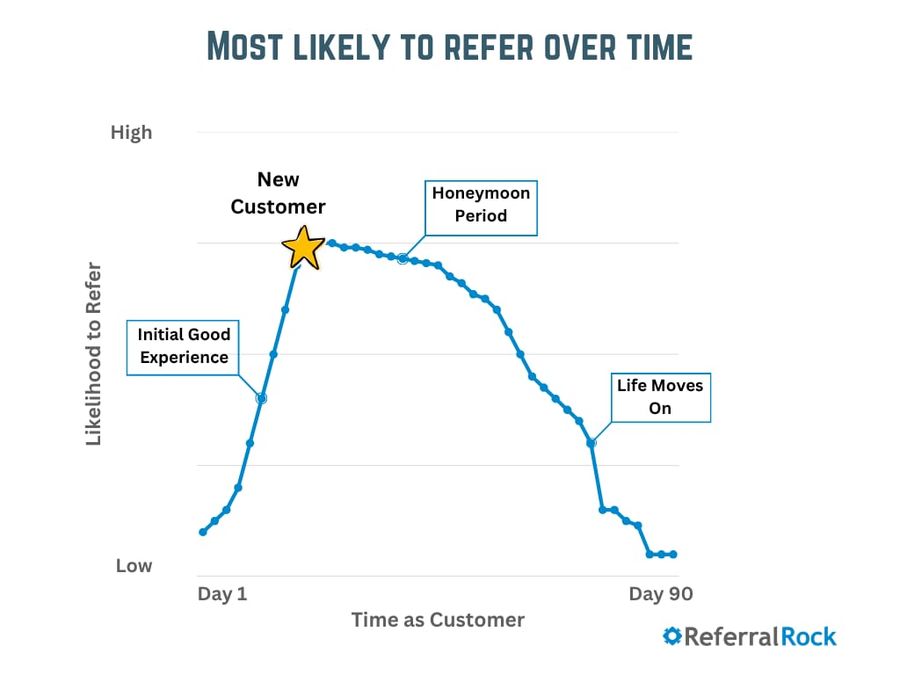
The urge to share fades as life moves on. One business on our platform found 86% of its referrals came within 90 days of someone becoming a customer. We call that span the sharing window.
So don't stop at one ask. Follow up gently over the next few weeks. Milestones bring the urge back too: the loan's first anniversary, or the day it's paid off.
2. Reward the friend first: a rate discount, a loan credit or cash
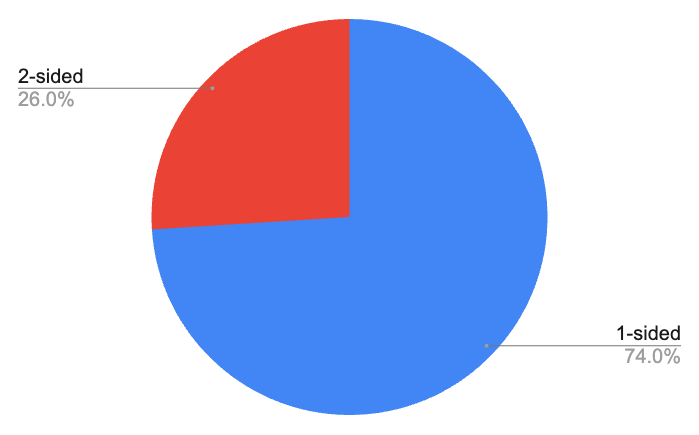
In our November 2024 review of 339 referral programs, 54% gave the friend nothing. That's a missed opportunity. A friend offer turns "try my lender" into a favor: "Use my link and they'll take $100 off your loan."
For the friend, tie the offer to the loan: a lower rate, a credit toward the principal, or cash once the loan funds. For the sharer, a gift card or cash works well, since it lands with them and not on their loan. Auto, personal, student and business loans leave room for both, as the real programs below show.
Some lenders add a second, smaller reward when the friend makes a first payment, or a bigger one for bigger loans. More ideas are in our guide to referral rewards. Whatever you pick, choose an amount your margins carry easily, then leave it alone. Bigger isn't always better: past a point, a big reward brings in less profitable borrowers and more fraud.
3. Pay the sharer when the referred loan funds, and tell them each step
Many applications never fund. If you pay at the application, you pay for loans you never make, and you invite fake applications. So in lending, the reward waits for funding, which comes after the papers are signed.
Our last thing in the deal is funded. Not when it closed.
Funding can take weeks, so keep the sharer posted. Send a quick note when the friend applies and another when the loan is approved. Then pay when it funds, and say so in the terms. The friend's offer can come at funding too, as a credit on the new loan.
4. Let loan officers start the ask, and let the program follow up
Borrowers remember the loan officer who got them through, more than the brand. So the loan officer starts the ask at funding, in person or on the closing call. The program's emails then follow up with the link and the reminders, so nothing depends on anyone's memory. Give each loan officer their own link, so you can see who brings in loans.
What a loan officer can say at funding: "Congratulations, you're all set. If anyone you know is shopping for a loan, send them your link. They'll get $100 off their loan, and we'll send you $200 once theirs funds."
Swap in your own offer. For a mortgage, use only what your compliance team has approved.
5. Record every referral on the loan application
A referral that isn't recorded at the start is lost by funding. Weeks pass, and the loan moves through several hands. So capture the sharer the first time the friend shows up: through their link, or a field on the application.
Neighborhood Credit Union does this simply. The friend names the sharer on the application, or ticks yes for the referral program online. Then tie each later stage to that same referral: approval, then funding. Our guide to referral tracking covers the options.
6. Keep sharing open: a link in the payment portal, statements and emails
Every borrower should have a referral link right away, with no form and no password. A borrower can share it the moment a friend asks where they got their loan. That's what we call keeping access open. If you worry about fraud, watch for signs like duplicate applications and handle them as they come, rather than locking everyone out.
Then put the program where borrowers already look, in 3 to 5 places, each leading with the friend's offer:
- The online payment portal and mobile app
- Payment due and payment receipt emails
- Monthly statements
- Your website menu and footer
Ask borrowers to send the link to one person directly, by text or email. A message to one friend works better than a post to everyone. Programs that stall usually stall after launch, when the reminders stop, and placements like these keep yours in view.
7. Watch shares and reach before you count funded loans
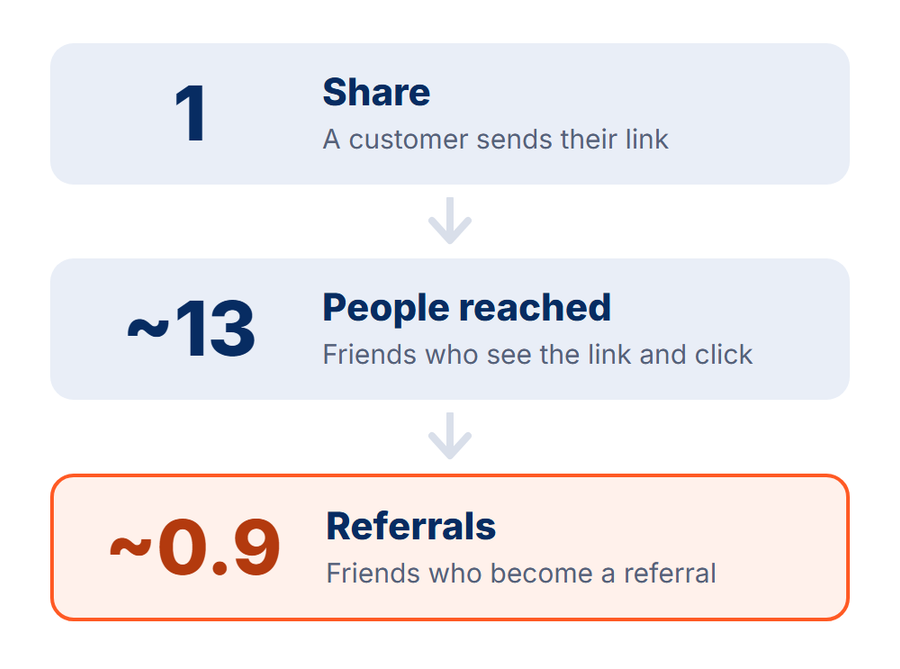
Funded loans are the last number to move, and they take weeks. So watch shares first, then how many people they reach. In our June 2024 data, one share reached about 13 people and led to about 0.9 referrals, across all program types on our platform. If shares climb, applications follow.
Mortgage referral programs need a compliance check before any reward
A mortgage or home loan referral program works like the steps above, with one big difference. Strict federal rules cover anything given in return for a mortgage referral, and it doesn't have to be cash to count. Regulators have fined lenders for payments to the businesses that sent them borrowers. So talk to your compliance team or attorney before you offer anything to anyone.
Two tips for successful mortgage referrals: ask the right questions about borrower rewards, and run realtors and brokers as their own program.
Borrowers referring friends: what to ask your compliance team
We didn't find a US mortgage lender offering borrowers a refer-a-friend reward in November 2026. That's why this guide shows no mortgage reward amounts. Bring your compliance team these questions:
- Can the referred friend get an offer, like a credit toward closing costs, and how should it be described?
- Can we thank a past borrower in a way that isn't tied to whether their friend takes a loan?
- What can loan officers be paid for bringing in referrals, and how does that fit their pay plan?
- What must the program's terms and messages say, and what must they leave out?
The other best practices in the steps still work for mortgage client referrals, with no reward. Invite borrowers at funding, keep the link easy to find, and let loan officers ask. Milestones such as a year after funding, or the final payment, are good times to remind borrowers you'd welcome their friends. Over time, those reminders build a referral base for your mortgage business.
Realtors, builders and brokers belong in a separate partner program
Realtors, homebuilders, contractors and brokers send residential mortgage borrowers your way all the time. Loan officers build referral relationships with them, and together they make up a mortgage referral network. Partners aren't borrowers, so they need their own program, with their own terms. Partners also want to see what happened to the people they sent.
There's no way for the referral partners to actually track anything themselves.
Give each partner a link and a page where they can follow their referrals from application to funding. Payments to partners for mortgage referrals are exactly where regulators have acted. So pay a partner only if your counsel says how, and put it in writing. If you're partnering for mortgage referrals, our guide to referral partnerships covers how partner programs run.
Real loan referral programs and what they paid (November 2026)
What 5 lenders' referral pages offered in November 2026:
| Lender | The sharer gets | The friend gets | When it pays |
|---|---|---|---|
| Neighborhood Credit Union (auto loans) | $200 | Not stated | When the auto loan funds |
| OUR Credit Union (auto loans) | A $200 Visa virtual reward (doubled for the holidays, through December 31) | $200 | When the friend's auto loan is approved and paid out, within 60 days of joining |
| Vantage Credit Union (auto loans) | $100, up to $500 a year | $100 | Once the auto loan referral is complete |
| ELFI (student loan refinancing) | A $400 check | $100 off the loan's principal | When the friend refinances through the sharer's link |
| T Bank (business loans, a partner program) | Up to 1 point on funded volume | Not part of the program | On funded loans |
Every one of them pays at funding or later, and most reward the friend too. Running member accounts at a credit union? The credit union referral guide covers member-get-member. T Bank's is a partner program for business loans, where a share of the loan is normal.
Loan referral software: your options
You can run a program by hand, build your own, or use software. The first three options below are free tools of ours.
| Option | Good for | The catch |
|---|---|---|
| Manual referral tracker | A few referrals a month while you test | Links, status updates and rewards are all by hand |
| Referral link and code generators | Giving each borrower something to share | No tracking or rewards on their own |
| Referral program workbook and fee calculator | Planning offers, referral fees and timing before you start | They plan the program but don't run it |
| Building it yourself | Teams with developers to spare | You build and maintain every part, including the tracking to funding |
| Referral software | Running it every week without the busywork | A monthly cost |
How Referral Rock runs a loan referral program
The feature that fits lenders best is referral program recruiters. Each loan officer gets their own link and a portal that shows the borrowers they've signed up. At funding, they can sign the borrower up on the spot, and every referral that follows is credited to them.
The rest runs in the background. Borrowers and loans sync with HubSpot, Salesforce or Pipedrive, so new borrowers get invited as their loans fund. Each referral is tracked from application to funding, and you can approve each reward before it goes out.
Every plan includes a program advisor who helps set it up, including the terms your compliance team will review. See how it works for financial services.
Start with your next funded loan
You don't need a big launch. When the next loan funds, have the loan officer hand over the borrower's link with the friend's offer, and pay when the friend's loan funds. For mortgages, clear every reward with compliance first, and keep realtor and broker partners in a program of their own.
If you're unsure your lending business is ready, the readiness check takes a few minutes.
About the author
Referral Rock Editorial is the team behind Referral Rock's guides and templates on referral, affiliate, partner and brand ambassador programs. Today's team writes, reviews and updates them, building on work by former staff and freelance writers over the years.