A car dealership referral program gives your customers an easy way to send friends to your store. When a friend buys a car, both of them get a thank-you. And you know exactly who sent the buyer and which salesperson earned the credit.
Most dealerships already run on repeat and referral business. The hard part is tracking it. A name goes on a spreadsheet, a check gets written at month end, and the salesperson can't prove the buyer was theirs. This guide builds the program around the deal, from a customer's delivery day to when their friend's driving home in a new car of their own.
Why referrals fit car dealerships
A car is a big buy, so people ask the people they trust. In an Autolist survey of more than 1,100 car shoppers, 52% said advice from friends, family and coworkers had shaped a past purchase. No other source scored higher. The survey is from 2020, but people still ask around before they buy.
Each sale is also worth a lot, and a buyer who likes you comes back for service for years. That leaves room for a real thank-you on both sides.
The people buyers remember are the salesperson who sold them the car and the service writer who checks them in. They're the ones who hear "my brother-in-law needs a truck." That makes their ask the most personal one, and every referral they bring can be credited to them.
Many dealers already run a loyalty program for service, with points or free oil changes. A referral program sits next to it: loyalty keeps a buyer coming back, and referrals bring in the people they know.
6 signs you're ready for a referral program
A referral program amplifies the word of mouth you already get. So check these 6 signs first, here in dealership terms.
| Sign | What it looks like for a dealership |
|---|---|
| 1. Word of mouth | Walk-ins already say "my neighbor bought from you" |
| 2. Easy to talk about | Buyers show off the new car and talk about how easy the deal was |
| 3. Community | Your buyers live and work near people who'll need a car soon |
| 4. A service team | Salespeople follow up after delivery, and the service lane keeps its promises |
| 5. Business software | Buyers and leads live in your dealership CRM (your customer database) |
| 6. Steady marketing | Your website, listings and ads bring in shoppers every month |
If several are missing, work on those first. The readiness check walks through all 6 in a few minutes.
How to run a car dealership referral program in 8 steps
These steps follow the order our program advisors use to build a referral program, answered for car dealerships.
1. Invite every buyer on delivery day
Start with buyers from the last few months, then add each new buyer the day they take delivery. Recent buyers still remember you. Buyers from years back may not, and some will mark a sudden invite as spam.
Everyone gets a personal referral link right away, with no form and no login. A signup step loses people, while a link already in their texts lets them pass it to a friend the moment cars come up. That's what we call keeping access open.
2. Give the friend something too
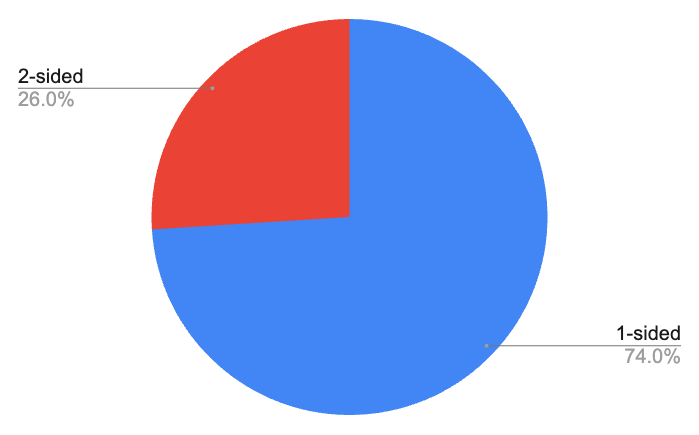
Many programs reward only the person who refers. In our November 2024 analysis of 339 referral programs, 54% gave the friend nothing. That makes the ask feel like a sales pitch. A reward for the friend turns it into a favor: "Tell them I sent you and they'll get $250 off."
Rewarding the friend works, too. It increases the likelihood that the referring customer will make additional, high-quality referrals, and that the new customer will make that crucial car purchase.
In a 2020 field test at a video game subscription company, a free month went to one side or the other. When the friend got it, 4.77% of customers asked brought in someone new, against 1.71% when the sharer got it. None of the four dealer programs below names anything for the friend, and they're missing an opportunity.
For the friend, money off the car, a free first oil change or accessories all work. For the referrer, cash, a gift card or a service credit is the best thank-you, since they won't need a new car anytime soon. Rules on paying customers for referrals vary, so check your reward against your area's laws before you launch. For more ways to reward both sides, see our guide to referral rewards.
3. Make the friend's first step easy
The friend should land on a page that shows who sent them and what they get, with a button to book a test drive. Friends trust the sharer more than your dealership, so lead with the sharer's name. Keep the friend's offer open, too: someone who hears about you in March may not shop until fall.
Then the friend's details should reach your CRM with the sharer's name on them. Ideally, route the friend to the salesperson who sold the sharer their car, to leverage the trust factor even further.
4. Pay once the car is sold
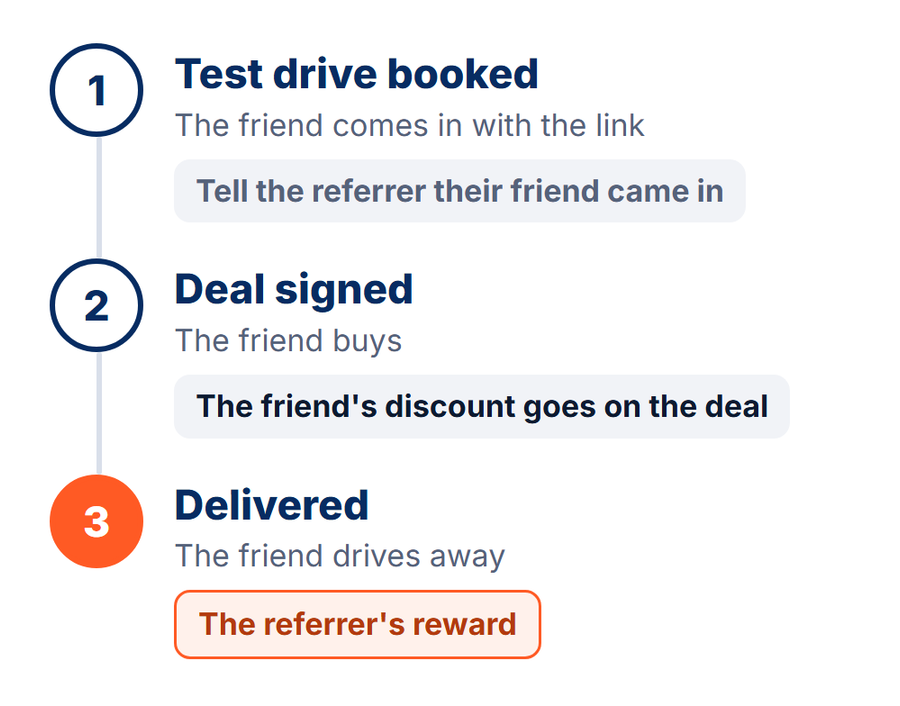
A friend can walk away at any point before the deal is signed. So wait to pay the referrer until the friend's car is sold and delivered; every dealership program below works this way. The friend's discount can go right on the deal, so they see it before they sign. Keep the sharer posted while you wait: tell them the day their friend comes in, and again when the reward goes out.
SIR Glass, an auto glass shop in Portland, pays its partners $10 to $40 only once each referred customer buys. Its partner program brings in 30+ new sales a month.
5. Ask soon after a great experience
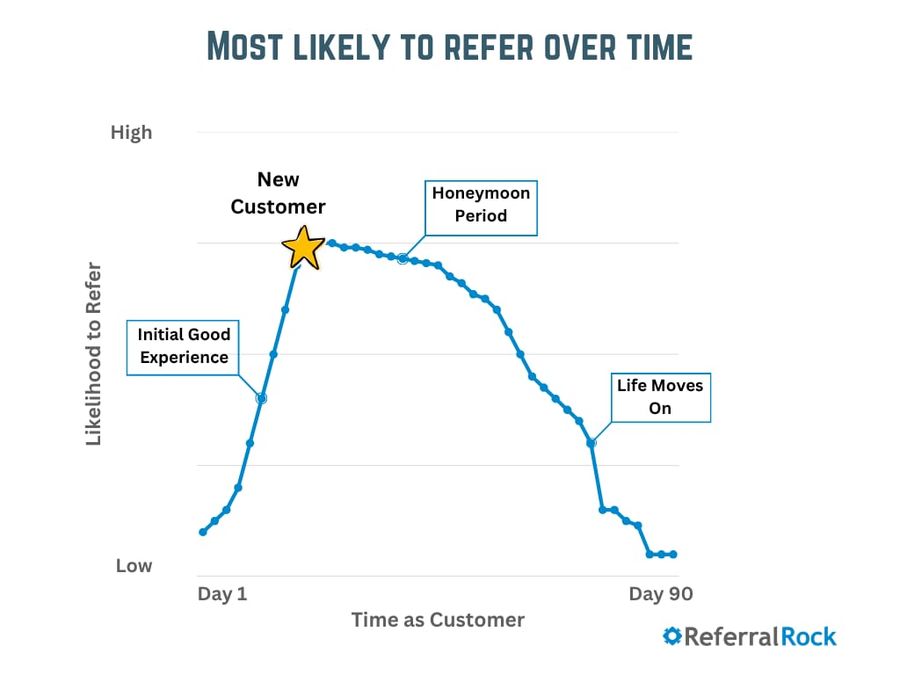
Buyers are most willing to recommend you right after a good experience, and the urge fades as life moves on. One of our customers found 86% of their referrals came within 90 days of someone becoming a customer. We call this span the sharing window.
The window lasts weeks, so one perfectly timed ask isn't the goal. Ask early, then follow up gently while it's open. At a dealership, it opens on delivery day and comes back at every good service visit.
4 good times to ask for referrals at a dealership:
- On delivery day, in person, with their link in the follow-up text
- At the 30-day check-in call
- At the first service visit
- Each time a service customer leaves happy
6. Put the program where buyers already look
Buyers forget a program they saw once. Put it in 3 to 5 places they already see. Give each a short message that leads with the friend's offer, and a clear way in to start sharing:
- The delivery packet and the glovebox folder
- The service lane and waiting room, with a QR code
- Your website and follow-up texts
- Salespeople's and service writers' email signatures
Programs that stall usually stall after launch, when the reminders stop. Placements like these keep the program in view without a big push. For more places and messages, see how to promote a referral program.
7. Let salespeople and service writers ask potential sharers
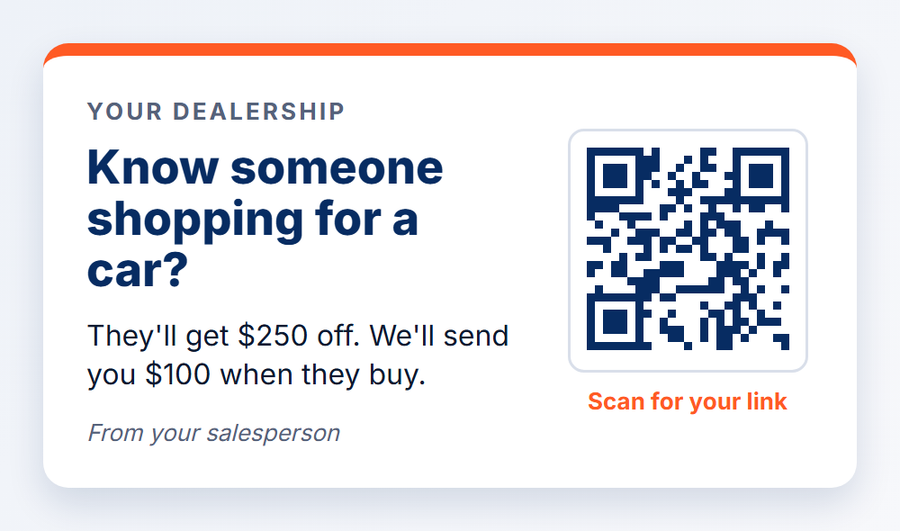
The person who sold the car is there at the happiest moment of the deal, and the service lane sees that buyer for years after. The salesperson starts the ask in person; the program's follow-ups bring the link and reminders, so nothing rests on memory. Give every salesperson and service writer their own link and a QR card. A buyer can then join on the spot, and the right person gets credit.
What to say at delivery: "Enjoy the new car. If anyone you know is shopping, here's a card with your link. They'll get $250 off, and we'll send you $100 when they buy." Swap in your own offer.
8. Watch shares before sales
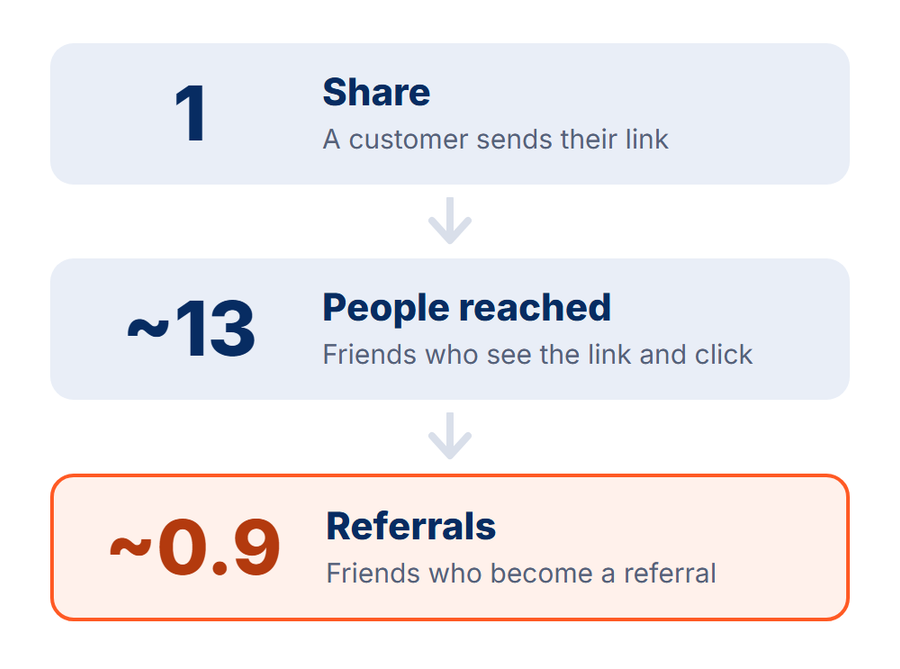
Cars sold are the last number to move. So watch shares first (that's each time a buyer passes their link on), and how many friends those shares reach. In our June 2024 data, one share reached about 13 people and led to about 0.9 referrals, across all program types on our platform.
If shares climb, sales follow. Say shares dip for a month: that's your cue to check whether the asks at delivery have slipped.
4 real car dealership referral programs
What 4 dealerships' referral pages offered in November 2026:
| Dealership | The referrer gets | When it pays |
|---|---|---|
| Exclusive Motorcars (Maryland) | A $150 check; 5 referrals pay $750 | Mailed within 30 days of the friend's purchase |
| Irwin Automotive Group (New Hampshire) | $100 | When the friend buys |
| Lange & Fetter Ford (Alberta) | $100 toward their next car or service | Once the friend completes a purchase |
| Galaxy Auto Place (New York) | A gas card | After the friend's purchase |
All four pay only once a car is sold. None of them states an offer for the friend, which leaves room for a dealership that makes this offer to stand out from the crowd.
Referral software for car dealerships [Free Tools]
You can run a program by hand, build your own, or use software. The first three options below are free tools of ours.
| Option | Good for | The catch |
|---|---|---|
| Manual referral tracker | A few referrals a month at one store | Links, follow-ups and checks are all by hand |
| Referral link and code generators | Giving each buyer something to share | No tracking or rewards on their own |
| Referral program workbook and fee calculator | Planning rewards and timing before you start | They plan the program; they don't run it |
| Building it yourself | Dealer groups with developers to spare | You build and maintain every part |
| Referral software | Running it every week across rooftops, with the busywork automated | A monthly cost |
How Referral Rock runs it for car dealerships
The feature that fits dealerships best is referral program recruiters. Each salesperson and service writer gets their own portal and link. At delivery or checkout, they sign up the buyer or service customer from a phone, and every referral that follows is credited to them.
You see which stores and which people bring in buyers, so you can thank your best askers. The rest runs in the background. New buyers come in from a regular file upload and get invited on the days you choose. Each reward waits until your sales manager marks the car sold.
Every plan includes a program advisor who helps set it up. See how it works for dealerships and auto businesses.
Start with your next delivery
You don't need a big launch. Hand your next buyer a card with the friend's offer at delivery. Ask again at their first service, and pay when that friend buys. Then add your past buyers.
If you're unsure a program fits your store yet, the readiness check takes a few minutes.
About the author
Referral Rock Editorial is the team behind Referral Rock's guides and templates on referral, affiliate, partner and brand ambassador programs. Today's team writes, reviews and updates them, building on work by former staff and freelance writers over the years.