Most articles about types of referrals treat them like five competing flavors to pick from. They’re not. Direct referrals are the foundation. Email, social, and incentive-based programs are channels and structures for amplifying that foundation. And reviews? Those aren’t really referrals at all — they’re social proof, which is a different beast.
Here’s how each one works, what it actually does for your business, and where it fits in a real referral program.
1. Direct referrals (word of mouth)
Direct referrals are word of mouth — the original referral. One person tells another about your business, in conversation, no link or campaign required. They’re cost-effective, they convert at high rates, and they’ve existed since businesses have existed.
But direct referrals don’t just happen. They’re earned through one or more of four drivers:
- Product — does it exceed expectations, save time, take away pain?
- Service — how do you treat people, especially when something goes wrong?
- Value — does the customer feel like they got more than they paid for?
- Story — is there a personality, a narrative, something that resonates?
The best businesses nail two or three of these. Being exceptional at one can be enough.
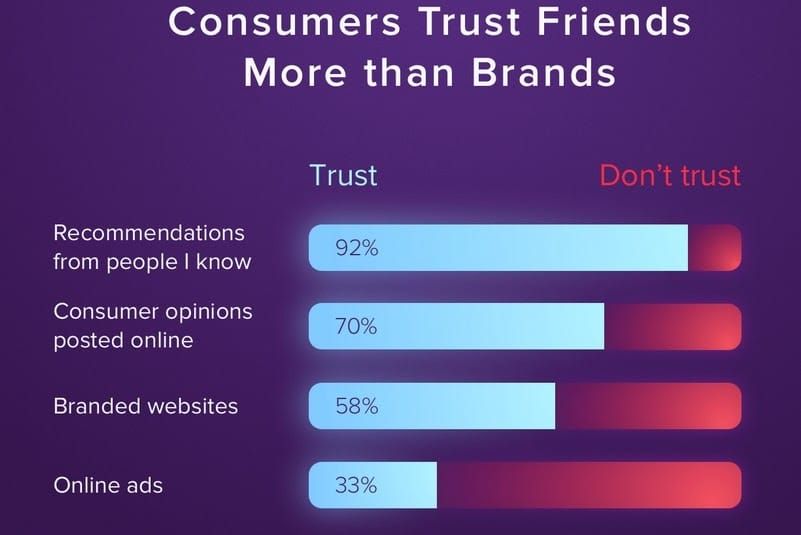
When you’ve earned that conversation, customers refer you without thinking — you’re the obvious recommendation. And when they’re choosing between an online review from a stranger and a recommendation from someone they know, the personal recommendation wins almost every time
Example: Zappos
Zappos calls itself “a service company that happens to sell shoes.” Most companies pour profits from their word-of-mouth success into new marketing campaigns. Zappos pours theirs back into customer service — and the word of mouth keeps compounding.
No automated phone systems. No call-time limits (their longest customer call lasted 10 hours and 51 minutes). No scripts. Reps empowered to make judgment calls without escalation. The customer service is the marketing — and direct referrals follow.
That’s the Service driver doing its job.
2. Email referrals
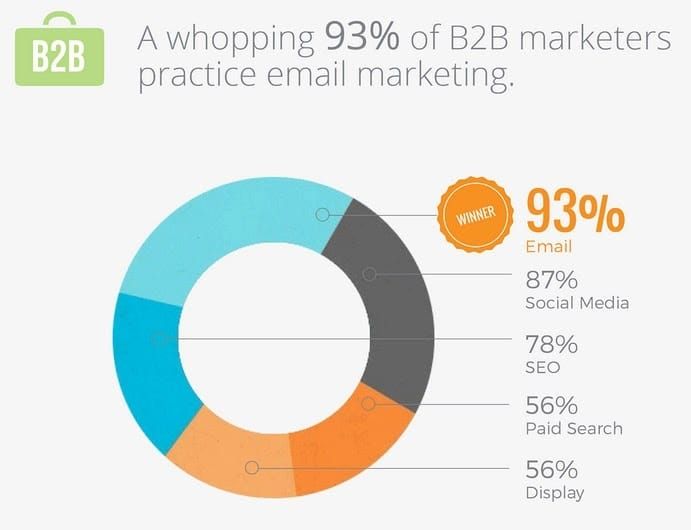
Email referrals aren’t really a separate type. They’re a channel. They’re one of the touchpoints that keeps your referral program in front of customers continuously, instead of as a one-time launch announcement.
The mistake most businesses make is treating email referrals as a campaign. Blast the list once, watch the spike, then move on. The list goes stale in two or three months. The volume that actually moves a referral program comes from sustained, low-friction touchpoints with new and recent customers, not from periodic reminders to old ones.
Email marketing works for referrals because it’s a channel you control end to end. You can trigger it at the right moments (post-purchase, post-service, milestone hit), and you can design the message so the friend understands what they’re being given, not just what the sharer earns.
Example: Doordash
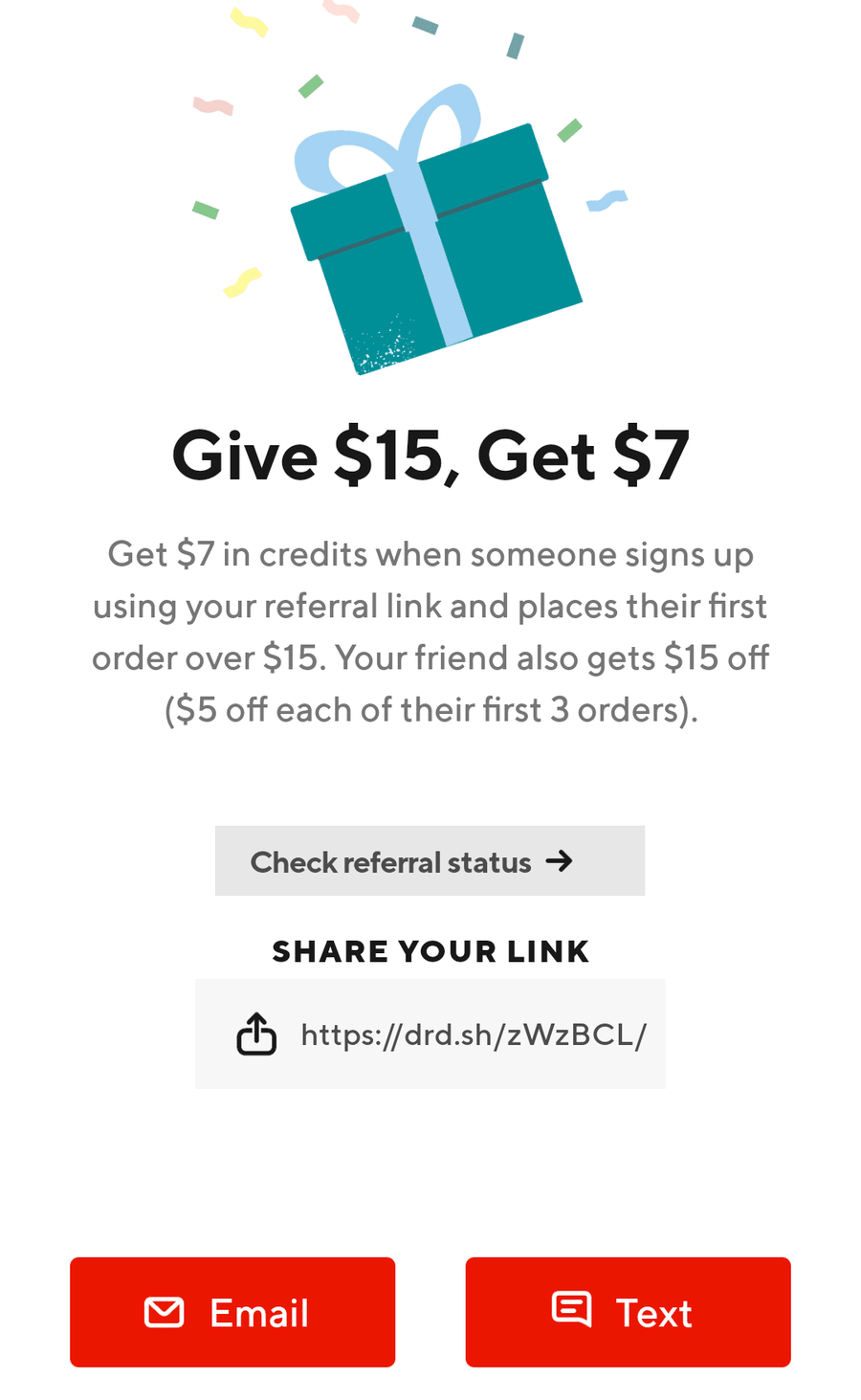
Doordash’s referral email is a clinic in clarity. The bold headline tells the sharer what they give first, then what they get. The copy-paste link makes it easy to share instantly. The send buttons are impossible to miss.
What’s worth noticing: the design leads with what the friend gets, not what the sharer earns. That framing is what we call the Friend Factor (it’s a gift, not an ask). We’ll come back to that in the next section.
3. Incentive-based referrals
This is where most businesses spend the most time and get the most wrong. Incentive-based referrals tie a reward to the act of referring: a discount, a credit, a gift card, a free product. The intent is to encourage customers to share. The execution usually undermines it.
The default approach: focus on what the sharer earns. “Refer a friend, get $20.” It’s transactional. The sharer feels like they’re selling out their friend. The whole thing feels calculated.
The reframe: focus on what the friend gets. The sharer isn’t earning a payout, they’re giving their friend a gift. All messaging, including the program title, emails, and offer pages, should center on what the friend receives. Done right, the share isn’t an ask. It’s a give.
Two practical rules that follow from the reframe:
- Two-sided rewards work better than one-sided. When both the sharer and the friend get something, the sharer feels like they’re sharing a benefit, not collecting a finder’s fee. A 15% discount that extends to both parties beats a $20 credit just for the sharer. (See: incentive-based referral programs.)
- Keep the sharer’s reward off the friend-facing message. If the friend’s email mentions what the sharer earns, you’ve turned the gift into a transaction. The sharer’s reward stays in the sharer’s dashboard, thank-you email, and UI. Never in the message the friend sees.
Example: Harry’s
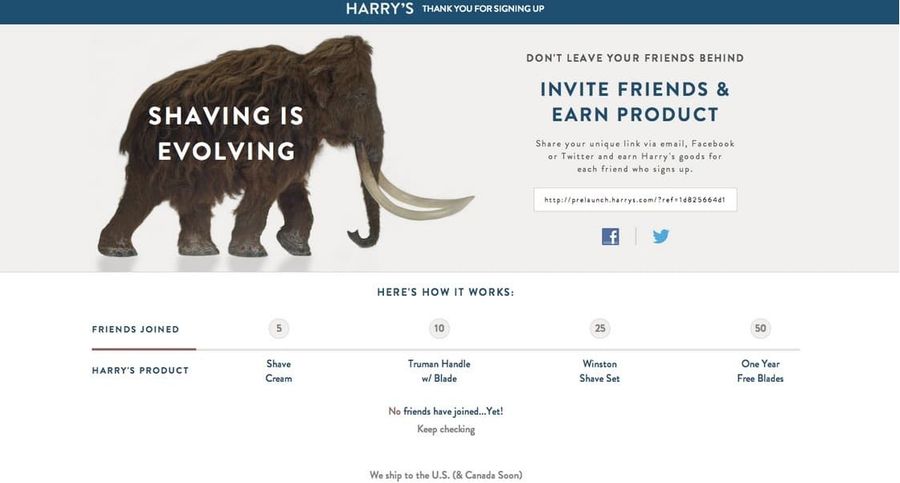
Harry’s launched its men’s grooming brand by spending months collecting 100,000 email signups before the company even opened. Each signup got redirected to a referral page with a gamified referral element:
- 5 referrals → free shaving cream
- 10 referrals → Truman handle with blade
- 25 referrals → Winston shave set
- 50+ referrals → a year of free replacement blades
The rewards were tiered, tangible products from the brand itself, not generic cash credits. Essentially, something you’d actually want to give or receive, not something that just feels like a payout. By the time Harry’s launched, the brand had a built-in audience and lots of referrals ready to go.
Source
4. Referrals from reviews
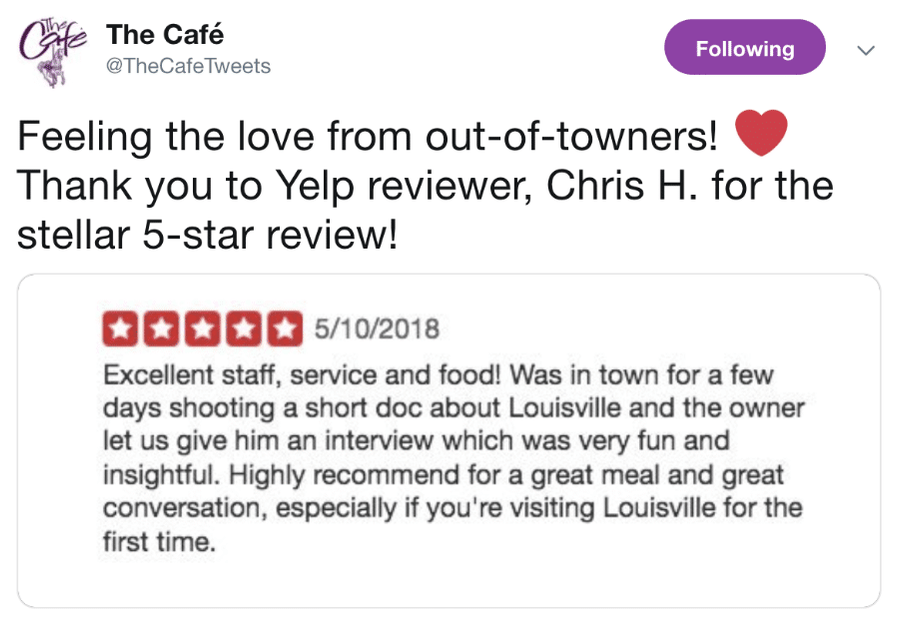
Here’s where we push back on the category itself. Reviews aren’t really referrals. They’re social proof, which is a wider category.
A referral is a personal trust transfer: someone you know recommends a business to you, by name, in a one-to-one or one-to-few conversation. A review is a public signal from a stranger, designed to influence other strangers. Both support the same goal (getting more customers), but they work through different mechanisms. Conflating them leads to confused strategy.
That said, reviews matter. They’re a form of referral marketing in the loose sense. They signal that other people trust you, which makes new customers more likely to convert. To get them: claim your pages on Google, Yelp, and any platform relevant to your industry. Then start asking customers to review your business. Your loyal ones will move quickly, the rest may need a nudge. Tools like NPS software help you find the right customers to ask in the first place.
Example: Zendesk
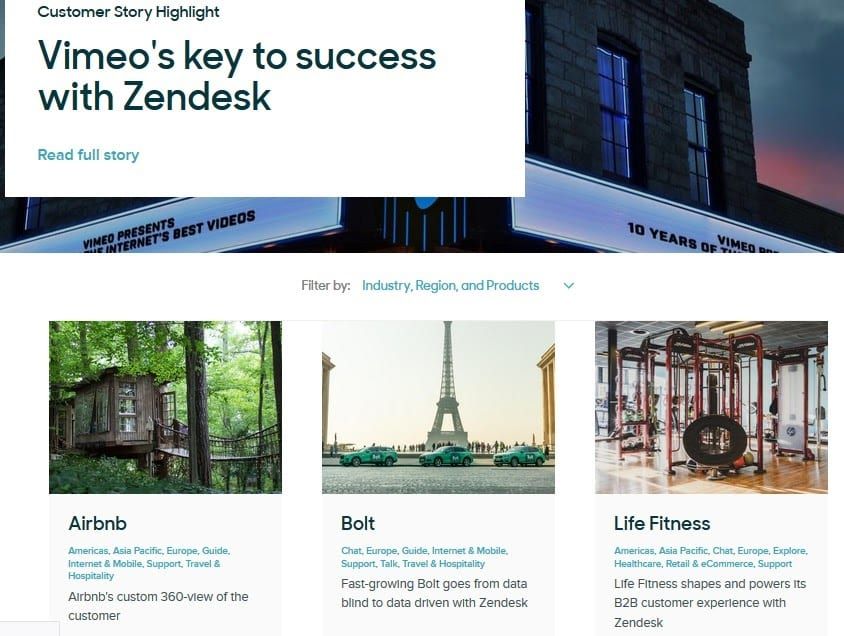
Zendesk doesn’t treat reviews as quotes to be plucked. It treats them as customer stories: full case studies, with the challenge, the solution, and the outcome laid out. Each story shows which Zendesk product the customer used and how it helped.
The result is something halfway between a review and a referral. It’s social proof from a named customer (review), but framed as a story a prospect can map onto their own situation (closer to a referral). It’s the strongest version of “referrals from reviews.” These reviews are detailed enough to do the trust-transfer work a referral does.
5. Social media referrals
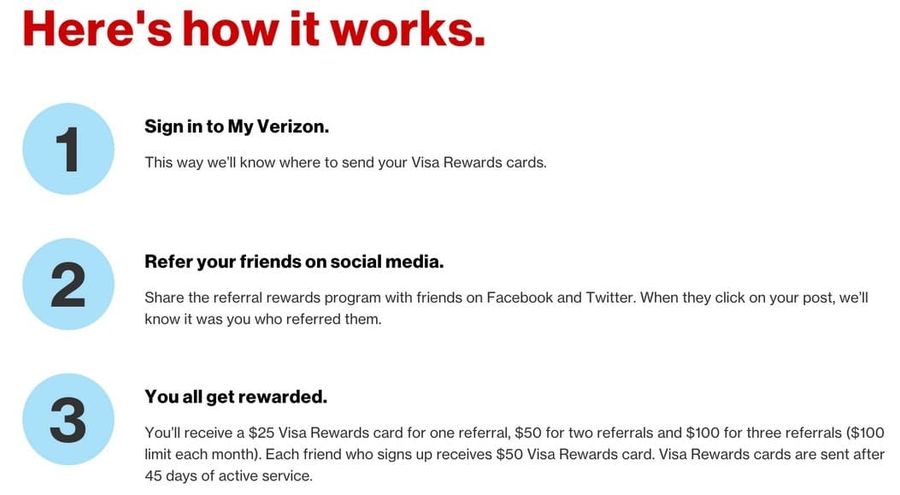
Like email, social media referrals are a channel, not a separate type. The advantage is reach. A single share puts your offer in front of an entire network at once, instead of one conversation at a time.
The catch: social shares carry less weight per share than direct referrals. A friend tagging you in a post is closer to a recommendation than a share to their full audience, which lands somewhere between an ad and a personal endorsement. The math still works — volume compensates for lower per-share trust — but only when the share is genuinely something worth passing along.
Example: Pepsi’s #sayitwithPepsi
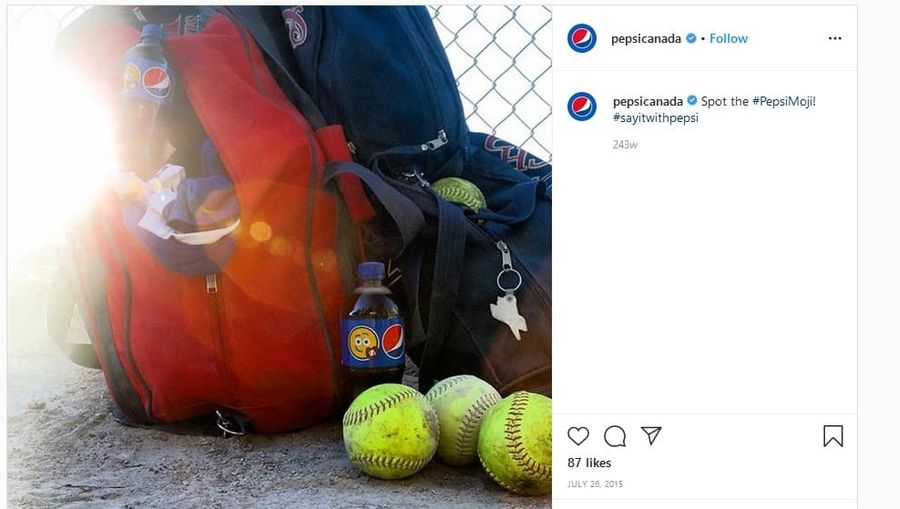
Pepsi’s #sayitwithPepsi campaign paired influencers with a branded hashtag and emoji-labeled bottles. As influencers posted, Pepsi tracked engagement and amplified the strongest content through additional influencer waves. The campaign generated 46 million impressions and 50,000 engagements.
A note on what this is, and isn’t: influencer-driven social campaigns sit closer to ambassador or affiliate marketing than to a customer referral program. The sharer isn’t a customer recommending the brand to a friend. It’s a paid partner amplifying it to a broader audience. Useful, but a different motion. For a true social referral program, the lever is making it easy for actual customers to share, not staffing up an influencer roster.
Key takeaways
The five types above are variations on the same underlying motion. You’ve earned a conversation, and now you’re capturing or amplifying it. The type that fits your business depends on how customers already share and what channels you can sustain. But none of them work without the foundation underneath: a product, service, value, or story that customers actually want to talk about.
If that foundation is in place, a referral program turns word of mouth from random to reliable. If it isn’t, no “type” of referral will fix that.