![How to Start a Newsletter Referral Program [+ Examples]](https://cdn.sanity.io/images/x9q04aql/production/f8cf46e1861665623aacb7ee35766b179327c71c-900x600.jpg?w=420&auto=format)
If subscribers are already recommending your newsletter to friends, a referral program turns that casual habit into a reliable growth engine. It captures what’s already happening and makes it easy to track, reward, and scale. If no one’s talking about your newsletter yet, a program won’t manufacture that — but if people are sharing, you’re leaving subscribers on the table without one. Here’s how to build a newsletter referral program that works, with examples from Morning Brew, The Hustle, theSkimm, and the Daily PNut.
What is a newsletter referral program?
A newsletter referral program uses strategic word-of-mouth marketing to grow your subscriber list. You motivate existing subscribers to recommend your newsletter to people they know, by offering valuable rewards. These personal referrals carry real weight: Nielsen research shows 84% of people trust word-of-mouth recommendations more than any other form of advertising.
The results back that up. Morning Brew grew from 100,000 to 1.5 million subscribers in just 18 months, with 30% of new subscriptions coming from referrals. The Hustle gained 300,000 subscribers in just a few months through its program. theSkimm attributes 20% of its Daily Skimm subscribers to referrals. When done right, newsletter referral programs are a proven way to gain more subscribers through people who already read and enjoy your content.
4 reasons newsletter referral programs work
Why are newsletter referral programs so successful? Below, we list some of the top benefits of running referral programs for an email newsletter:
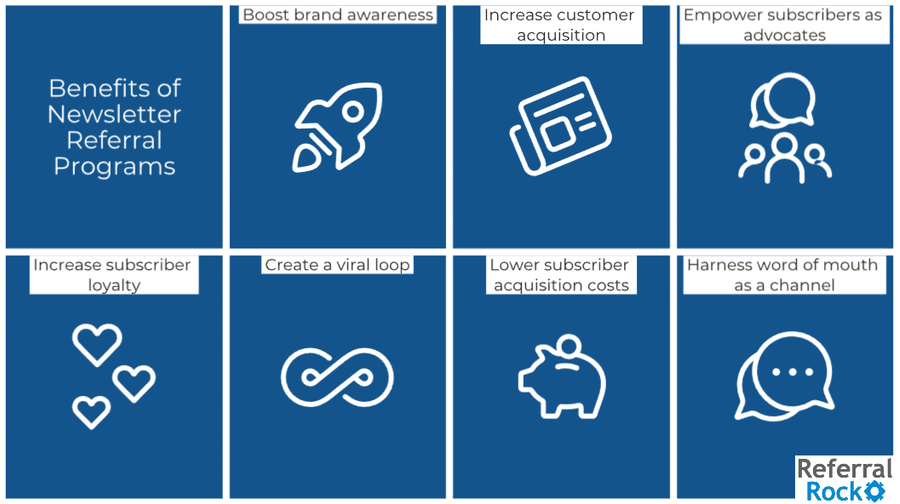
- Trusted recommendations bring in better subscribers. Your subscribers’ peers trust what they say more than they trust a company’s mass promotions. When a friend refers someone to your newsletter, that person is far more likely to subscribe — and stay subscribed.
- They create a viral loop. As we’ve seen with The Hustle and Morning Brew, referral marketing can create a viral loop: subscribers refer friends, who become subscribers and refer their own friends. The cycle keeps going, creating a system where your subscriber base continues to grow.
- They reduce acquisition costs. Referral programs encourage existing subscribers to promote your newsletter for free. You only pay rewards for successful sign-ups, making this far cheaper than ads or paid acquisition.
- They make word of mouth measurable. Your happy subscribers are already talking about you. A good referral system lets you track that word of mouth in an actionable way and use the data to improve.
Referral software for newsletters [Free Tools]
These referral tools for newsletters are a free and easy way to help you start your referral program.
Want a automated referral system for your newsletter business? Uncover referrals in plain sight to smooth out business lulls, without losing focus on your real day to day work helping customers.
Check out our referral program software - done right.
Is your newsletter ready for a referral program?
Not every newsletter is ready for a referral program. Before setting one up, the key question to ask is: are subscribers already recommending you to people they know?
That’s the real readiness signal. A referral program captures and systematizes what’s already happening informally — it doesn’t create word of mouth from scratch. If subscribers aren’t sharing your newsletter organically, adding a program won’t change that.
What makes a newsletter worth recommending? Usually one of these:
- A distinct voice. Subscribers feel like they know the author. They’d describe the newsletter to a friend the same way they’d describe a person.
- A useful content angle. It covers something specific well enough that readers feel smarter or better-informed after each issue.
- Consistent quality. It shows up reliably and doesn’t waste their time.
If your newsletter has that foundation, a referral program is a smart next step. If it doesn’t yet, focus there first.
Setting up your program: 4 key steps
Once you’re ready, a few best practices separate the programs that gain traction from the ones that go nowhere. Here are the ones used by the most successful newsletter referral programs.
1. Design a cost-effective rewards structure
Referral rewards are key to motivating subscribers to share, but you must be strategic. For your program to be sustainable, it needs to minimize costs while still giving subscribers a reason to refer — especially if your content is free and most of your revenue relies on ads or sponsorships.
The most successful newsletter referral programs use tiered, cumulative rewards. Subscribers earn different rewards for each referral, with bigger prizes the more they refer. Email newsletters often add gamification to motivate subscribers to reach the next tier.
The most important reward in your structure is the first one — not the biggest. As Tyler Denk, senior product lead at Morning Brew, explained to Digiday, Morning Brew “strategically placed [their] awards where they are.” One early reward was stickers at 20 cents apiece. Another was access to a Sunday newsletter that cost nothing to offer: “Our premium newsletter costs $0 for us to produce outside of human capital. It’s free on our end, but it still encourages people to share.”
As a result, while Morning Brew’s average cost to acquire a subscriber is $2–$5, the cost through the referral program is significantly lower.
How to design your rewards structure: Your first tier rewards need to be motivating but cost-effective, and it helps if subscribers need to make multiple referrals before earning their first reward. Some examples of low-cost first-tier rewards:
- Access to exclusive content (a bonus newsletter, ebook, or podcast)
- Small swag (stickers, magnets, notebooks — often under a dollar per piece)
- An invitation to a private online community
For later tiers, offer larger swag like t-shirts and mugs, which cost relatively little in bulk but feel substantial to the subscriber. Reserve your best rewards for super-advocates who send high volumes of referrals.
If you’re planning on using a tiered structure, choose your referral software carefully. Some options are only designed for simple ecommerce rewards and can’t handle tiered programs. Referral Rock can manage any rewards structure you choose, including tiered referral programs, and lets you set up custom rewards — including swag — for maximum flexibility.
Use our referral reward calculator to determine the reward values you should offer, for the best ROI.
One thing most programs miss: think about the friend’s experience, not just the referrer’s. Most newsletter referral programs focus entirely on what the referrer earns — the rewards, the tiers, the gamification. But the person being referred matters just as much.
When someone clicks a referral link from a friend, they should land somewhere that feels personal, not like a generic promotion. If the landing page shows who referred them — “Taylor sent you this” — it reinforces the trust that came from the personal recommendation. Without that, the referral is indistinguishable from any other marketing message, and the conversion advantage disappears. Frame what the subscriber is giving their friend, not just what they’re earning for themselves.
Here’s more on how Referral Rock can help you optimize rewards
2. Promote your program inside every issue
From our years of referral marketing experience, one factor either makes or breaks a program: promotion. A referral program won’t gain any traction if your subscribers don’t know about it. And they won’t remember it exists if you only mention it at launch.
The most effective place to promote your program is right inside the newsletter itself — in every issue. Sharing on social media and through dedicated referral emails can help, but the number one way to reach your subscriber base is where they’re already reading.
You don’t need to use the same approach or the same wording every time. In fact, varying your referral messaging helps keep it from going invisible. Options for how to feature it in each issue:
- A dedicated section at the end of every email (the Morning Brew approach)
- A small banner in the body
- A sentence or two in your intro (use sparingly)
- A call-to-action button at the top that links to your referral hub
Whichever format you choose, adding a line or two in every issue is what keeps the program top-of-mind. Keep reading to see how the best newsletters promote their programs.
3. Make sharing easy
If your program is easy to find and share, people will share. Make sure subscribers can learn about your referral program and share your newsletter in as few steps as possible.
The best way to do this: include each subscriber’s unique referral link directly in every email, in a spot that’s easy to find. This lets subscribers instantly copy and share it however they prefer — text, email, social, wherever they’re most comfortable.
For subscribers who want more context before sharing, a referral landing page fills the gap. It should cover the key information:
- How the program works and what rewards are available
- How to share (and on which channels)
- Where to track referral progress
- The subscriber’s referral link, for easy copying
Keep instructions simple, with a clear call to action. Referral Rock’s One Click Access links let subscribers instantly access their program landing page without signing up or logging in. Include these alongside direct referral links in every newsletter and program email for maximum ease of sharing.
Here’s more on how Referral Rock offers the best referral experience to your subscribers
4. Automate with referral software
Building a referral program completely from scratch — the way Morning Brew did — is possible but too time-consuming for most businesses. Referral software handles the operational work automatically: tracking referrals, attributing them to the right subscribers, and distributing earned rewards when conditions are met.
Newsletter referral software generates unique referral links for every subscriber, which they can easily copy and share anywhere. The referral codes within those links let the software track and report on key metrics, which you can use to refine and improve your program.
Referral Rock integrates with over 50 key tools to further automate the referral process. If you send newsletters using an email delivery system, you can integrate it with Referral Rock so subscribers can instantly access and share their unique referral link. We integrate with MailChimp, Klaviyo, HubSpot, ActiveCampaign, Emma, and other leading email platforms.
We also let you measure the brand awareness your subscribers generate — even when their friends don’t sign up for your newsletter right away — so you know the full impact of referrals. Plus, a dedicated onboarding specialist will guide you through every step of setting up your program, following best practices.
Here’s how we can help you create a referral program that runs on autopilot
The best newsletter referral program examples
Now for some inspiration for your own newsletter referral program. We’ve handpicked four of the most successful referral programs from email newsletters, and broken down exactly why they’ve worked so well.
1. Morning Brew
Morning Brew, a daily newsletter for young business professionals, runs one of the most successful newsletter referral programs, a case study for any newsletter wanting to start a referral program of its own.
Thanks to their program, Morning Brew was able to grow its revenue by $10 million in just one year. The newsletter also jumped from 100,000 to 1.5 million subscribers in 18 months, with 30% of those new subscriptions coming from referrals.
What makes the Morning Brew referral program so successful? Morning Brew places most of its referral promotions within the newsletter itself, to remind its existing subscriber base of the program. At the end of every daily edition, a dedicated section explains how sharing with friends will earn subscribers branded rewards, such as a Morning Brew coffee mug or t-shirt.
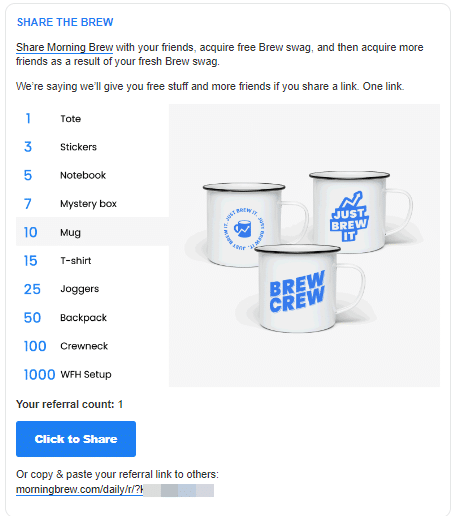
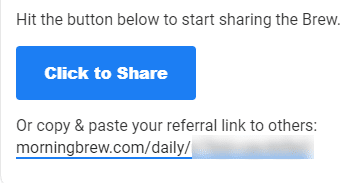
Every email includes the subscriber’s unique referral link – and makes the link easy to find – for easy sharing on any platform.
Morning Brew also includes a call-to-action button that takes subscribers to their personal referral widget, where they can share via email, social media, and (again) directly via referral link. The referral link ensures every new sign up is permanently tied (and credited) to the referring subscriber’s account.
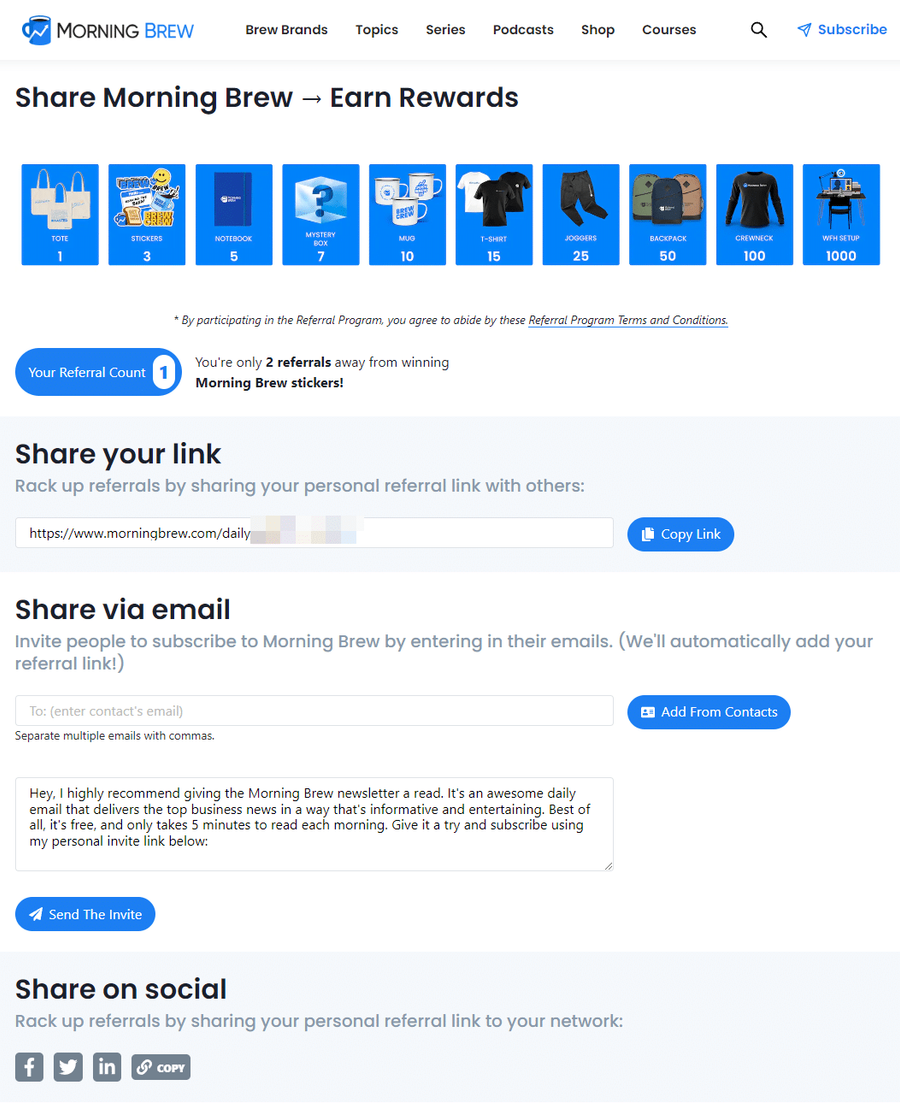
Morning Brew’s referral program uses a tiered rewards structure. Subscribers earn bigger and better rewards as they refer more friends – a great way to keep up motivation.
- Most of the tiers are spaced in a way that makes getting the next reward feel attainable.
- Plus, the newsletter often highlights the subscriber’s current referral count, and encourages subscribers by letting them know how many referrals they need to earn the next reward. Subscribers can also find this info in their referral hub.
- They’ve also offered the ultimate work-from-home makeover as a top reward (for 1,000 referrals), letting even the most prolific referrers have a top incentive to work toward.
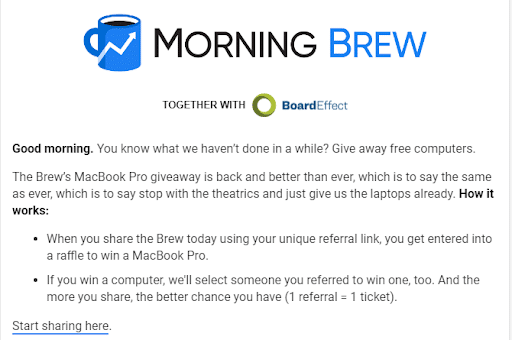
In addition to their regular referral program, Morning Brew often runs flash contests, where referring within a certain time period enters the referring subscriber and their friend into a MacBook Pro giveaway. These contests run several times a year, giving subscribers even more incentive to refer others. When the contest runs, Morning Brew promotes it at the start and middle of their newsletter.
(Every now and then, Morning Brew will change things up and place other referral program promotions at the start and middle of the newsletter, in a similar fashion to the MacBook Pro promotion.)
The rewards structure and promotion strategy aren’t the only reason for Morning Brew’s referral program success, though. Morning Brew also uses strategic notifications to motivate referrals from individual subscribers. For instance, they send a “nudge” email if someone hasn’t referred a friend within a week of subscribing, and a “push” email if someone is just one referral away from the next reward (to get them over the hump).
2. The Hustle
The Hustle is another business newsletter known for its creative copy, informative, slightly humorous tone, and top-notch content that distills the news of the day. But that’s not the only reason The Hustle gained its first 300,000 subscribers in a matter of months – its referral program played a huge part in its growth.
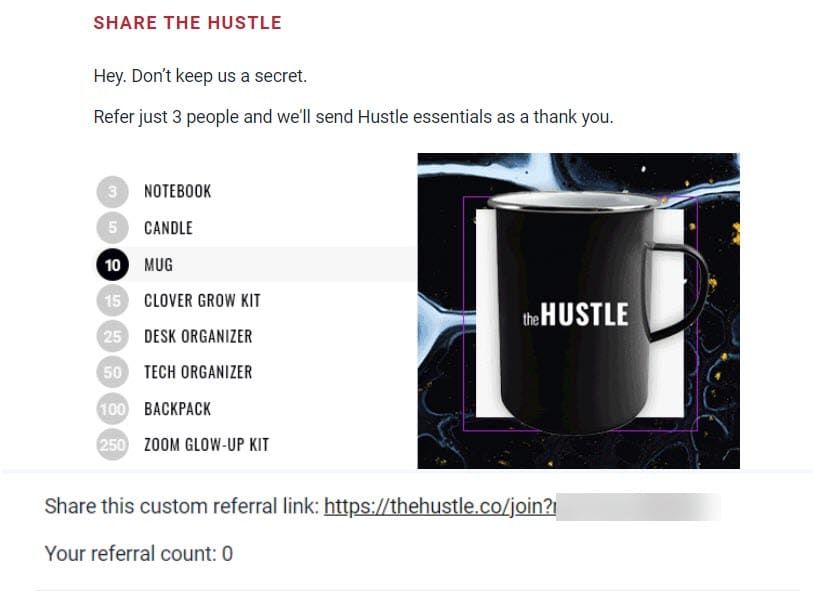
Similar to Morning Brew, The Hustle’s referral program offers tiered, branded rewards. At the bottom of every newsletter, they invite subscribers to share with a personal referral link. Plus, they track the number of referrals the subscriber has sent, so the subscriber knows how close they are to the next reward (an effective motivator).
But some unique touches have made The Hustle’s referral program really stand out from the pack. For instance, at one point, after a subscriber successfully got three friends to subscribe, they were invited to become a Hustle Ambassador. Ambassadors were granted access to an exclusive Facebook group for networking, as well as ambassador-only content. For a personalized touch, loyal subscribers got an invitation right from Sam Parr, the newsletter’s co-founder and CEO, when they were invited to become an ambassador. And the “ambassador” title itself was another way to keep them invested in The Hustle’s success,
Even without the “ambassador” element, the current reward system is just as thrilling, and the tiered system means the more referrals, the more rewards.
- Three referrals earns subscribers a notebook
- Tiers from 5-25 referrals reward advocates with creative Hustle swag to trick out their desk
- 50 referrals means they’ve got a useful tech organizer to keep cords at bay
- 100 referrals earns them a roomy backpack
- 250 referrals earns them a high-value “glow-up” kit for Zoom meetings, recording, and podcasting
The unique rewards make subscribers feel like true insiders, and the tiered reward structure provides even greater motivation.
Every time advocates reach a referral milestone, they receive an email from Sam Parr, thanking and congratulating them for their achievement. This further empowers subscribers and makes them feel integral to The Hustle’s success.
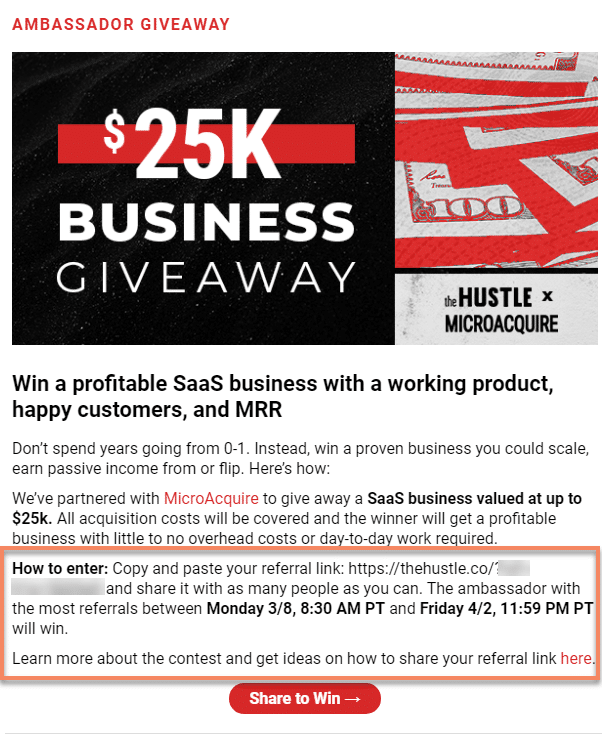
And not to be outdone by their newsletter competitor, The Hustle sometimes runs their own version of a flash referral contest. But instead of holding a drawing, The Hustle awards an amazing prize to the super-advocate who makes the most referrals in a given time period. One time, they even awarded a business worth $25,000 to the person who made the most referrals in a month’s time.
Thanks to its crafted newsletter referral system, The Hustle has enjoyed smashing success. According to Digiday, The Hustle’s referral program “accounts for at least 10% of the free newsletter list’s growth,” and they’ve recruited over 10,000 ambassadors through the program.
3. theSkimm
As one of the first email newsletters to start a referral program, theSkimm knows a thing or two about driving word of mouth. Their Daily Skimm newsletter’s content and tone, perfectly aimed at distilling hot topics for young women, already got their subscribers talking. And a referral program was the perfect way to accelerate all the sharing.
theSkimm’s referral program acts as a feeder for its perk-filled brand ambassador program. Subscribers gain access to a personal referral link from the moment they get their first newsletter. In fact, part of the welcome email is dedicated to introducing the referral program, and concisely tells subscribers everything they need to know to start sharing. Subscribers can then share the referral link any way they please, including through email and social media.
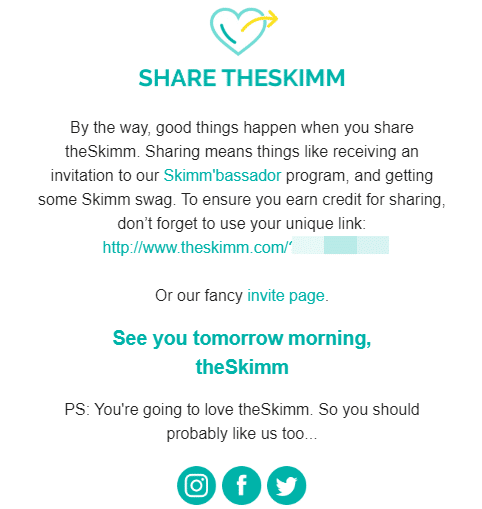
theSkimm also injects their signature tone into their newsletter’s “Skimm Share” referral section, included at the end of every issue. The section’s basic format always remains the same (with a “share” button, referral tracker, and personal referral link for easy sharing). Every day, the company creatively changes up the wording to catch subscribers’ attention, with a new type of friend its readers should refer. Check out two examples below:
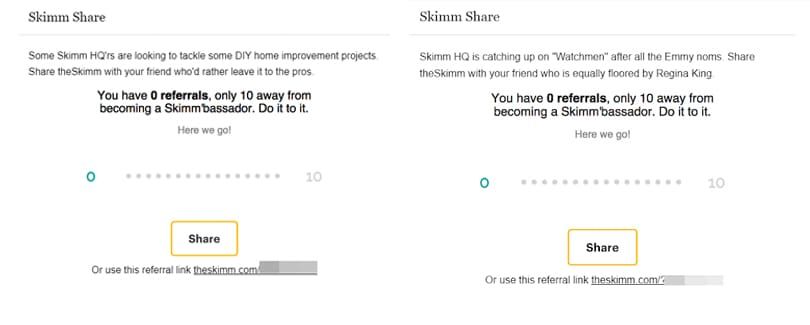
But the rewards – and magic – truly begin once a subscriber successfully refers 10 friends. After 10 referrals, a subscriber becomes a “Skimm’bassador” and gains access to a whole host of incentives. This includes exclusive content, early access to Skimm content and products, membership in ambassador-only groups to help them network and reach their goals, the chance to earn branded swag for more referrals, and access to exclusive events and opportunities. Skimm’bassadors also get to provide direct feedback to the newsletter’s team, making them even more invested in theSkimm’s success. This ensures that theSkimm will continue to wow its most invested subscribers.
Even though access to rewards and perks is fairly gated, it hasn’t deterred theSkimm subscribers from referring others. Referrals account for around 20% of Daily Skimm subscribers.
4. The Daily PNut
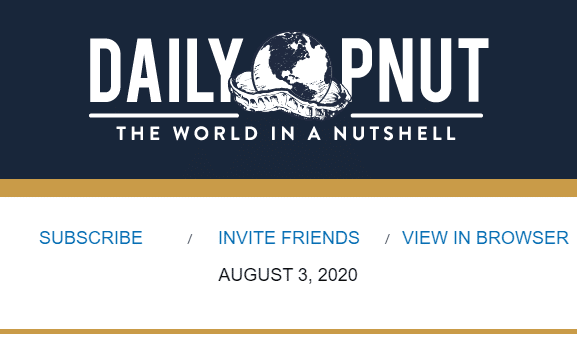
The Daily PNut’s referral program follows the same tiered referral reward pattern of some of its competitors, but it stands out from them in three ways: First, at the top of every newsletter, the PNut includes an “invite friends” button with a link to their referral landing page. This lets subscribers learn more about the referral marketing campaign without needing to scroll all the way to the bottom of the email. A simple yet effective promotion.
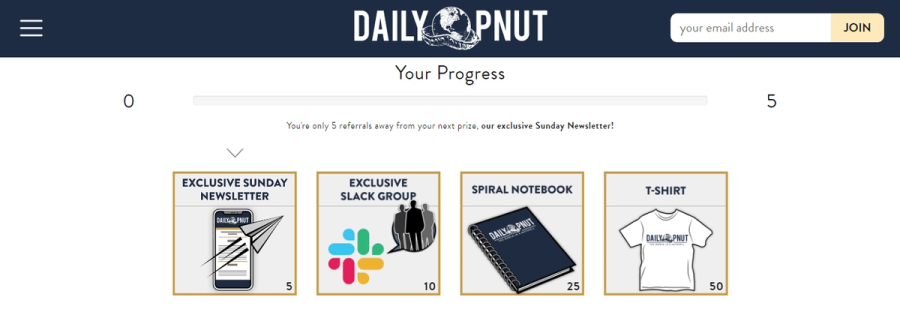
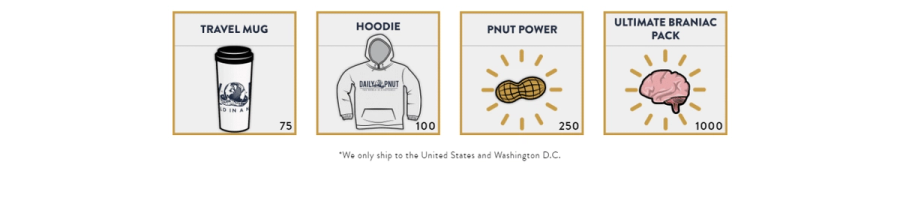
Second, some of the PNut’s rewards are especially unique and valuable to their audience. This includes membership in an exclusive Slack discussion group (for 10 referrals), and year-long subscriptions to several top news outlets, such as the New York Times (250 referrals).
Third is the way the PNut displays the rewards: The referral landing page layout stays clean, starting with simple illustrations of each reward. Clicking or tapping on each reward brings up its creative description. The fun “PNut Power” and “Brainiac Pack” rewards especially entice you to click to learn more, since they require the most referrals but aren’t easily explained from the illustration.
Plus, the PNut uses a referral tracker and adds a message about the subscriber’s next available reward. While this is done in most other top newsletter referral programs, the PNut pairs the tracker with an animated arrow that points to the next referral reward the subscriber can earn.
Start your newsletter referral program
The newsletters that grow through referrals share one thing: subscribers who already love what they’re reading. Morning Brew, The Hustle, and theSkimm didn’t build programs and hope for the best — they built audiences worth recommending first, then made it easy for those audiences to spread the word. If your newsletter has that foundation, a referral program is the next logical step.

About the author
Content Specialist & Referral Program Advisor
Jess has been with Referral Rock since 2019. She has been a critical part of our content team and has been responsible for writing, reviewing, and maintaining our content library as well as our product support documentation. She is meticulous in her research, writing, and review process. More recently she has helped review and draft referral program messaging for our customers. This has helped her create a unique feedback loop where she sees referral programs in action, helps launch them, and also contributes to our articles.