A tutoring referral program, or a test prep one, gives the families you already help a simple way to pass you along. Each parent gets a link or code. The referred friend's family gets free hours or a discount. The parent who shared gets a thank-you after the new family's first paid session.
It fits tutoring well because parents talk about results. A raised grade or a better SAT score comes up at pickup and in the parent group chat. Below: the 6 signs you're ready, 8 steps to run it, rewards that fit, and 6 real programs. This guide is about families referring families to you; a teacher sending a student to a tutoring center is another kind of referral.
The call quotes here come from our 2026 sales and customer calls, shared without names.
Why referrals fit tutoring and test prep
Tutoring wins word of mouth on two things: the tutor and the result. Parents remember the tutor who finally got their child to like math. And a result is a story they want to tell. Some parents keep tutoring quiet at first, but once grades turn around, most are glad to talk about it.
A friend has to need tutoring before a referral can happen, and most families don't until a report card or a test date comes along. So the program stays in front of your families for months, ready for the day another parent says "my son is struggling in chemistry." A program amplifies the word of mouth you already have; it won't replace your other marketing.
Each new family is worth a lot. Packages are big purchases: C2 Education's referral offer applies to packages of 100 hours or more. Many families stay a school year or longer. That shows there's room for a real reward, but it doesn't set the amount (more on that in step 2).
6 signs your tutoring business is ready for a referral program
A program works best when parents already recommend you. Check these 6 signs first, here in tutoring terms.
| Sign | What it looks like for a tutoring or test prep business |
|---|---|
| 1. Word of mouth | New parents say "my friend's daughter worked with you" or ask for a tutor by name |
| 2. Easy to talk about | Parents share score jumps and better report cards without being asked |
| 3. Community | Your families know other families at the same school, team or test date |
| 4. A service team | Tutors show up prepared, and the front desk answers parents quickly |
| 5. Business software | Families, sessions, packages and payments live in your scheduling, billing or CRM (customer records) tools |
| 6. Steady marketing | Search, school events and seasonal campaigns bring in new families every month |
If several are missing, work on those first. The readiness check walks through all 6 in a few minutes.
How to run a tutoring referral program in 8 steps
These steps follow the order our program advisors use to set up a program, answered for tutoring and test prep.
1. Invite every family after the first few sessions
Start with the families you teach today. Then add each new family a few sessions in, once they've met their tutor and seen how it works. One test prep company in our calls sends the invite about a month into a family's first package.
Invite every family, including the quiet ones, since you can't easily tell who's happy, and sorting them first only delays things. A good progress report or a five-star review earns a personal note on top. Each parent gets a personal link right away, with no form to fill in and no password. They can pass it on the moment another parent asks who you are, which is what we call keeping access open.
2. Give the new family free hours, and thank the parent who shared
Start with the friend's side. Free hours turn "you should call our tutor" into a gift: "Use my link for 2 free hours with our tutor."
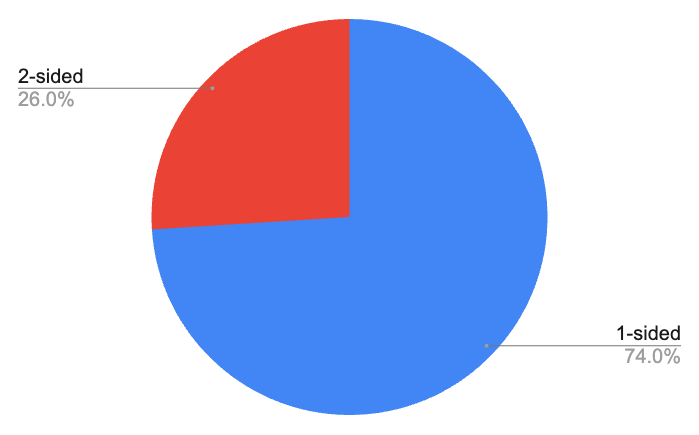
In our November 2024 analysis of 339 referral programs, 54% gave the friend nothing. That's a missed opportunity, because the friend's reward is what makes the ask feel like help instead of a sales pitch.
A reward for the friend also brings in more new customers. In a 2020 field test, 4.77% of a subscription company's customers asked to share brought in someone new when the friend got a free month. When only the sharer got the reward, 1.71% did.
For the parent who shared, pick something they'll use. Tutoring has three good options:
| Reward | Good for | Watch out for |
|---|---|---|
| Free hours or sessions | Both sides, paid in tutor time | Set when they can be used, such as after paid hours |
| Lesson credit or money off | The new family's first package, or the parent's next bill | Credit only helps families who are still enrolled |
| A gift card or check | Parents whose child is finishing, and adult students | A referral fee is income for whoever receives it. Ask your accountant how to handle the payouts. |
Pick amounts people notice and your margins carry easily, then leave them alone. Bigger isn't always better: past a point, a bigger reward brings in less profitable families and more fraud. For more ways to reward both sides, see our guide to referral rewards.
3. Let your tutors refer families too
Your tutors talk to parents after every session, so they hear first when a sibling or a friend needs help. Give each tutor a personal link they can text or email, and give the family a tutor sends the same free hours as any other. A tutor at capacity can still pass a family to a colleague and get credit for it. Tailored Tutors, a UK tutoring company, pays parents and tutors the same flat bonus.
An ask from the tutor who just watched a student turn a C into a B is about as personal as it gets. The tutor starts it in person or by text, and the program's emails follow up with the link and reminders. That way nothing rests on the tutor's memory, and you can see which tutors bring in families.
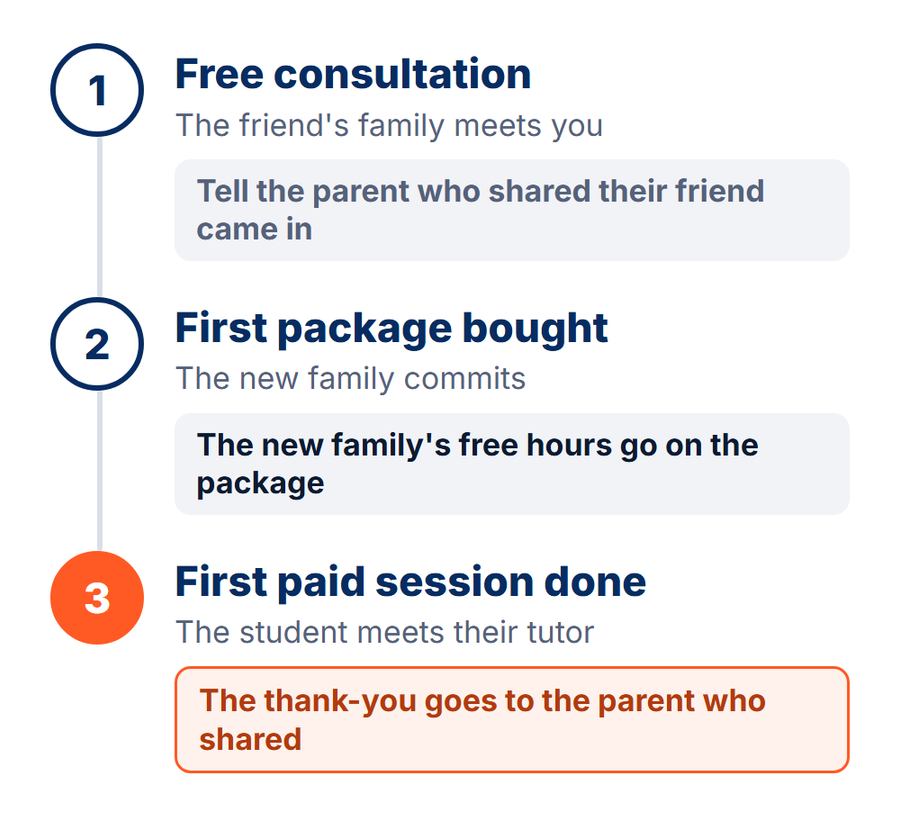
4. Pay the reward after the friend's first paid session
Wait until the new family has sat down with a tutor and paid. By then that family has bought a package and started, so you never pay for a free consultation that went nowhere. Some companies wait longer: Tailored Tutors pays after the 3rd paid lesson. Pick one point and say it clearly on the friend's page and in the invite.
Tell the parent who shared the day their friend signs up, and again when the reward goes out. A quick "Your friend's first session went well, and your 2 free hours are on your account" keeps them sharing.
5. Ask when the student shows progress, then keep asking
We tend to be really proud to share once their student's doing really well.
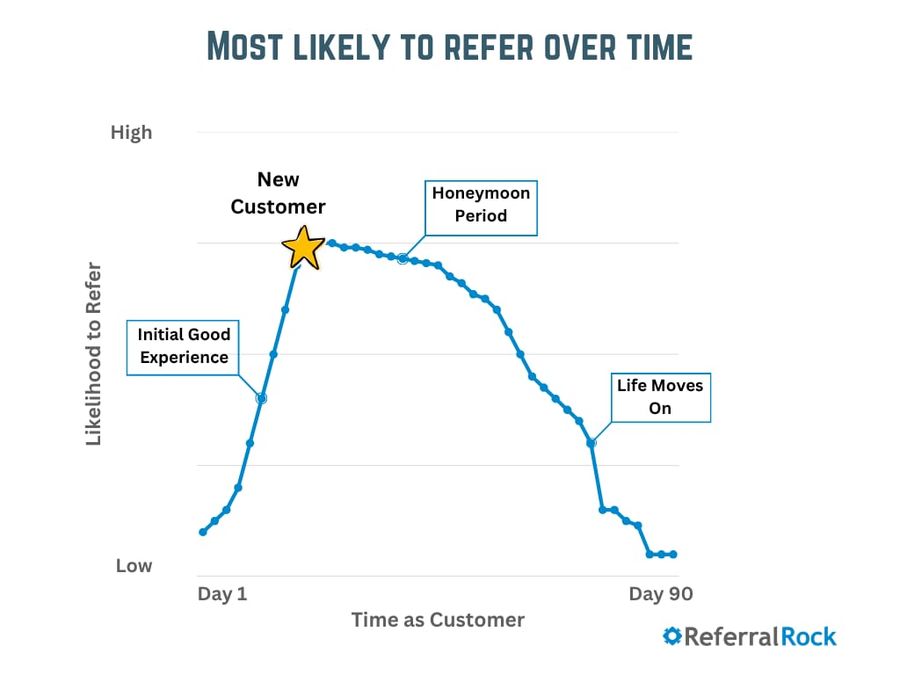
Parents are most willing to share right after good news, and the urge fades as the school year moves on. One of our customers found 86% of their referrals came within 90 days of someone becoming a customer. We call that span the sharing window. Tutoring opens it again with each progress report, each report card and each score release.
So ask early in each window, then follow up gently while it's open, since a single ask is easy to miss. The friend runs on their own clock. A family may not need help until the next test date, so don't put a short end date on the new family's offer.
6. Bring the program up in progress reports, invoices and texts
Most programs get one launch email and then go quiet. Across 952 programs over 9 years, 82% of the ones that stalled did so because promotion stopped after launch. Tutoring has an advantage here, because you already talk to parents every week.
Put the program in 3 to 5 places parents already see, each with a short message and a clear way in. Good places to start:
- Progress reports and score reports. One line under the results: "Know a family who could use this?"
- Invoices and package renewals. The new family's offer and the parent's link.
- The parent dashboard or booking page. A small banner with the parent's link.
- Texts and emails from the front desk. A line after a scheduling note or a session recap.
7. Plan around test dates and the school year
Tutoring runs on the calendar, so your asks can too. Spring SAT and ACT dates, midterms and finals, and report card weeks all bring good news for some families and worry for others. One exam prep business we spoke with runs its program only from August to September and December to January, when students start preparing.
You can keep yours on all year and add a seasonal nudge where it fits. Send an email when scores come out, or add a line to the back-to-school welcome. A family that finishes SAT prep in June is a good one to ask, since their friends may start in the fall.
8. Watch shares before referrals
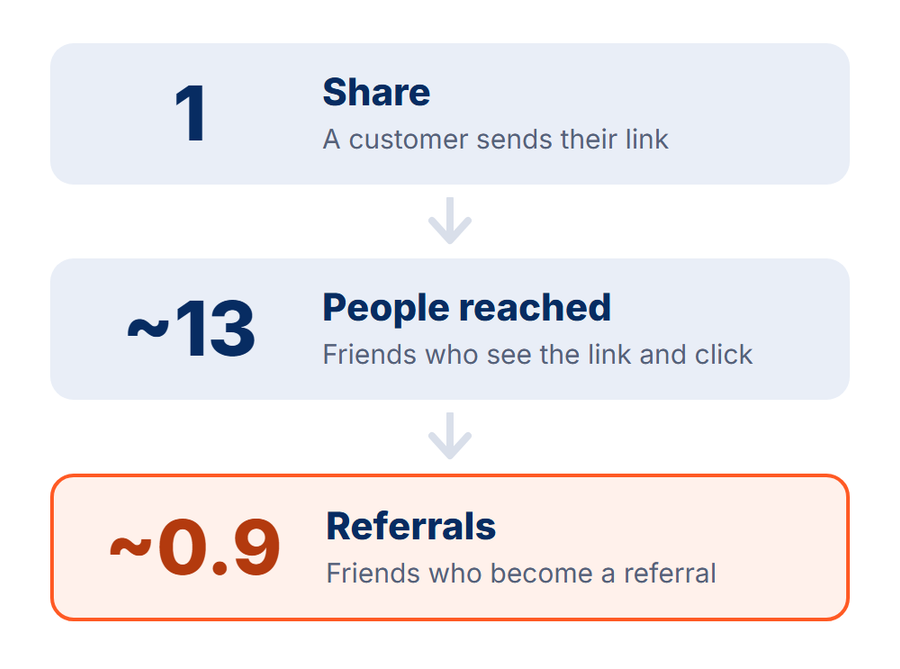
Referrals are the last number to move, so watch shares first and how many people they reach. In our June 2024 data, one share reached about 13 people and led to about 0.9 referrals, across all program types on our platform. If shares climb, new families follow.
Then answer the question owners ask us most: how much are referrals bringing in, and how much are we paying out? Match each referred family to the package it bought and to the reward you paid, so you can see both numbers side by side. For example, one row per referred family: who sent them, the package they bought and the free hours you gave. Our referral tracking guide shows how.
Who else can refer: adult students, teachers and school programs
Parents aren't the only people who send you students. Three more groups come up in tutoring and test prep, and each needs a different thank-you. Whoever sends them, the new family gets the same offer.
- Adult test prep students. People preparing for a graduate or licensing exam often study with classmates. They bought for themselves, so reward them directly, the same way you thank a parent.
- Teachers and school counselors. They send students your way, but a paid reward can clash with their school's rules. Compass Education Group leaves teachers, counselors and consultants out of its paid program. Thank them with a note, and check any reward with your attorney or the school's own rules first.
- School programs. An exam prep company we spoke with has students refer their program director, who can bring a whole class. The program needs no login for students. The reward, a free seat for a student, goes out only after the director has a consultation call.
For students under 18, reward the parent or the family, since they made the purchase. A student can get a non-cash thank-you, like a free session or a small gift. Check any reward for minors against your area's laws first.
What to say after a good score report
A score report gives the tutor an easy opening, while the parent is already glad. Below: a few words for the tutor, and a short text for the parent to send.
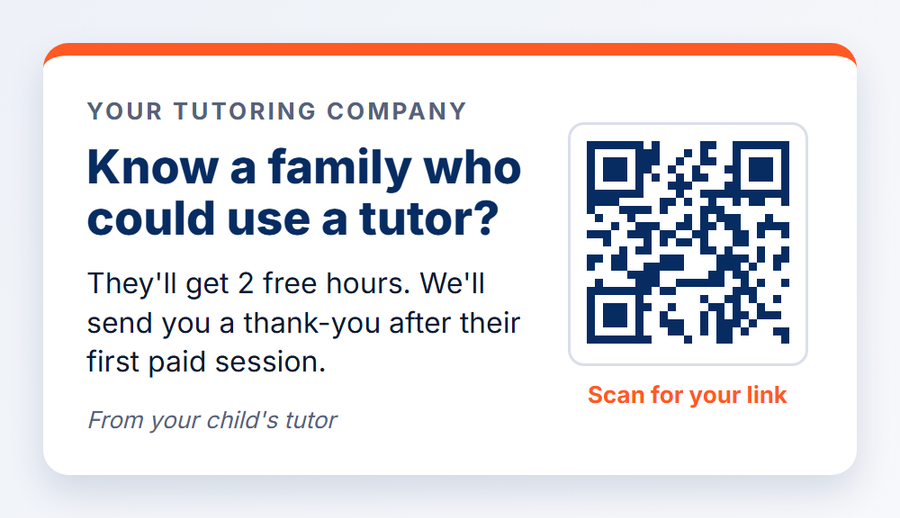
What the tutor says: "That's a great jump, and she worked hard for it. If any of her friends need help before the next test, here's a link for their family. They'll get 2 free hours, and we'll send you a thank-you after their first paid session."
The parent's text: "Our tutor at [your business] has been great for Maya. Use my link and you'll get 2 free hours: [link]"
6 real tutoring and test prep referral programs
What these companies' referral pages offered in November 2026:
| Company | The sharer gets | The friend gets | When it pays |
|---|---|---|---|
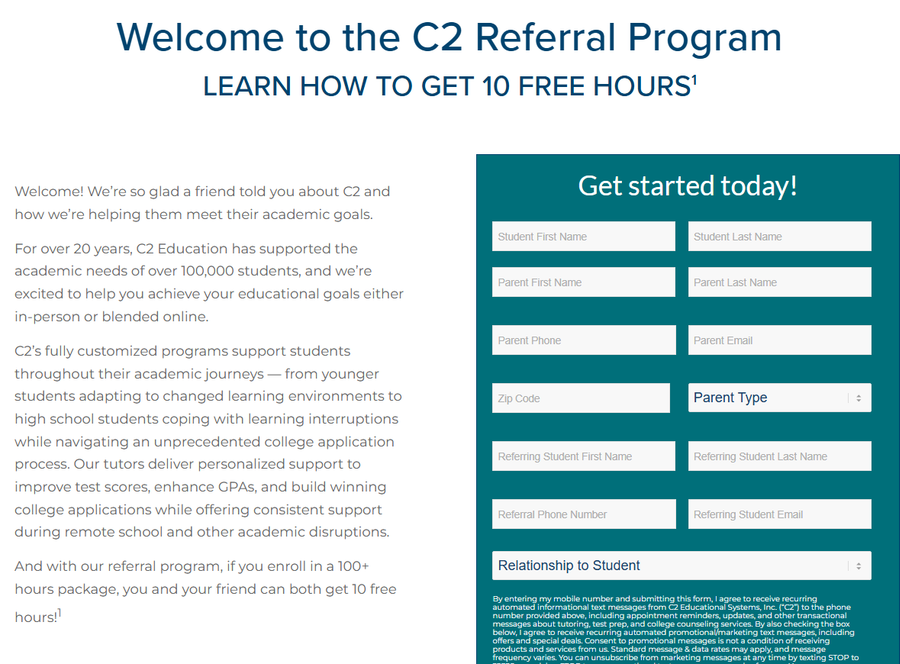
| C2 Education | 10 free hours | 10 free hours | When the friend enrolls in a 100+ hour package |
| Compass Education Group | A $100 check, up to $500 a year ($25 for a class) | $100 off a first one-on-one program ($25 for a class) | When the new family starts tutoring |
| Cambridge Coaching | A free half hour of tutoring credit | A free half hour of tutoring credit | When the friend buys a first package (3 sessions, from $495) |
| Hoot Reading | $100 credit on the next bill (Nov 1 to Dec 31, 2026) | $100 off the first month | At the friend's first payment |
| Magoosh SAT | A $10 Visa gift card, no limit | $20 off any SAT plan | When the friend buys a premium plan |
| Tailored Tutors (UK) | £100, for parents and tutors | Not stated | After the new family's 3rd paid lesson |
Five of the 6 give the new family something. Three give both sides the same kind of reward: free hours, tutoring credit or money off. Most pay once the new family buys or makes its first payment.
Referral software for tutoring and test prep companies [Free Tools]
You can run a program by hand, build your own, or use software. The first three options below are free tools of ours.
| Option | Good for | The catch |
|---|---|---|
| Manual referral tracker | A few referrals a month while you test | Links, follow-ups and rewards are all by hand |
| Referral link and code generators | Giving each family and tutor something to share | No tracking or rewards on their own |
| Referral program workbook | Planning offers, reward sizes and timing before you start | It plans the program but doesn't run it |
| Building it yourself | Teams with developers to spare | You build and maintain every part |
| Referral software | Running it every week, with links, reminders and rewards automated | A monthly cost |
How Referral Rock runs it for tutoring companies
Referral Rock is referral program software for businesses with teams. For tutoring, the feature that fits best is referral program recruiters. Each tutor and front desk team member gets their own link. After a good session, they sign the parent up from a phone, and every family that follows is credited to them.
The rest runs in the background. New families come in from tools like HubSpot, Pipedrive or Stripe and get invited on the days you choose. Emails can go through Klaviyo or Mailchimp. Each reward waits until you approve the referral after that first paid session, and a waiting period can cover a refund window too.
An advisor sets it up with you on every plan. See how it works for education businesses.
Start with your next progress report
You don't need a big launch. Pick the new family's free hours, send the thank-you once they've had a paid session, and give each tutor a link. Then ask the next parent who opens a good progress report.
Not sure a program fits yet? Take the readiness check. For schools, colleges and courses, see the education referral program guide.
About the author
Referral Rock Editorial is the team behind Referral Rock's guides and templates on referral, affiliate, partner and brand ambassador programs. Today's team writes, reviews and updates them, building on work by former staff and freelance writers over the years.