A resident referral program, also called a rental or tenant referral program, gives your residents an easy way to send friends to your community. When a referred friend signs a lease and moves in, both of them get a thank-you, and the leasing office knows exactly who sent whom.
Most communities already get these referrals. The hard part is catching them: a friend tours, mentions a name, and the guest card (the tour's sign-in form) never records it. This guide builds the program around how apartments lease, from the first tour to move-in day.
Why referrals fit apartment communities
People pick a home on trust, often from someone who already lives there. Nielsen's 2021 Trust in Advertising study surveyed more than 40,000 people online in 56 countries. Of them, 88% trusted recommendations from people they know more than any other channel. A resident can show a friend the pool, the gym and the neighbors before your leasing team says a word.
A lease is also worth a lot. Each one is a year of rent, often more with renewals, and every empty week costs you. That leaves room for a real thank-you on both sides.
The people residents see most are your leasing agents and maintenance techs. They hear "my friend's lease is up in June" long before a guest card exists. That makes them the most personal way to ask, and every referral they bring can be credited to them.
6 signs you're ready for a referral program
A referral program amplifies the word of mouth you already get. So check these 6 signs first, here in apartment terms.
| Sign | What it looks like for an apartment community |
|---|---|
| 1. Word of mouth | Prospects already say "my friend lives here" on tours |
| 2. Easy to talk about | Residents post the pool, the rooftop or the dog park |
| 3. Community | Residents have friends and coworkers looking in the same area |
| 4. A service team | Leasing and maintenance follow up and fix things fast |
| 5. Business software | Leases and residents live in your property management software or a CRM (a contact database) |
| 6. Steady marketing | Listings, your website and events bring in tours every month |
If several are missing, work on those first. The readiness check walks through all 6 in a few minutes.
How to run a resident referral program in 8 steps
These steps follow the order our program advisors use to build a referral program, answered for apartment communities.
1. Invite every resident at move-in
Start with residents who moved in over the last few months, then add each new resident on move-in day. Everyone gets a personal referral link right away, with no form and no portal login. A signup step loses people, while a link already in their inbox lets them send it the moment a friend's lease comes up. That's what we call keeping access open.
2. Give the friend something too
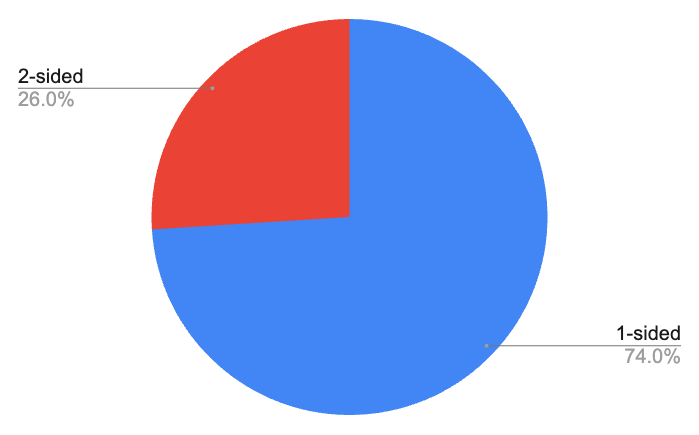
Many programs reward only the person who refers. In our November 2024 analysis of 339 referral programs, 54% gave the friend nothing. And that's a major missed opportunity. Skipping the friend makes the ask feel like a sales pitch. A reward for the friend turns that ask into a favor: "Sign here and you'll save $200 on your first month."
For the friend, a move-in credit or a waived application fee works well. For the sharer, a rent credit or a gift card is the usual thank-you. What you can offer depends on where your community is based, though, so check the reward against your area's laws before you launch. For more ways to reward both sides, see our guide to referral rewards.
3. Catch the referral before the tour
Most programs only count a referral that's recorded before the friend applies, and some before the first tour. At StuyTown, for one, the friend names the resident when booking a tour. So make that step easy.
The friend should land on a page that shows who sent them and what they get, with a button to book a tour. They trust the sharer more than your brand, so the sharer's name goes first. Then the referral reaches your leasing team with that name already on it. Keep the friend's offer open, too: a friend whose lease ends in June may not tour until May.
4. Pay after the friend moves in
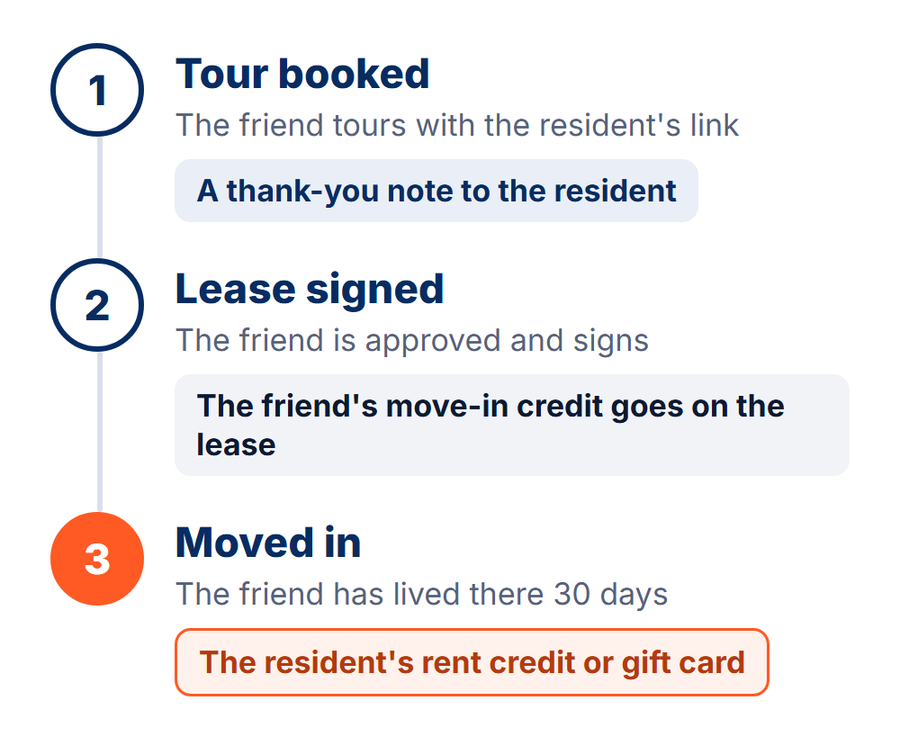
A lease can fall through between the tour and move-in day. So wait to pay the sharer until the friend has signed and moved in; two of the programs below wait 30 days after move-in. The friend's move-in credit can go on the lease itself, so they see it while they decide.
Whatever day you pay, tell the sharer when their friend books a tour, and again when the reward goes out.
5. Ask soon after a great experience
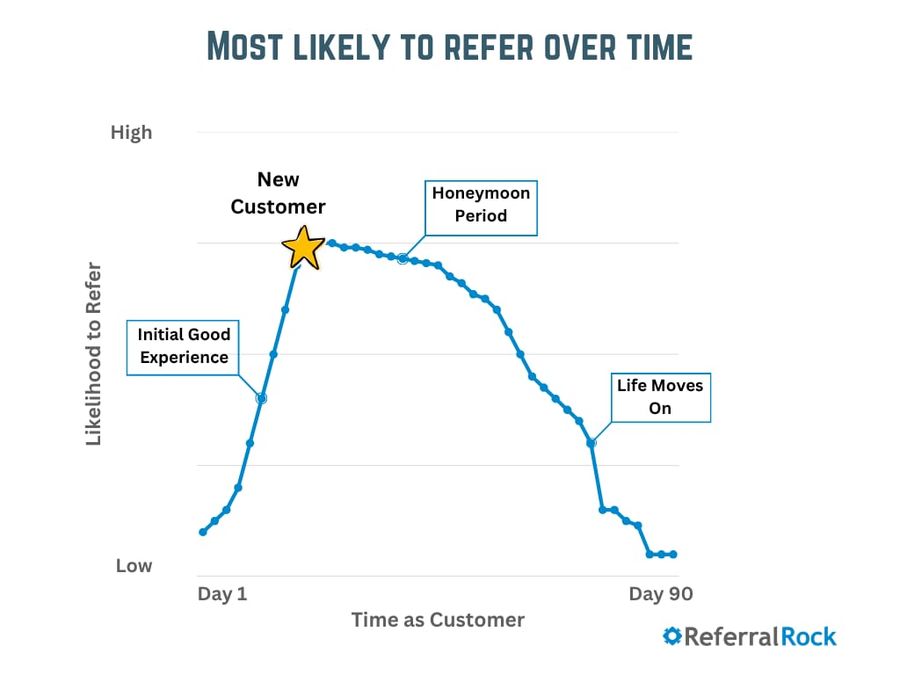
Residents are most willing to recommend you right after a good experience, and the urge fades as life moves on. One business on our platform found 86% of its referrals came within 90 days of someone becoming a customer. We call this span the sharing window.
The window lasts weeks, so one perfectly timed ask isn't the goal. Ask early, then follow up gently while it's open. Even residents who mean to pass it on get busy, and one email on its own is easy to miss. For a resident, the window opens on move-in day and comes back each time something goes well.
4 good times to ask residents to share:
- At move-in, with their link in the welcome email
- After their first month, once they've settled in
- Right after a maintenance request is fixed fast
- At renewal, when they've decided to stay
6. Put the program where residents already look
Residents forget a program they saw once. Put it in 3 to 5 places they already see, each with a short message and a clear way in:
- The resident portal and app
- The move-in packet and welcome email
- A flyer with a QR code in the mail room and the elevators
- Community events and your resident newsletter
Programs that stall usually stall after launch, when the reminders stop. Placements like these keep the program in view without a big push. For more places and messages, see how to promote a referral program.
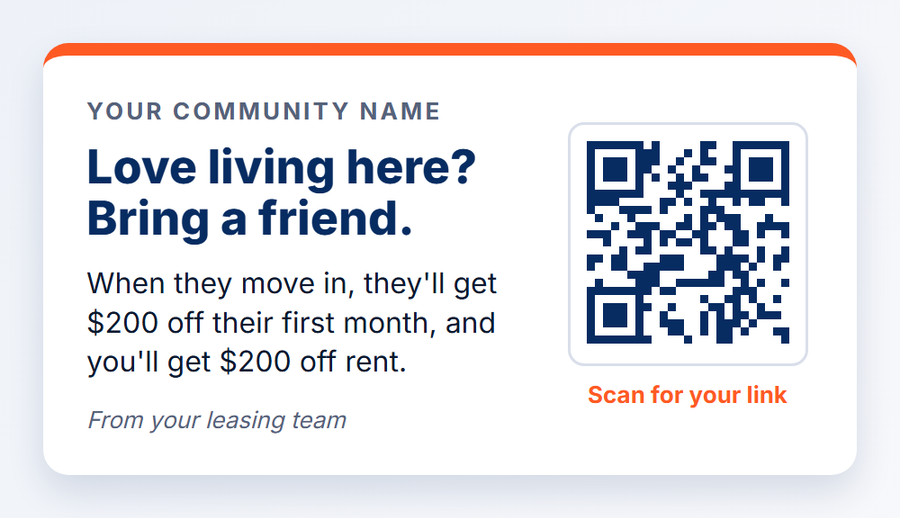
Flyer text to copy (swap in your own offer): "Love living here? Bring a friend. When they move in, they'll get $200 off their first month, and you'll get $200 off rent. Scan the code for your link; terms are on the referral page."
7. Let your leasing team ask
Your leasing agents see residents at move-in, at renewal and every time a package goes missing. The agent starts the ask in person; the program's emails follow up with the link and reminders, so nothing rests on memory. Give each agent a personal link and a card with a QR code. A resident can then sign up at the desk, and the right agent gets credit.
What to say at move-in: "Welcome home. If a friend is looking for a place, here's your link. When they move in, your friend gets $200 off their first month, and you get $200 off rent."
8. Watch shares before leases
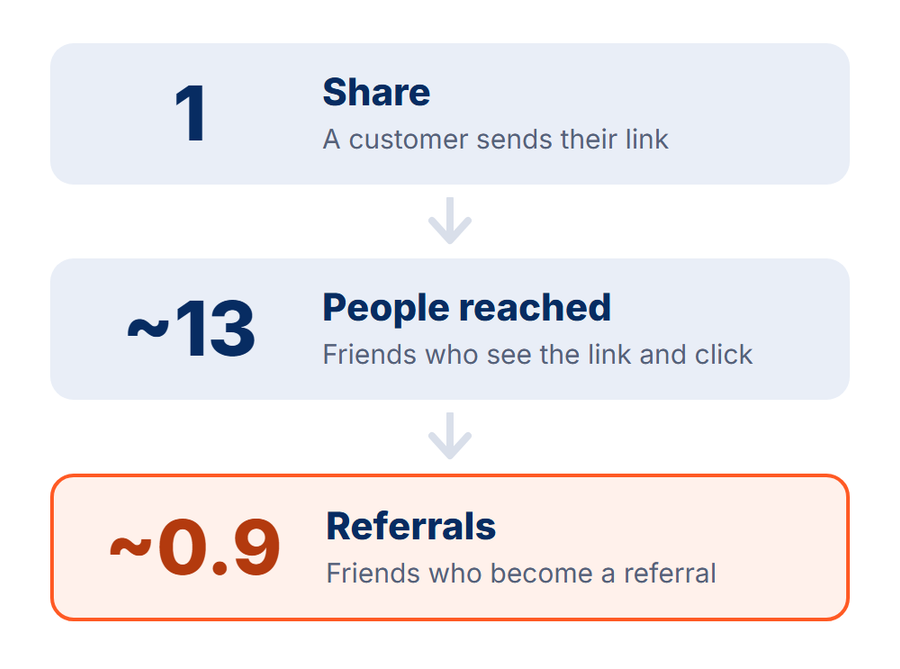
Leases are the last number to move, so watch shares first and how many friends they reach. In our June 2024 data, one share reached about 13 people and led to about 0.9 referrals, across all program types on our platform. If shares climb, leases follow. Our referral tracking guide covers what else to watch.
4 real resident referral programs
What 4 communities' referral pages offered in November 2026:
| Community | The referrer gets | The friend gets | When it pays |
|---|---|---|---|
| StuyTown–Peter Cooper Village (New York) | A $200 rent credit | A $200 rent credit | At move-in |
| Bungalow (shared homes, many cities) | Up to $500, as rent credit | Up to $500 | 30 days after move-in |
| NEMA Chicago | A $1,500 to $3,000 rent credit | Not stated | At move-in, on a new lease |
| Culdesac Tempe | A $500 gift card | Not stated | 30 days after the lease starts |
Two of the four give the friend something too, and all four wait until the friend has moved in, just like the advice above.
Tenant referral programs for rental homes
Landlords with a handful of single-family rentals can run a tenant referral program too. So can the letting and property management agencies that look after homes for owners. A tenant sends a friend, and both get a thank-you once the friend moves in. The 8 steps above still apply, with four changes:
- Ask when a home is coming open. With a few homes, a vacancy comes up a few times a year. Give each tenant a link at move-in, then remind them as soon as you know a home will be free. A tenant who has given notice is worth asking too, since a friend may want their place.
- Fit the reward to the tenant. A rent credit suits a tenant who's staying, and a gift card thanks one who's moving out. The friend gets a move-in credit, as in step 2. Check either reward with your attorney before you offer it.
- Pay when the first rent comes in. For a small landlord, the friend's first rent payment is the simplest sign they've signed and moved in. When the friend pays you, you pay the tenant.
- Run one program across every home you manage. An agency can then offer a tenant's friend whichever home is open, and credit each tenant referral to the right tenant.
Owners who send you properties to manage are a different program, covered in our property management referral program guide. With only a few homes, a spreadsheet can track every referral. The options below start there.
Referral software for apartments [Free Tools]
You can run a program by hand, build your own, or use software. The first three options below are free tools of ours.
| Option | Good for | The catch |
|---|---|---|
| Manual referral tracker | One community with a few referrals a month | Links, follow-ups and rewards are all by hand |
| Referral link and code generators | Giving each resident something to share | No tracking or rewards on their own |
| Referral program workbook and fee calculator | Planning rewards and timing before you start | They plan the program; they don't run it |
| Building it yourself | Management companies with developers to spare | You build and maintain every part |
| Referral software | Running it across communities without the busywork | A monthly cost |
How Referral Rock runs it for apartment communities
The feature that fits apartments best is referral program recruiters. Each leasing agent gets their own portal and link. At move-in or renewal, they sign the resident up from a phone, and every referral that follows is credited to them.
You see which communities and which agents bring in leases, so you can thank your best askers. The rest runs in the background. New residents come in from HubSpot or a regular file upload and get invited on the days you choose. Each reward goes out once the new resident has moved in.
Every plan includes a program advisor who helps set it up. See how it works for real estate and property management.
Start with this month's move-ins
You don't need a big launch. Invite this month's new residents, ask again after their first month, and pay once their friends move in. Then add the rest of your residents.
If you're unsure it fits yet, the readiness check takes a few minutes.
About the author
Referral Rock Editorial is the team behind Referral Rock's guides and templates on referral, affiliate, partner and brand ambassador programs. Today's team writes, reviews and updates them, building on work by former staff and freelance writers over the years.