A course referral program gives your graduates and students a link to send friends and coworkers, then thanks them when one enrolls. For bootcamps, certification training, continuing education and driving schools, the timing matters most.
Give the new student their discount when they enroll. Pay the sharer once the course is paid for and past your refund window. If finishing is the point, pay once it's finished. This guide covers who refers, what to offer when an employer pays the bill, and 6 real programs with what they pay and when.
The call quote here comes from our 2026 sales and customer calls, shared without names.
Why referrals fit bootcamps, certifications and continuing education
Signing up for a bootcamp or a certification is a career decision. It costs real money and weeks of evenings, so people ask someone who has taken the course. A graduate with a new job or a new certificate is the proof they're looking for.
Most of those people mean to pass your name on, and many never get around to it. In a study by Kumar, Petersen and Leone (Harvard Business Review, 2007), 81% of telecom customers said they would refer, but only 30% did. A referral program closes part of that gap with a link, a reason to share and a reminder. It amplifies the word of mouth that's already there.
A bootcamp or a multi-day certification class also costs enough to leave room for a reward people notice. Continuing education comes back every time a license is up for renewal. And the people who do the asking are already on your team: admissions and sales advisors, and instructors who see students every week.
Who refers: graduates, current students, employers and partners
Four kinds of people send you new students. Each knows something different, so each fits a different thank-you.
| Who refers | What they know | A reward that fits |
|---|---|---|
| Graduates and alumni | The course worked: the job, the certificate, the license | A gift card or cash, since most won't buy another course soon |
| Current students | Classmates and coworkers who keep asking how it's going | Money off their next course, or a gift card |
| Employers and training managers | Which staff need training next | A group discount, and a gift card for the person who arranged it |
| Partners, like program directors or instructors | Whole groups of students at once | A thank-you per enrolled student, agreed in writing |
The last row is common in exam prep. Students who pass tell the director of their program, and that director sends the next class. Give each partner their own link, so every student they send is counted.
Pay once the enrollment is paid and past your refund window
Most businesses should pay the sharer when the friend becomes a customer. Courses and training are one of the few exceptions, because a new student isn't really a customer on day one. Many courses give a full refund in the first days or weeks. Pay at registration, and you pay for students who leave before the first assignment.
So the default is to wait until the new student has paid and is past your refund window. The wait is short, so the sharer still remembers sending the friend. For a short course, or where finishing is the whole point, pay when the course is finished instead.
| When you pay the sharer | What it risks | Fits |
|---|---|---|
| 1. At an application or a consultation call | Paying for people who never enroll | Almost no one, so send a thank-you message instead |
| 2. At enrollment, with a deposit or full payment | A refund in the first weeks, after the reward is gone | Courses with no refund window |
| 3. Paid and past the refund window | Little, since the wait is short | Most bootcamps, certifications and online courses: the default |
| 4. When the course is finished or the license earned | A longer wait for longer programs | Short classes, bootcamps that place graduates, CDL and trade schools |
I was about to say registration, but no, we definitely wouldn't want someone to cancel.
Three of the 6 programs below pay on completion. Sunset Learning Institute pays after a colleague finishes an IT class, which takes only a day or a few. 160 Driving Academy pays once the friend gets their CDL (commercial driver's license). Le Wagon Canada rewards both sides when the friend completes the bootcamp.
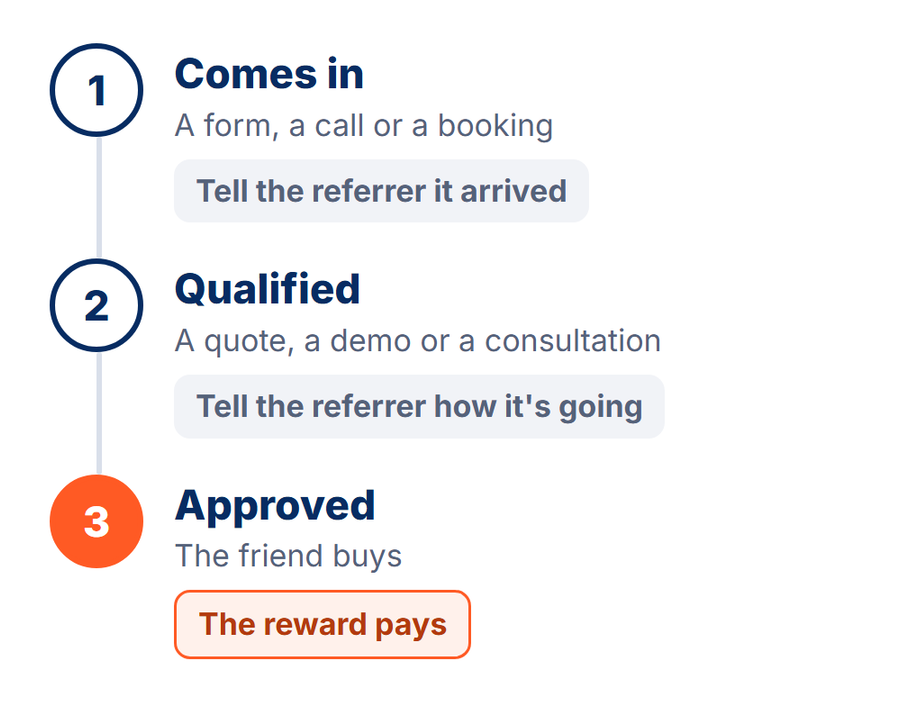
Whichever moment you pick, the sharer shouldn't be left wondering. Tell them when their friend applies, again when the friend enrolls, and again when the reward goes out. Put the timing in your terms, so nobody is surprised.
Match the reward to who pays: the student or the employer
Start with the new student. Money off their enrollment turns the share into a gift, a tip from a friend instead of a pitch.
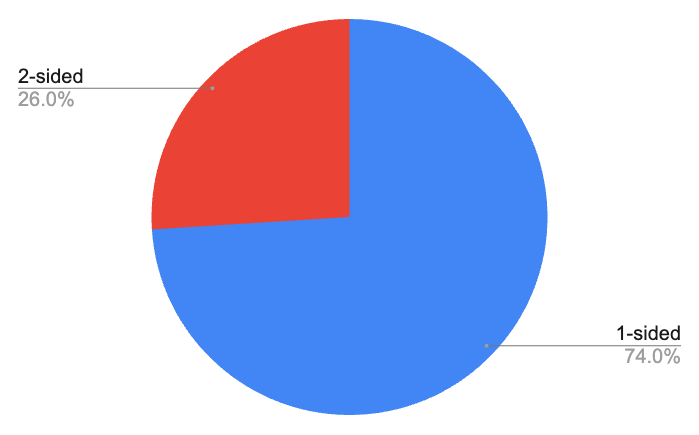
Many programs still skip the friend. In our November 2024 analysis of 339 referral programs, 54% gave the friend nothing. That's a missed opportunity, because the friend's offer is what makes the ask feel like a favor.
Then ask who pays the bill, because that decides who actually feels the reward.
| The student pays | The employer pays | |
|---|---|---|
| The new student or group gets | Money off their enrollment | A group discount for the company |
| The sharer gets | A gift card, cash or a free class, with more for a second referral | A gift card for the person who arranged it |
| Skip | A course credit for a graduate who won't take another course | A credit on the company's invoice, which the sharer never sees |
Some companies don't let staff accept gifts, so ask the training manager before you send one. Then pick a reward people notice, one your margins carry easily, and leave it alone. A bigger reward isn't always a better one. More ideas: our guide to referral rewards and incentives.
6 signs you're ready for a training referral program
Since a program builds on the talk you already get, check these 6 signs first, here in training terms.
| Sign | What it looks like for a training provider |
|---|---|
| 1. Word of mouth | New students already say a coworker or a classmate sent them |
| 2. Easy to talk about | Graduates post their certificate or their new job |
| 3. Community | Students work alongside people who need the same skill or license |
| 4. A service team | Admissions advisors and instructors students know by name |
| 5. Business software | Inquiries and enrollments live in a CRM (customer database) or a student system |
| 6. Steady marketing | Ads, search and partners bring in new students before every session |
If several are missing, work on those first. The readiness check walks through all 6 in a few minutes.
How to run a course referral program in 8 steps
These steps follow the order our program advisors use when they set up a program, answered for training providers.
1. Give every graduate and student a link, no login needed
Start with recent graduates and current students. Each gets a personal link from day one, with no form and no password. They can share it the moment a coworker asks about the course. We call that keeping access open.
A link on your website that says "Interested in referring?" works too, as a second door in. But a graduate shouldn't have to go looking for it, so send each one their link.
2. Lead with the new student's discount
The message you send potential sharers needs to lead with the perk they can give to their friends, not the thank-you they can earn for themselves. And the message a graduate sends to the peers they refer opens with what those friends can get at enrollment, and doesn't mention the sharer reward at all. "You'd save $200 on the course" sounds like a favor. "I get $100 if you sign up" sounds like a sales pitch.
What a graduate can send a friend: "You keep asking about the course I took. Here's my link: you'd get $200 off when you enroll." Swap in your own offer.
3. Send the friend to a page that names who sent them
The referred friend should land on a page with the sharer's name, their offer and a short form to apply or book a call. They trust their friend more than your course page, so put that name at the top. Then send each referral to admissions, so someone calls back the same day.
4. Pay after the refund window, and tell the sharer when
Write the payout moment into your terms. Count from the start date or the payment date, whichever your refund policy uses. Checking each referral by hand before the reward goes out is fine, as long as the sharer hears at each step. Only the sharer waits: the friend's discount still applies at enrollment.
5. Ask at graduation, the certificate and the first win
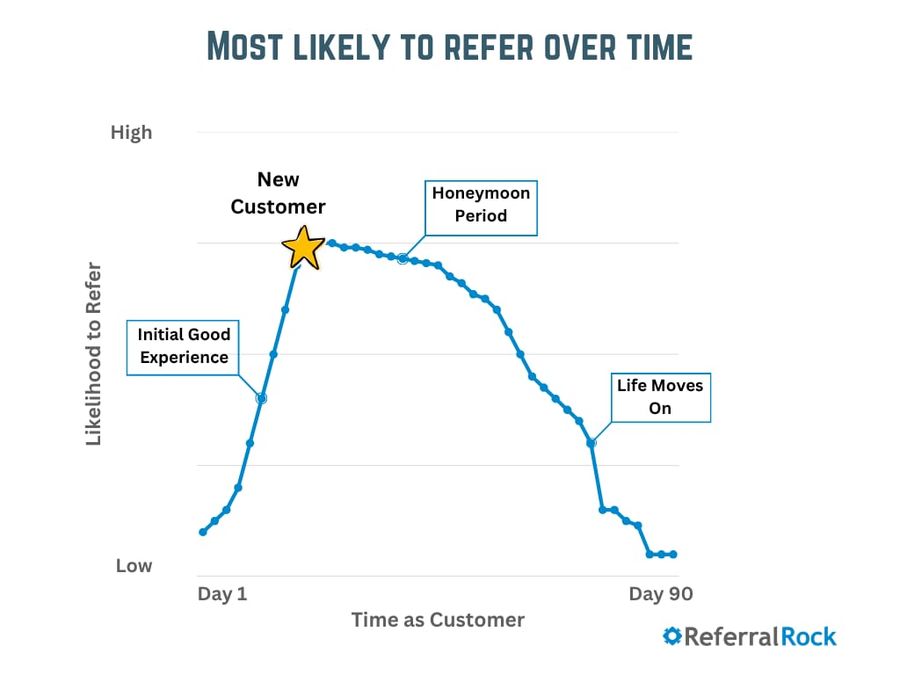
Graduates are most willing to share right after a good moment, and the urge fades as life moves on. One business on our platform found 86% of their referrals came within 90 days of someone becoming a customer. We call that span the sharing window.
Training has several good moments. Think of the last day of class, the certificate or license, the first job or promotion, and the renewal reminder. Ask early in each one, then follow up gently, since a single ask is easy to miss.
The friend keeps their own schedule, so leave their offer open. Some enroll in the next session; others wait until their employer approves the budget.
6. Invite past graduates a few at a time, then before each new session
A big alumni list is tempting, but one blast to everyone who ever took a course tends to fall flat. People who barely remember you may mark it as spam. Invite recent graduates first, then work back through the older ones a few at a time.
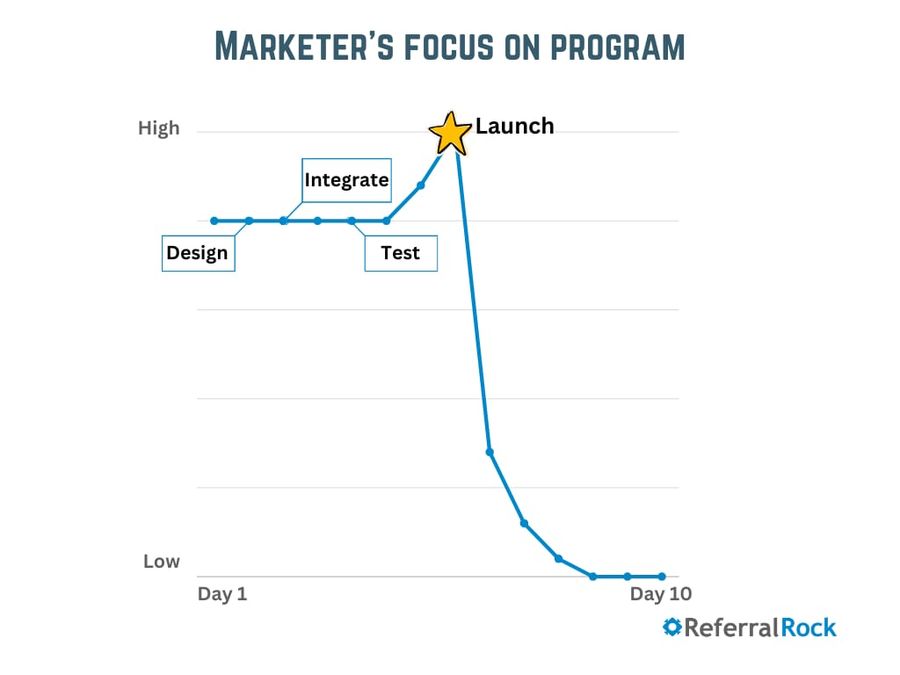
After that, keep the program in view. Across 952 programs over 9 years, 82% of the ones that stalled did so because promotion stopped after launch. Put it in 3 to 5 places students already look:
- The certificate email and the graduation message
- The student portal or course dashboard
- Reminders before each new session opens
- License renewal reminders, for continuing education
7. Let admissions and sales advisors make the ask
Students remember the advisor who walked them through enrolling and the instructor who got them through the exam. Give each of them a personal link. When a new student says a friend is thinking about it too, the advisor can mention the friend's discount and send the link.
The person on the spot starts the ask, and the program's emails follow up with the link and the reminders. That's both the most personal ask and the easiest to track, since you can see who on your team brought each student in.
8. Watch shares and reach before you count enrollments
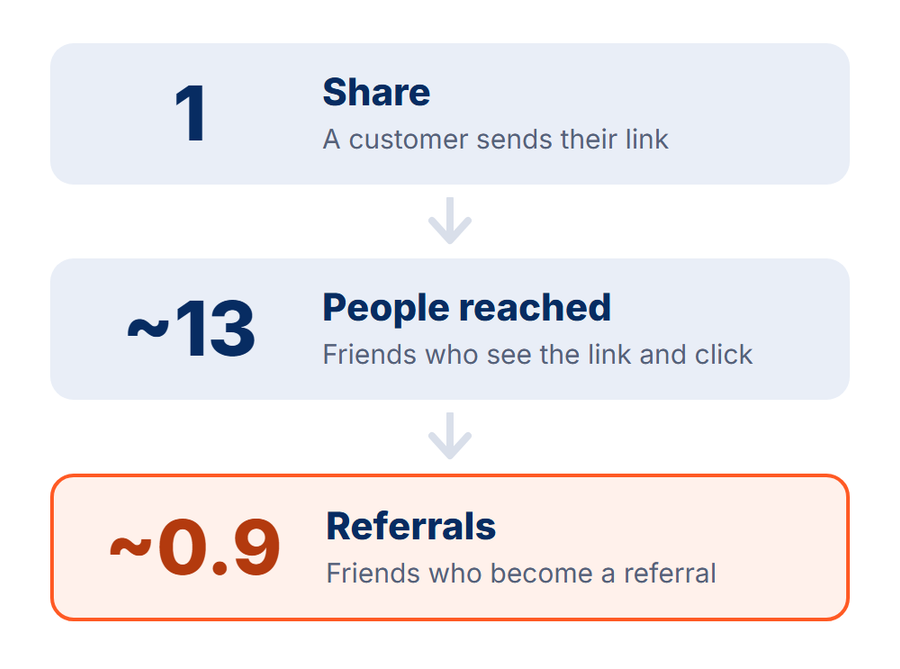
Enrollments are the last number to move, so watch shares first and how many people they reach. In our June 2024 data, one share reached about 13 people and led to about 0.9 referrals, across all program types on our platform. If shares climb, applications follow.
What pays and when, by kind of training business
The steps above hold everywhere. Here's only what changes from one business to the next.
Bootcamps: a big discount for the friend, paid out after the refund window
A bootcamp costs enough that a few hundred dollars off gets noticed. Give the friend money off tuition, and pay the referrer once the friend is past the refund window. If your bootcamp is judged by placing graduates in jobs, paying at graduation fits too, the way Le Wagon Canada does.
Certification and professional training: gift cards by course length
Short classes fit a reward that grows with the class. Sunset Learning Institute pays $25 for a 1 to 2 day class, $50 for 3 to 5 days and $100 for a private class. Pair it with money off for the colleague, so both sides get something. Many of these students are sent by an employer, so use the employer column of the reward table above.
Continuing education: ask when licenses come up for renewal
People with a license to keep come back each time their credits fall due. Try putting the ask in your renewal reminder, since the reader is already choosing a course. Teaching Channel, which sells courses to teachers who need credits, gives the friend $100 off and the sharer a $50 gift card.
Driving and trade schools: pay when the student finishes or gets licensed
For a driving or trade school, the license is what the student is paying for. So give the friend their discount at enrollment. Hold the sharer's reward until the friend finishes or passes, as 160 Driving Academy does at the CDL. In drivers ed, when the student is under 18, send the thank-you to the parent who pays the bill.
Online courses you sell yourself: a referral program or an affiliate program
If your own students are the ones sharing, a referral program fits: a discount for the friend, a thank-you for the student. Online course referral methods follow the steps above. Give each student a link, put the friend's offer first, and ask when they finish a module or the course.
If you want creators and influencers to sell your course for a commission, that's a different setup. See affiliate programs for online courses.
Rules to check before you offer a reward
Training has a few rules of its own. Settle these before you write your terms:
- Federal student aid and accreditation. If your school takes federal student aid or answers to an accreditor (the body that approves programs), check rewards with your compliance office first.
- Employer-paid training. The company gets the group discount; the person gets the thank-you, if their company's gift policy allows it.
- Students under 18. The reward goes to the parent paying for the course.
- Cash and gift cards. A referral fee is income for whoever receives it. Ask your accountant how to handle the payouts.
6 real course and training referral programs (checked November 2026)
What 6 training providers' referral pages offered in November 2026:
| Company | The sharer gets | The friend gets | When it pays |
|---|---|---|---|
| Le Wagon Canada (coding bootcamp) | $600, or $300 for Data Engineering | The same | At completion |
| ISSA (fitness certification) | $100 gift card | $200 off | At enrollment |
| Teaching Channel (teacher courses) | $50 gift card, $100 to $200 for bundles | $100 off, or a $50 gift card with a bundle | At enrollment |
| Sunset Learning Institute (IT training) | $25 to $100 gift card, by class length | Not stated | At completion |
| 160 Driving Academy (truck-driving school) | $250 | Not stated | At the CDL |
| Coast2Coast First Aid & Aquatics (safety training) | $50 gift card or credit | $75 off a group of 8+ | At the deposit |
Every gift card here is an Amazon card, and ISSA's comes with each enrollment. ISSA's $200 is off the friend's first course. Le Wagon's amounts are its current campaign, paid once the friend applies with the link and completes the bootcamp.
160 Driving Academy's program runs 4 weeks, and its offer comes from an undated blog post on their site. Coast2Coast pays once the referred group books and puts down a deposit.
ISSA and Teaching Channel lead with the friend's discount, so the share reads as a gift. Coast2Coast shows the employer pattern: the group gets money off, and the person who sent them gets the gift card.
Referral software for training providers
You can run a program by hand, build your own, or use software. The first three options below are free tools of ours.
| Option | Good for | The catch |
|---|---|---|
| Manual referral tracker | A few referrals a session while you test | Links, refund windows and rewards are all by hand |
| Referral link and code generators | Giving each graduate something to share | No tracking or rewards on their own |
| Referral program workbook | Planning the offer, the reward and when it pays | It plans the program but doesn't run it |
| Coupons in your course platform, or building it yourself | A simple code inside your own checkout | You build the tracking, the waiting period and the reminders |
| Referral software | Running it every session without the busywork | A monthly cost |
How Referral Rock runs it for training providers
The feature that fits training providers best is referral program recruiters. Admissions and sales advisors each get their own link and a page that shows who they've signed up. They can add a student on the spot, and every referral that follows is credited to them.
The rest runs in the background. New graduates come in from tools like HubSpot, Salesforce or Stripe and get their links, with no login. When a friend enrolls, a waiting period holds the reward until your refund window passes. Then it goes out as a gift card or cash.
Every plan includes a program advisor who helps set it up. See how it works for schools and education businesses.
Reward the enrollments that stick
The new student gets money off at enrollment. The sharer hears about each step along the way. The thank-you lands once the enrollment sticks: past the refund window, or at the finish line when finishing is the point.
Not sure your graduates are talking about you yet? Take the readiness check. For schools, tutoring and other kinds of education, see the education referral program guide.
About the author
Referral Rock Editorial is the team behind Referral Rock's guides and templates on referral, affiliate, partner and brand ambassador programs. Today's team writes, reviews and updates them, building on work by former staff and freelance writers over the years.