An agency referral program gives the people who already send you work an easy, fair way to keep doing it. Most agencies get referrals from two places: clients who introduce a peer, and partners, like freelancers and other agencies, who pass on a lead. Each needs its own deal.
The client's friend gets a welcome, like a free audit or money off the first month. The client gets a thank-you when the friend's first invoice is paid. Partners get a fee or a cut of the retainer, in written terms. This guide covers both, for marketing, SEO, PPC and digital agencies, plus a section for web design studios.
The call quotes here come from our 2026 sales and customer calls, shared without names.
Why referrals bring agencies their best clients
Referrals are already where most agencies find new work. In a 2025 RSW/US survey of agencies and professional service firms, 73% said referrals drove the most new business in the past year. Networking came in at 38% and organic search at 19%. RSW/US is a lead generation agency, so that's vendor data, and most firms surveyed had under 50 people.
Most of those referrals still happen by chance. In a 2015 Hinge Research Institute study of professional services, 72% of buyers who hadn't referred their provider said nobody had asked. The same study found 81.5% of firms got a referral from someone who wasn't a client. So two groups send you work, and neither gets asked on purpose.
The person who asks is usually the account manager, because they talk to the client every week. A program gives them a simple way to ask, and gives you a record of who sent whom.
Agency referrals come from 2 places: clients and partners
Each group refers for its own reasons. A client refers a peer as a favor. A partner, like a freelance developer or an agency with a different specialty, refers as part of how they earn.
| The deal | Clients | Partners |
|---|---|---|
| Who they are | Current and past clients who introduce a peer | Freelancers, consultants, web developers, agencies with a different specialty |
| What fits as a thank-you | A gift card, a donation or a personal gift; their friend gets a welcome offer | A referral fee or a share of the retainer, in written terms |
| When it pays | After the friend's first invoice, or first month of a retainer, is paid | When the new client pays, for as long as the terms say |
Most agencies blur the two, and the client side gets left out. The client program is where the steps below start. Partners get their own section after the steps, and our guide to referral partnerships goes further.
6 signs your agency is ready for a referral program
A referral program amplifies the word of mouth you already have, so it needs some to start with. Check these 6 signs first, here in agency terms.
| Sign | What it looks like for an agency |
|---|---|
| 1. Word of mouth | New clients already say "a friend at another company told me about you" |
| 2. Easy to talk about | You have results a client can point to: a launch, a ranking, a campaign that paid off |
| 3. Community | Your clients know people in the same industry who need the same help |
| 4. A service team | Someone owns each account and talks to the client every week or month |
| 5. Business software | Clients, deals and invoices live in a CRM (customer database) or billing tool, so you can see who sent whom |
| 6. Steady marketing and capacity | New leads come in every month, and you have room for new retainers |
If several are missing, work on those first. The readiness check walks through all 6 in a few minutes.
How to run a client referral program at your agency in 7 steps
These steps follow the order our program advisors use when they set up a program, answered for a marketing or digital agency.
1. Invite every client after a result they can see
Start with current clients. Then add each new one after their first win: a site launch, a first monthly report, a campaign that hit its target. Past clients come next, with a light note.
Ask every client, including the quiet ones, since you can't tell who will share; the happiest can get a personal note on top. Everyone gets a personal referral link right away, with no form and no password. They can pass it on the moment a peer asks who runs their ads. We call that keeping access open.
2. Give the referred friend a welcome first
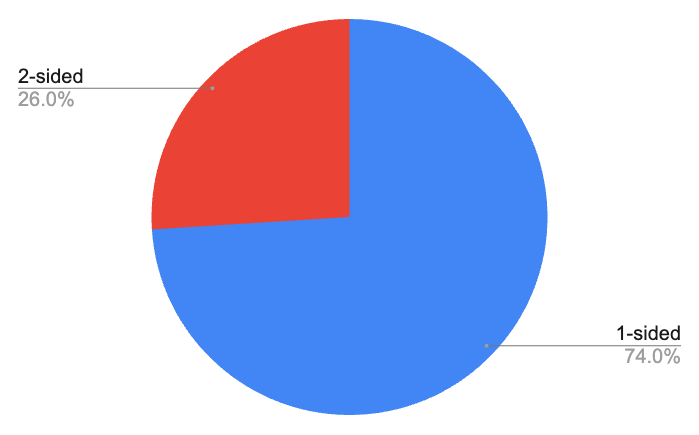
The friend should get something too, and it should come first in the message. In our November 2024 review of 339 referral programs, 54% gave the friend nothing. That's a missed opportunity. None of the agency referral pages we checked in November 2026 offered the friend anything either.
A welcome turns the client's introduction into a gift. Tie it to your work: a free audit, a strategy session, or money off setup or the first month. The friend is usually a business, so put the offer on its new account. That way it never reads like a kickback.
The friend should land on a page that welcomes them by the sharer's name and states the offer. Add a short form to book a call, since a generic homepage loses them. More reward ideas for both sides are in our guide to referral rewards.
3. Thank the person who shared with something personal
A client who refers you is one person at a company. A credit on the company's invoice lands with accounts payable, and the person who made the introduction may never see it. So give the sharer something personal: a gift card, a donation in their name, or a gift they'd pick for themselves.
Offer an account credit only if the client asks for one, like an owner who pays the bill. Keep the referrer's thank-you to an amount people notice and your margins carry easily. A share of the new retainer is for partners. Then send a short personal note from the account lead, and tell the sharer each time their friend moves forward.
4. Pay after the first invoice, or the first month of a retainer
Pay once the friend is a real paying client. Before that, at the intro call or the proposal, a quick update to the sharer is enough. When that point comes depends on how you bill.
we have monthly retainer payments, subscription, right? Like SEO, PPC
| How you bill | When the client's thank-you goes out | Why |
|---|---|---|
| A project (a site build, a campaign) | When the deposit or first invoice is paid | The work is booked and paid for |
| A monthly retainer (SEO, PPC, social) | When the first month is paid | A client who cancels before paying costs you nothing |
| Both a project and a retainer | When the first invoice is paid, whatever it's for | One thank-you per new client keeps it simple |
That answers the question agencies ask most: what if the new client cancels? If they never pay, nothing goes out. Waiting longer than the first paid month is possible, but the thank-you then arrives long after the sharer remembers the introduction. The friend's welcome comes off the first invoice, so they get it right away.
5. Ask soon after a win, then follow up
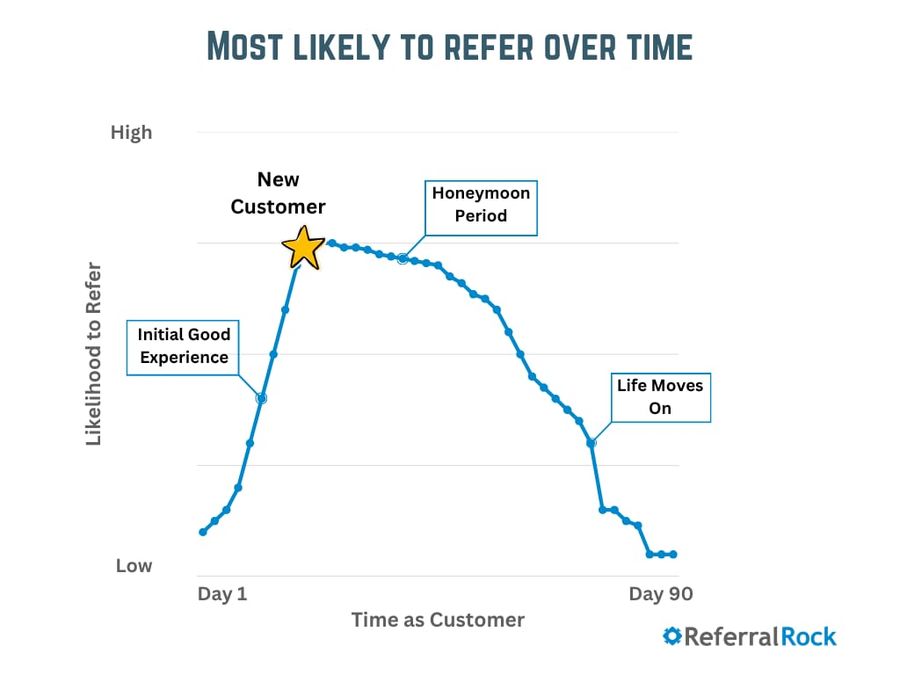
Clients are most willing to share right after something goes well, and the urge fades as the work becomes routine. One business on our platform found 86% of their referrals came within 90 days of someone becoming a customer. We call that span the sharing window.
Agencies get that window more than once: at the launch, at a monthly report with good numbers, at a quarterly review. Ask early in each one, then follow up gently while it's open, since one ask is easy to miss. The friend keeps their own schedule, so leave their welcome offer open.
6. Let your account managers make the ask
The people who run your accounts know which clients are happy, and they're already on the call when the good news lands. Give each one a personal link, so every introduction they start is credited to them. Then the program's emails follow up with the client's link and reminders, so nothing rests on memory.
Asking can feel awkward, but it rarely feels that way to the client, especially when the ask leads with the friend's welcome offer. The account manager starts it in a sentence, and the follow-up email does the rest. Our guide on how to ask for referrals has more wording to try.
7. Watch shares before referrals
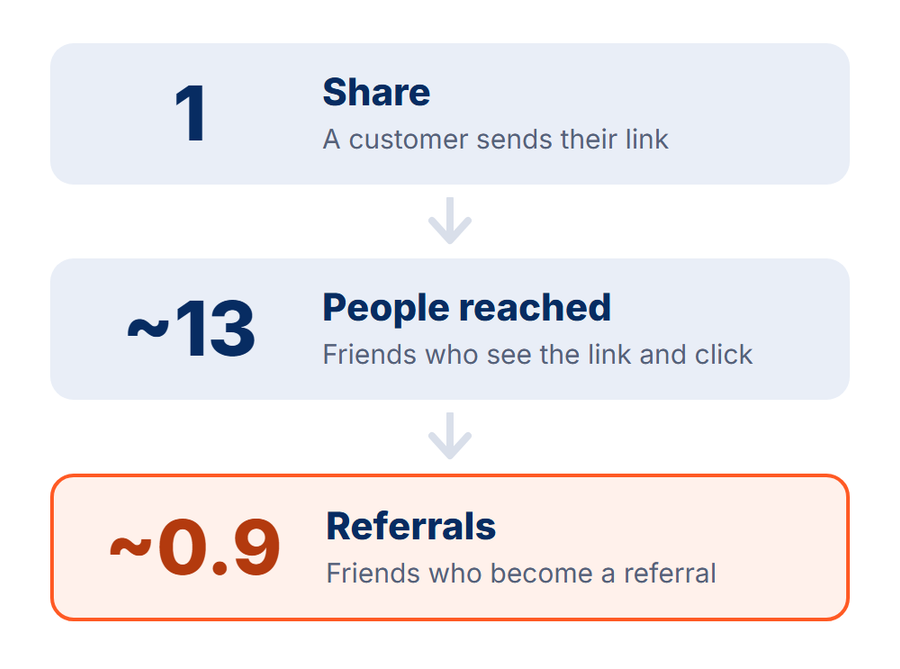
Referrals are the last number to move, so watch shares first and how many people they reach. In our June 2024 data, one share reached about 13 people and led to about 0.9 referrals, across all program types on our platform. If clients are sharing, new clients follow.
How to pay partners a referral commission
Partners are the people who send you work as part of their business, and together they're your agency's referral network. Think of freelance developers, copywriters, consultants, agencies with a different specialty and past employees. For them, a fee or a share of the deal is normal. No amount is standard, so see what real agencies publish (listed further down) and pick what your margins carry.
| Way to pay | How it works | Good for |
|---|---|---|
| One-time fee | A flat amount once the new client pays, sometimes set by project size | Project work, and partners who send work now and then |
| A share of the retainer | A percentage of each paid month for a set term, often 12 months | Retainers, and partners who send work often |
Put the terms in writing before the new client signs. Say what you pay, when and for how long, and that the referring agency or freelancer names the referral up front. The 215 Guys, a web design and marketing agency, only pays if the referral is disclosed in writing before the client engages. Written terms also give you something to hold a partner to.
Pay only on invoices the new client has paid, so a monthly commission stops on its own if the client leaves. The friend a partner sends can get the same welcome offer as a client's friend.
A referral fee is income for whoever receives it. Ask your accountant how to handle the payouts.
Web design referral programs: projects, maintenance plans and partners
Web design studios sell a website design project first, then a smaller maintenance or care plan after launch. So a website design referral program follows the client steps above, but selling in two parts changes what each side gets.
| Who | What fits | When |
|---|---|---|
| The friend | Credit toward their build, money off setup, or a month of maintenance free | Off their first invoice |
| A client whose project is done | A gift card or a gift, since a service credit is no use to them now | When the friend's deposit is paid |
| A client on a care plan | Money off their own plan, if they'd rather have that | When the friend's deposit is paid |
The best proof is the work itself. In the message the client sends, include a link to the website you built for them, so the friend sees what they'd get. Ask when the site goes live and the client is proudest of it, then again at the first care plan check-in.
Web designers get a lot of partner work too. Copywriters, SEO freelancers, photographers and developers who don't do design all pass on projects. Give them the partner terms above, paid once the new client's deposit clears.
What to say: an account manager's ask and an introduction email to copy
Two things make the ask easy: a line the account manager can say on the call, and an email the client can forward. Both lead with the friend's offer.
What to say after a good monthly report: "Glad the numbers are moving. If you know someone who could use the same help, I'll send you a link. They get a free audit, and we'll send you a thank-you once they're on board." Swap in your own offer.
5 real agency referral programs
What 5 agencies' referral pages offered in November 2026. All 5 are open to partners as well as clients.
| Agency | The referrer gets | When it pays |
|---|---|---|
| Directive (business-to-business marketing) | $500, then 2.5% of the contract for 12 months | $500 when a proposal is presented; 2.5% once the referral is a client |
| Mavlers (web and marketing services) | 20% of the first project's invoice, or 15% of monthly invoices for 12 months | After the new client pays the first invoice |
| The 215 Guys (web design, SEO, PPC) | $1,000 for projects of $5,000 or more, otherwise the first month's fee up to $1,000 | Within 30 days of signing and first payment |
| Fireart Studio (design and development) | $500 plus 8% of every invoice for the first year | When the referral leads to a new contract |
| Upgrow (digital marketing) | 5% of the paid monthly retainer, up to $500 a month | After the first monthly invoice is paid, then each paid month |
None of the 5 states an offer for the friend, which leaves room for an agency that does. Most pay only on paid invoices, and the retainer agencies share each month for a set term.
Referral software for agencies [Free Tools]
You can run your referral system by hand, build your own, or use software. The first three options below are free tools of ours.
| Option | Good for | The catch |
|---|---|---|
| Manual referral tracker | A few introductions a month | Links, follow-ups and payouts are all by hand |
| Referral agreement templates | Putting partner terms in writing | A starting point, to check with your own advisor |
| Referral fee calculator and link generator | Planning fees and giving each client something to share | They plan and link; they don't track or pay |
| Building it yourself | Agencies with developers to spare | You build and maintain every part |
| Referral software | Running clients and partners every week without the busywork | A monthly cost |
How Referral Rock runs it for agencies
The feature that fits agencies best is referral program recruiters. Each account manager gets their own link and a portal showing the clients they've brought in. When they ask on a call, the client joins from that link, and every referral that follows is credited to that account manager.
Clients and partners can run as separate programs side by side, each with its own offer and terms. Partners can earn a recurring commission for each paid month, and clients get a gift card or a thank-you of your choice. HubSpot, Salesforce or QuickBooks keep it in sync in the background. Agencies that run programs for their own clients can run several from one account.
Every plan includes a program advisor who helps set it up. See how it works for professional services firms.
Start with your next client win
You don't need a big launch. Ask the next client who gets a result, welcome their friend with an offer, and send your thanks once the new client pays. Then write down terms for the partners who already pass you work.
If you're unsure a program fits yet, the readiness check takes a few minutes. For other service firms, see the client referral programs guide.
About the author
Referral Rock Editorial is the team behind Referral Rock's guides and templates on referral, affiliate, partner and brand ambassador programs. Today's team writes, reviews and updates them, building on work by former staff and freelance writers over the years.