
Most B2B companies launch a referral program once and wonder why it stops generating referrals after the first email blast. The problem isn’t the program — it’s the model. A B2B referral program isn’t a campaign. It’s an operational system you build into how you already work with customers. Here’s how to build one that keeps running.
What is a B2B referral program?
A B2B referral program encourages satisfied customers to recommend your brand to decision-makers at other businesses. These programs involve tracking the referrals your customers make, and rewarding customers whenever their recommendation results in a qualified lead and/or sale.
If your business informally emails or calls customers to ask them to share your brand, that doesn’t quite count as a referral program. Instead, B2B referral programs involve a more formalized process: a unique share link for the referring customer (member), a streamlined way for customers to share, and a process for automatically sending out rewards.
Why start a B2B referral program?
A formalized B2B referral program creates frequent, scalable word-of-mouth recommendations. It makes it easier for your customers to share your company with others by:
- Streamlining the sharing process (empowering customers to share on their own with a unique link)
- Building the referral “ask” into the customer lifecycle (through post-purchase email campaigns, for example)
- Tracking all referrals
- Automatically rewarding the business (or stakeholder) for sharing
These statistics prove how well B2B referral programs work:
- Word-of-mouth marketing influences 91% of a B2B purchaser’s buying decisions.
- 78% of B2B marketers believe that B2B customer referral programs are a source of high-quality leads.
- 54% of marketers believe B2B referral programs foster lead generation at a lower cost than other marketing channels, making referrals the most cost-effective way to market.
- 87% of B2B stakeholders whose companies have referral programs think their sales process is effective.
Are you ready for a B2B referral program?
A referral program doesn’t create word of mouth — it captures and amplifies what’s already there. Before you build the system, make sure the foundation is in place.
✅ People are already talking about you
The clearest readiness signal: customers are already referring you informally, but there’s no system to make it easy, track it, or thank them. You’re leaving referrals on the table.
If you’re not sure, check your NPS scores and online reviews. Look for customers who have used your product or service with real success — they’re the ones who can authentically share what you do. If any existing customers are already recommending you without a formal program, that’s your sign.
If nobody’s talking about you yet, a referral program won’t change that. The program operationalizes existing word-of-mouth recommendations. It doesn’t manufacture them.
✅You run a tight operational ship
Strong operations are the foundation of referral-worthy businesses. This means:
Scheduling is easy and you’re responsive. You get back to customers quickly. No one’s left waiting.
You follow through on everything. Regular updates on projects, follow-up on milestones, nothing falling through the cracks.
Clean team operations. Hiring works, everyone knows what they need to do, and your service is consistent.
Consistency becomes reputation. If your customers can rely on you, they’ll put their name on the line to refer you. If they can’t, they won’t — no matter how good your incentives are.
✅ Your customer support team is ready and available
When they make a referral, customers trust that their peers will receive similar care. Make sure your customer support team can deliver the same high levels of service to new customers before you launch your referral program. Will they be able to handle a rapid influx of new clients?
How do you create a B2B referral program?
Once you’ve determined that you’re ready, these 12 referral program ideas and best practices are key to building a program that grows your business over time.
1. Know who to ask for B2B referrals
Even though you’re running a B2B program, referrals will still be made from individual to individual: an employee at one businesses will refer an employee at another business.
You’ll need to determine who to ask for referrals, and when you should ask. The most effective referral programs invite the best customers first.
We recommend asking:
Paying customers
- In contrast to free users, paying customers have experienced your full range of features, and have a deeper knowledge of what you have to offer.
- Plus, they’ve expressed their confidence in the value of your product.
Loyal users
- Look for customers who have used your product with success. This allows them to authentically share how you’ve helped grow their business.
- If you sell products, choose customers who use your product frequently. Prioritize long-term users and repeat buyers, especially if they have expressed their satisfaction in your product.
- If you offer a service or a subscription, prioritize customers who have been with you the longest.
Willing promoters
- Directly invite any customers who have left you positive reviews online.
- If you conducted an NPS survey, reach out to the customers who said they would be most likely to promote you.
- Are customers already recommending you? Start incentivizing them to send more recommendations with your referral program.
2. Choose incentives — and give the friend something too
The rewards that work for B2B are very different from B2C. Standard discounts and money back can work for small businesses, but they won’t work for larger B2Bs where the referrer usually isn’t the one paying for your product.
For most B2B programs, the strongest referral incentives are:
Gift cards and cash referral fees — flexible, the recipient chooses how to use them. With Referral Rock, you can let customers select their preferred gift card type through Tango for an added element of choice.
SaaS credits or premium features — if you’re a SaaS company, offer more storage space, premium features, or a free month subscription. These tie the reward back to your product.
Dual-sided rewards — offer something to the referred friend, not just the referrer.
That last point matters more than most programs acknowledge. When a referral is purely transactional — “refer a friend, get $50” — the referrer can feel like they’re selling out their relationship for a personal gain. A dual-sided incentive reframes the whole dynamic: instead of asking a customer to bring you business, you’re giving them something valuable to pass along to a colleague.
This is what we call the Friend Factor. When your program messaging centers on what the friend gets — the exclusive credit, the free trial, the discount applied at signup — the act of sharing feels generous, not self-serving. Design your program from the friend’s perspective, not just the referrer’s, and you’ll get more sharing.
Tiered incentives (increasing in value with each successful referral) and recurring rewards (for subscription renewals) are also worth considering for B2B programs with longer customer relationships. Learn more about reward rules and incentive structures.
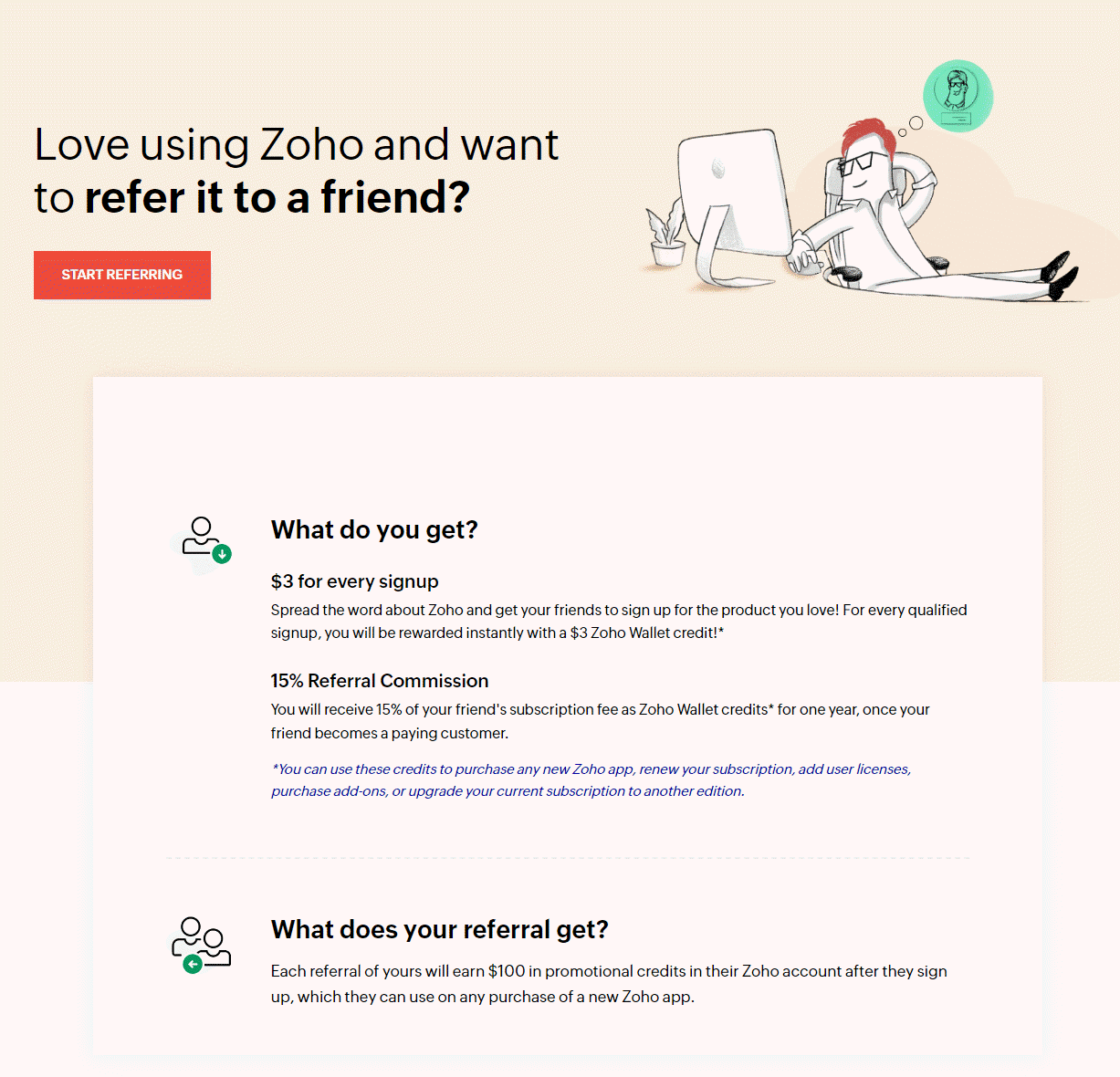
Zoho’s referral program offers product credits in exchange for successful referrals.
3. Decide who gets rewards and when
Next, decide how you’ll pay out the referral incentives.
- Dual-sided incentives are best. In addition to rewarding your customers for their referrals, you should also offer incentives to the referred lead and motivate them to make a purchase. Customers appreciate this as they have a chance to give something valuable to their peer, rather than “selling out” their friend simply to get a reward of their own.
- Think about using tiered incentives (increasing the value of the reward customers receive each time they make a successful referral).
- If you have a subscription business, think about offering recurring rewards whenever someone brings in a subscriber who ends up renewing their subscription.
- Another attractive structure is gamified incentives, which adds a bit of fun and competition to your program. For example, you can set up a raffle where every referral earns a drawing entry for a big-ticket prize. You can also hold a competition, where the customer with the most successful referrals in a month earns an extra reward.
Use our referral reward calculator to determine how much to offer the sharer and their referral, for the best ROI.
4. Use multi-step rewards for long B2B sales cycles
To make the most of your B2B referral program, tailor it to the distinct needs of the B2B purchasing process. A company often goes through a long sales cycle with many steps, and a decision-making process with several stakeholders, before buying a B2B product or service.
Given this, how to motivate customers to continue sharing, since they’ll likely have to wait a while before they receive a referral reward for their friend’s purchase? Keep engagement high by rewarding people who refer qualified leads to your business, and then providing a bigger reward if that lead ends up purchasing. This is known as a multi-step referral program.
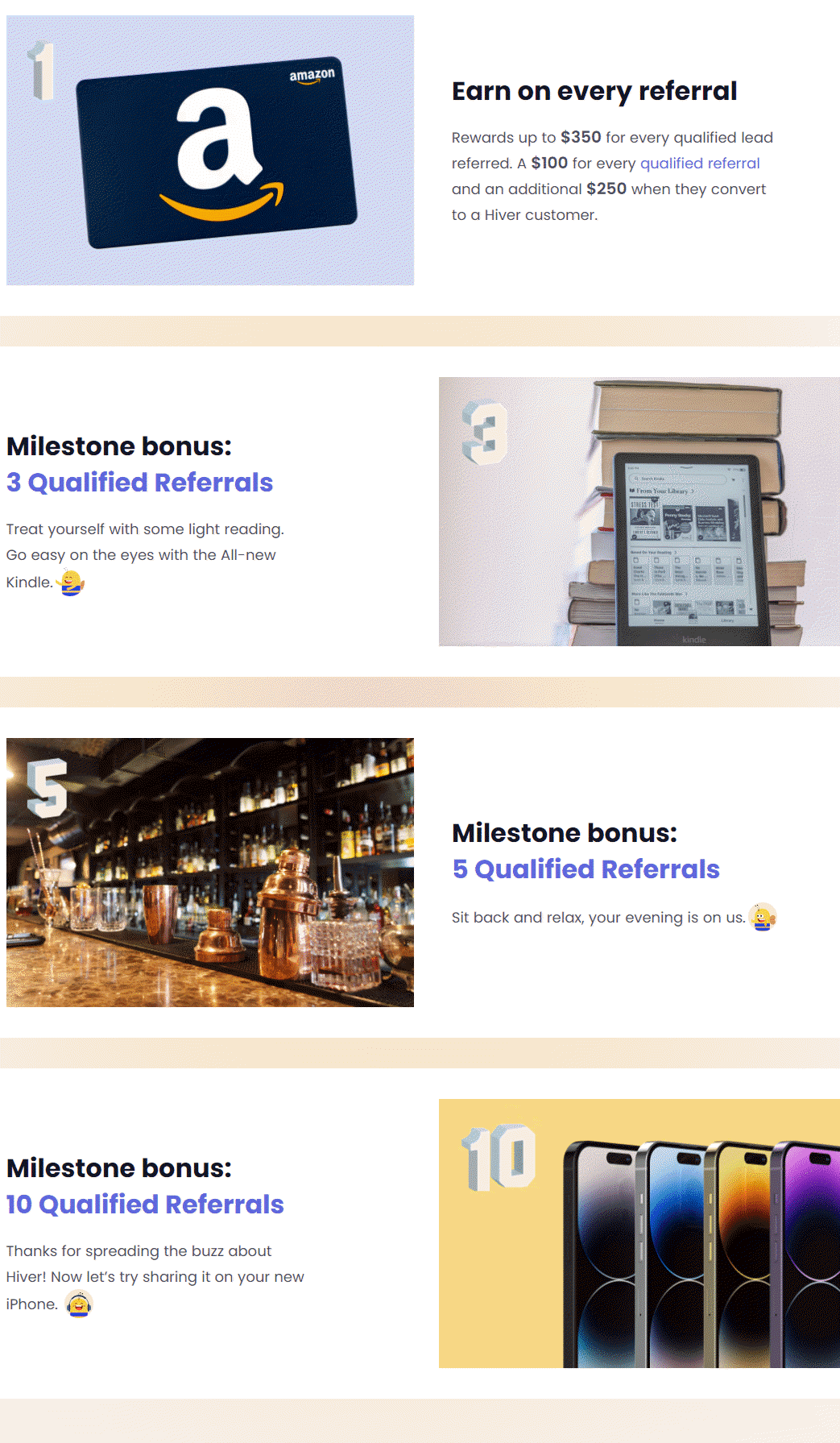
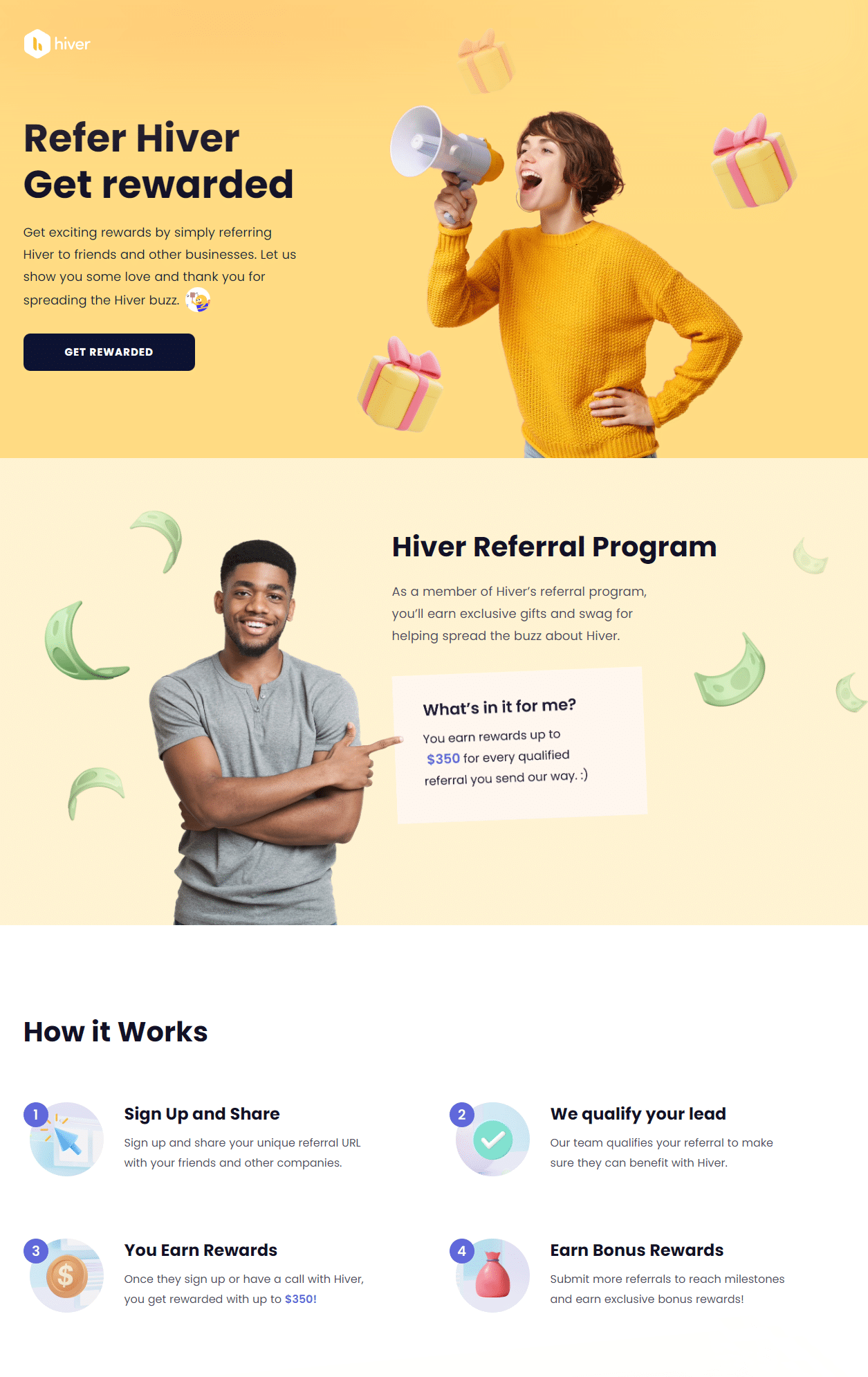
Hiver uses a multi-step structure, where customers earn some Amazon credits for referring a qualified lead, then more Amazon credits once that lead purchases a plan. They also offer tiered milestone rewards, which increase in value with every qualified referral someone makes.
Referral Rock is flexible enough to handle complex rewards, like tiers, bonuses, and stepped structures. Set up the incentives that fit your business, then let our platform send the payouts automatically.
A multi-step referral program in Referral Rock might look like this:
- Customer A earns $15 when their referral books a demo with your company
- Customer A earns $25 when the referral purchases an annual subscription to the product (and this could recur annually if you opt for a recurring rewards program)
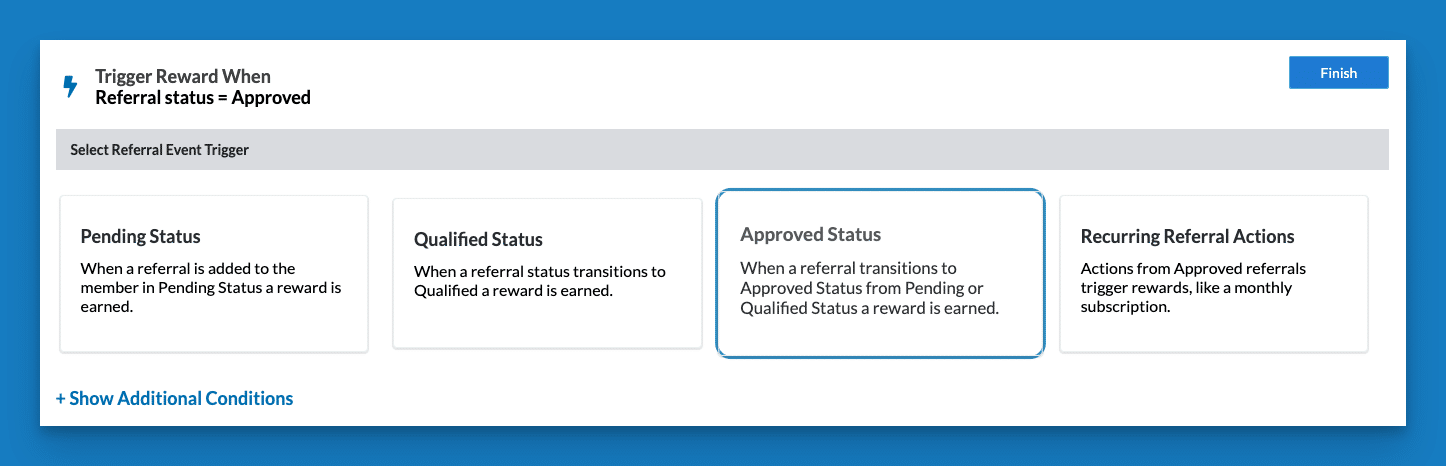
Here’s a snapshot of how you can set up advanced reward rules in Referral Rock:
5. Make sharing easy
If your referral process takes too many steps or is unclear, you’ll lose valuable opportunities. A few principles:
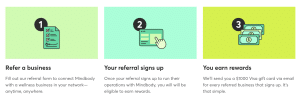
Keep the program simple to understand. Use your headline and program description to clearly state what you want customers to do, what’s in it for them, and what the referred friend gets. Explain it in 3-4 steps max. MINDBODY’s approach of breaking it into a few clear steps is worth emulating.
Give every member a referral code or referral link. These tie each customer to their referrals automatically — no manual tracking, and customers can copy-paste them into any message.
Include a clear call to action. The referral button should stand out and prompt the right action. “Refer a business” or “Give [reward] to a colleague” works better than generic “Share now” language.

Create an FAQ page. An FAQ handles the detailed questions — terms, conditions, how rewards are paid — without cluttering your main referral page. It also reduces the volume of support requests your team fields.
6. Keep access open — everyone’s already in
Most referral programs make customers jump through hoops to join: fill out a form, create an account, wait for approval. Every hoop is a referral that doesn’t happen.
The best B2B referral programs flip this. Instead of asking customers to join, everyone is already a member. Each customer gets a unique link or code by default — no signup required, no friction, no join button. You never know who your most enthusiastic referrers will be. Gating the program preemptively means you’ll never find out.
This is Open Access, and it changes the economics of your program. Keeping it open means the person who would have referred five clients — but didn’t bother with the form — actually refers them.
Referral Rock‘s automatic enrollment features and access links put this into practice: include them in all the emails you send to promote your referral program so customers can start sharing immediately, already enrolled. They’ll only need to enter minimal information about their peer to send the referral.
The concern most companies have about open access is fraud. Handle it progressively — use detection rules to flag exceptions rather than restricting the entire program upfront. Assume good intent. Prepare for the exception, not the rule.
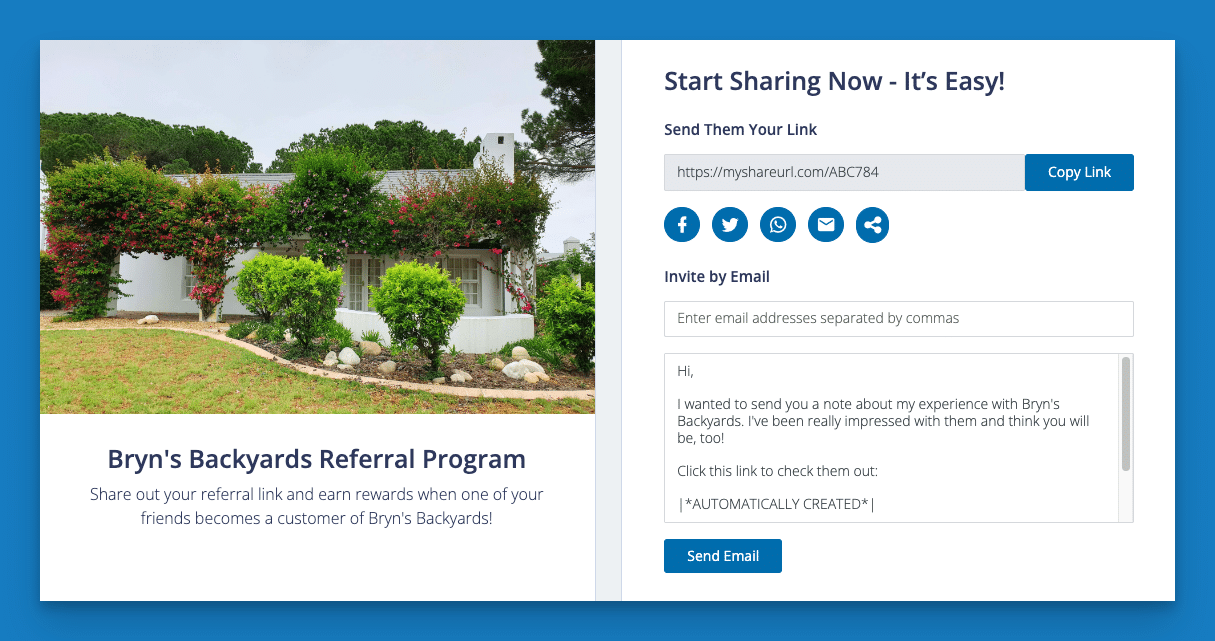
7. Craft a referral message that sounds like your customer
In any referral program, it’s important the very first contact a referral has with your business comes directly from the existing customer. So, craft a compelling, personalized message from the customer’s perspective.
Make things easier for the customer with a pre-drafted referral message. But give them the opportunity to customize part of the message before sending it to their peer, so they can explain personally why they love your business.
Here’s an example email template:
- An initial greeting (“Hi [name], I hope you’re doing well. I thought you might be interested in [business]”)
- A short introduction to your business, from the referrer’s perspective
- Space for the customer to share the benefits they’ve seen thanks to your business, if they choose.
- The referral code or link, along with any reward available to the referral
Remember that the message should read like it’s coming from the customer, not from your brand.
A share carries further when it feels personal at every step, from the invitation sharers get, to the message they send their referrals, to the page their referral lands on. Here’s how to personalize the share experience with Referral Rock.
8. Treat promotion as an ongoing operation, not a one-time push
This is where most B2B referral programs break down. The typical playbook: launch the program, send an email blast to your customer list, see a spike of activity, then watch it fade. The list goes stale. New customers never hear about the program. The program becomes an artifact, not an engine.
A referral program that keeps running requires continuous promotion — not campaigns with a start and end, but touchpoints baked into how you already operate.
Proactive invites: Start by personally inviting your best customers. Let them know you specifically chose them. Then, as new customers come on, invite them as part of onboarding — not six months later when they’ve forgotten who you are. Send monthly emails to all customers so new members always hear about the program. Use Monthly Summary emails to keep existing sharers engaged with their own referral activity. Send reminders to sharers who haven’t referred within the quarter, and time personal notifications for shortly after someone makes a purchase, completes onboarding, or hits any other milestone that shows they’re satisfied.
Discovery paths: Make the program findable in the places customers naturally look — your website homepage, your customer portal or app, email signatures, post-service follow-ups. Customers who have a great experience want to share it in that moment. Give them a path to do it.
Program recruiters: Train your team to promote your referral program during follow-ups and check-ins. Your service people are in front of satisfied customers every day. They’re the most credible promotion channel you have.
Contact lists go stale in two to three months. New customers don’t know the program exists unless you tell them. Continuous promotion solves both problems by treating the referral program as something the whole business operates — not something marketing launches once.
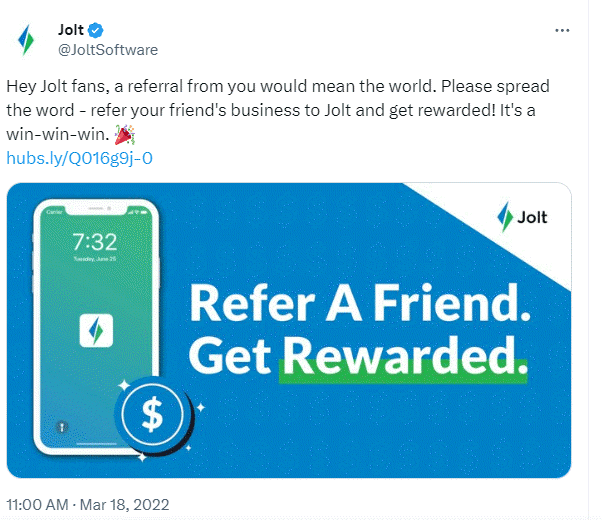
9. Automate with referral software built for B2B
Referral systems have a lot of moving parts. For busy companies, automating some routine steps will make the entire referral program easier to run and increase your odds of success. Thankfully, there are a lot of good B2B referral software options out there to help manage your program’s success. But choose carefully. Many referral software programs are targeted to e-commerce or B2C businesses, and don’t properly account for the complexity of B2B sales.
At Referral Rock, we support the complex needs of B2Bs with:
- Multi-step reward programs (where customers can be rewarded at both the “qualified lead” stage and the “closed won” stage, if you want)
- Automated payout options, including gift cards, PayPal, Wise transfers, coupons, or custom rewards
- Recurring workflows, event-based invites, and other automation to promote your program over time
- Seamless integration with your CRM to track referrals and trigger rewards (including HubSpot and Salesforce)
In addition to creating a database of all your customers and their referrals, referral software generates the referral links and codes needed to automatically account for each action and reward customers for their referrals.
10. Analyze and qualify your referrals
When new referrals and leads start coming in, it helps to have an efficient process to analyze and qualify these potential customers. Start by checking for the referral’s position in the company. Are they a decision-maker in the purchasing process? Is the company the right size for your product or service? Can your company meet its needs?
Next, get some background info about the company, their industry, products, etc. You can even reach out to the referring customer for any any details about the referral. Why did they think the company would be a good fit? Find a good jumping off point to explain how your business will meet their unique needs.
Then have someone on your sales team personally contact the referral to introduce your company. If your marketing team doesn’t properly hand off a B2B sales lead referral to your sales team, and sales doesn’t follow up efficiently, you’ll lose the sale (which might also dissuade customers from referring others).
11. Personalize the referred lead’s experience
B2B businesses are looking for customized experiences, and the ways you connect with newly referred leads should also have that personal touch. Oftentimes, it’s the first experience the referral is having with your company.
The type of page you send the friend to is a crucial point to enhance their experience. Don’t send them to a generic page, as this creates a disconnect.
Instead, use a personalized referral landing page, as this leverages the trust people place in the referrer as an “unfair” advantage vs. your normal landing pages.
Let friends know they got an exclusive reward from their peer, and that the reward will be applied automatically when they purchase.
Also, show how the potential buyer how your solution can meet their needs based on their industry, role, and company size, plus their unique pain points.
12. Track the metrics that show your program is working
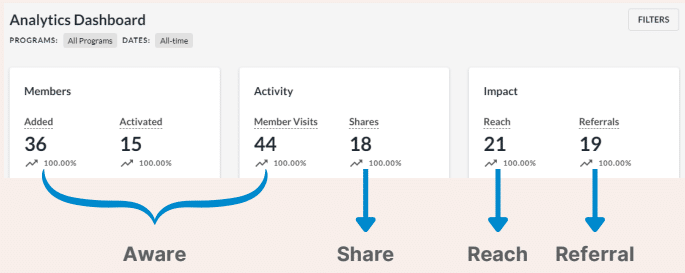
To know if your referral program is successful, set detailed goals and implement tracking systems to measure whether you’re on the right track to reach these goals. How to measure the results of your B2B referral program? At Referral Rock, we recommend tracking these metrics, as they are key indicators of program success:
- Awareness of the program: How many new members were added? How many were activated (how many first engaged with the program)? How often do potential sharers visit your member portal?
- Shares: The number of times people shared you with other businesses, by sending out a referral link
- Reach: How much brand awareness your program is generating (how many referrals click on referral links, regardless of whether they buy).
- Even if a referral doesn’t purchase right away, they could come back now that they know the benefits of your brand.
- Measuring traffic generated from your program shows you if the messages and offers shared by your referring customers bring people to your website.
- (Converted) Referrals: The number of referred leads who ultimately make a purchase, relative to the total number of referred leads.
Using referral marketing software can make measuring your program’s ROI much easier, with built-in analytics, referral link tracking, and reward payout features. Even after you set up your referral program, software can help you easily refine and improve your program. For example, you can experiment with different referral messaging or types of reward to see what your customers and referrals respond to best.
Referral software for B2B [Free Tools]
These referral tools for B2B are a free and easy way to help you start your referral program.
Free Tools + Services:
- Create your own referral codes - [Referral Code Generator]
- Track referrals manually - [Manual Referral Tracker - Spreadsheet]
- Build referral links - [Referral Link Generator]
- Get best practices and actionable guidance - [Referral Program Workbook]
- Readiness Assessment - [Free Consult]
- Online referral software - [Free Trial]
Want a automated referral system for your B2B business? Uncover referrals in plain sight to smooth out business lulls, without losing focus on your real day to day work helping customers.
Check out our referral program software - done right.
Best B2B referral program examples
Before we wrap up, let’s look at some of the best B2B referral programs out there. Each one illustrates a specific principle from the tips above.
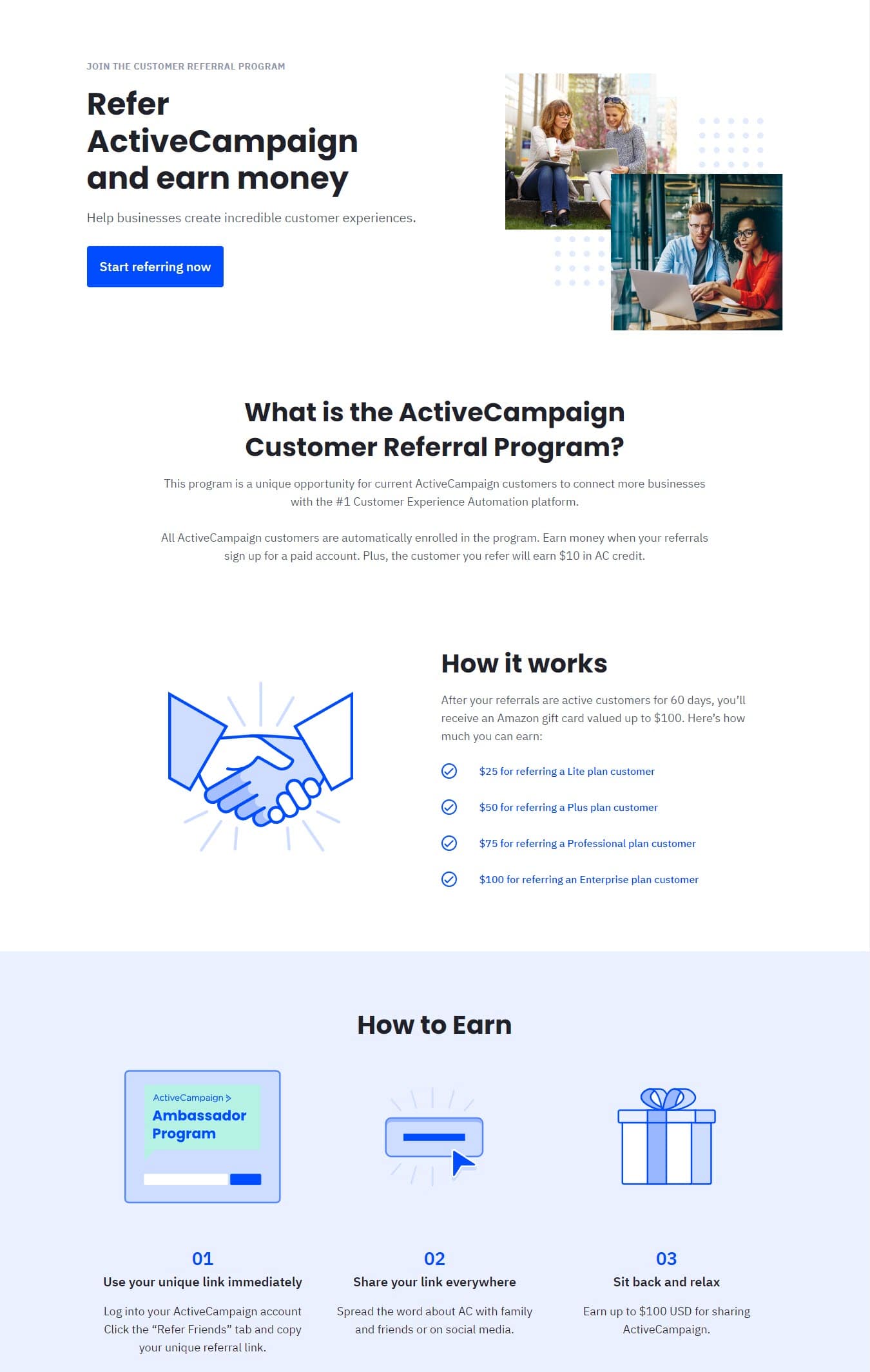
1. ActiveCampaign
ActiveCampaign knows how to turn customers into reliable brand ambassadors. It’s easy to refer ActiveCampaign’s marketing automation tool, as all current customers are automatically enrolled in the program thanks to referral software. Logged-in clients can copy their referral link right from their portal. No need for an extra step.
We also love that stakeholders earn rewards based on the value a newly referred ActiveCampaign customer brings to the company. Incentives range from $25-$100 in Amazon credits, based on the cost of the plan the referred customer bought. And for customers who regularly create content, ActiveCampaign offers a separate affiliate program for those who want to earn passive income through promotion.
2. Hiver
We highlighted their rewards earlier, but Hiver is such a great B2B referral program example, so we’re featuring it here as well. Eye-catching images grab customers’ attention, and little mascot icons show they’re not afraid to have fun.
Hiver explains the program in four simple steps, which makes the sharing process easier to understand. If customers have any more questions, an FAQ breaks things down and they’ve even made a chat feature available. We also love how the testimonials on the referral program page can remind customers why they love Hiver and should share this help desk software.
And of course, we can’t forget about the rewards! As we featured earlier, Hiver uses multi-step Amazon gift card incentives to reward both referrals of qualified leads and sales. Then, when customers refer enough qualified leads, they become eligible for bonuses like a Kindle and an iPhone, in an awesome tiered system.
3. GetResponse
Email marketing software GetResponse offers a double-sided, tiered B2B referral program. When someone refers another business that signs up for GetResponse, both the existing and new customer are rewarded with $30 in credit that can be used toward their subscription.
Best of all, when a customer makes three referrals then result in sales, they receive another high-value reward – a free Digital Marketing Certification course of their choice. These GetResponse courses are normally valued at $200, with interesting topics such as email marketing, marketing automation, landing page optimization, and inbound sales. 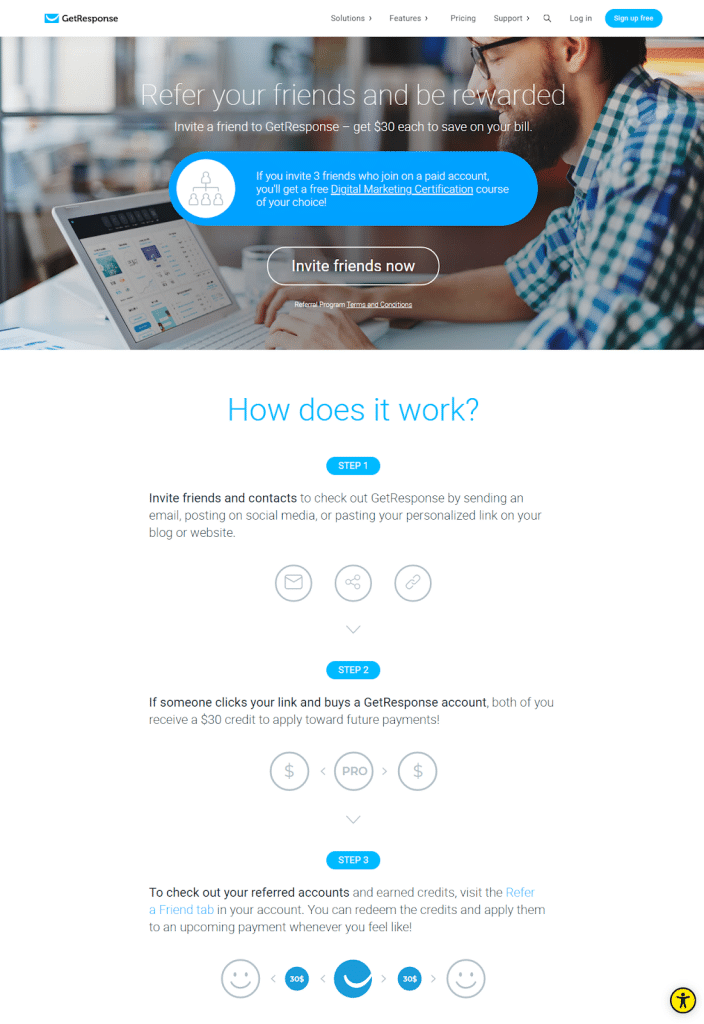
4. FreeAgent
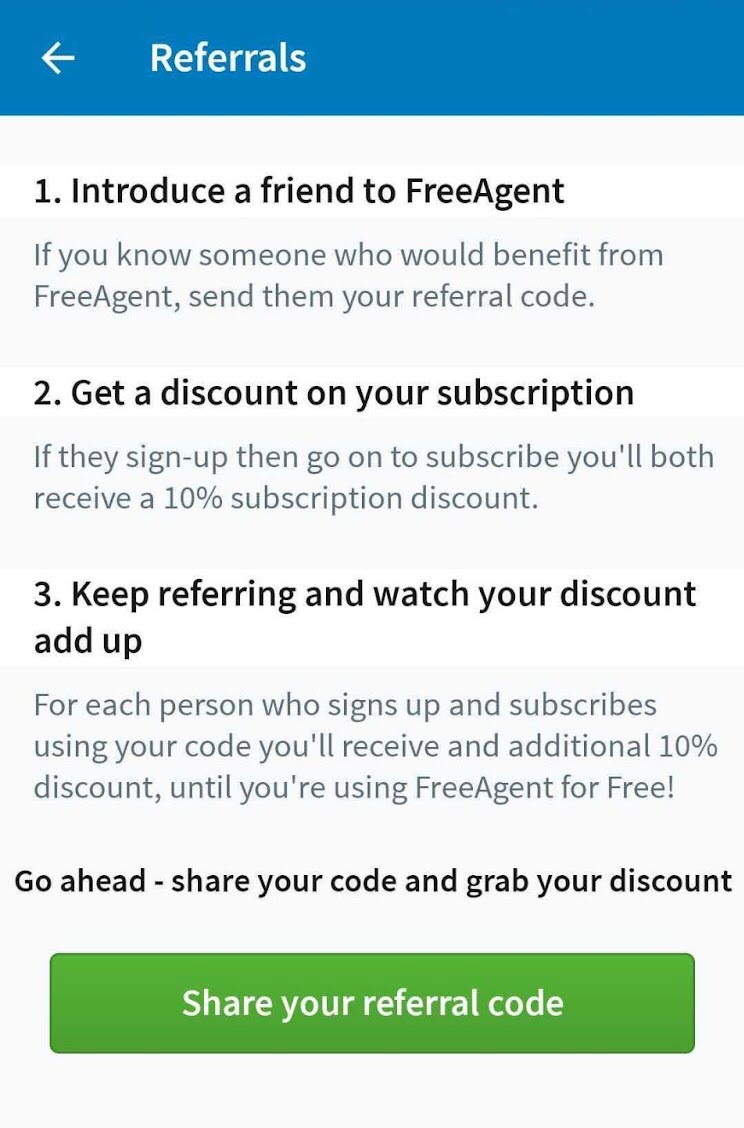
Small business accounting software FreeAgent offers a valuable referral program for its direct customers. When a FreeAgent customer refers someone who eventually becomes a paid user, both the referring customer and new customer receive a 10% discount on their subscription. A unique feature of this discount is that it lasts as long as both customers stay with the company (so a single referral can lead to a lifetime discount for both parties).
But since the referral reward is a recurring discount, how does FreeAgent encourage customers to make multiple referrals? The program allows customers to stack the discount, with an additional 10% off the customer’s subscription for every succeeding referral who stays subscribed. This means FreeAgent effectively becomes free to use for any customer who refers 10 new customers (as long as all the customers keep active subscriptions, which creates a lifetime value for the company).
With a reward like this, it’s easy to see why FreeAgent’s program made our list of the best B2B referral program examples! And the pot gets even sweeter. Once a customer makes 10 successful referrals, they are now eligible to earn commission fees for continuing to refer others. In other words, they can become an affiliate or partner of FreeAgent and get paid to continue their advocacy.
5. DigitalOcean
DigitalOcean provides cloud, development and hosting services for businesses and developers to create powerful websites and software. Their referral program features a unique reward structure, to reward businesses when the peers they refer start to commit to the service, but motivate new B2B customers to commit earlier in the process.
If someone refers a business or decision-maker, and the referred lead adds their payment method, the lead gets a free $100, 60-day credit. (The limited time offer of credit promotes a sense of urgency). But the referring business doesn’t earn a reward until the peer they recommended spends $25 on their own. Once that happens, the referring business also earns $25 in DigitalOcean credit. 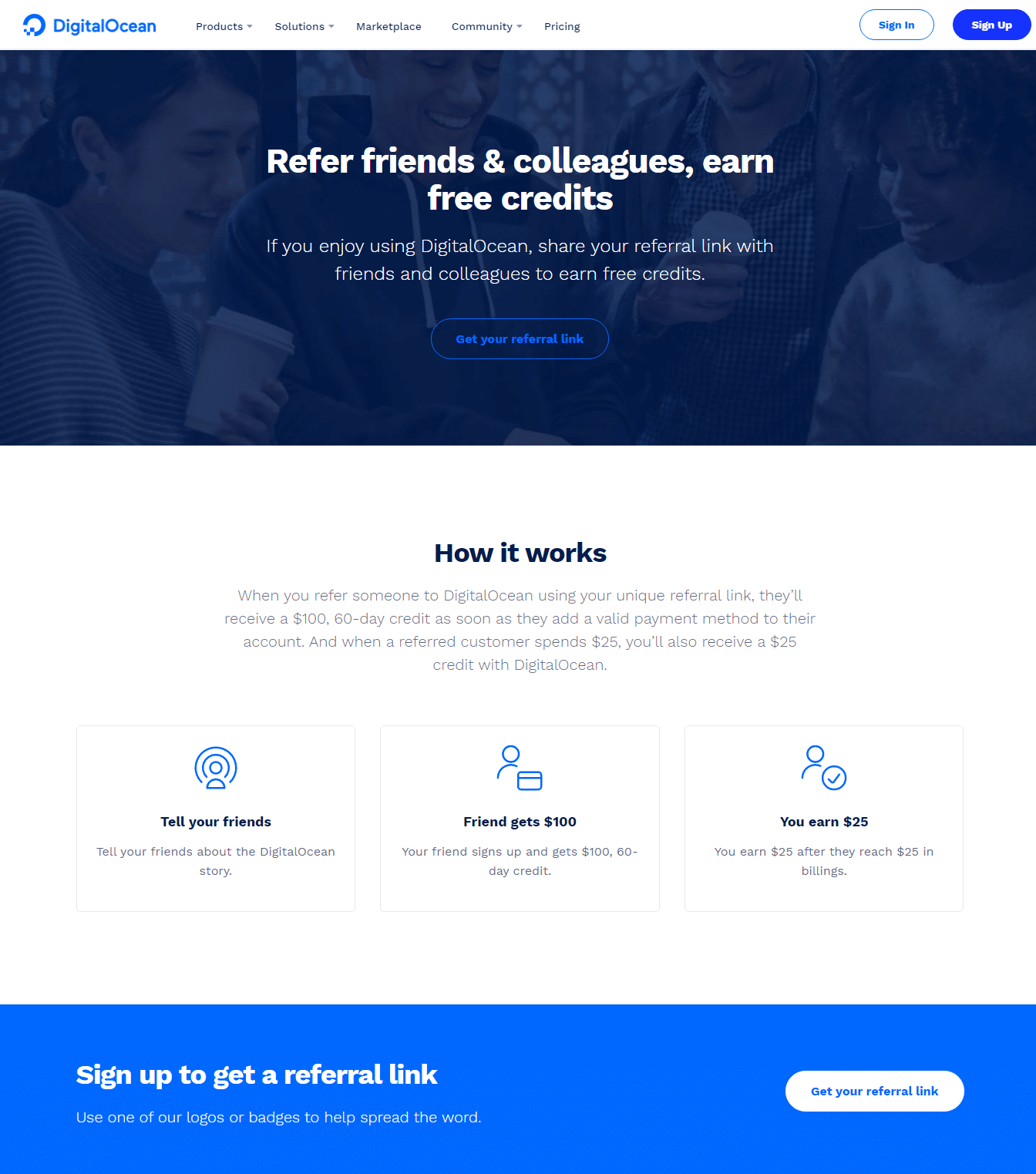
6. Bench
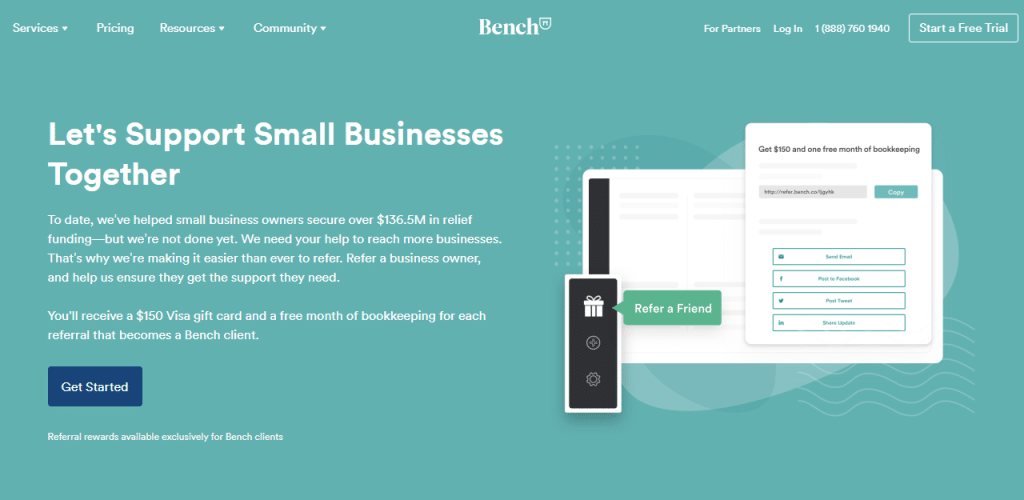
Bench is a B2B SaaS company that offers relief funding and bookkeeping services. For every referral that joins them as a new customer, the referring client receives a $150 Visa gift card and a free month of bookkeeping (a reward that ties back to the company, plus a reward they can use however they want).
There are no limits on the number of leads a customer can bring in, either. So, clients can keep sending in new B2B leads and earning funds back for their efforts. They could potentially earn a year, or more, of free services in return for referrals!
7. Gusto
Gusto is an all-in-one payroll, benefits and HR software solution that helps businesses manage their employees with ease. It simplifies the complexities of taxes, compliance and benefits so business owners can focus on running their business. As part of Gusto’s referral program, customers can earn a $300 visa gift card for every referral they bring in, and the person they refer will also get a $100 gift card.
Gusto does a great job of highlighting their referral program by including a callout in customer dashboards under “Refer & earn,” as well as in the Personal details dashboard of every account. 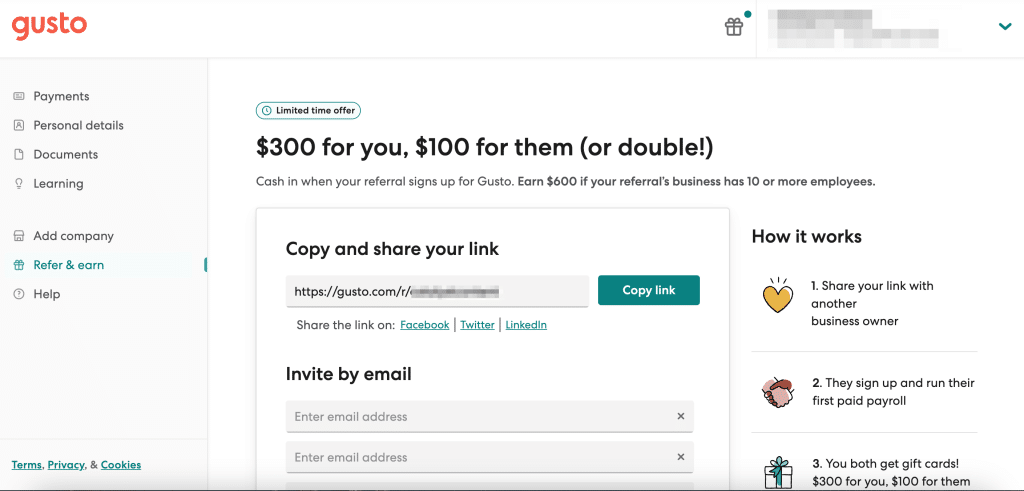
Wrapping up
A B2B referral program doesn’t generate word of mouth on its own. It captures and amplifies what’s already happening — conversations your customers are already having about you. If that foundation is there, the system works. If it isn’t, no amount of promotion will save it.
Start with the readiness check. Then build the system, not the campaign.
Book a consultation to learn more about how referral marketing could work for your business. And if you’re part of a B2B SaaS company, don’t miss our dedicated referral program guide for SaaS businesses.