
Affiliate marketing has an obvious appeal for small businesses: you pay only when affiliates drive a sale, they bring their own audiences, and your reach multiplies without a big upfront budget. But it doesn’t work for every small business. Before you recruit a single affiliate, there are things you need to have in place — and if you don’t, a customer referral program will serve you better. This guide covers what affiliate marketing actually is, how to tell if it’s the right fit for your business, and 9 steps for starting a program without getting burned by affiliate networks.
What are affiliate marketing programs?
Affiliate marketing programs involve a brand recruiting content creators and entrepreneurs (“affiliates”) to promote its brand, products, or services. Affiliates can be influencers, bloggers or vloggers, or well-known creatives and personalities who have an established base of loyal, engaged followers. Think of a food blogger promoting their favorite pots and pans as an example.

Affiliates share trackable affiliate links to the brand’s website on their blog and social media posts, websites, newsletters, or other marketing channels. In many cases, the affiliate also creates promotional content for the brand — a blog post, video, or product review, for example — and includes those links for the viewer to get further information or buy the product. This both drives sales for the business, and creates brand awareness among a larger audience — at a lower cost.
The affiliate, in turn, gets commission every time someone makes a purchase through their affiliate link. This allows them to earn passive income while they drive traffic, generate leads, and increase sales for your small business.
Is affiliate marketing right for your small business?
Even though affiliate programs are a great marketing tool for many small online businesses, keep the following criteria in mind before you decide to launch your own affiliate marketing campaign:
- Do you know your profit margins? Your profit margins determine how much you can spend on affiliate commissions. At the end of the day, most affiliates will only promote your brand for the right incentive.
- Are you ready to pay commission on every affiliate-driven sale? If your business is relatively new, you may not be ready to pay affiliate commission for every sale. Or, you may not be able to offer a commission that’s attractive enough for best-fit affiliates. In these cases, it may be best to launch a customer referral program instead, where you can offer store credit, discount coupons, or other rewards to your best customers.
- Does your product have mass appeal? Affiliates promote your brand to a wide range of people. If your product doesn’t have a wide enough appeal to hook a large target audience, you may not get the full value of an affiliate program.
- Do you sell physical products? Physical products are generally easier for affiliates to promote, particularly on more visual mediums like Instagram, YouTube, and TikTok. So, affiliate marketing works best if you’re in an ecommerce or digital product space. If you sell services, you can still find affiliates, but they might target a more niche audience — and you may have to work harder to have them demonstrate your offering.
- Do you have access to good-fit affiliates? Are there content creators who you can easily access and who have audiences that match your own target audience? More popular creators may not be within reach of smaller businesses because they demand higher commissions and brand recognition. In the earlier stages of your business, finding the right content creator to work with your brand may prove difficult.
Why some small businesses are better off with a referral program
Before deciding between these two options, it helps to understand what makes them fundamentally different.
Affiliate programs are partnerships with content creators and experts. These authorities promote your brand to their own audiences in exchange for a commission. You’re essentially paying for reach. The relationship is between you and an external partner who may never have been your customer.
Customer referral programs work differently. They tap the customers you already have — the people who’ve used your product or service and would genuinely recommend you to someone they know. Referral marketing is peer-to-peer sharing, not influencer promotion. You’re not buying reach; you’re capturing word of mouth that’s already happening.
That distinction matters for small businesses because the readiness criteria are different. An affiliate program makes sense when you have products with wide appeal, margins that support ongoing commissions, and access to good-fit content creators. A referral program for your small business (sometimes called an informal small business brand ambassador program) makes more sense when:
- There’s no room in your budget to pay cash commissions on every affiliate-driven sale
- You want to encourage customers to share with people they know — friends, family, colleagues, community members
- Your business may not be well-known enough yet to attract the right content creators
- Your product or service appeals to a niche audience rather than a broad one
If people are already recommending you to friends and neighbors, you have something worth capturing. A referral program turns that from random to reliable — without the overhead of managing external partners. Learn more about the differences in our guide comparing referral programs to affiliate programs.
Whichever direction fits, our referral software platform is flexible enough to help you start an affiliate program or a customer referral program to grow your business.
Benefits of affiliate marketing for small businesses
If you decide your small business is a good fit for affiliate marketing, here are the benefits you can expect:
✅ Affiliate programs harness the power of social proof
Social proof describes how people look to what others are doing as a basis for their actions – including what purchases to make. This word-of-mouth sharing has a powerful influence on purchasing behaviors. Research shows that 97% of consumers look for reviews and recommendations (one type of social proof) before buying online.
Affiliates have already established trust with their followers through their content — so when they share about your business, followers are more likely to believe what they have to say.
✅ Affiliate programs create brand awareness among a larger audience
Each affiliate has their own audience of fans and followers eager to learn from and engage with them. There’s an established level of trust. When your affiliate puts your business in front of their audience, your reach multiplies and you can grow your base of new customers by leaps and bounds.
You get to deliver your products and services to new audiences, and increase the number of potential customers who buy from you.
✅ When done right, affiliate marketing is cost-effective
Affiliate marketing is more affordable than advertising or hiring a marketing agency for your small business. The only real cost is the commissions you give your affiliates. But since you set the commission rates, your risk is minimal compared to other forms of marketing.
And because affiliate marketing is performance-based, you don’t pay anything to affiliates unless they generate a sale for you. You’re only paying when you see results – there’s no upfront cost to recruit an affiliate.
✅ An affiliate’s expertise helps expand your marketing
For small businesses that can’t hire full-time marketers or consultants, an affiliate’s marketing efforts can bring much of the same value. Since they have their own brand, affiliates have years of on-the-ground experience of converting prospects to sales.
As a small business, affiliate programs let you compete with bigger companies (and their bigger budgets) without breaking the bank.
✅ Your small business still maintains control
With an affiliate program, you decide how you want to manage your affiliate marketing relationships and resources. While the actual legwork still gets done by the affiliates, you are still in charge of deciding how they’ll promote you. Whether it’s the specific messaging or look of your campaign, you have full control over how your business is presented in the market.
9 steps to starting a small business affiliate program
To make sure your small business is getting the most out of its affiliate program, follow this step-by-step guide:
1. Build a strong brand
Your brand is what will attract the right affiliates to your business, no matter what its size. Tell the story of why you founded your business, the uniqueness of your product, and how it meets a need in the market.
All of these aspects come together to create a strong brand that affiliates will not only want to be a part of, but love to share with their own audience.
2. Set realistic program goals
As a small business, it’s key to set a realistic goal for your affiliate program — one you can achieve within a planned timeline. Start with small goals and work your way up. Goals don’t always have to be in the form of “number of sales” or “revenue generated” — you can also set goals for the amount of traffic affiliates direct to your website, or monitor direct/branded search for your business to see if it goes up. Decide how you will measure performance and track metrics regularly so you know where you’re lagging and what to improve.
3. Build your program with affiliate software
The easiest and most efficient way to create your own small business affiliate program is to use affiliate marketing software. A ready-to-use tool will automate all the tasks involved in running a program, including enrolling new affiliates, keeping track of affiliate referrals and sales, and managing payouts.
You’ll also have complete control over your data, which can inform what affiliate relationships are the most valuable and generating the most sales. (This is an advantage of affiliate software over third-party affiliate networks, which hold on to your data and control all affiliate communication.)
The best affiliate software programs also come with dedicated customer support and educational resources, giving you all the help you need to set up your program correctly.
4. Choose the right commission structure
Your affiliate commission rates should be attractive and worthwhile for your affiliates, but also be reasonable for your business. Start by analyzing how much of the profit you make can be allocated towards a commission.
Research your competitor’s affiliate programs to get a sense of the average commission rate in your industry.
You can also attract more affiliates with added incentives. Aside from a set commission rate, you can also create performance tiers, where the top affiliates get bigger rewards with larger commissions or bonuses.
Whatever structure you choose, as a small business, it’s advisable to pay commissions only after a sale has been made. Don’t pay per click, and don’t pay per lead.
Use our affiliate commission calculator to figure out the right affiliate commission for your business, whether it’s a flat fee or percentage.
5. Figure out how you’ll find affiliates
Now that you’ve ironed out the program details, it’s time to find high-quality content creators, such as online influencers or bloggers, to partner with you.
But how do you find potential affiliates? Don’t rely on an affiliate network, as they usually withhold affiliaet data and limit your ability to build relationships with creators.
Instead, manually search for specific keywords in your niche on social media channels. Also try online forums and Facebook groups, where you can easily see popular and trending influencers.
At this early stage of business, you’ll find it’s easier to connect with new or niche content creators with relatively small followings.
But if their tight-knit community consists of engaged and committed followers, these micro-influencers can be an extremely effective type of affiliate. And if you can find someone who’s familiar with your brand (or have even promoted you before organically), that’s even better!
6. Find and vet the right affiliates
Choose affiliates based on whether they’ll resonate with your target audience — do they share the same needs and concerns? Do they create content in a voice similar to your customers? The best affiliates should align with your core brand values and be willing to work in a long-term relationship with your business.
Affiliates are an extension of your marketing team, so do your research before accepting them into your program:
- Look through their social media profiles and website to get a feel for their personality, tone, and style.
- Look for consistent activity, a growing following, and solid engagement from followers.
- Comb through their public accounts for any potential red flags — spammy links or signs of unethical behavior.
- Ask about previous experience and results. Website visitors, follower count, or past generated sales will give you a sense of expected ROI.
- Ask for a concrete plan of how they intend to promote your brand.
At this early stage, you’ll often find better success connecting with micro-influencers — new or niche content creators with smaller but tight-knit, highly engaged followings. If you can find someone who’s already familiar with your brand or has promoted you organically before, that’s even better.
7. Create an affiliate agreement
Next, draw up an affiliate marketing agreement. Getting everything down on paper guarantees that both sides are clear on expectations and how the relationship will work going forward. Affiliate agreements should typically cover:
- Definition of terms and their relationship to each other
- Start and end dates of the agreement
- Details of how affiliates will promote your business on their website and social media channel
- Branding guidelines
- Any marketing or promotional restrictions
- The program’s commission rates and structure (how and when the payouts will be sent)
- Reasons for the premature termination of the contract, and the necessary actions to put the process in place
- Other specific terms and conditions
We’ve covered everything you need to write an affiliate agreement. There’s even a downloadable affiliate agreement template for you to use as a starting point!
8. Communicate well with affiliates
Create a system to send affiliates the latest updates and promotional announcements. Hold regular check-ins to connect with your affiliate partners and give marketing tips. Provide clear channels where affiliates can reach you for support. And highlight good performers in your affiliate communications to keep motivation high. Manage affiliates like the long-term partners they are — the relationship is what separates programs that compound from ones that go quiet.
9. Track affiliate sales
Tracking affiliate sales is necessary to know whether you’re reaching your goals and what areas may be slowing you down. Of course, not every small business will have the spare time and manpower to track an affiliate program.
In this case, we recommend using affiliate marketing software to make program optimization easier and automate the process end-to-end.
Referral Rock affiliate software lets you see how effective your program is at a glance, with dedicated dashboards to track all your affiliates’ activity in real time. Plus, you can customize your dashboard so you have full visibility on all the metrics relevant to performance.
Why small businesses shouldn’t use an affiliate network
An affiliate network is a third party that acts as a go-between for businesses and affiliates, with the main benefit being that networks can pair you with affiliates that match your business.
Going through a third-party affiliate network to jumpstart your program seems easy – at first. But if you want to run a successful affiliate program in the long run, your small business should stay away from an affiliate network.
Here are some reasons why:
❌ With an affiliate network, your small business doesn’t control the affiliate relationship
When you go through an affiliate network, you don’t have ownership over any of the key assets, such as the program data and affiliate contacts. Your affiliates belong to the network, which functions chiefly as a middleman.
You won’t have much visibility and not being able to form meaningful relationships removes a lot of the real value an affiliate program brings to your business.
❌ You’re forced to compete with other businesses in the affiliate network
When you put your products or services on affiliate networks, you often end up competing with more established businesses and more attractive offers.
For one, these businesses benefit from an established reputation and credibility. They also offer higher commissions or other added rewards, which can attract the best affiliates and leave your small business out in the cold.
❌ Affiliate networks can charge extra for commission and other services
Affiliate networks are known to charge up to 30% commissions on your sales. Furthermore, there can be many other fees associated with affiliate networks that you need to be aware of. Depending on the network, you may also be billed with setup fees and monthly maintenance fees.
For instance, the Commission Junction (CJ Affiliate) network charges a $3,000 fee for the initial setup. The ShareASale network has a one-time $550 network access fee, plus a $100 minimum deposit fee. (These are in addition to other charges from the networks.)
Small businesses with limited resources can find this challenging and oftentimes, not worth the added expense.
❌ Affiliates on networks might not be as authentic
An affiliate network is a marketplace that connects businesses with promoters who earn commission from the sales they generate. These engagements are transactional by nature — affiliates on networks are often promoting dozens of brands at once.
For small businesses that haven’t yet established themselves in the market, it’s hard to stand out or attract partners who are genuinely enthusiastic about what you offer. You’re better off reaching out directly to bloggers, influencers, or marketers who are sold on your business — people who’ll promote you because they believe in what you do, not because the commission happened to be competitive.
Why compete with bigger brands in a crowded marketplace when you can find partners who actually want to work with you?
Bottom line: Affiliate software is usually a better choice for small businesses (vs affiliate networks).
Grow your small business with affiliate software
When it comes to running a successful affiliate marketing program, the right affiliate marketing software can offer many more benefits over affiliate networks.
Affiliate software tools (affiliate platforms) are usually out-of-the-box solutions, which means that they’re easy to set up and run. But they also give you complete control over how you run your program, and often come with customer support in case you run into challenges during the setup, running, or maintenance phases.
A great advantage of affiliate marketing software is marketing automation. These specialized tools automate a lot of the backend processes required to maintain a profitable affiliate program. You’ll also have real-time access to all performance reports and communication tools so you easily manage your program.
While you’ll have to source your own affiliate partners, this also means you don’t have to compete with other businesses in an affiliate network, or pay any unnecessary fees that eat away a lot of your profit. Plus, you get to build authentic and meaningful relationships with your affiliates.
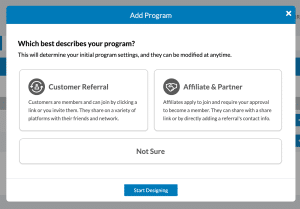
Running a successful affiliate program comes down to two things: the right software and the right partners.
Affiliate marketing software gives you full control over your data, your relationships, and your program rules — without the fees and constraints of an affiliate network. And if you’ve gone through this guide and decided affiliate marketing isn’t quite the right fit yet, Referral Rock runs customer referral programs too. Same platform, different approach — and you can always start with one and add the other later.