Most refer-a-friend programs put all the focus on the referrer. What do they earn? How big is the incentive? But the referrer isn’t the one you need to convince. Their friend is.
When someone shares your business with a friend, the friend’s experience determines whether the referral converts. The reward structure needs to account for both sides.
This article covers 8 refer-a-friend reward ideas, starting with the principle that makes any of them work: make the referral feel like a gift, not a sales pitch. Then we’ll get into specific reward structures you can match to your business.
What is a refer-a-friend program?
A refer-a-friend program turns your existing customers into a reliable source of new business. Customers share your product or service with people they know, and both parties get rewarded when the referral converts. The best customer referral programs use software to track who referred whom and deliver rewards automatically.
Refer-a-friend programs are different from affiliate programs. Affiliates don’t always use the products they promote. Referral programs rely on real customers recommending something they already use and trust.
Do refer-a-friend programs work?
When done right, a refer-a-friend program maximizes word of mouth, accelerates customer acquisition, and builds loyalty through social proof.
- 84% of consumers trust referrals from friends and family more than any other source of brand information. (Nielsen)
- Referred leads are four times more likely to make a purchase.
- Referred customers spend 25% more than other customers and are 37% more likely to make a repeat purchase. (Social Media Today, Deloitte)
Companies like Dropbox, Uber, and Airbnb built significant growth on refer-a-friend programs. But the results depend on getting the fundamentals right.
How to start a refer-a-friend program
Before you pick rewards, make sure you have something worth referring. If customers aren’t already talking about you (even informally), a referral program won’t create that word of mouth. It captures and amplifies what’s already there.
Once you have that foundation:
- Choose a reward structure that fits your business. Service businesses with longer sales cycles need different rewards than ecommerce companies with quick checkout flows. We’ll cover 8 options below.
- Account for both the referrer and the friend. Most programs focus only on the referrer’s reward. The friend needs a reason to act too (more on this next).
- Make the program easy to find and share. Give customers a unique referral link they can share in a few clicks.
- Promote continuously, not just at launch. A refer-a-friend program is ongoing operations, not a one-time campaign. Build it into your regular customer touchpoints.
The reward principle that matters most: Account for the friend
Most refer-a-friend rewards focus entirely on the person doing the sharing. “Refer a friend, get $20.” The problem: the sharer ends up feeling like they’re selling out their friend for a payout. The whole thing feels transactional, and people hesitate to share.
Flip the focus. Instead of centering the reward on the referrer, position the referral as a gift the sharer gives their friend. Your messaging, your program title, your emails, the offer itself should center on what the friend gets. We call this the friend factor.
When someone shares your business and their friend gets a genuine benefit (a discount on their first purchase, a free consultation, early access), the sharer feels good about it. They’re hooking their friend up, not selling them out. Don’t forget about the friend!
We recommend referral coupons as the friend reward, so referred friends have an extra incentive to take that first step. The sharer gets to be the hero, and the friend gets a real benefit. Both sides win.
Whatever reward structure you choose from the list below, run it through this filter: does the friend benefit too?
8 refer-a-friend reward ideas
Here are eight reward structures that work, with real examples. Pick the one that matches your business model and customer base.
Don’t make any of the common referral program reward mistakes. This video will help you avoid common pitfalls.
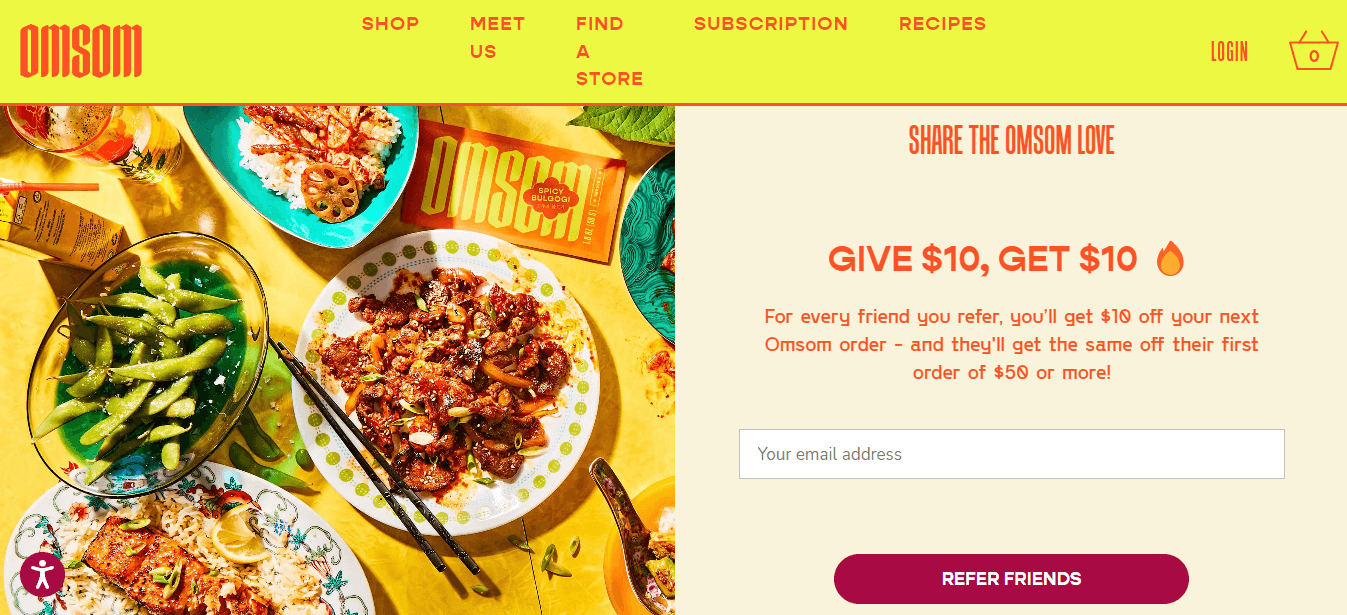
1. Store credits or subscription credits
Store or subscription credits attract customers who want to save money and encourage them to keep buying from your business. This type of reward doesn’t cost much either, since the credit goes toward part of a total purchase.
For many digital businesses, the expense is already baked into operations. But for customers, those credits feel like finding cash in their pocket. Credit-based referral programs work especially well for businesses selling digital products like software, courses, or ebooks.
Determine the exact credits (or discount) that you should offer with our referral reward calculator.
2. Donations to charity
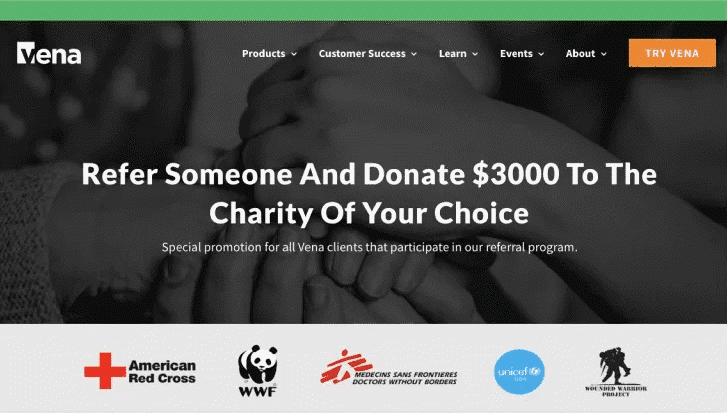
Choose a charity your business and your customers care about, and pledge to make a donation on the customer’s behalf for every referral. Better yet, let them pick the charity for maximum emotional connection.
Budgeting software company Vena donates to charities of a client’s choice whenever clients successfully invite friends.
Customers are increasingly committed to making a positive change in their communities. A charitable reward creates an emotional connection that goes beyond a transactional relationship. It doesn’t take much effort for customers to participate, but adding a social purpose may be the motivation they need to share.
3. Progressive rewards: tiered and multi-step
Tiered refer-a-friend programs offer larger rewards with every successful referral. The customers most active in your program reap the greatest rewards, which turns them into advocates who keep referring.
Razor company Harry’s used tiered rewards when launching their ecommerce site, ranging from free shaving cream to an entire year of free blades. The response: 100,000 emails gathered in a single week.
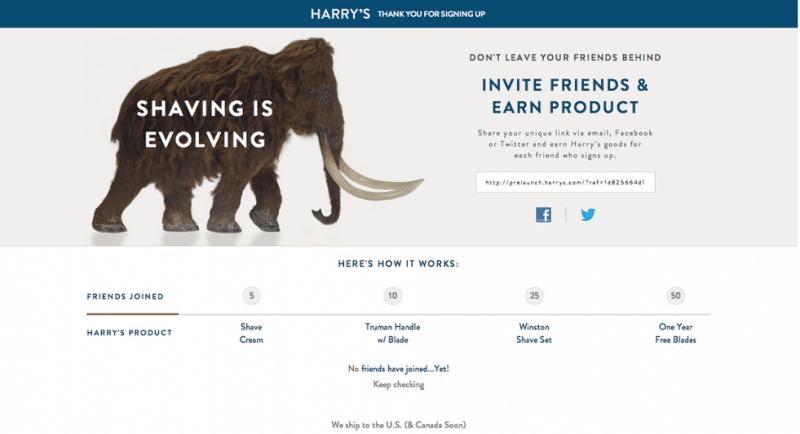
You can also apply this to discounts. For example, offer 20% off for the first five referrals, then 40% for every referral after that. The possibility of unlocking bigger rewards creates momentum. Once customers start referring, they want to reach that next tier.
Multi-step programs take a different approach: reward at different stages of the same referral. Give a smaller reward when someone’s referral becomes a qualified lead, then a larger reward when that referral makes a purchase. This works well for service businesses and B2B companies with longer sales cycles, where the smaller early rewards keep referrers motivated while the final purchase takes time.
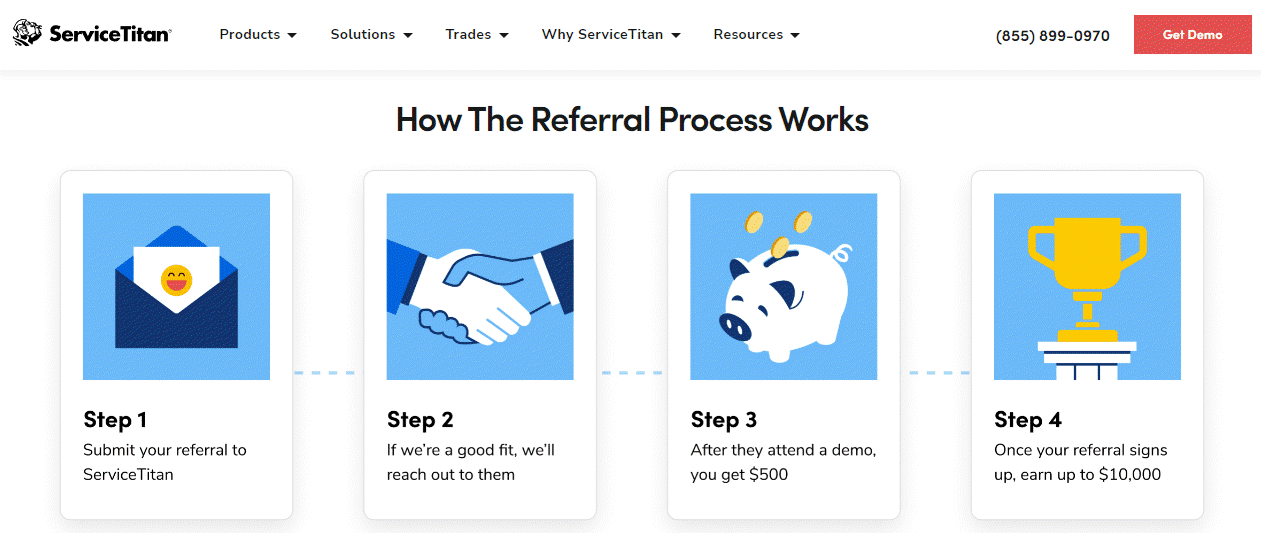
Referral Rock handles both tiered and multi-step reward structures. Set your reward tiers or steps, and the right rewards pay out automatically when earned. Referral Rock integrates with over 50 tools including HubSpot and Salesforce for tracking referrals through different buyer journey stages.
4. Premium access and upgrades
Create an elite tier for your most active referrers with perks like early access to sales, free products, VIP events, or priority support. People work harder for rewards not everyone can get, and it creates a tiered customer experience that fosters loyalty among your best advocates.
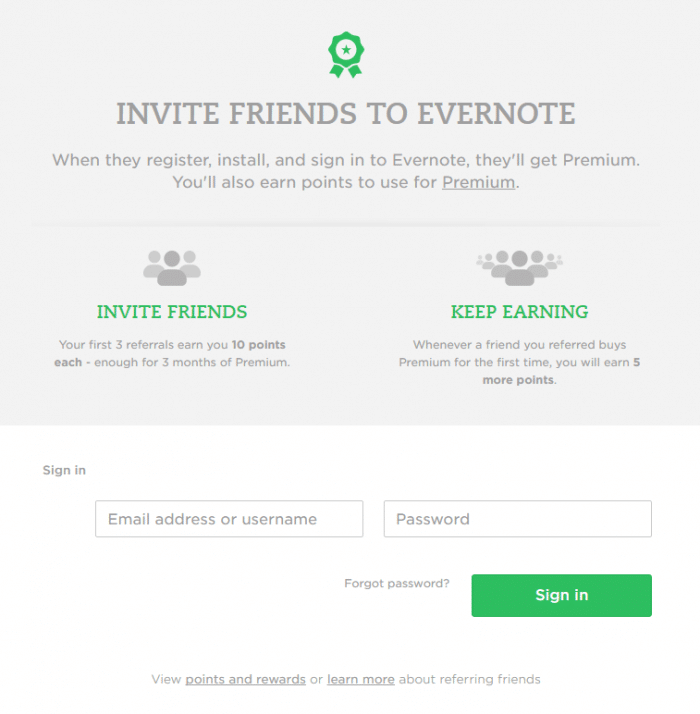
If you sell software or digital products, offer premium add-ons or a free month of your top-tier package. Evernote does this with service upgrades for successful referrers. Once people experience your premium offering, they often can’t go back to basic. It’s a “try before you buy” strategy that converts free users into paying customers.
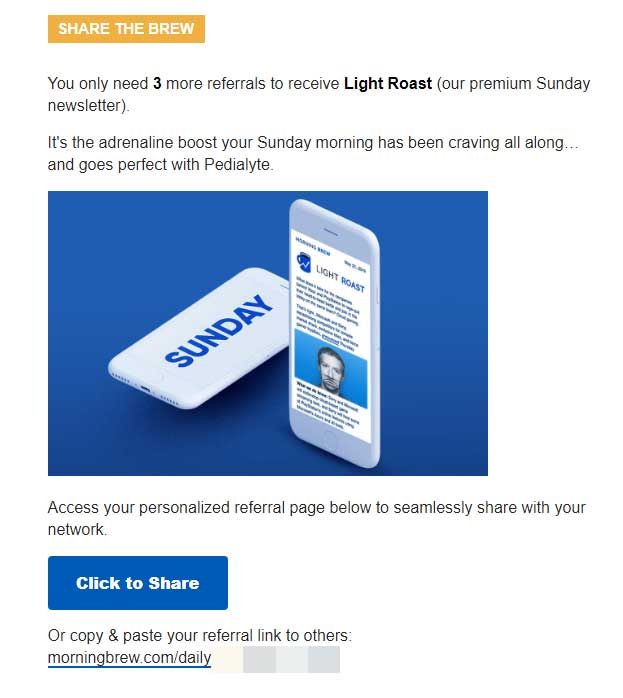
You can create multiple tiers within your VIP program, with increasingly better rewards for your top referrers (say, the top 10 or 20 members). Morning Brew’s newsletter referral program uses this approach: once a subscriber hits a certain number of referrals, they get the premium Sunday newsletter for free.
5. Repeated reward incentives
Sometimes simplicity wins. Offer the same reward (cash back, discounts, store credit) consistently, but let customers earn it repeatedly over time.
Design and print company MOO offers customers $20 for every qualified referral, with a maximum of 500 referrals (up to $10,000 in earnings) per year. The opportunity renews automatically each calendar year
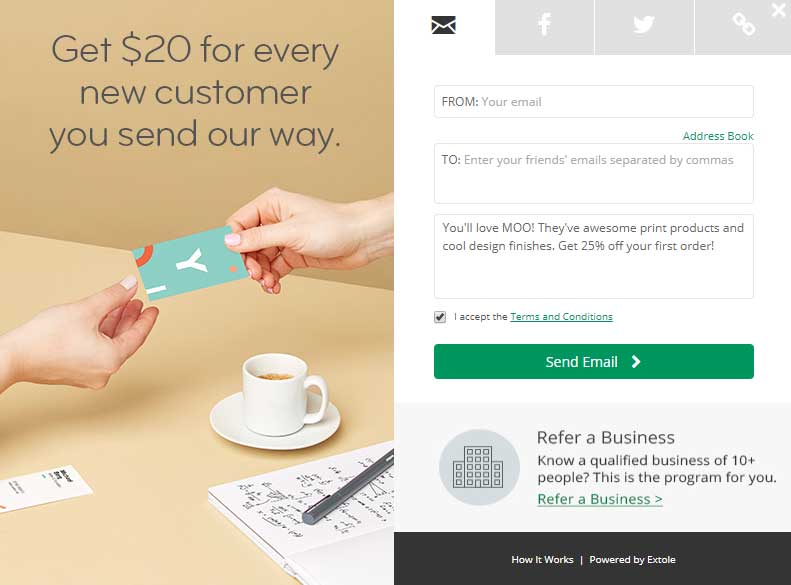
The unlimited earning potential creates a sustainable referral engine. Customers know exactly what they’ll get without complicated terms or conditions.
6. Surprise mystery rewards
Specific rewards work great, but a surprise element can add excitement. Robinhood gives users a surprise reward stock whenever they send a successful referral. This added a fun, potentially high-value motivation for users to share the app with friends.
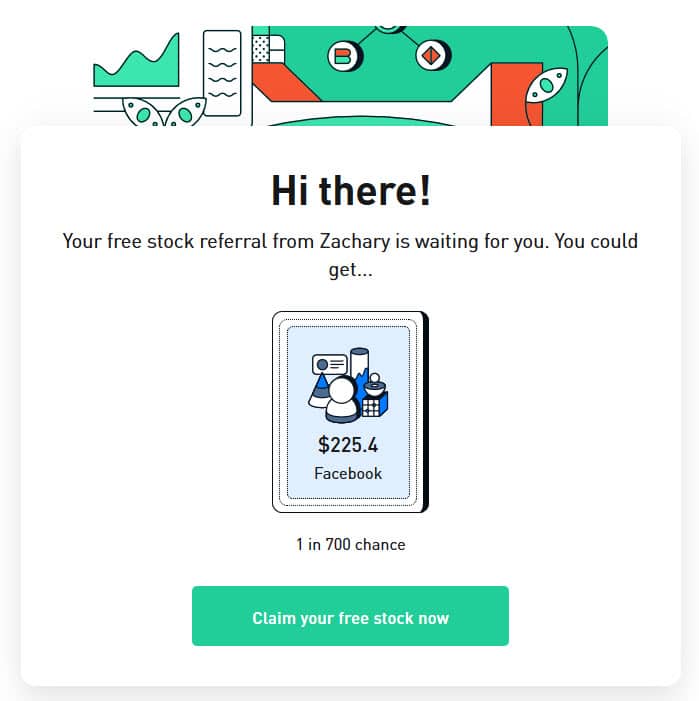
Mystery gifts work best for existing customers doing the referring, not new customers being referred. New customers are still getting used to your product. A random reward can be confusing at that stage.
If the mystery reward is good, customers share their experience on social media, creating organic buzz. Mystery rewards also give you flexibility to experiment with different incentives and see what generates the most excitement.
7. Referral contests
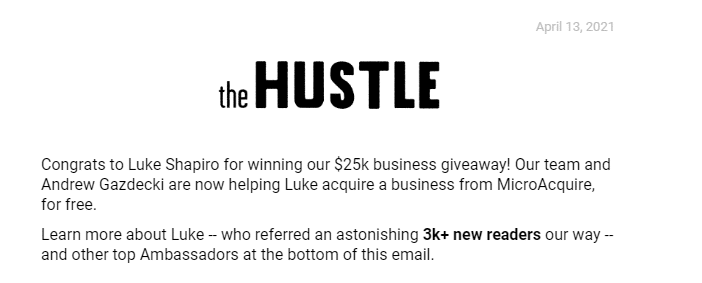
Running a referral contest gets customers excited about your refer-a-friend program fast. This works best when the prize is high-value and sought-after: the latest smartphone, premium event tickets, or business ownership rights (as The Hustle offered in their newsletter referral program).
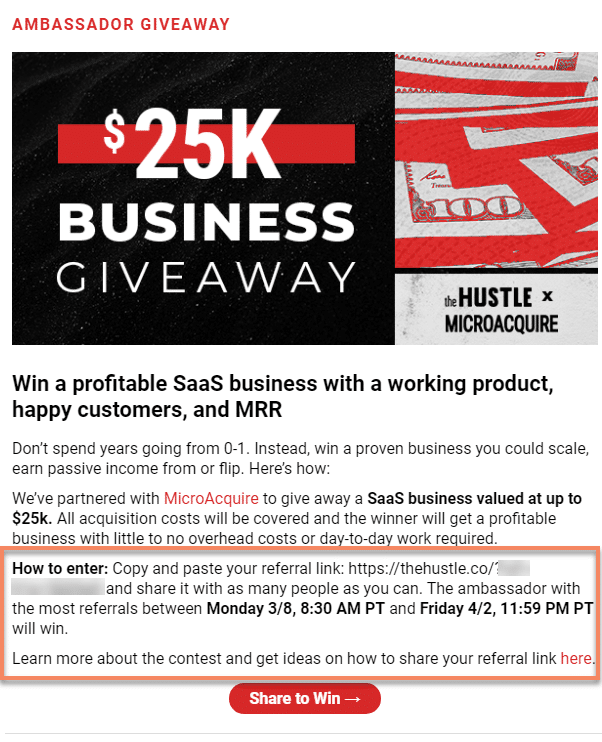
Include secondary prizes for runners-up. Not everyone wins the grand prize, but offering consolation rewards (gift cards, discounts, swag) to the next 20-50 people keeps more customers engaged. Even better if every referrer gets a small reward.
For programs with many participants, set different reward categories: customers with the most social media shares, the highest number of referrals for a specific product, and so on. You could also hold a raffle drawing where every successful referral earns an entry to win. But contests with visible leaderboards tend to be more effective at motivating referrals.
8. Gamified rewards
A gamified refer-a-friend campaign combines several reward structures into a game-like experience. Customers progress through levels, unlock achievements, and collect rewards as they refer more friends.
Loot Crate, a subscription box for gamers, tied gamified rewards into its referral campaign. Customers get $5 for every referral and become eligible to win a free year of Loot Crate.
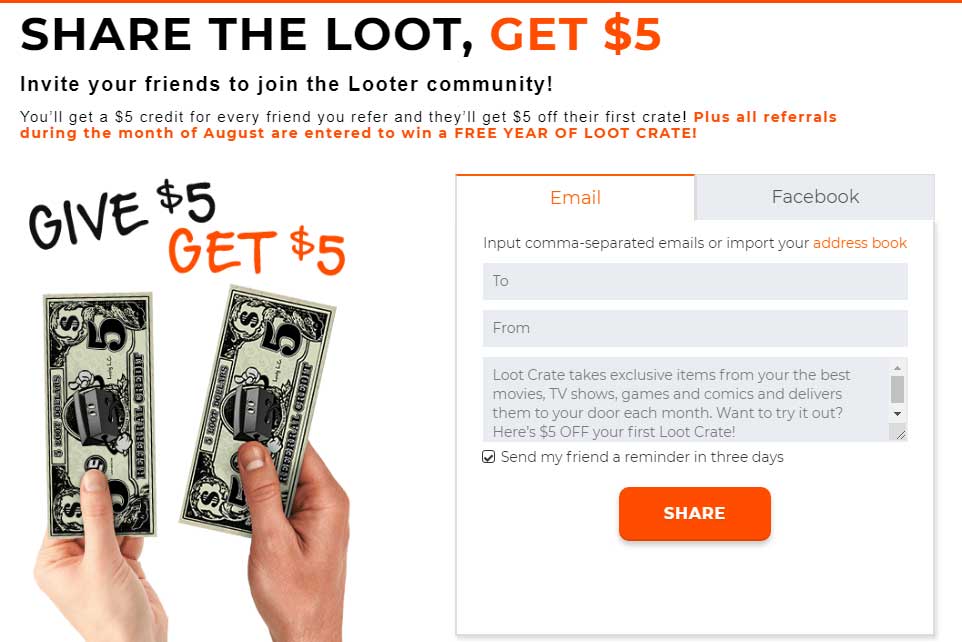
The achievement system (badges, levels, leaderboards) creates ongoing engagement beyond the tangible rewards. It fosters friendly competition, and you can combine mystery gifts, exclusive memberships, and contests into one system.
Keep your refer-a-friend program running
The best reward structure won’t help if nobody knows your program exists. And a launch announcement isn’t enough. Contact lists go stale in 2-3 months. You need to promote your referral program continuously, not just at launch.
Build referral touchpoints into your operations:
- Where customers already look: Your website, app menus, social media profiles, signage at your physical location.
- After great experiences: On receipts, in shipping confirmations, after service is completed. Your team members on the front lines are your best program recruiters here.
- In regular communication: Email newsletters, business cards, email signatures.
Fine-tune your referral messaging templates and landing page, then keep the program visible across every customer touchpoint. This isn’t a marketing campaign you run once. It’s how the program operates.
Start your refer-a-friend program
A well-designed refer-a-friend program shows existing customers you value them while creating a steady pipeline of new business. The reward ideas above are all scalable and grow with your business.
The through-line: whatever reward you choose, account for the friend. And keep the program visible.
Looking for referral software to run your program? Referral Rock can help you automate any type of refer-a-friend program and customize your rewards to fit your needs. Check out more refer-a-friend program ideas to keep building.