An attorney referral program is how a law firm asks for, tracks and thanks the referrals it already gets. Cases come from past clients who send a friend, accountants who send a business owner, and other lawyers who send a case they can't take.
It's a different thing from a bar's lawyer referral service, where people call to be matched with a lawyer. And in law, a program for clients can't run on cash rewards, because bar rules limit what you can give anyone for recommending you. So the work is the ask, the tracking and a small thank-you. This guide shows how to set one up that fits those rules.
The call quotes here come from our 2026 sales and customer calls, shared without names.
Why referrals fit law firms: most cases start with a recommendation
Legal help is personal and hard to judge from the outside, so people ask someone they trust. In Clio's 2025 survey of law firms, 59% of solo and small firms said referrals were their top source of leads. Only 27% of larger firms said the same (vendor data from a legal software company).
Business clients work the same way. The BTI Consulting Group reports that 71% of law firm hires start with a single recommendation. Its 2025 study asked legal decision makers at large companies.
The people who send cases are your clients and the professionals around them: accountants, financial advisors and other lawyers. In Clio's 2024 Legal Trends Report, 35% of firms said referrals from other legal professionals brought in the most potential clients.
The most personal ask comes from the people clients already know: the attorney on the case and the intake team who took the first call. Each case is worth a lot, from a flat-fee estate plan to a contingency case. But in law, the rules set the size of a thank-you, whatever the case is worth.
How an attorney referral program differs from a lawyer referral service
Bar associations and nonprofits run these referral services. People call or fill in a form, and the service matches them with a lawyer for a first consultation, often for a small fee. Your firm can sign up to be one of the lawyers it sends people to.
Your firm's referral program is your own. Clients and professionals who already know your work send people to you by name, and you track and thank them. The two can run side by side, and only the program builds on people who can vouch for you.
6 signs your firm is ready for a referral program
A referral program builds on the word of mouth your firm already gets. So check these 6 signs first, here in law firm terms.
| Sign | What it looks like at a law firm |
|---|---|
| 1. Word of mouth | New clients already say "my accountant told me to call you" |
| 2. Easy to talk about | Clients tell friends about a smooth estate plan or a business deal |
| 3. Community | Your clients know people with the same needs: business owners, families, coworkers |
| 4. A service team | Attorneys and intake return calls fast and keep clients updated |
| 5. Business software | Cases and contacts live in your practice management system or a CRM (customer database) |
| 6. Steady marketing | Search, reviews, talks and bar events bring in new inquiries every month |
Practice areas people keep private, like bankruptcy, get fewer referrals, so a program may not fit there yet. If several signs are missing, work on those first. Law is also a regulated trade. A program still fits, with a warm welcome for the friend, a small thank-you or no reward at all.
What you can give for a referral: a small thank-you after the fact
Many states let a law firm send a small gift to someone who sent a case, once the case has come in. The main legal consideration is what bar rules limit: paying or promising anything of value for a recommendation. So a client program runs on thanks and never advertises a reward. What fits each person:
- Clients and other professionals. A handwritten note, a coffee card or a gift basket once the case is signed. Keep it about the size of a holiday gift, and never promise it in advance or pay cash. No gift at all is a real choice too: a personal note or a thank-you call often means more.
- Other lawyers. A share of the fee, or work on the case as co-counsel, in writing and with the client's consent. Step 6 covers it.
- The referred friend. A fast callback from someone they can name, and the free first consultation if you already offer one. Skip discounts meant to win the case, since those are limited too.
- A donation for each referral. Some firms give to a local charity for every person referred. Check a per-referral donation with your state bar's ethics counsel first.
The rules differ by state, and some allow less than others. Run every thank-you, fee and gift past your bar's ethics counsel before you start. Then log every gift you send, so no one is thanked twice or missed.
How to run a law firm referral program in 7 steps
Our program advisors use this order when they set up a program with a firm like yours. Each step is a referral strategy your firm can start this month.
1. List who sends you cases: clients, professionals and other firms
Start with a list of everyone who has sent you a case in the last year or two. Most firms find 3 groups, and each needs its own kind of thanks.
| Who sends cases | What fits as a thank-you | When to thank them |
|---|---|---|
| Past and current clients | A note, a small gift, or a thank-you call | When the friend's case is signed |
| Accountants, financial advisors and other professionals | A note, a lunch, or a case sent their way | When the case is signed, and at each new introduction |
| Other law firms | A referral fee or co-counsel, in writing | When the case resolves, as the agreement says |
We're a corporate law firm and we get referrals from accountants, clients, other kind of professionals in the business.
In law, referral runs both ways. You also send cases out, like a workers' comp case your firm doesn't handle. Log those too, because the firms you send cases to are the ones most likely to send some back. The same list works for companies that serve law firms, like legal-finance and litigation funding companies, where the lawyers are the ones who refer.
2. Welcome the referred friend with a fast, named callback
Someone referred to a lawyer is usually worried, and they may be comparing firms. Give the referred friend a page or a call that says who sent them, never your homepage. A page that greets them by the sharer's name says they were expected, and the sharer looks good for sending them. Then have a named attorney or intake contact call back the same day.
Skip the discount. Giving a prospective client something of value to win the case is limited in law. If your firm already offers a free first consultation, say so on the page. Speed and a known name do the work a price does elsewhere.
3. Ask after a win, at the close of the case, and again later
Clients are most willing to refer right after a good experience, and the urge fades as life moves on. One of our customers found 86% of their referrals came within 90 days of someone becoming a customer. We call that span the sharing window.
In law, the window opens more than once: after the first meeting, after a win or a signed deal, and when the case closes. Ask early, then follow up gently a few weeks later, since one ask is easy to miss. The friend runs on their own clock. They may not need a lawyer until something happens, so don't put an end date on the welcome.
Most programs get one launch email and then go quiet. Across 952 programs over 9 years, 82% of the ones that stalled did so because promotion stopped after launch. Put the ask in 3 to 5 places clients see anyway: the closing letter, your email signature, the intake confirmation email and the firm newsletter.
4. Let your attorneys and intake team make the ask
An ask from the attorney who handled the case is the most personal one a firm can make, and the easiest to track. Give each attorney and each person on your intake team a personal link. When a client they asked sends a friend, the referral is credited to that attorney or intake contact. You can then see who on your team brings in cases.
The attorney starts the ask, in person or in the closing letter. If that feels awkward, remember that people who ask for help tend to expect a no far more often than they get one. The program's emails follow up with the link and a reminder, so nothing rests on someone's memory. Here's wording to copy:
A line for the closing letter: "It was a privilege to help you with this. If a friend or colleague ever needs help with an estate plan, please pass on my name. When they use this link, we'll know you sent them, and my team will call them back the same day."
A thank-you note for a client who sent a case: "Thank you for sending your friend our way. We know it means a lot to recommend a lawyer, and we'll take good care of them. Thank you for trusting us with someone you care about."
Keep the note to the thanks, and say nothing about the friend's case. For more wording, see our thank-you notes for referrals.
5. Log every referral, including email introductions and calls
In law, most referrals don't come through a link. An accountant sends an email introduction, a former client calls, or a lawyer mentions a case at a bar lunch. If nobody writes it down, the referrer never gets thanked.
Have intake ask every new caller who sent them, and log the answer with the date and the case type. Clients and referring attorneys who'd rather share a link get their own, with no sign-up or password, and intake logs the rest. We call that keeping access open. Our guide to referral tracking covers the ways to do it.
6. Put fee splits with other firms in writing
When another firm refers a case, agree on the terms before work starts. Settle a fee split or a co-counsel role, the share, and when it's paid. Put it in writing, with the client's consent, as several firms below promise to. Each firm sets its own terms, but the legal considerations come from your state's rules on fee sharing.
Then treat referring attorneys the way you treat clients. Respond within a day or two, name one contact, and send updates as the case moves, such as when it's filed and when it settles. A referral fee is income for whoever receives it. Ask your accountant how to handle the payouts.
7. Watch who sends cases before counting signed clients
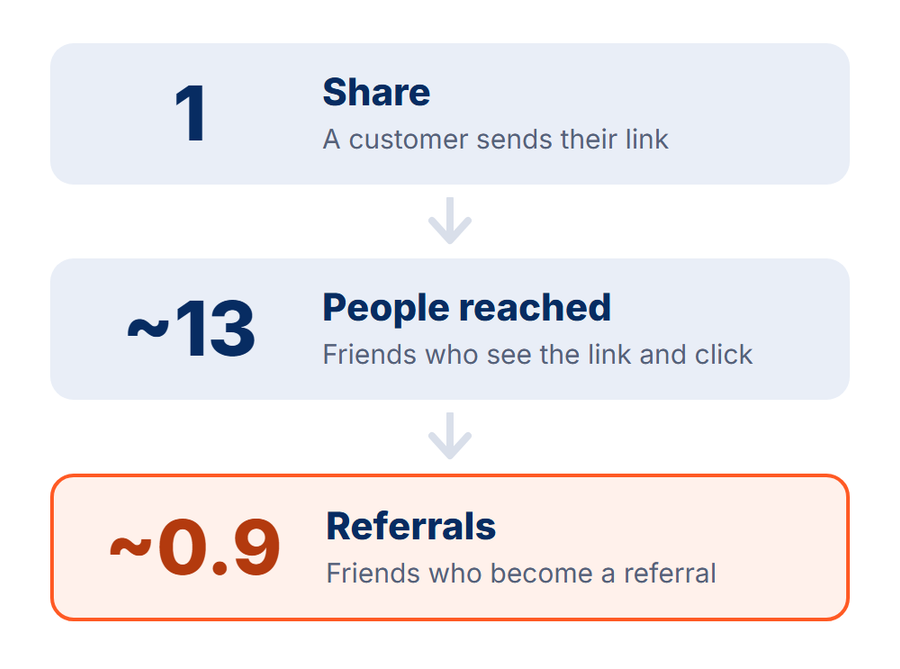
Referrals are the last number to move, so watch shares first and how many people they reach. In our June 2024 data, one share reached about 13 people and led to about 0.9 referrals, across all program types on our platform. We call shares and reach the leading indicators.
For a law firm, that means watching how many clients and attorneys pass on your name each month, and who they are. A new accountant who sends two introductions is worth a call, even before either case signs.
5 law firms that publish how they handle referrals
What 5 firms' referral pages offered in November 2026:
| Firm | What they get | When it pays |
|---|---|---|
| Morgan & Morgan, Athens, GA (for clients) | $30 to Books for Keeps, a local children's book charity, in the sharer's honor | For every person referred |
| The Kryder Law Group (for other attorneys) | A referral fee in writing, which the firm says typically ranges from 25% to 35%, set by the case | At the end of the case |
| Munley Law (for other attorneys) | A referral fee or co-counsel in writing, a reply on most cases within 48 hours, and a direct line to a referral coordinator | As the written agreement says |
| Shiner Law Group (for other attorneys) | A referral fee or co-counsel in a written agreement with the client's consent, and the firm pays all case costs up front | Promptly when the case resolves |
| Law Offices of James Scott Farrin (for other attorneys) | No reward stated | Not stated |
Four of the 5 are personal injury firms writing to other lawyers. Farrin takes cases from attorneys through a form, and from people who aren't lawyers too. Three put the fee terms in writing, and Kryder and Munley also promise regular updates. Farrin adds firms that refer to its network, which may get cases Farrin can't take.
Morgan & Morgan's charity program is the one aimed at clients, open to anyone who refers, and it states nothing for the friend. If you copy it, check the donation against your state's rules before you launch.
Referral software for law firms: your options
You can run a program by hand, build your own, or use software. The first two options below are free from us.
| Option | Good for | The catch |
|---|---|---|
| Manual referral tracker | A few referrals a month | Logging, follow-ups and thank-yous are all by hand |
| Referral agreement template | Putting fee or co-counsel terms in writing, then reusing them with each new firm | A starting point, to edit to your state's rules |
| Building it yourself | Firms with developers to spare | You build and maintain every part |
| Referral software | Running it every week, with links, logging and reminders handled | A monthly cost |
For most firms past a few referrals a month, software built for referrals is a better fit than building your own.
How Referral Rock runs it for law firms
Referral Rock is referral program software for businesses with teams. For law firms, the feature that fits best is referral program recruiters. Each attorney and intake team member gets their own portal and link, and every referral that follows is credited to them.
Referring attorneys get a page where they send a case and see where it stands. Intake can add a referral by hand, so an email introduction counts too. Rewards can be a gift card, a custom thank-you you log, or none at all, and the program connects to HubSpot and Salesforce.
An advisor sets it up with you on every plan. See how it works for professional services firms.
Start with the cases you already get
You don't need a big launch. The cases are already coming in, so start with the next one. Call the friend back the same day, log who sent them, and thank that person in a way your bar allows. Then add the ask to your closing letter, and put your next fee split in writing.
If you're unsure a program fits yet, the readiness check takes a few minutes. For other service firms, see the client referral programs guide.
About the author
Referral Rock Editorial is the team behind Referral Rock's guides and templates on referral, affiliate, partner and brand ambassador programs. Today's team writes, reviews and updates them, building on work by former staff and freelance writers over the years.