
Starting a B2B affiliate program means recruiting content creators and industry voices to promote your product on commission. It’s one of the most cost-effective channels in B2B marketing, since you only pay when affiliates deliver results. But it’s not for everyone, and the way you set it up matters. This guide covers how to know if an affiliate program fits your B2B, how to recruit and compensate affiliates, and the decisions that separate programs that produce from ones that stall.
What is a B2B affiliate program?
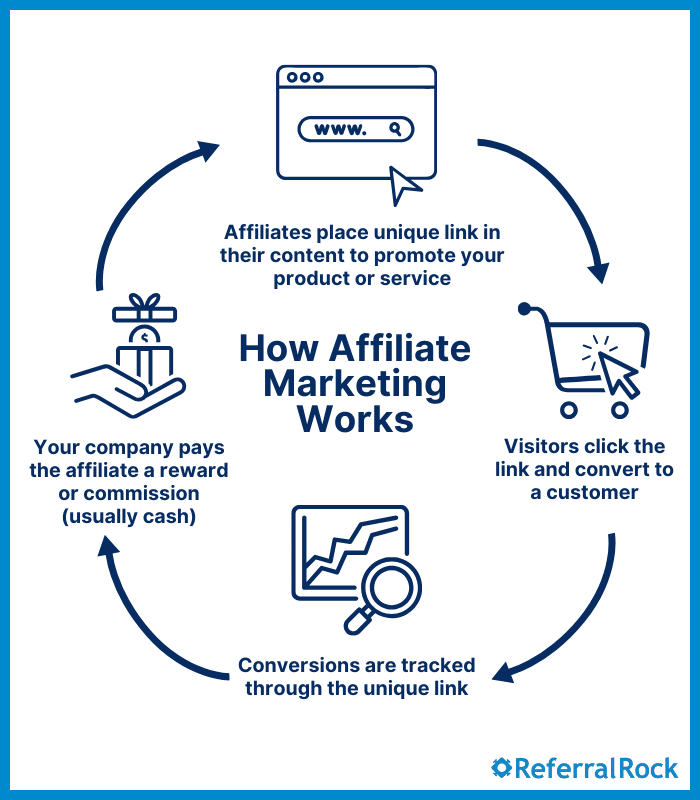
In a B2B affiliate marketing program, you recruit respected content creators (like influential industry bloggers, social media personalities, website owners and email marketing publishers) to promote your B2B company on their own channels.
The content creators, known as affiliates, place links to your website within their content.
Every time someone converts (becomes a qualified lead or makes a purchase) as a result of clicking on an affiliate’s link, you reward the responsible affiliate by paying them a commission.
Why B2B affiliate marketing works
Affiliate marketing isn’t just for B2C ecommerce. 15% of digital marketing revenue can be attributed to affiliate marketing, and U.S. affiliate marketing spend sees 10% growth each year.
For B2B companies specifically, affiliate programs deliver in three ways:
- Trusted voices drive B2B decisions. Affiliates are usually respected content creators in your industry. When they promote your products or services, potential buyers listen because they trust the source. That trust is hard to buy through paid channels. Affiliate marketing is a word-of-mouth powerhouse because B2B buyers trust industry authorities and peers more than brand messaging.
- Word of mouth becomes measurable. Word of mouth can be difficult to track. But with an affiliate program, you can attribute a sale to the exact affiliate responsible, track how many conversions resulted from a given affiliate link you’ve created, and know exactly how much you’ve paid out. That makes ROI straightforward.
- You only pay for results. Since you only pay affiliates after they’ve successfully generated a qualified lead or a sale, affiliate marketing produces results with less risk. You can have affiliates link to targeted landing pages optimized for your program to directly generate high-quality B2B leads.
Is a B2B affiliate program right for you?
Even though affiliate marketing can be a powerful channel, it needs to meet several conditions to be sustainable. Before starting, make sure:
- You have high customer retention rates. You’ll be paying affiliates a portion of every sale they bring in. That’s more sustainable when those sales turn into long-term customer relationships.
- You have reasonably high margins. Affiliate programs work best for businesses with healthy profit margins, like software companies and subscription-based businesses.
- You know the content creators your audience trusts. You’ve clearly identified your target audience and have an idea of the niche creators they follow. Existing relationships with some of these creators make it easier to form partnerships.
If your B2B doesn’t check these boxes, you may get more value from a stellar B2B referral program.
B2B affiliate programs vs. referral programs
Before diving into strategy, it’s worth clarifying what type of program you actually need. The terms get used interchangeably, but they describe different things:
- Affiliate programs recruit content creators, publishers, and influencers to promote your product to their audiences on commission. Affiliates don’t need to be customers. They reach people they don’t know personally, through content.
- Referral programs turn your existing customers into advocates who share your business with people they know personally. The dynamic is trust-based, not commission-based.
If your growth is coming from customers who already recommend you to colleagues and contacts, a B2B referral program might be the better fit. If you need to reach new audiences through established industry voices, an affiliate program is the right channel. Many B2B companies run both.
How to start a B2B affiliate program
Once you’ve decided an affiliate program is right for you, here’s how to set it up. These tips are based on our experience working with B2B affiliate programs.
1. Map affiliates to your buyer’s journey
The main difference between B2C and B2B affiliate programs is the longer and more intensive B2B sales cycle.
Compared to B2C buyers, B2B decision-makers tend to do much more research on products or services before purchasing, usually consult with several stakeholders, and are seeking long-term deals that last at least a few years.
B2B buyers often require a highly personalized experience. They want to know exactly how your product or service will meet their needs, and receive hands-on assistance during every part of the sales funnel.
Where do B2B affiliates fit into this process? Since affiliates are trusted authorities in your niche, they’re instrumental in building trust among prospective buyers, and generating qualified leads and sales.
Depending on your affiliate marketing goals, you can design appropriate landing pages for affiliates to link to – pages with a direct sales offer, or a call to action encouraging email sign-ups. Personalize these pages based on the needs of your target audience, and encourage your affiliates to address these needs when they include your link.
2. Set measurable KPIs
All B2B marketing strategies must be measurable and data-driven. Affiliate programs are no exception. Set measurable goals before launching.
Key metrics to track:
- Amount of revenue you’d like affiliates to bring in per quarter or per year
- Number of qualified leads per quarter or per year (keep in mind, it may take a while before a lead converts)
- Conversion rate from affiliate link click to purchase
- Number of unique sales from affiliate links
3. Recruit the right affiliates
To see success in your affiliate program, use targeted outreach. Personally reach out to the affiliates you want rather than posting an open application.
Affiliates don’t have to use your product regularly. But they should be trusted content creators respected by other B2B buyers. Look for reputable B2B professionals and influencers your target customers already follow, along with niche creators who produce quality content aligned with your brand.
Make a list of people who meet these criteria. If they’re familiar with your product (or already use it), even better. Also consider choosing affiliates across different segments of your target market to deliver personalized messages to different audiences.
If possible, look for affiliates who already have an established track record of ethically promoting B2B products/services, and who aren’t already promoting a competitor.
4. Recruit customers as affiliates
The biggest B2B affiliate program mistake is forgetting to invite existing customers.
Sometimes, existing customers are influential voices in the B2B space with a considerable audience that could benefit from your product. The best part: customer-affiliates can authentically share how your product helps them. They may be your best advocates.
5. Design your commission structure
Offering the right affiliate commission is key. Commissions should be paid out in cash, as either a fixed amount or percentage of a sale.
Setting competitive rates: Run a competitive analysis. Compare your planned commission against direct competitors and other companies recruiting the same affiliates. If most competitors offer 10%, offering 5% won’t be effective. But one-upping the competition isn’t always the answer either. Consider your customer acquisition costs, retention rate, and average customer lifetime value to find a rate your business can sustain.
Commission rules to think through:
- How long are affiliates eligible to earn a commission after someone clicks on their link?
- If an affiliate brings in a qualified lead, will they automatically earn a commission if that lead makes a purchase, no matter how long before the purchase is made? Or must the lead purchase within a set period?
- What happens to an affiliate’s commission if a product is returned or a service is cancelled? How does this align with your existing return/cancellation policy?
- If you’re a subscription-based business, will affiliates also earn a commission when a customer they brought in renews their subscription? For how long?
Commission structures for B2B: Given the longer B2B sales cycle, structure commissions to keep affiliates motivated:
- Multi-step commissions work well for B2B. Pay a small fixed amount for every qualified lead, then a larger commission when that lead converts to a sale.
- Bonus commissions for affiliates who hit a threshold of leads or sales within a time period (quarterly or annually).
- Tiered structures that permanently boost commission rates once an affiliate exceeds a given amount of lifetime sales.
- Recurring commissions for subscription businesses. As long as a customer stays active, the affiliate keeps earning on renewals.
Use our affiliate commission calculator to figure out the right affiliate commission for your business, whether it’s a flat fee or percentage, and whether it’s one-time or recurring.
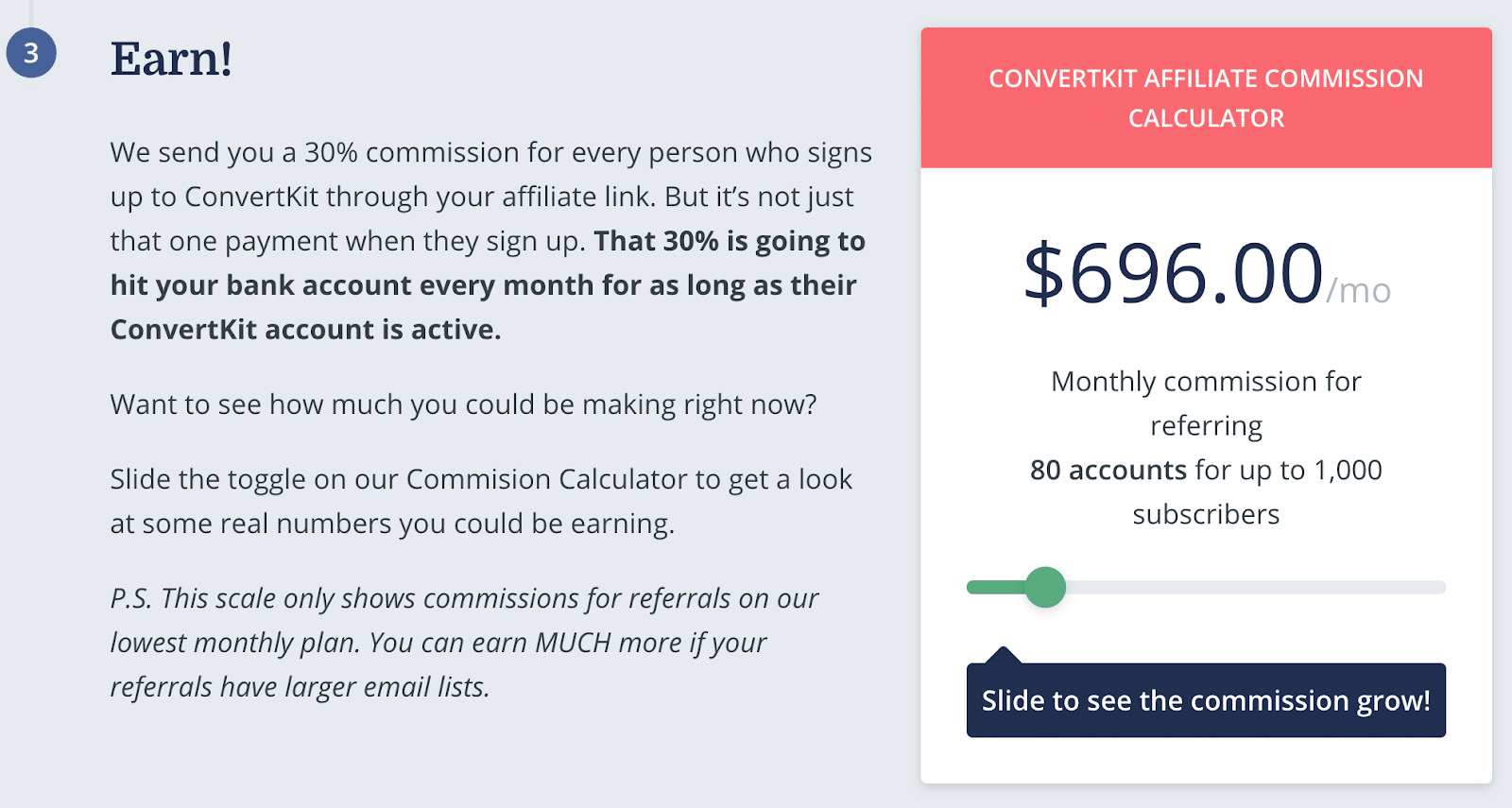
ConvertKit’s affiliate program pays out recurring commissions. As long as a customer who signed up via an affiliate link stays active, the affiliate whose link they used keeps earning a commission on purchase renewals. Source
To keep your program lowest-risk, only pay commissions when your business has received a clear return (a qualified lead or sale).
Automatically handle affiliate payouts with PayPal and Wise integrations, or set up custom cash payouts. We’re flexible enough to handle any commission structure your B2B wants to use, including tiered and multi-step commissions. Here’s more on how we can help your B2B automate commissions >
6. Build your own affiliate network
Going through an existing affiliate network may seem like it’ll save time. But for long-term affiliate marketing, it’s more effective to form your own affiliate network and cut out the middleman. Existing networks charge their own fees (sometimes as high as 30%) on top of what you pay affiliates directly.
By recruiting your own affiliates:
- You won’t pay extra network fees
- You’ll have direct access to all your affiliate data, making tracking easier and optimization faster
- You’ll form more authentic relationships with your affiliates
- You can choose any affiliates you want, not just those bound to an existing network
7. Choose affiliate software
Affiliate software is a must when building your own network. It streamlines your program with automation and lets you instantly track key metrics. You’ll always know which affiliates are responsible for which sales, automate payouts, and strengthen your best relationships.
Affiliate management software typically costs much less per year than fees paid to an existing network, and gives you full control over all aspects of your program. It lets you manage affiliates on your terms, and automate key processes, without being held back by a marketplace.
Why choose Referral Rock?
Referral Rock lets you take full control of your affiliate program with the tools that matter most for B2B:
- Multi-step commissions built in. Support tiered, recurring, and limited-time commission structures that match how B2B sales actually work.
- CRM integration. Seamlessly connect with HubSpot, Salesforce, Shopify, and 50+ other tools so the program runs inside your existing workflow.
- Affiliate portal. Give affiliates full visibility on their progress, ready-made sharing messages, and regular updates to keep them engaged.
Set up easily with prebuilt templates and expert guidance from an onboarding specialist. Learn more about how Referral Rock can help you give your affiliates the best experience >
8. Train affiliates on your sales cycle
After recruiting affiliates, train them on your brand and program fundamentals. Provide brand guidelines, terms and conditions, and the requirements to earn a commission. Then have them sign an agreement covering these points.
One often overlooked step is training affiliates on your B2B sales cycle. It’s important for them to know where they fit into your process, especially if they’re more used to B2C. Emphasize the needs of your target customer, the affiliate’s role in building trust with prospective leads, and the fact that B2B sales take more time.
Don’t stop after initial training:
- Make a plan to regularly check in at set times (through an affiliate dashboard or an exclusive LinkedIn, Facebook, or Slack group)
- Let them know how to contact you with questions
- Keep them up-to-date with brand assets, product updates, and marketing campaigns
- Consider letting them try your product for free or at a discount so they have firsthand experience
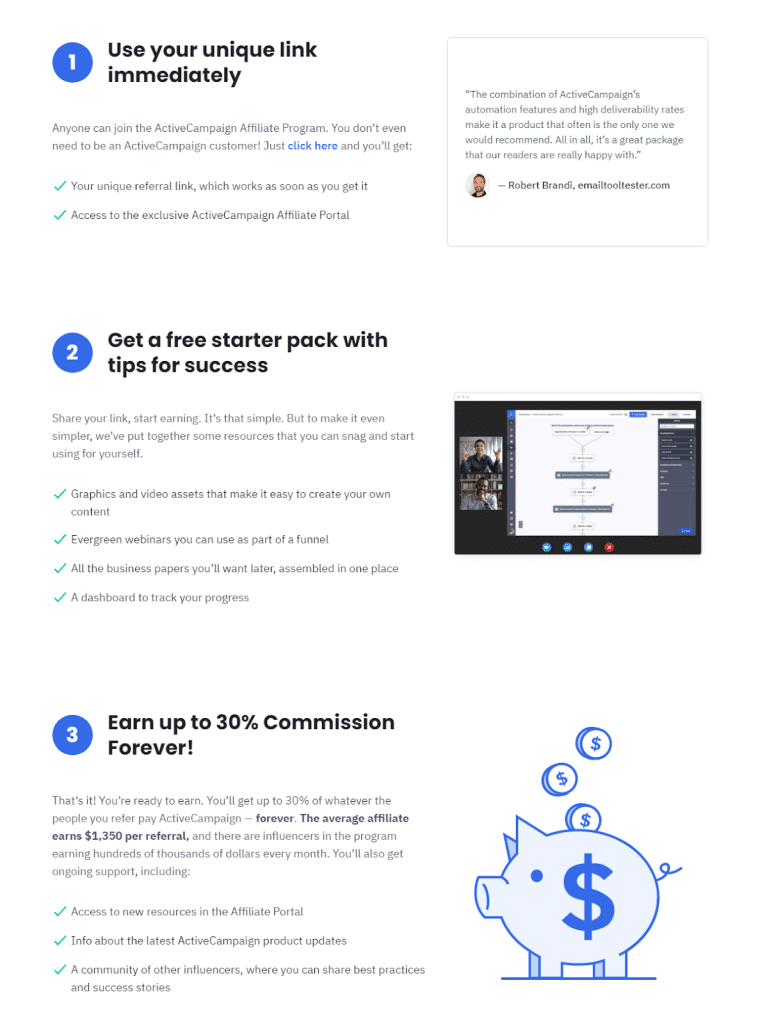
ActiveCampaign trains and educates affiliates in several ways: a starter pack; easy access to product updates; graphic, video, whitepaper, and webinar assets; and even an affiliate community where affiliates can learn from their peers.
Keep affiliates engaged with Referral Rock’s top-notch affiliate experience. Set up a branded portal where they can quickly track deal progress, give them ready-made sharing messages, and send update emails at strategic times to keep them in the loop.
What makes B2B affiliate programs work long-term
The B2B affiliate programs that produce aren’t the ones with the most affiliates or the highest commissions. They’re the ones that treat the program as an ongoing channel, not a one-time launch. That means refining based on data: tracking which affiliates drive real pipeline, adjusting commissions when the numbers say to, and keeping affiliates engaged with fresh assets and regular check-ins. Start with a small group of the right affiliates, give them what they need to succeed, and build from there.
To brush up on affiliate program fundamentals, take a look at these guides:
- Affiliate Marketing Best Practices
- Affiliate Marketing for SaaS Companies: Our Dedicated Guide
- Affiliate Marketing Vs. Partner Marketing
And if you’re looking for real-life examples, we put together 10+ affiliate marketing examples to inspire you.