Subscription businesses already live or die on word of mouth. Happy subscribers tell their friends. Churners go quiet. What people say about you in private conversations sets the ceiling for every channel you pay for.
A referral program doesn’t create those conversations. It captures the ones already happening, makes sharing effortless, and keeps your most enthusiastic subscribers connected to the act of recommending you. This guide walks through how to set one up: which subscription businesses are ready, how to think about rewards, and how to run referrals as ongoing operations instead of a one-time launch.
What are subscription referral programs?
A subscription referral program rewards current subscribers when they refer your service to friends and family. It works for any subscription model that runs through a website or app: content platforms, e-commerce subscription boxes, SaaS referral program setups, online classes.
The mechanics are simple. The reframe most businesses miss: this isn’t a marketing campaign you launch. It’s an operational layer that runs alongside your service, capturing the recommendations your subscribers are already making and turning them into trackable, rewardable, repeatable acquisition.
Essentials for the best subscription referral program
The best subscription referral programs have these features:
- A reward that feels like a gift to the friend, not a payout to the sharer
- A frictionless way for subscribers to share, with no forms, no signup, and no join button
- Automatic tracking and reward fulfillment via referral software
- Continuous promotion built into your service, not a one-time launch
- Messaging to the referred friend that carries the referrer’s name and trust
- Visibility into program performance so you can see what’s working
Subscription referral program benefits
A subscription referral program could benefit your business in the following ways:
- Enhancing brand awareness. Word-of-mouth marketing boosts brand awareness without the need for expensive advertising campaigns. Existing customers are your best advertisers, because they know what makes your brand worth talking about.
- Adding authenticity to your marketing. People trust the word of their friends and believe their recommendations are genuine. That makes them more likely to subscribe when referred.
- Promoting retention. The trust factor also boosts the lifetime value of new subscribers, who tend to stick around longer when they signed up on a friend’s recommendation.
- Keeping marketing efforts cost-effective. A refer-a-friend program costs far less than pay-per-click advertising or influencer campaigns, and the ROI is easier to attribute.
- Lowering the risk on customer acquisition. You only pay rewards when referred friends actually subscribe, so the cost only kicks in when the result has already happened.
- Tracking who your real advocates are. Referral software identifies your strongest sharers, so you know where to invest your relationship-building energy.
Referral software for subscription services [Free Tools]
These referral tools for subscription services are a free and easy way to help you start your referral program.
Want a automated referral system for your subscription business? Uncover referrals in plain sight to smooth out business lulls, without losing focus on your real day to day work helping customers.
Check out our referral program software - done right.
Are you ready to start a subscription referral program?
A referral program captures word of mouth. It doesn’t manufacture it. Before launching one, two things need to be true.
First, you need word of mouth worth capturing. Are subscribers already telling friends about you, posting positive reviews, or staying past the initial trial? People are four times more likely to spend money on something a friend recommends, but that only matters if your subscribers have a reason to recommend you in the first place. If your churn is high or your NPS is low, a referral program will accelerate the loss, not fix it. People won’t recommend a service they’re about to cancel.
Second, you need the operational foundation to support it. A digital signup flow that works on any device. Reliable billing and reward fulfillment so referrers don’t get stiffed when a friend converts. Customer service that can answer questions when a friend tries to claim a reward. The program runs on top of your operations, not despite them.
The signal you’re ready: subscribers refer you sometimes, but there’s no system to make it easy, track it, or thank them. You’re leaving growth on the table. A program captures what’s already there. It doesn’t create something from nothing.
Subscription referral program best practices
Once you’re ready, the program design and ongoing operations matter as much as the launch. Here are the principles that separate programs that grow from programs that fizzle.
Design rewards as gifts for the friend
Most referral programs obsess over the sharer’s reward: what does the referrer earn? But the magic is on the other side. Frame the reward as a gift the sharer is giving their friend, and the whole dynamic changes. Subscribers don’t want to feel like they’re selling out their friends for a $20 credit. They want to feel like they’re doing a friend a favor.
Subscription businesses have a structural advantage here. A free month, a free upgrade, a free first box — these feel like genuine gifts because the friend gets a real taste of the service, not a discount that nudges them toward a purchase. Lead with what the friend gets in your messaging, your program title, and your share copy.
A few common reward structures, with subscription-specific notes:
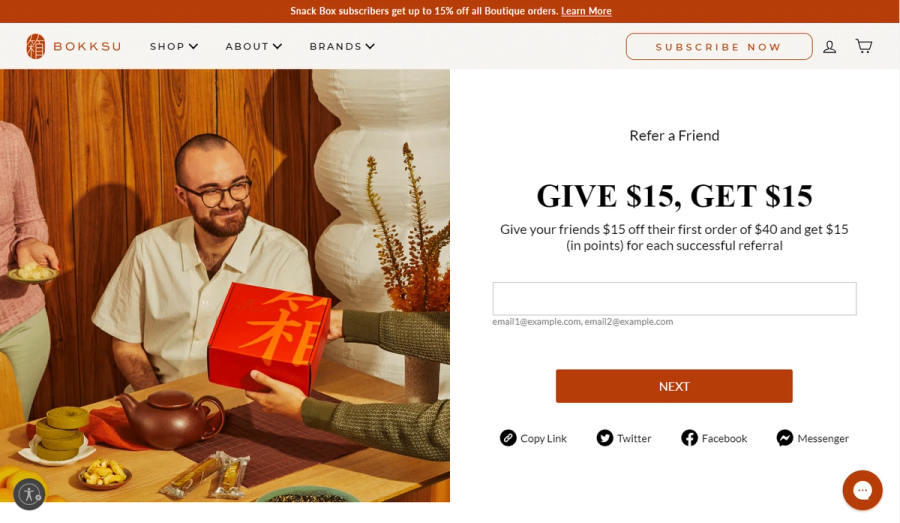
- Double-sided rewards. Both the existing subscriber and the new subscriber get something. This works best for paid subscriptions where the friend’s gift can be a real free taste: a free month, a free upgrade, an extension on the next renewal. The subscriber gets recognized. The friend gets a low-risk way to try.
- Single-sided rewards. Only the existing subscriber gets a reward. This makes sense for free, ad-supported content where the friend doesn’t have a payment to discount. In this case, the content itself is the gift for the friend.
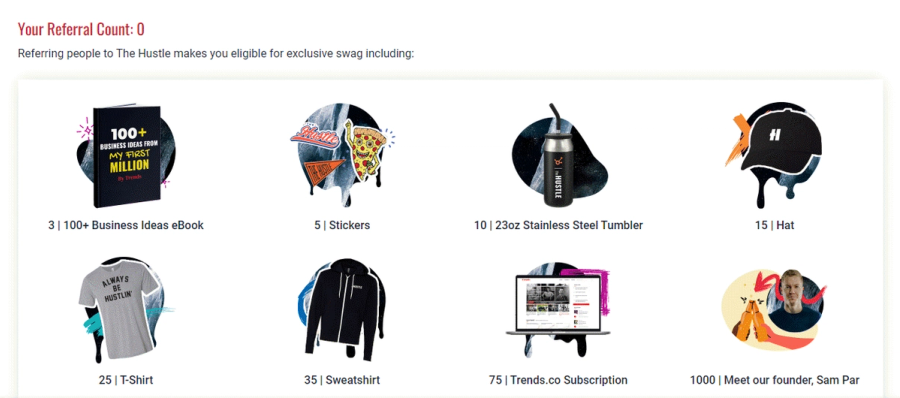
- Tiered referral program. Different rewards depending on how many referrals an advocate makes. The more they successfully refer, the higher the reward. Newsletters and content subscriptions often use tiered swag (mug at 3 referrals, hoodie at 10). See how a newsletter referral program typically structures these tiers.
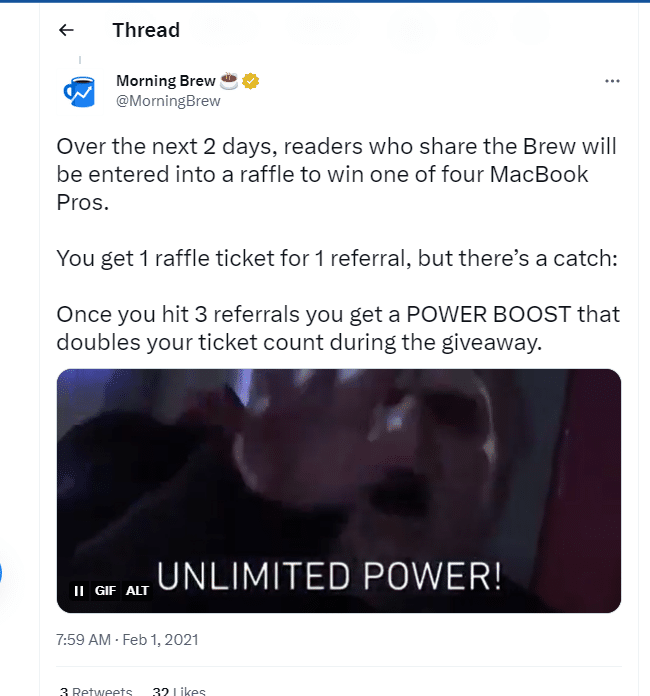
- Referral contests. Each referral is a sweepstakes entry, or the top referrer in a window wins a big prize. Morning Brew famously used this model with its MacBook Pro giveaways.
For the reward itself, lean toward things connected to your service rather than cash. Subscription credits, free upgrades, access to bonus features, branded swag. They all carry the brand and feel less transactional than gift cards. Save cash and gift cards for your highest-converting advocates if you want to use them at all. (More options: referral incentives.)
Use our referral reward calculator to determine the reward values you should offer the sharer and their friend, for the best ROI.

Start with your most loyal subscribers
Personally invite your strongest advocates before opening the program to everyone.
The people most likely to drive early traction:
- Long-tenured subscribers who’ve stuck through multiple renewals
- Subscribers who already talk about you in person, on social, or in reviews
- Subscribers who recently posted positive feedback or rated you highly on a satisfaction survey
Reach out with a personalized note. These early shares build momentum before the program goes wider. (For more on framing the ask for referrals, we have a separate guide.)
Promote continuously, not as a launch
Most referral programs die because they get treated like a campaign: big announcement, mass email, hope for a spike, watch the spike fade. Then nothing. The fix is to treat promotion as ongoing operations, not a one-time push. A list of past contacts goes stale within a few months. What you need is volume, surface area, and consistency with new subscribers as they come in.
We recommend three elements of continuous promotion:
- Proactive invites. Bulk emails, event-triggered emails (after a successful renewal, after a positive support interaction), in-app prompts. These are direct asks at moments when subscribers are feeling good about you.
- Discovery paths. Places subscribers naturally encounter the program: a permanent spot on your website, a tile in your account dashboard, a footer in transactional emails, a mention in your help center. Subscribers can find it when they are ready, not just when you decide to ask.
- Program recruiters. Your customer success and support teams are some of your strongest sharers. Give them their own invite links, mention referrals in their handoffs, and make it part of how they close out a positive interaction.
For a deeper playbook, see Promote your program.
Keep access open: no signup, no join button
Most programs gate access with a form: “Sign up to join the referral program.” Every form field is a step where subscribers drop off. The strongest programs flip the model. Every subscriber is already a member. The moment someone subscribes, they get a link or code. No application, no approval, no separate enrollment.
Keeping access open does a few things at once. It removes the friction between “I want to recommend this” and “here’s my link.” It signals that you trust your subscribers and value the reputation they’re putting on the line by recommending you. And it lets you discover super-promoters you’d never have predicted, including subscribers you wouldn’t have hand-picked but who quietly drive a third of your referrals.
The fear is abuse. The answer isn’t to gate the program. It’s to handle abuse progressively, with detection rules and fraud protection in your software, not preemptive friction for everyone else.
A few things that go with open access:
- Auto-issue a unique referral link or code at the moment someone subscribes. See referral links for how this looks in practice.
- Surface the program in places subscribers already are: account dashboard, post-purchase pages, transactional emails.
- Give subscribers multiple ways to share — direct link, social, SMS, email. If you have a mobile referral program, the share UX needs to be one tap on a phone.
- Keep referrers in the loop proactively. Don’t make them ask for status updates. Email or text them when their referral converts and when their reward is ready.
Get more of your customers into your program with our automatic enrollment tools. When customers meet the requirements you set, they’re automatically preloaded into your Referral Rock program, with no sign-up necessary.
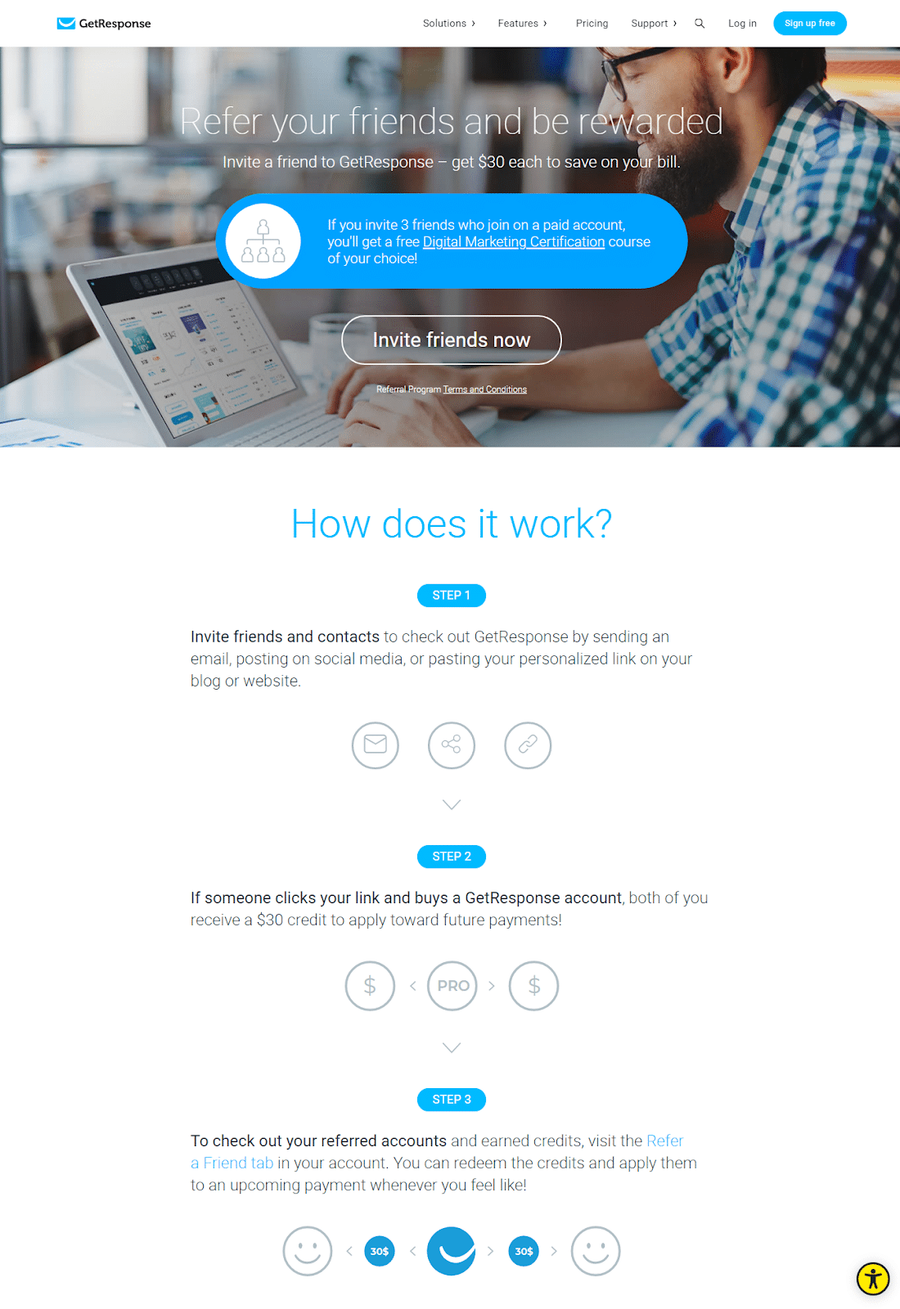
Use referral software
Whether you’re running an eCommerce or a SaaS referral program, you need referral software to streamline the creation of your referral program and ensure your tracking and management processes are as simple as possible. Other referral program benefits include:
- Create customized referral experiences for your brand
- Track where each referral comes from to ensure you target the best advocates
- Instantly issue rewards for successful referrals and minimize your administrative burden
- Collect program data to measure success and make improvements on past mistakes
Create and establish your referral program in a matter of days with Referral Rock. We offer automatic program promotion for scalable, cost-effective growth – without the need for complicated coding.
Track and measure your success
Referral software handles tracking automatically, but a few metrics matter more than the rest:
- Retention of referred subscribers vs. your overall subscriber base. Referred subscribers usually stick longer. If they’re not, something in your post-share experience is breaking.
- Share rate. What percentage of subscribers are sharing? Low share rate usually points to discovery or messaging, not reward design.
- Conversion rate. What percentage of referred friends actually subscribe? Low conversion usually points to the friend experience: is the landing page personal, is the offer clear, is the path to subscribing one click away?
Capture the word of mouth that’s already happening
Your subscribers are already talking about you. Some are recommending you to friends, some are quietly churning, and most are somewhere in between. A referral program doesn’t change those conversations. It changes how many of them turn into new subscribers, by removing the friction between someone wanting to share and someone actually doing it.
The businesses that win at this don’t treat referrals as a launch. They treat referrals as operations: every subscriber is a member, every share is a gift, every channel where subscribers naturally find you is a place the program lives. That’s how word of mouth goes from random to reliable.
Ready to capture what your subscribers are already saying? Contact us to learn more about Referral Rock.
About the author
Referral Rock Editorial is the team behind Referral Rock's guides and templates on referral, affiliate, partner and brand ambassador programs. Today's team writes, reviews and updates them, building on work by former staff and freelance writers over the years.