

With the right sales strategy, your company can rapidly expand. With that said, your sales team will face lots of challenges along the way. Here’s how to overcome those challenges by creating a B2B sales strategy.
A quick overview of the B2B sales process
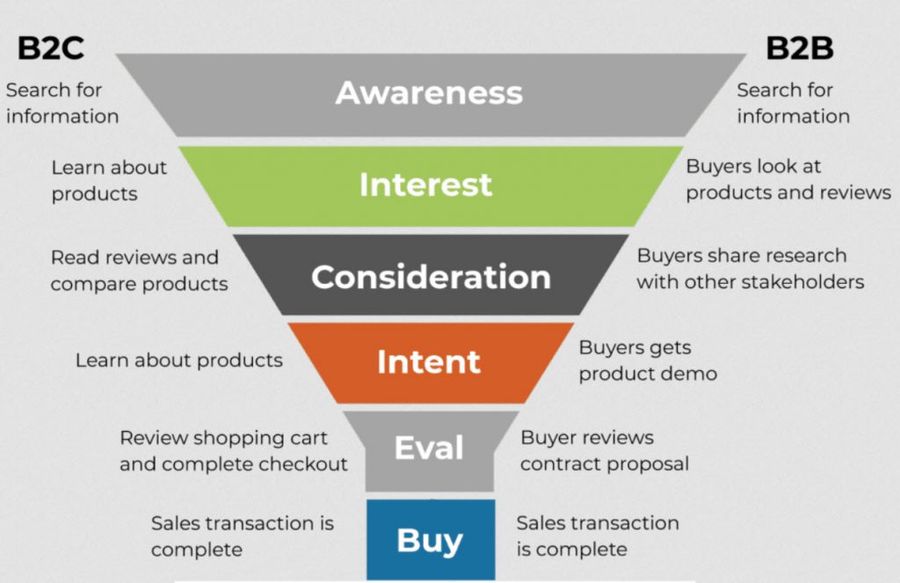
Source
Before we check out challenges and the strategies needed to overcome them, it’s helpful to take a quick look at a typical B2B sales funnel. Will every client enter at the beginning of this funnel and take this exact path? Probably not. However, it’s helpful to learn more about each stage of this process.
Generating leads
The B2B sales process can’t begin unless your business has other companies to sell to. You can begin this process with B2B lead generation strategies. There are many ways to generate B2B leads, including:
- Referrals: Referrals take place when someone refers your business to another person. Employees, customers, and business partners are all great referral sources. Streamline and scale your referrals with an automated B2B referral program.
- Social media posts: There are many popular social media websites including Facebook, Twitter, Instagram, and LinkedIn. Make posts on these platforms to generate more leads.
- Content marketing: Chances are, you and your employees have a lot of knowledge to share. By implementing a content marketing strategy, you can create website posts to generate more traffic.
- SEO: Content is great, but you need a way to make sure people are seeing it. This is where an effective search engine optimization (SEO) strategy comes into play.
- Paid advertising: Whether you use them on social media, search engines, or a paid ad network, this type of advertising is a popular lead generation method.
- Retargeting: Have you ever visited a company’s website and then started to see ads from this same company appear at every website you visit? This is known as retargeting, a somewhat newer strategy compared to the others in this list.
As your lead generation strategies improve, your company’s clientele should begin expanding. In a perfect world, every lead would become customers and be with your company forever. Unfortunately, we don’t live in that type of world. Considering that, you’ll need a way to qualify leads.
Turning leads into prospects
It might seem beneficial to move all prospects forward. But, this will cost your company lots of time and money, much of which will be spent in vain. You can minimize wasted time, money, and effort by qualifying your leads.
You can help qualify leads by asking three questions:
- Is this client a fit for our products/services? Unfortunately, not every lead will need what you’re selling. You will usually be able to determine if there’s a good fit during initial client research. It’s also wise to consider using customer forms, which can allow the client to directly indicate whether they’re a good fit or not.
- Is this a client with serious buyer intent? Other times, leads want to buy what your business sells but are unable to afford the product or service. Of course, you never want to ask a business how much they can afford. So, you’ll need to use research and questions as baselines to help decide how much buyers are willing to spend.
- Is the timing right for the client to make a purchase? Sales rarely happen without lots of following up. Make sure you keep track of clients who aren’t interested at the moment. This can always change with time and relationship building.
Also, take the time to thoroughly research quality leads. Visit the company’s website, social media pages, and other sources. This allows you to learn more about this company’s challenges, goals, and recent news.
Making contact

After finding out more about your leads, it’s time to start communicating with them. Whether it’s by phone, video chat, or an in-person meeting, the first contact is when you and the client get to meet for the first time. With that said, you don’t want to start celebrating yet.
More often than not, these clients are speaking with other companies – including your competition – to find out what’s the best fit. How does your company win over clients and stand out from competitors, especially during this first stage of contact?
Think of this initial meeting as a type of first date. Would you want to spend a first date with someone who only talks about themselves? Probably not. What about someone who spent time listening to you and asking questions about what you’re saying?
First dates (and business meetings) tend to go much better when two people are asking and answering questions about each other. It’s not good to spend this meeting doing all of the talking. Of course, you don’t want to spend an entire meeting only asking questions and presenting nothing. Instead, combine a combination of these strategies.
Use this first meeting to prepare targeted questions to your clients while also having a sales presentation that’s engaging and relevant.
Following up
Not every initial contact with a prospect is going to go well. But this doesn’t mean gritting your teeth through one follow-up and expecting to convert a lead out of it. In fact, it’s rare to close a client without several sales follow-ups. Unfortunately, 44% of sales reps make this mistake by calling it quits after only one failed follow-up.
Initially, it’s kind of hard to blame this type of thinking. If you’ve presented your pitch, followed up, and the prospect is still not interested, what else are you supposed to do? One study found 80% of accounts need five follow-up conversations after an initial meeting before closing a deal.
Closing the sale
Before someone can become an official client, some type of “close” has to happen. This is an area where it’s understandable for salespeople to start sweating. But, it doesn’t have to be this way.
If you’ve followed our tips from the previous steps, closing becomes much easier than expected. You know your clients, their problems, and how your products or services will solve these issues.
Here is a selection of tips to consider using during your next sales closing session:
- Value statement: Make one last short statement about your company’s products/services and how it will solve their problems.
- “The Yes Rule:” One study found simply asking questions customers will say yes to during the closing phase can increase your rate of closing clients by 16%. Strange but true.
- Just asking: If you and your client are going around in circles, they might be waiting for you to ask them if they’re ready to become a customer.
- Learn from a client walking away: Unfortunately, there will be times where you and a client can’t come to an agreement. That’s perfectly fine, use this situation to find out where your B2B sales process might need improving.
The challenges your B2B sales team faces
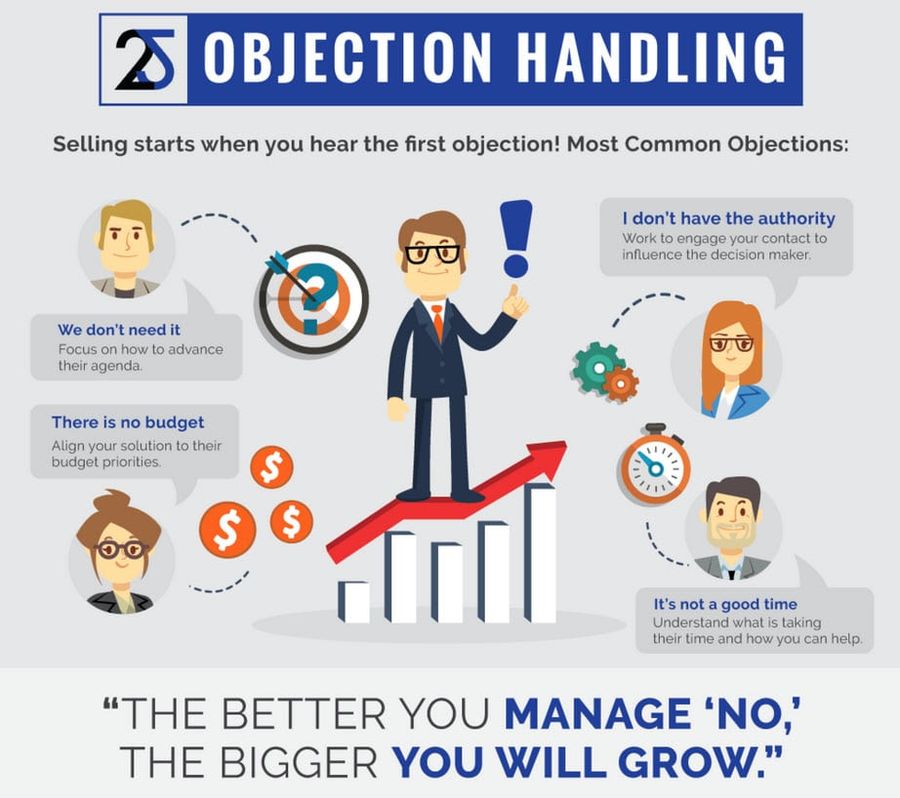
In the world of sales, every industry deals with its own challenges. Before creating a B2B sales strategy, it’s helpful to learn how these challenges affect your sales team.
Industry know-how
Most B2B clients live and breathe their respective industries. Considering the amount of knowledge these customers have, B2B sales requires in-depth training. Make sure that your B2B sales team has an in-depth understanding of every product or service your company offers.
More potential roadblocks
Sometimes, consumers don’t have to rationalize their purchases with anyone but themselves. However, this is rarely the case in the world of B2B sales. Most B2B clients also need to discuss purchases with managers and colleagues. Making things more challenging, there’s no guarantee that these managers and colleagues will like what your company is selling.
To overcome this challenge, it’s a good idea to take note of why others are objecting. Do they feel your prices aren’t aligned with the value of your products or services? Is there something your competition offers that they want instead? Finding out the answers to these types of objection-based questions often provide lots of insight for your company.
Longer sales cycle
Another advantage of companies in the B2C realm is that they can make lots of sales within a quick amount of time. This isn’t impossible for B2B companies, but it’s rarely the case. As mentioned earlier, B2B salespeople are trying to sell to clients that often need approval from other people before making any purchases.
To make this sometimes painfully lengthy process easier, make sure to focus on multiple touchpoints. This means having your company show up in every possible digital avenue. Making use of these touchpoints help to keep your company “fresh” in the minds of clients at all times.
If your clients are searching for industry-based information in Google, make sure your company shows up in the results. Another touchpoint is your client’s email inbox. There’s no doubting that your clients are going to be checking their email inboxes. When they do, it’s always good to have an email packed with value waiting for them. It’s also good to use paid ad retargeting and social media posts as other pillars of a long-term marketing strategy.
Information overload
It’s great to have endless sources of digital information at our fingertips. With that said, this can also become a burden for B2B clients. How can you solve this problem? By becoming the only source of information your clients need. By implementing a growth marketing strategy, your company can show up everywhere a client looks.
Follow this B2B sales strategy to convert more leads
To say that B2B sales are growing at a rapid pace is a major understatement. Research shows B2B ecommerce sales alone will reach a value of $1.8 trillion by the year 2023. If you want your company to claim its share of this massive market, you’ll want to follow the tried-and-tested B2B sales strategies below.
1. Know each client like the back of your hand
It’s understandable to assume this is simply remembering basic information about clients. However, you can do much more by digging deeper into each client’s business. Instead of getting the bare minimum, take time to research the company. Visit their website regularly, follow them on social media, watch their latest YouTube videos.
Does your client’s website feature a news or blog section? These places are great sources of information for salespeople to use to their advantage. Did the client just celebrate a major win? Be the first outside source to congratulate them for it. Is your client in a bit of a slump? Take note of how your company’s products and services can help solve the problems they’re dealing with.
2. Ask your leads probing questions
Probing questions are ones that need much more than a “yes” or “no” answer. Let’s take a look at how these types of questions differ from each other.
“Yes” or “no” question: Are you happy with your company’s current marketing software?
Probing question: What aspects of your company’s current marketing software are you unhappy with?
“Yes” or “no” questions are common, but they’re not going to be very informative. Also, these questions are easy for busy professionals to dodge with a simple, one-word answer. Probing questions get your clients to start opening up, whether they realize it or not.
By actively listening to your client’s answers, especially to these types of questions, you’ll gain a ton of insight to build your B2B sales strategy.
3. Become an authority in your client’s field
As mentioned earlier, B2B clients have access to endless amounts of information. How do you use this to your advantage? By positioning your company as the best source of information. As an authority, you can effectively increase sales without having to invest lots of money.
A digital content strategy to help establish yourself as an expert in your field can include:
- SEO
- PPC advertising
- Social media marketing
- Email marketing
- Video marketing
- Content marketing
4. Focus on aligning your company’s teams
A lack of teamwork is more costly than you might think. Research shows that 19% of companies with aligned sales and marketing teams continually exceeded their revenue goals. You’ll be glad to know there are many ways to align sales and marketing teams.
- Consider having a content library the marketing team continually contributes to that the sales team can look over.
- Have salespeople teach the marketing team what aspects of the product/service they’re focusing on and the challenges they’re facing. This helps the marketing team create more targeted content.
- Create goals for your company’s sales and marketing team to work together towards achieving.
With closer collaboration, you’ll soon begin to see this part of your B2B sales strategy pay off in a major way.
Conclusion
Improving your company’s B2B sales strategy is something that will bring about lots of positive results. If your company needs more B2B clients to sell to, make sure to check out our can’t miss B2B marketing strategies.

About the author
Jessica Huhn is a content writer and strategist at Referral Rock. When she is not writing, there is a good chance that Jessica is singing, arranging songs, sharing and enjoying content on social media, or hanging out with her mini Goldendoodle. She believes that it's always important to cultivate gentle strength.



![8 Ways to Identify Your Ideal Customer Profile: Qualify Better B2B Leads [From The Experts]](https://cdn.sanity.io/images/x9q04aql/production/f24131517f446a1c9be8b7941fbbbd341cfbd0c1-900x600.jpg?w=400&auto=format)