Most agencies treat referrals like a marketing campaign. They announce a program, blast their client list, watch a small spike, then watch it fade. A few months later, the program is a dusty page on the website.
The agencies that get this right treat referrals as ongoing operations, something that runs alongside account management, not on top of it. This guide walks through how to build an agency referral program that keeps rolling: when you’re ready for one, how to set it up so clients want to share, and how to keep the program moving without it becoming another item on your team’s to-do list.
What an agency referral program actually is
An agency referral program is a system for capturing the recommendations your existing clients are already making, then making it easy for them to keep making more. It’s not a marketing campaign with a launch date and an end date. It’s an ongoing piece of how your agency operates.
There are three roles in any referral program:
- Referrers — your existing clients, each with a unique link or code so their referrals can be tracked.
- Friends — the businesses being referred. They show up via a recommendation from someone they trust.
- The agency — runs the system in the background: reward rules, tracking, payouts, communication, integration with your CRM and tools.
That third role is the one most agencies underestimate. The program isn’t a thing your team announces and then walks away from. It’s something the team operates, the way they operate client onboarding or monthly reporting. When it’s set up well, software does most of the work. But the program still belongs to operations, not to a campaign calendar.
This applies whether you run a marketing agency, a staffing agency, a social media shop, or any other B2B referral system. The agency context shapes the details, but the underlying mechanics are the same.
Why an agency referral program works
Referrals consistently rank as one of the highest-quality lead sources for agencies. Most marketers put them in the top two. A few reasons that matter specifically for agencies:
- Referred leads come pre-qualified. Your existing clients only recommend agencies that match their peers. The leads that come through tend to look like the clients you already have, which means they’re closer to your ICP than anything coming through paid ads.
- The acquisition cost is low and predictable. You pay for the software and the rewards, and the rewards only fire when a referral converts. Compared to paid media spend, the risk profile is dramatically different.
- Trust transfers in a way that ads can’t replicate. A survey by Nielsen found that 92% of people trust recommendations from friends and family over any other form of advertising. For an agency, where the buying decision is high-consideration and trust-driven, that’s the entire game.
- Word of mouth becomes trackable. Without a system, referrals show up randomly and you don’t know who sent them or why. With one, every share has a name attached, and you can actually see what’s driving growth.
Referral software for agencies [Free Tools]
These referral tools for agencies are a free and easy way to help you start your referral program.
Want a automated referral system for your agency business? Uncover referrals in plain sight to smooth out business lulls, without losing focus on your real day to day work helping customers.
Check out our referral program software - done right.
Are you ready for an agency referral program?
A referral program doesn’t manufacture word of mouth. It captures and amplifies what’s already happening. If your clients aren’t talking about you yet, a program won’t fix that. If they are, you’re leaving leads on the table without one.
The signal that you’re ready is simple: clients refer you sometimes, but there’s no system for it. The referrals are random. You hear about them after the fact. There’s no way to thank the person who sent them, no way to make it easier next time.
Before you launch, you need three things in place:
- Strong service operations. Account management is responsive. Deliverables ship on time. Nothing falls through the cracks. Consistency is your reputation. If client work is bumpy, the referrals you do get won’t outpace the ones you lose to the bumps.
- Word of mouth worth capturing. Identifiable evidence that clients are happy and would recommend you if asked. Positive reviews, repeat business, unprompted introductions to peers. You can’t fake this.
- Capacity to handle the new clients. A support and account team that can absorb an influx without dropping the ball on existing accounts. The program multiplies whatever you currently deliver, good or bad.
If those aren’t in place, the order of operations is to fix them first. The program will still be there when you’re ready.
Agency referral program best practices
Once the foundation is in place, the rest is about how you run the program. The patterns below are the difference between a program that rolls and one that fades after launch.
Make the friend’s reward the headline
The default approach to agency rewards is double-sided: the referrer gets something, the new client gets something. Double-sided is the right structure, but the framing inside it matters more than most agencies realize.
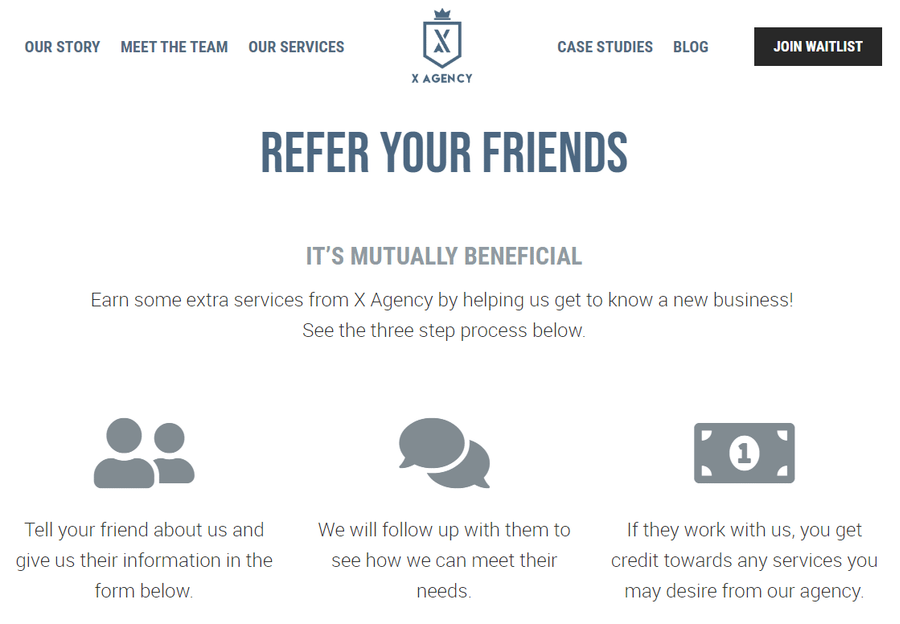
When you talk about your program in client emails, on the program page, in the message your clients send to peers, lead with what the friend is getting. The whole thing should feel like a gift the client is giving someone they like. Not a payout for sending leads.
The reason: clients don’t want to feel like they’re selling out their peers for a discount. The moment the message reads “refer a friend, earn $200,” the dynamic flips from generosity to transaction. People share less, and the peers who receive the message feel like they’re being marketed to instead of being given something.
Practical version of this:
- The friend’s reward is the headline of the message and the landing page.
- The referrer’s reward stays where the referrer sees it: their dashboard, their thank-you email, their UI.
- Don’t put “your friend earns $X when you sign up” in the friend-facing message. One line of that turns the gift into a transaction.
Use our referral reward calculator to determine the reward values you should offer the sharer and their friend, for the best ROI.
Pick rewards that fit a high-consideration decision
Choosing an agency is a long sales cycle. The reward structure should reflect that.
A few patterns that work for agencies:
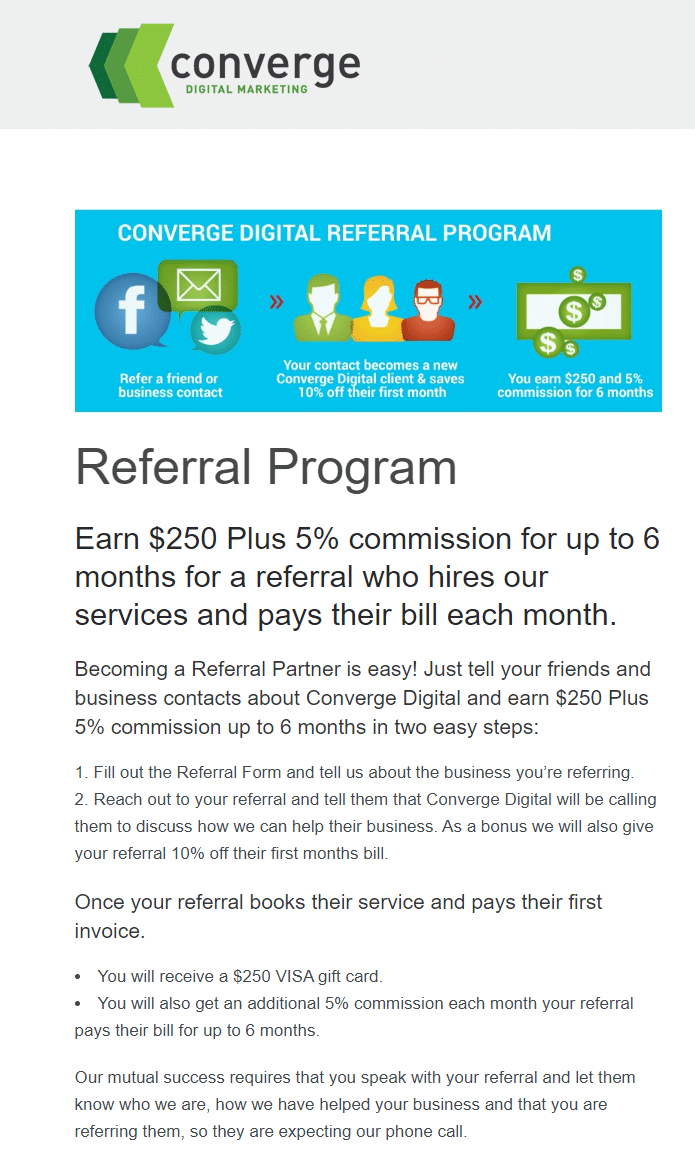
- Multi-step rewards. A smaller reward when the referred lead becomes qualified, a larger one when they sign on as a client. This keeps sharers motivated through the long sales cycle and ties the bigger payout to the outcome you actually care about.
- Recurring bonuses for retention. Since agency relationships are recurring revenue, reward the referrer again when the referred client renews. This compounds the incentive to refer the right kind of business, not just any business.
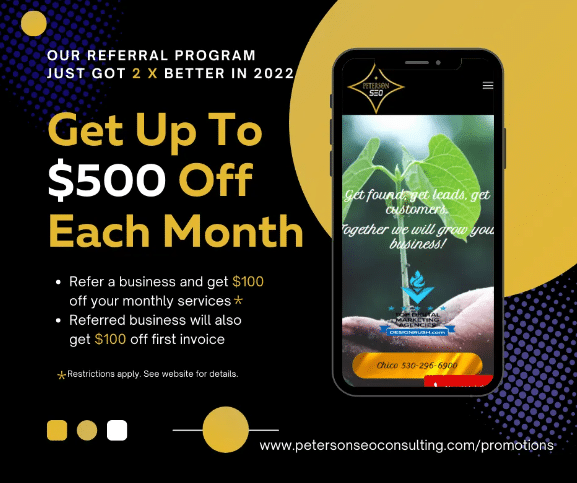
- Reward types that match B2B context. Service credits, gift cards, charitable donations in the client’s name, event tickets, marketing funds, professional development. Cash works but feels more transactional. See referral rewards for a deeper look.
- Rewards that are easy to fulfill. Pick something you can pay out consistently without it becoming an operational drag. Reward delivery delays kill trust faster than a small reward amount ever would.
Pay rewards out promptly when the conditions are met. Trust is the currency of the program.
Referral Rock is flexible enough to handle complex rewards, like tiers, bonuses, and stepped structures. Set up the incentives that fit your business, then let our platform send the payouts automatically.
Stop hunting for the perfect moment
A lot of advice on how to ask for referrals tells you to wait for the perfect moment: right after a campaign ships, right after a positive QBR, right after the client signs the renewal. The timing optimization is mostly a trap.
The right time is all the time, in multiple ways. A list of past contacts goes stale in two to three months. The agencies that win at this don’t pick one referable moment, they build referral touchpoints into the operating cadence so the asks happen continuously.
That doesn’t mean spamming clients. It means making sure the program is visible at the moments that already happen in the relationship: after deliverables ship, in monthly reports, at QBRs, in the email signatures of the account team, on the client portal. The program runs in the background. The opportunities surface themselves.
Keep access open — no join button
The fastest way to kill an agency referral program is to gate it. A signup form, a “join the program” page, a separate login, a workflow your client has to remember. Every step between “I’d refer them” and “here’s my link” is a step where you lose the referral.
The pattern that works: every existing client is already a member. They get a link or code by default, no signup required. Bulk import the client list. Send the link in the welcome email and the monthly report. When a client lands on the program portal, they shouldn’t have to authenticate; passwordless access or social login removes the friction. The job of the program is to be one click away when the client thinks of someone to refer.
Two other pieces of this:
- Make sharing easy across channels. Email, text, LinkedIn, social. Match the channels your clients actually use to talk to peers. Most agency clients refer via email or LinkedIn, so optimize for those first.
- Handle fraud progressively, not preemptively. Open access sounds risky if you imagine fake referrals flooding in. In practice, agency programs don’t have a fraud problem the way consumer programs do. The deal sizes are too high and the conversion path is too long. Use detection rules to flag the rare exceptions, and don’t preemptively gate the program in fear of a problem that probably won’t happen.
You never know who your most enthusiastic clients are. Gating access means you’ll never find out.
Treat the message and landing page as one handoff
The referral message your client sends and the landing page the recipient lands on are not two separate things. They’re one continuous handoff. The recipient should feel the same tone, see the same name, and read about the same offer from the moment the message arrives through the moment they take action. Break the seam and the click goes nowhere.
What that looks like in practice:
- The message is from the perspective of the referrer. “I thought you’d love this – from Dana” beats “Your friend referred you” every time.
- The landing page also names the referrer, in the headline. The recipient should see “Dana sent you a free strategy session” within the first second of landing on the page.
- The reward the message promised is the same reward the page promises. Don’t change the framing between the two.
- The tone matches. If the message is casual, the page is casual. If the message says “Your friend sent you a gift,” the page says “Your friend sent you a gift.”
- The headline focuses on what the friend is getting, not what your agency does. Save the pitch for the second scroll.
A note on how the message gets written: prewrite a default version your client can send as-is, but make it editable so they can personalize it. The prewritten version removes the cognitive load. The editability keeps it from sounding like a template.
Shares carry further when they feel personal at every step, from the invitation sharers get, to the message they send friends, to the page their friend lands on. Here’s how to personalize the share experience with Referral Rock.
Build referral touchpoints into ongoing service
Promotion isn’t a launch event. It’s a cadence. The agencies that get the highest sustained referral volume don’t promote the program harder, they promote it more often, in more places, woven into work the team is already doing.
Three patterns to combine, sometimes called the 3 P’s of continuous promotion:
- Proactive invites. Bulk emails about the program, sent on a monthly to quarterly rhythm. Event-triggered emails after milestones (a campaign goes live, a renewal closes, a particularly good month of results). Monthly summary emails to existing program members, recapping their sharing activity and prompting more shares.
- Discovery paths. Places clients can find the program when they’re looking. Hero placement on the website. Buttons in the client portal. Mentions in newsletters, invoices, confirmation emails. Email signatures. LinkedIn bios. Social media profiles. A dedicated FAQ page for clients with questions.
- Program recruiters. This one’s particularly powerful for agencies. Your account managers, customer success leads, and service team members all sit in client-facing seats. Each can have their own program access, their own invite link, their own sharing flow. Account managers are often closer to the client than anyone in marketing, and they’re already having the kinds of conversations where a referral request fits naturally. Make it easy for them to surface the program in those conversations.
For more on this, see promoting your referral program and referral ideas and practices.
Keep referrers in the loop proactively
Once a client refers a peer, don’t make them ask what happened. Send status updates automatically as the referral moves through the pipeline: lead captured, qualified, converted, reward fulfilled. Email is the right channel for detailed updates. SMS works for time-sensitive notifications.
The reason this matters: the referrer put their relationship on the line when they made the recommendation. They want to know the friend was treated well. Silence on your end after they refer feels like the relationship got dropped into a black hole. Updates close the loop.
This also creates a natural moment to thank them and prompt the next referral. Monthly summary emails work especially well here. They show the client what they’ve shared, recognize their contributions, and quietly invite the next round.
Thank clients for referrals
Send a personal thank-you when a referral converts. A handwritten note, a personal email from the account lead, a small gift on top of the program reward. Not because the client is expecting it. Because they put their relationship on the line, and acknowledging that explicitly is the kind of thing that makes them want to do it again.
For higher-volume referrers, consider public recognition: a spotlight on your website or LinkedIn, a quote in a case study, a small mention in your newsletter. A lot of clients value the recognition more than the dollar amount of the reward.
Track what actually moves the program
Most program dashboards have too many metrics. For an agency program, focus on the few that actually predict whether the program is working:
- Members added and members activated. Are clients in the program, and are they engaging with it at all?
- Shares. Is the program being used? If members are joining but not sharing, the issue is usually messaging or visibility.
- Conversions. How many referred leads become qualified, then become clients?
- Retention and lifetime value of referred clients vs. all clients. This is the metric that justifies the program at the leadership level. Referred clients almost always retain longer and spend more.
- ROI. Revenue generated through the program against the cost of running it (software plus rewards paid out).
Tracking these by hand is impractical at any scale. Referral software handles attribution, automatic reward fulfillment, and reporting in the background.
Pick one designed for B2B (like Referral Rock), so it can handle multi-step rewards, CRM integration, and the longer agency sales cycle. A consumer-style tool will leave you wiring things together by hand.
Start a referral program that works for your agency
A referral program isn’t going to invent word of mouth your agency doesn’t already have. But if your client work is solid and people are already mentioning you in conversation, a program is the difference between hoping referrals show up and knowing they will.
Build it like operations, not a campaign. Make the friend’s experience the headline. Keep access open. Then let the program roll alongside everything else you’re already doing well.
Referral Rock is built for agency programs, designed to handle the multi-step rewards, CRM integration, and progressive fraud protection that B2B referral programs need. Click here to request a demo, learn more about how our software works, or find out how our referral software is designed for professional services.

About the author
Content Specialist & Referral Program Advisor
Jess has been with Referral Rock since 2019. She has been a critical part of our content team and has been responsible for writing, reviewing, and maintaining our content library as well as our product support documentation. She is meticulous in her research, writing, and review process. More recently she has helped review and draft referral program messaging for our customers. This has helped her create a unique feedback loop where she sees referral programs in action, helps launch them, and also contributes to our articles.