
Most referral program advice boils down to a checklist: pick a reward, blast your list, hope for the best. That’s how you get a program that spikes on launch day and flatlines a month later. The programs that actually work aren’t built like campaigns. They’re built like operations, running continuously alongside your business. Here’s what that looks like in practice.
Referral program best practices
How do you make a good referral program? There are a few things every business owner or marketer should know before diving in, and the first one has nothing to do with software or incentives:
1. Start with word of mouth worth capturing
Before you think about rewards or referral links, ask yourself: are customers already talking about you? A referral program doesn’t create word of mouth. It captures and amplifies what’s already there.
If no one’s recommending you organically, a program won’t fix that. The signal that you’re ready is that referrals are already happening, just informally. There’s no system to make it easy, track who’s referring, or thank people when they do. That’s the gap a program fills.
What drives word of mouth in the first place? It comes down to your product, your service, the value you deliver, and the story people tell about you. You don’t need all four firing on all cylinders, but you need at least one or two strong enough that customers mention you without being asked.
Once that’s in place, a referral program takes word of mouth from random to reliable.
2. Frame the reward as a gift for the friend
This is where most programs get it backwards. All the energy goes into “what does the referrer earn?” when the real question is “what gift can the referrer give their friend?”
When the reward is framed as a payout for the referrer, the whole thing feels transactional. The sharer feels like they’re monetizing their relationships. Nobody wants that. But when the referral is framed as a gift, like “here’s a discount for someone you care about,” the dynamic flips. Sharing feels generous, not calculated.
The best referral programs offer double-sided incentives, where both the existing customer and the new customer receive rewards. But even more important than the reward structure is how you frame it. All messaging, from the program title to the emails to the offer itself, should center on what the friend gets.
If you offer an incentive that your customers love, your program is already on its way. Your reward should tie back to your business: store credit, an account upgrade, free products, or swag. Learn more about what referral rewards and incentives work best.
A few principles for getting the referral program reward right:
- Frame it as a gift the sharer gives their friend, not a bounty they collect
- Offer double-sided rewards so both the referrer and the friend benefit
- Use the friend reward to encourage a purchase/action (store credit, free months, product upgrades)
- See the table below for suitable rewards for the sharer, based on business type
- Keep the value clear but don’t make it feel like a cash transaction
| If your product is… | Higher cost or purchased infrequently |
Service or subscription-based | Low-cost or purchased frequently |
| Description | Big ticket items, such as cars, mattresses, or large kitchen appliances | Frequent or repeat purchases (i.e., streaming services, software tools) | Items that may vary, but are purchased repeatedly (i.e., food items, restaurants, clothes) |
| Consider these sharer rewards | Cash, swag, gift cards, donations (rewards not tied to future purchases) | Store credit, points, free month, upgrade, swag, donations | Store credit, discount, gift cards, swag, donations |
And when someone sends you a referral, say thank you. A small note of thanks goes a long way in building a long-term relationship with your most loyal customers, and it motivates them to refer again.
3. Keep access open
Most referral program advice tells you to carefully “consider who to invite” and start with your most loyal customers. That sounds smart, but it kills programs before they start.
Here’s the problem: you never know who your most enthusiastic sharers will be. The customer you’d never expect might be the one who refers ten friends. Gating access with forms, signups, and selective invitations means you’ll never find out.
Instead of making people join, make everyone a member by default. Give every customer a referral link or code automatically. No hoops, no join button. The fewer steps between “I want to refer someone” and “here’s my link,” the more referrals you get.
What about abuse? Prepare for it progressively, not preemptively. Use fraud detection rules to flag exceptions rather than locking down the whole program out of fear. The vast majority of your customers have good intentions. Operate from abundance, not scarcity.
Keeping access open also sends a signal: your company is friendly and values customers. It shows you recognize the reputation they put on the line when they recommend you to a friend. Whether people use the program or not, being open and generous helps your brand spread within communities.
4. Build referral touchpoints into your operations
If your program isn’t easy to find, participation will be low. But the bigger mistake is treating referral program promotion as a launch event, blasting your list once and hoping it takes off.
Contact lists go stale in 2-3 months. New customers come in every week. Promotion needs to be ongoing, built into how your business already operates, not a one-time campaign.
Think of three categories of promotion:
Proactive invites: Email your customers after key events (after purchase, after a service is completed). But don’t stop at the initial invite. Send periodic reminders. Use transaction emails, which tend to get opened more often, to include your referral program with a clear CTA.
Discovery paths: Put your program where people look and expect to find it:
- Your website (homepage link, footer, or main menu)
- Social media profiles and periodic posts
- Customer portal or dashboard
- Post-purchase confirmation pages
- Receipts and shipping confirmations
Program recruiters: Empower your team (sales reps, field techs, account managers) as always-on referral recruiters. They’re already talking to customers at the moments that matter. Make the program part of their handoff.
A refer-a-friend widget on your site is one easy way to keep the program visible without making customers jump through hoops.
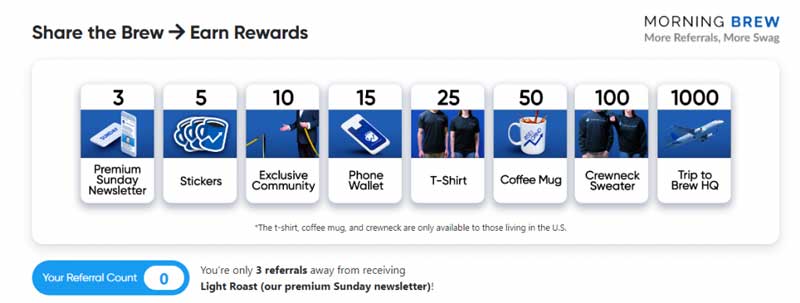
5. Make use of referral emails
There are a few key emails sent during every referral program. These go to either the existing customer (the referrer) or the potential customer (the referred friend).
Emails to the existing customer:
To start the referral process, you’ll email existing customers, usually after certain events (after purchase, when shipment has been made). This is your initial invite asking for referrals. To make these emails work:
- Make sure your subject line is clear and grabs attention
- Keep the email simple: save the details for your landing page or referral program FAQ
- Make sure the CTA drives people to learn more or start referring
- Include the main benefit or reason a customer should share
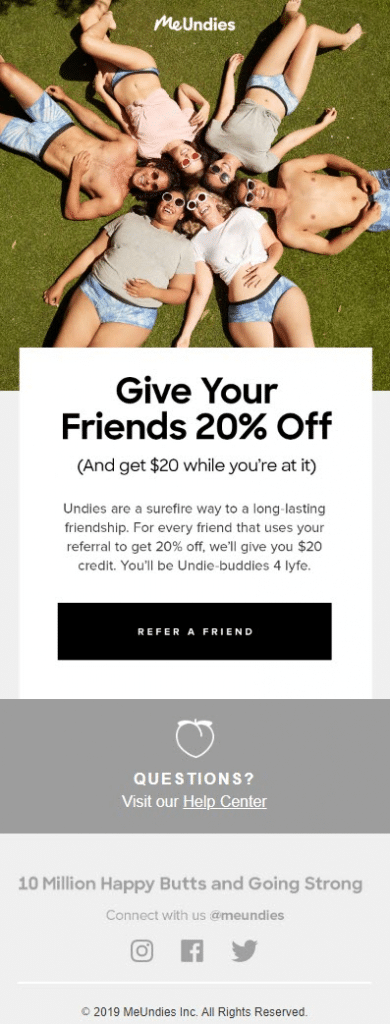
After the initial invite, send reminder emails with updates on recently sent referrals, summaries of overall sharing activity, or general program updates to boost engagement (more on this in #7 below).
Emails to the referred friend:
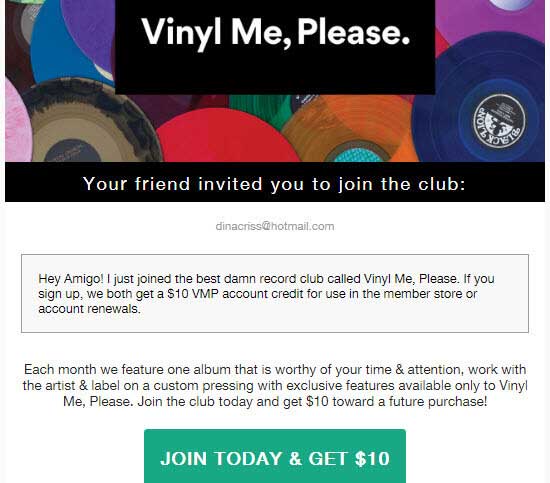
The first email to the friend is actually sent from the existing customer. You can create a pre-filled message that represents both you and your customer, which makes sharing easier. Allow customers to edit or personalize this message before sending.
After the friend makes their first purchase, send a thank you message. You can also notify the referring customer that they’ve earned a reward.
Check out these resources for more on creating compelling referral program emails: Referral Email Templates and Referral Email Examples.
6. Make sharing easy
If your referral program is easy to share, then people will end up sharing it with their friends. Since every referral has the potential to become a new customer, it’s crucial to make the referral process as easy as possible. Here are some ways to make sure your referral program is easy for your customers:
- Provide multiple options to share on the platforms they use most, like Facebook, Instagram, SMS, and email.
- Create easy-to-share referral links that customers can immediately copy and paste (even better if they can just tap the link, instead of having to highlight the whole line).
- Optimize your program for mobile so people can quickly share on-the-go.
7. Follow up with reminders
Some customers may have joined your referral program but simply forgotten about it. Send them a quick reminder. Let them know the program and its rewards are still there.
Your follow-up message can be simple. Something like “Hope you’re enjoying our referral program” or “We’re excited to meet your friends” can be enough to prompt a referral.
With Referral Rock, you can automatically send a reminder email a few days after someone first gets invited to be part of your program. You can also send Monthly Summaries of sharing activity (which do double duty as a regular sharing reminder for your progarm participants).
8. Use referral program software
Referral software allows you to track the number of referrals coming in, see who they’re coming from, and distribute rewards automatically. It can also generate referral links that make it easy for customers to share across email and social media, and send automated reminders when needed.
All this automation makes sharing just a click away, while tracking allows you to refine your program over time.
There are a number of refer-a-friend platforms available. Choosing the right one takes some thought. Before you start shopping, think about how you want your program to operate. Then, look for platforms that offer a demo or free trial. Schedule a demo to see if the software can do what you need. Some things to consider:
- How customizable is the program setup?
- Does it integrate with your existing tools (CRM, email, e-commerce)?
- What tracking and reporting is available?
- How does it handle reward fulfillment?
How effective are referral programs?
Referral programs are effective for both customer acquisition and retention. A few stats worth knowing:
- 84% of people trust recommendations from people they know more than any other form of marketing
- People are four times more likely to buy when referred by a friend
- A Wharton study reports that referred customers are 18% more likely to stay than other customers
Referrals work because people trust recommendations from someone they know. Refer-a-friend marketing uses this trust to spread the word about your business, product, or service in a trackable, repeatable way.
Referral program examples
Here are two successful referral programs that show how these best practices play out:
Tesla
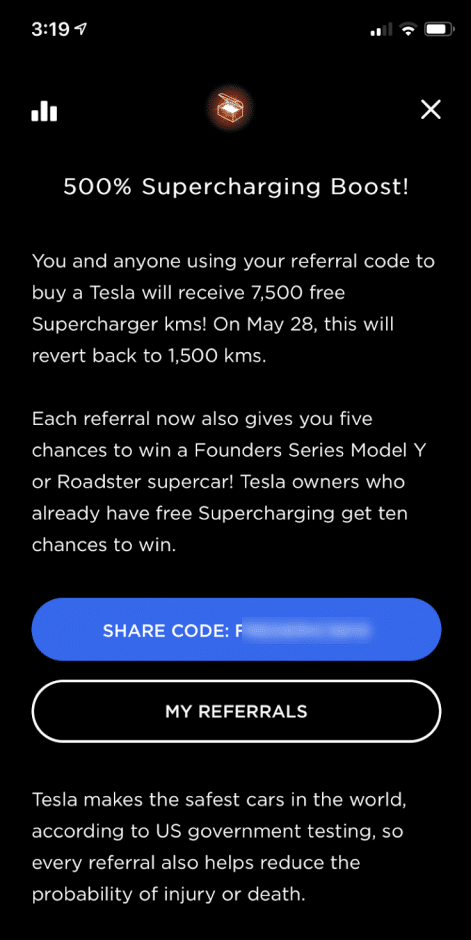
Tesla’s referral program rewarded customers by giving each owner discounts to share with friends, plus VIP factory tours and chances to win a free vehicle. Today, it offers supercharging bonuses for each referral along with raffle entries. In the last quarter of 2015, 25% of Tesla’s total sales came from their referral program.
Evernote
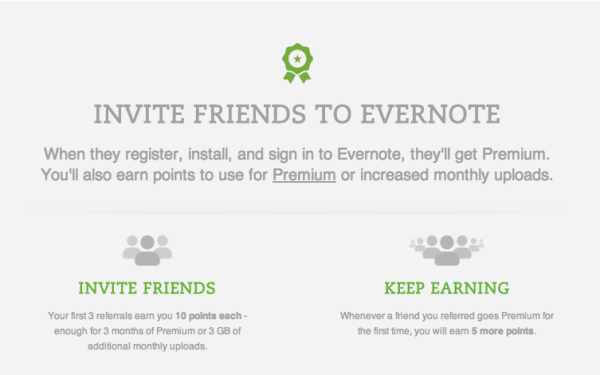
Evernote, the note-taking app valued at $1 billion with over 100 million customers, grew largely through referrals with barely any other marketing. Customers earn points for referrals that translate to extra storage or premium service. The referred friend gets a free month of premium as well, a clean example of double-sided rewards in action.
 We cover more referral program examples (including ideas for your own referral program) in our other articles.
Wrap-up
A referral program works when it rolls alongside your business, not when it launches with a bang and fades. Get the foundation right: make sure customers are already talking about you, frame the referral as a gift for the friend, keep access open, and promote continuously. The rest is execution.
Looking for more essential tips for starting and managing the best referral program? Check out these resources: