
A CPA referral program gives your clients an easy way to send friends, family and business contacts to your firm. The referred friend gets a welcome, often money off their first return or first month of bookkeeping, and you know which client sent them. Once that first return is filed, you thank the client who shared.
Happy clients share most right after good work, so tie the ask to handing back the return. This guide covers clients who refer, filing season for tax preparers, and the bankers, attorneys and advisors who send you work. It also covers the other kind of CPA referral program, where a company pays you to send it your clients.
The call quotes here come from our 2026 sales and customer calls, shared without names.
Why referrals fit accounting and tax firms
People hand a certified public accountant (CPA) or tax preparer their income, their business books and sometimes their mistakes. So they want someone's word before they choose one. A client who's happy with a smooth filing tells a coworker who's dreading theirs, and a business owner asks around when the books get messy.
Accounting also has a built-in moment to ask: the return comes back every year, and bookkeeping clients hear from you every month. Partners, preparers and the front desk talk to every client, so they're the ones to ask. And a new client is worth a lot here, because many stay for years. That leaves room for a fair reward, though it doesn't set the amount.
6 signs your firm is ready for a referral program
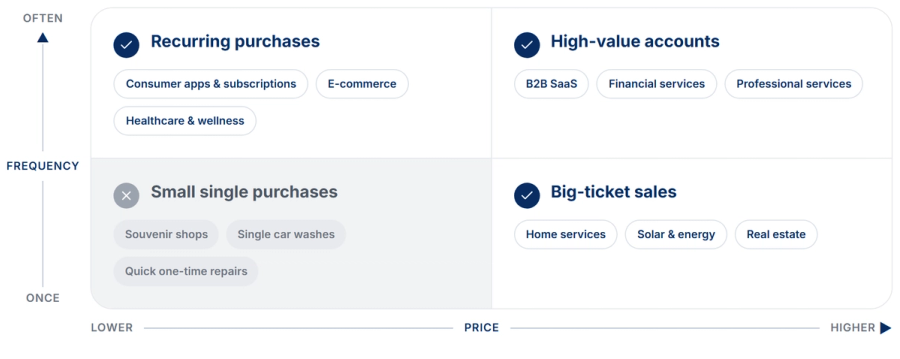
A referral program amplifies the word of mouth you already get; it doesn't create it. So check these 6 signs first, here in accounting firm terms.
| Sign | What it looks like at an accounting or tax firm |
|---|---|
| 1. Word of mouth | New clients already say "my friend said to call you" |
| 2. Easy to talk about | Clients tell people about returns filed on time and questions answered fast |
| 3. Community | Your clients know people like them: coworkers, business owners, neighbors with the same tax worries |
| 4. A service team | Preparers and bookkeepers reply quickly and deliver on time, even in busy season |
| 5. Business software | You track clients and work in practice management software, a client portal or a CRM (customer database) |
| 6. Steady marketing | Search, reviews, seminars and partner introductions bring in new clients every year |
If several are missing, work on those first. The readiness check walks through all 6 in a few minutes.
Accounting also has its own rules on what you can give or take for a referral. A friend's offer, a small thank-you or no reward at all can each work. Run your plan past your state board of accountancy before you launch.
How to run a CPA firm referral program in 8 steps
These steps follow the order our program advisors use when they set up a program, shown here for an accounting, tax or bookkeeping firm. For the general version, see our guide on how to build a referral program.
1. Invite every client, starting with this year's returns
Start with the clients whose returns you filed this season. Then add each new client once their first return is done or their books are set up. Recent clients remember the good experience, so they're the likeliest to share. Past clients come second, with a light reminder.
Give every client a personal referral link right away, with no form and no password. We call that keeping access open. Many referrals still arrive as a phone call: "my neighbor said to call you." So have the front desk ask every new client who sent them, and log the answer.
…tax professional and I get referrals and I need a way to keep up with the referrals
A log that names the sharer is what makes a thank-you possible. Without it, the client who sent three friends this year hears nothing.
2. Give the referred friend money off their first return
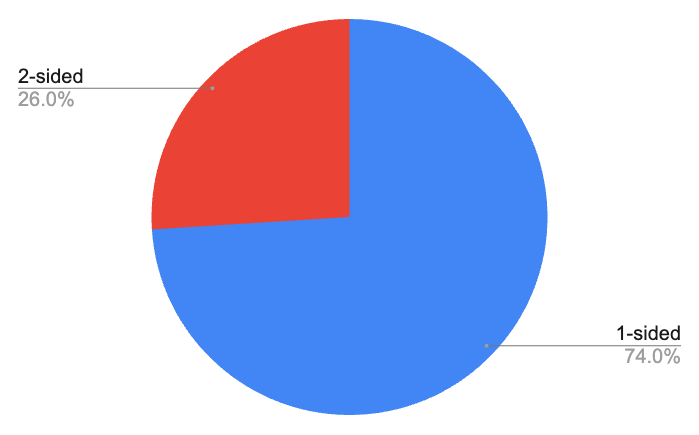
In our November 2024 analysis of 339 referral programs, 54% gave the friend nothing. That's a missed opportunity. A friend's offer turns "you should call my accountant" into a favor: "Tell them I sent you and they'll take $50 off."
Tie the offer to the work. Take money off the first return, discount the first month of bookkeeping, or give a business owner a free first consultation. Keep it short enough to say in one line, or to print on a card the client hands over. Put it on the friend's welcome page (the page their link opens) too, with the name of the client who sent them at the top.
3. Thank the client within your board's rules
For the referrer, the client who shared, pick a thank-you they'll notice and your fees carry easily, then leave it alone. Credit toward next year's return lands on their own bill. A gift card, or a donation to a charity they choose, suits a client who won't need you again for a while. Our rewards guide covers more options.
The profession's code of conduct lets many CPAs pay a client for a referral, if the referred friend is told in writing. A welcome page that tells the friend what both sides get is one way to put it in writing. State boards set their own rules, so check yours. A referral fee is income for whoever receives it, so plan how you'll report the payouts.
4. Send the thank-you once the return is filed
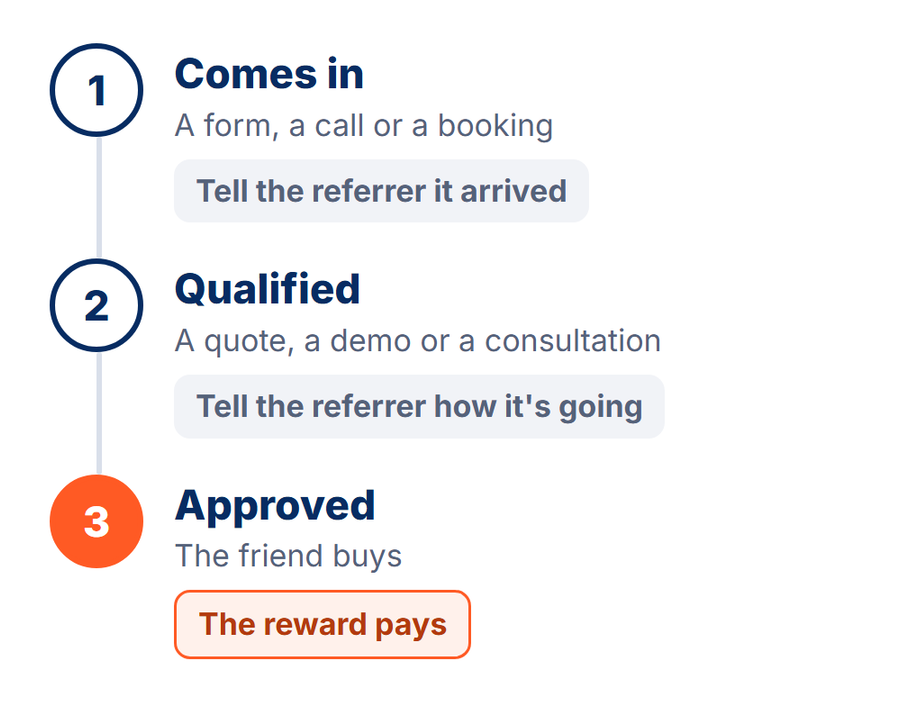
Pay once the friend is a real client, so you never reward a booking that falls through. For tax prep, that's when their first return is filed and paid. For bookkeeping, wait a few months: SDO CPA, a CPA firm, waits until the friend's sixth month as a paying client. The friend's offer comes off their first bill, so they get it right away.
referrals count as referrals once they've made a purchase instead of once they've signed up
Tell the sharer when their friend books, and again when the thank-you goes out. A quick note keeps them sharing, and it saves them from wondering.
5. Ask when you hand back the return, then follow up
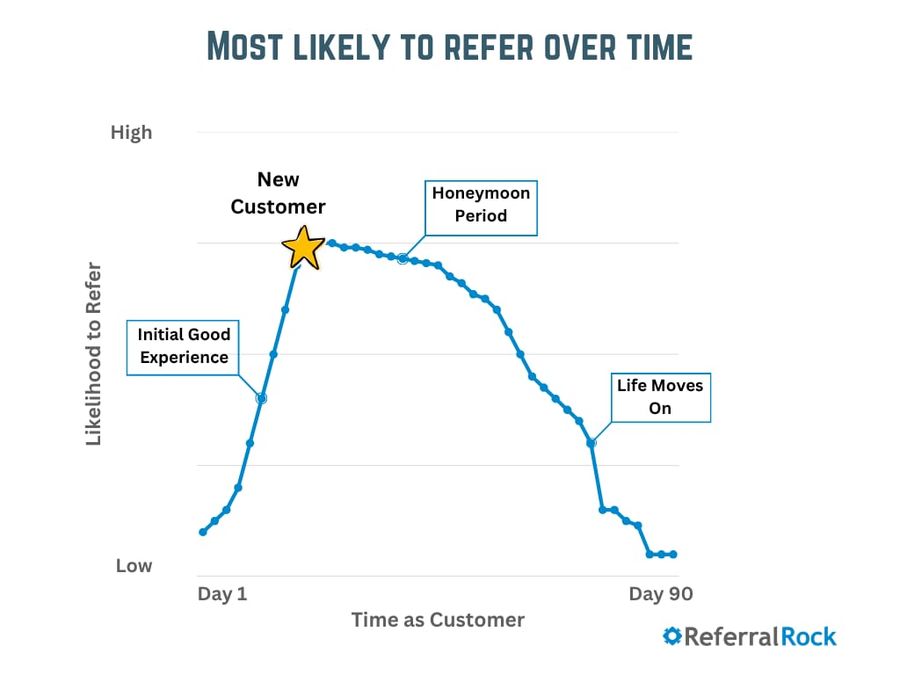
Clients are most willing to share right after a good experience, and the urge fades as life moves on. One business on our platform found 86% of their referrals came within 90 days of someone becoming a customer. We call that span the sharing window.
For a tax client, the window opens when the return is filed and the refund lands. For a bookkeeping client, it opens after the first clean month-end, and again at each good review. Ask early, then follow up gently a few weeks later, since one ask is easy to miss. The friend keeps their own schedule, so leave their offer open past April.
6. Keep the program in the portal, emails and engagement letters
Most programs get one launch email and then go quiet. Across 952 programs over 9 years, 82% of the ones that stalled did so because promotion stopped after launch. Put the ask in 3 to 5 places clients already see, each with a short line that leads with the friend's offer:
- The return delivery email and the e-signature request
- The home screen of your client portal
- The engagement letter and the invoice
- Your email signature and the year-end newsletter
Steady placements like these are what we call continuous promotion. Skip the social media blast. One client sending their link to one friend who needs a preparer does more than a post their followers scroll past.
7. Let partners, preparers and the front desk ask
Clients trust the person who did their return. So the most personal ask comes from the partner or preparer at the review meeting. The front desk can ask too, when a client picks up their copies. Give each of them a personal link or a card, so you can see who brings in clients and thank them too.
The preparer starts the ask. The program's emails follow up with the link and reminders, so nothing rests on anyone's memory during busy season. The wording is below.
8. Watch shares before referrals
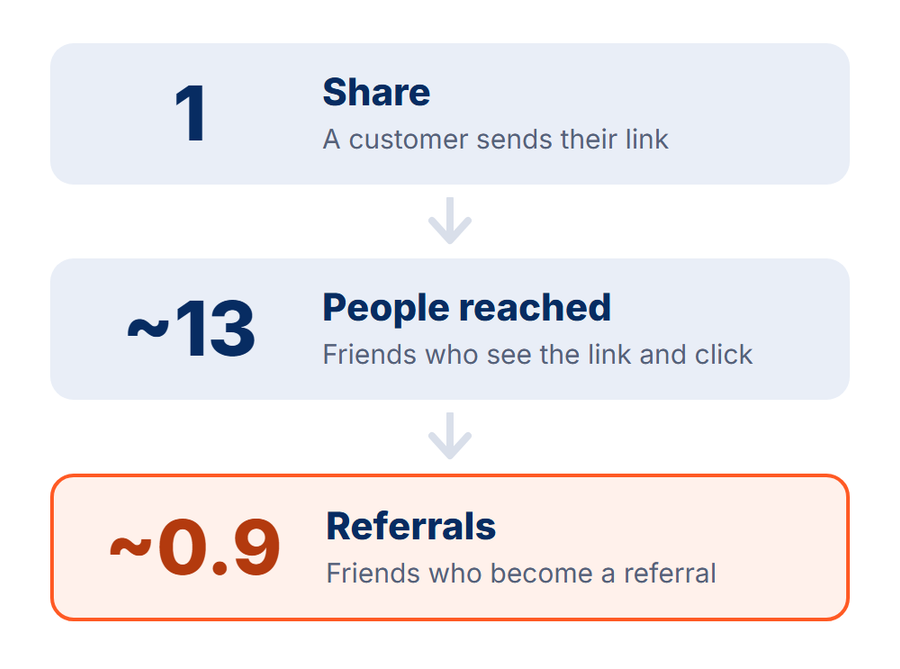
Referrals are the last number to move, so watch shares first and how many people they reach. In our June 2024 data, one share reached about 13 people and led to about 0.9 referrals, across all program types on our platform. We call shares and reach leading indicators: if they climb in the spring, new clients tend to follow, often at next season's first booking.
Tax preparation referral programs: plan around filing season
A tax services referral program follows the same 8 steps, timed to the filing calendar. Many new clients pick a preparer between January and April. So the program has to be running before the rush, and the ask works best once each return is done.
Set it up before January
Busy season leaves no time to build anything. Set up the offer, the links and the line in your delivery email in the fall, so the program runs from the first booking. Then keep it on all year. Business owners, the self-employed and people with a messy year look for a preparer in every month.
| When | What to do |
|---|---|
| Fall | Set up the friend's offer, the links and the wording in your delivery email |
| January to April | Ask as each return is filed, and log every "who sent you?" |
| May and June | Follow up with the season's clients while their refund is fresh |
| Extension season | Ask again as extended returns go out in the fall |
Ask after each return is filed, and again at extension time
Don't ask in the middle of the rush, when the client is still chasing documents. Ask when you hand back the finished return, then follow up once it's accepted. The extension deadline in the fall is a second window, full of clients who are relieved it's done.
For the sharer, try credit toward next season's fee, a gift card once the friend's return is filed, or next year's extension filed free. The friend's offer stays simple: a discount on their first return. Some preparers add a bigger prize once a client has sent 5 new clients. Keep that as an extra on a program that runs all year.
Referrals from bankers, attorneys and financial advisors
After happy clients, the best referral sources for accountants are other professionals. A banker's borrower needs clean books, an attorney's client is setting up a business, or a financial advisor's client has a tax question. These referral partners, sometimes called centers of influence, need their own track next to the client program.
A referral network for an accounting firm works by trading introductions both ways. Send your clients to the partners you trust, and tell them when you do. Give each partner their own link, so every introduction is counted and you know whom to thank. A lunch, a note, or a quick update on the client they sent often means more than money.
once we sign that work, then there's a one time bounty back to them.
A fee between firms needs both sides to check their rules first. Attorneys work under bar rules that limit paying for recommendations, and advisors answer to their firm's compliance team. Your state board has its own rules too. So lead with introductions, and put any referral fee in writing, with the client told about it.
Joining other companies' CPA referral programs
Search "CPA referral program" and half the results are the other side: companies that pay accountants to send them clients. Software, payroll, lending and banking companies run these, and so do some financial advisors. A referring accountant program pays the firm when a client signs up. The firm may earn per referral, take a share of revenue, or get a discount.
They can be worth joining when the product truly fits your clients. Check 3 things first:
- Fit. Would you recommend it with no fee? If not, the fee can cost you your clients' trust.
- Disclosure. Tell the client about any fee or commission, in writing, before they sign up.
- Your client list. A firm that audits or reviews a client's financial statements can't take a commission for recommending products to that client. The same goes for some compilation clients. Ask your state board if you're unsure.
What to say when you hand back a return
Wording to copy, with the friend's offer first. Swap in your own offer and timing, and find more ways to word it in how to ask for referrals.
At the return review: "Thanks for getting everything to us on time. If a friend or coworker needs help with their taxes, here's a card with your link. They'll get $50 off their first return, and we'll send you a thank-you once it's filed."
A line for the return delivery email: "Know someone who's dreading their taxes? Send them your link, and they'll save $50 on their first return with us. When they've filed, we'll thank you."
At a bookkeeping client's month-end review: "If another business owner you know is behind on their books, pass this along. Their first month is half price, and we'll thank you after their third month with us."
4 real accounting and tax referral programs
What 4 firms' referral pages offered in November 2026:
| Firm | The sharer gets | The friend gets | When it pays |
|---|---|---|---|
| Robert Hall & Associates (tax firm) | $25 Visa gift card | $50 off the first return | Friend files a long-form return or incorporates |
| SDO CPA (CPA firm) | $150 gift card | $150 credit | Friend's 6th paying month of bookkeeping |
| Taxes for Expats (online expat tax firm) | $50 credit | $25 credit on sign-up | Friend pays $400 or more |
| Jackson Hewitt (national tax chain) | $50 eGift Card, no limit | Not stated | Friend files for the first time |
For tax work, SDO CPA gives the sharer a $20 gift card and the friend a $20 credit, 180 days after the work is done. Taxes for Expats adds a $150 credit for every 3 paying friends.
Robert Hall's is the one to copy. The friend's $50 off comes first, printed on a card. The thank-you is small: a $25 gift card, and a prize or a $200 credit toward next year's prep at 5 friends.
The others each get one thing right. SDO CPA waits until the friend has proven out. Jackson Hewitt hands over the client's Referral ID with their own finished return, so the ask arrives at the right moment.
Referral software for accounting and tax firms [Free Tools]
You can run a program by hand, build your own, or use software. The first three options below are free tools of ours.
| Option | Good for | The catch |
|---|---|---|
| Manual referral tracker | A few referrals a month, logged by the front desk | Links, follow-ups and thank-yous are all by hand, in busy season too |
| Referral link and code generators | Giving each client something to share | No tracking or thank-yous on their own |
| Referral program workbook and fee calculator | Planning the friend's offer, the thank-you and the timing before the season | They plan the program; they don't run it |
| Building it yourself | Firms with developers to spare | You build and maintain every part |
| Referral software | Running it all year, for clients and partners, without the busywork | A monthly cost |
How Referral Rock runs it for accounting firms
Referral Rock is referral program software for businesses with teams. For accounting and tax firms, the feature that fits best is referral program recruiters. Each partner, preparer and front desk person gets their own link and a portal that shows who they've signed up. At the return review, they can sign the client up on the spot, and every client they sign up is credited to them.
Bankers and advisors who send work get their own links too. Your team can add a referral by hand when it arrives as a call or an email. New clients come in from HubSpot or QuickBooks and get invited on the days you choose. When the friend becomes a paying client, the referral is approved and the reward is sent.
Every plan includes a program advisor who helps set it up. See how it works for professional services firms.
Start with the returns you file this season
You don't need a launch campaign. Begin with the next returns you hand back: give their friends money off a first return, and thank them once it's filed. Then bring in your past clients and the partners who already send you work.
If you're unsure a program fits yet, the readiness check takes a few minutes. For law firms, consultants and other service firms, see the client referral programs guide.
About the author
Referral Rock Editorial is the team behind Referral Rock's guides and templates on referral, affiliate, partner and brand ambassador programs. Today's team writes, reviews and updates them, building on work by former staff and freelance writers over the years.