
Most student ambassador programs get treated like a campaign: a launch, a roster, a semester of activity, then it fades. The ones that work treat it as ongoing operations. They run cohorts, train continuously, and build the program into how the brand shows up on campus year after year.
This guide covers how to run that kind of program.
- What an ambassador actually does (and how the role differs from a customer referral or affiliate).
- How to recruit, reward, and train ambassadors who stay engaged. How to measure what’s working.
- Plus, three programs worth stealing from: PINK Campus Reps, Bumble Honeys, and Red Bull Student Marketeers.
What is a student ambassador program?
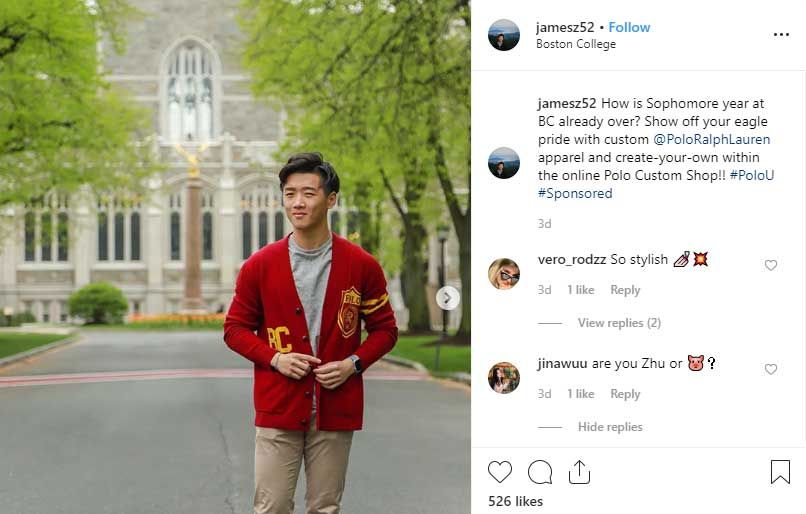
A student ambassador program is a structured initiative where college students who genuinely connect with a brand represent and promote it over time. The brand could be the college itself, or a consumer brand that resonates with the Gen Z demographic: apparel, energy drinks, dating apps, financial services. In return, ambassadors typically receive perks like internships, mentorship, professional development, free product, store credit, cash, or scholarships.
Student ambassadors are hand-picked students who serve as the face and voice of the brand, both online and in person. They share what they love about the brand authentically, build positive sentiment within their networks, and represent the brand at campus events.
A note on terminology. “Student ambassador program” gets used interchangeably with “customer referral program” or “affiliate program,” but they’re different models:
- A customer referral program captures word of mouth that’s already happening: any customer can share, no curation, no application. Most of our other guidance (like the brand ambassador program playbook) focuses on this.
- An affiliate program pays publishers or content creators commission to drive sales: more transactional, less personal.
- A student ambassador program is curated. You select the reps, train them, and ask them to do ongoing brand work: content, events, peer outreach. The relationship is more like a part-time job than a one-off referral.
Most of this guide assumes you’re running the third kind: selective, ongoing, curated.
What ambassadors typically do
Student ambassadors play a crucial role in both brand and school contexts by serving as liaisons, advocates, and representatives.
Online, they:
- Promote the brand on their social channels and create engaging content
- Host virtual events like Instagram or TikTok livestreams
- Share peer-to-peer recommendations that boost credibility
Offline, they:
- Represent the brand at campus events and parties
- Organize brand-related activities or activations
- Lead campus tours or info sessions (for college ambassadors)
- Provide testimonials and feedback that helps the brand understand its target audience
The mix depends on your goals. A college ambassador program is often heavy on tours, info sessions, and admissions support. A consumer brand program leans toward content, events, and product distribution.
Benefits for your brand and your ambassadors
Done well, an ambassador program creates a real win-win. The brand-side benefits:
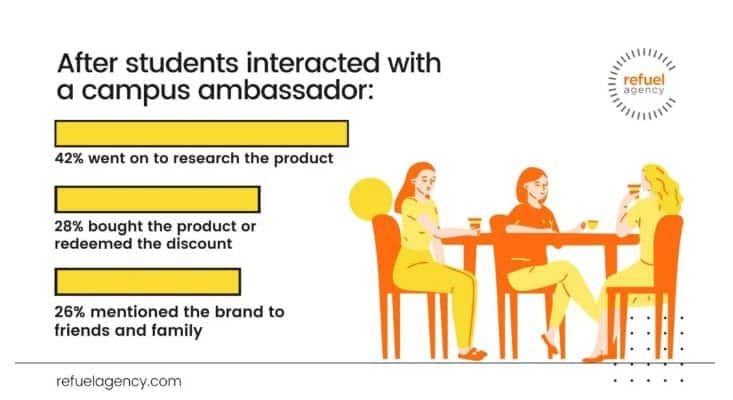
- Authentic peer-to-peer trust. Young adults trust their peers more than they trust brand accounts. A recommendation from a classmate carries weight that a paid ad never will.
- Sustained presence on campus. Ambassadors give your brand a real, ongoing footprint where your audience already lives, and not a one-week activation that disappears.
- Higher-quality leads, sales, or enrollments. Conversions that come through ambassadors tend to be better-fit because they came pre-qualified by the trust of the share.
The student-side benefits matter just as much:
- Real skill development: marketing, event management, social media, public speaking, leadership.
- Networking access: connections with brand staff, industry professionals, and other ambassadors.
- Unique experiences: early access to product, exclusive events, leadership opportunities, behind-the-scenes glimpses.
If the student-side benefits feel thin, your applicant pool will reflect that. Ambassadors stay engaged when the experience is genuinely worth their time.
How to run a student ambassador program: 7 practices
When launching a student ambassador program, follow these best practices to increase the chances of your program’s success and foster a positive and engaging experience for the students involved.
1. Set clear goals and objectives
Decide what you want the program to actually accomplish (increased enrollment, brand awareness, social engagement, sales) before you start recruiting. Goals shape everything downstream: who you recruit, how you train them, what you measure.
Be specific and measurable. “Increase social media mentions by 25% over the next two semesters through ambassador-led campaigns” is something you can run a program against. “Build brand awareness” isn’t.
2. Know where to find ambassadors
How you find brand ambassadors depends on what kind of program you’re running.
For a college’s own ambassador program: Hand-pick enthusiastic upperclassmen who reflect well on the school and represent its student body. Most college ambassador programs require a minimum GPA and full-time enrollment.
For a consumer brand running across multiple campuses: Start with students who already love your brand. Find them through social listening, branded hashtags, or comments on your posts. Brand mention software makes this faster.
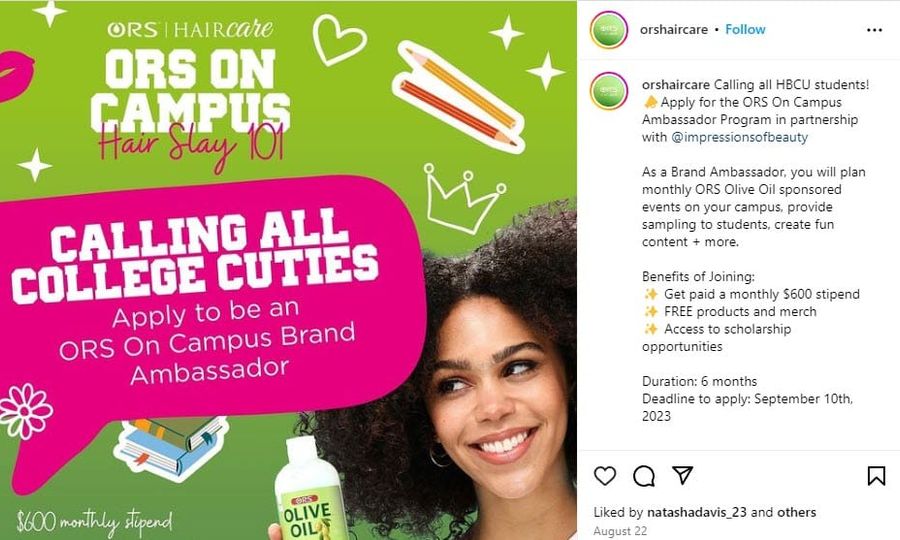
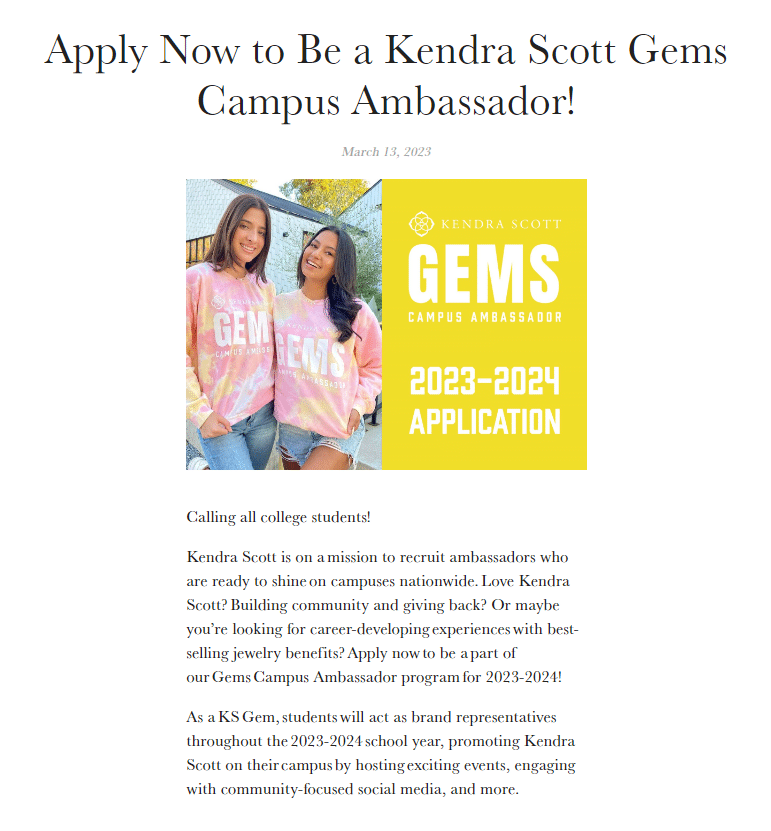
You can also create a brand ambassador application and promote it through social media, email campaigns, or campus events to reach a wider pool.
3. Be selective (curation is a feature)
Unlike customer referral programs, where you want every customer in by default, ambassador programs work better when you select carefully. The right ambassadors do better work and stay longer than a wide net of casual reps ever will.
Build a selection process with two layers:
- Written application: gives you insight into communication skills, motivation, and brand fit. Ask why they want the role, why they connect with your brand, and what makes them a good rep.
- Live interview (Zoom is fine): assesses passion, energy, and how they’d represent you in front of others.
Look for strong communication skills, leadership qualities, and a real connection to your brand. Skip applicants who seem in it just for the perks.
One structural decision: do ambassadors serve their full undergraduate run, or do you re-select each academic year? Annual cohorts force you to keep the bar high but cost you institutional knowledge. Multi-year tenures build community and depth but require more careful selection up front. Either works. Pick one and run it consistently.
4. Reward ambassadors without making them feel transactional
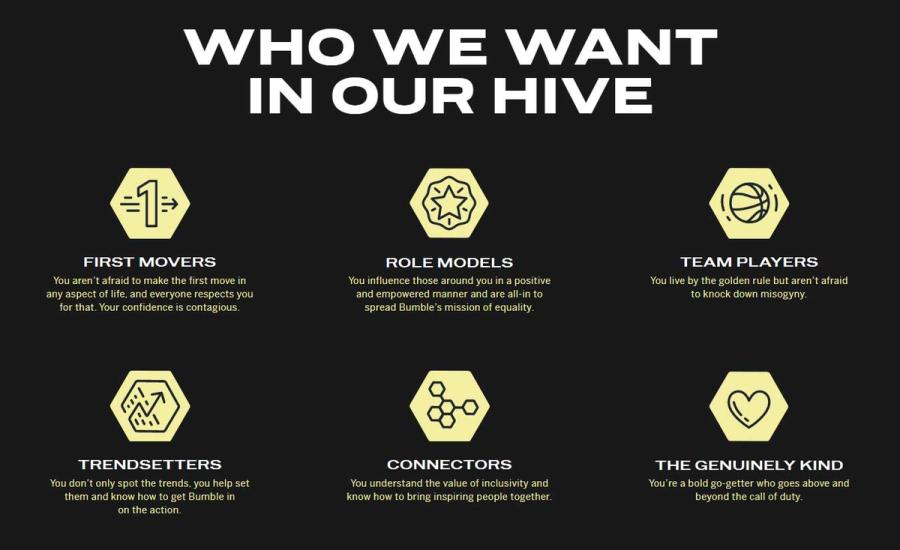
While student ambassadors are often motivated by their passion for your brand or institution, rewarding their hard work is both fair and effective for encouraging ongoing commitment. Free products, gift cards, brand swag, or school merch are popular and tangible ways to show appreciation.
Cash compensation works well too, especially for higher-effort programs like Red Bull’s. Consider tiered rewards, where top performers get tech, trips, or other premium perks, to drive friendly competition.
But here’s the part most programs miss: what motivates the ambassador isn’t what motivates the friend.
When an ambassador shares with their peers, the message they send shouldn’t be “use my code, I get $20.” That reads as an ad, and it puts their relationship with their peers on the line for a transaction. The friend feels sold to. Trust evaporates.
Coach ambassadors to lead with what the friend gets, not what they earn as an ambassador. Their reward stays on their side of the system: their dashboard, their thank-you email, their leaderboard. The friend’s message is about the friend’s gift, or the intrinsic benefits they’ll get. Same dynamic, much better results.
You can use brand ambassador software to automate reward fulfillment, segment rewards by performance tier, and keep the sharer’s reward side cleanly separated from the friend-facing message.
5. Train ambassadors on how to share, not just what to share
Most ambassador training covers the basics: public speaking, social media, event planning, brand guidelines. All necessary brand ambassador skills. But the part that often gets skipped is how to share authentically. Help them understand how to maintain their genuine voice while representing your brand or institution, as this builds trust among their peers.
A trained ambassador who posts “Sign up with my link, you get 20% off and I get $50” sounds like every other discount code on the internet. The peer-to-peer trust collapses.
Instead, train them on a different default:
- Lead with the friend’s experience. What does the friend get out of this? Why would the ambassador’s friend specifically care?
- Mention specific people they could refer. “You know who would actually love this? My roommate, who’s been complaining about X.” Naming who and why beats a generic post every time.
- Treat the share as a gift, not a transaction. The ambassador put their reputation on the line. The whole pitch should reflect that.
Beyond messaging training, build out ongoing support: mentorship, regular check-ins with program coordinators, and an easy channel for ambassadors to ask questions or flag issues. The training isn’t a one-time onboarding session. It’s continuous coaching across the cohort.
6. Treat communication as ongoing, not episodic
A program that sends a kickoff email in September and goes silent until April isn’t really running. The cadence is what makes it a program, not a campaign.
Build the rhythm:
- Set up dedicated channels: a Slack workspace, group chat, or community platform where ambassadors can connect with each other and with program coordinators.
- Send regular updates: what’s launching, what’s working, what’s coming up. Weekly or biweekly is fine for most programs. Silence is the killer.
- Actively ask for feedback: what’s working, what’s frustrating, what they need more of. Then act on it visibly so they know it matters.
- Collaborate on strategy: the best ambassadors have ideas about events, content, and outreach you’d never come up with from HQ. Build channels for those ideas to surface.
- Create an exclusive space: a newsletter or insider community where ambassadors get information their peers don’t. The exclusivity reinforces that they’re part of something.
7. Measure what’s working (and use software to do it)
You can’t improve what you can’t see. Track conversions first: sales, enrollments, signups attributed to specific ambassadors. That’s the bottom-line measure.
Beyond conversions, track:
- The frequency and reach of ambassador posts and content
- Reposts and shares of ambassador-generated content
- Event attendance and engagement at ambassador-led activations
- Application volume and quality (a sign your brand visibility is rising)
Then use the data. Adjust who you recruit, how you train, and what you reward based on what the numbers tell you, not gut feel.
Brand ambassador software automates the tracking by giving each ambassador a unique link or code that attributes conversions back to them. Referral Rock’s brand ambassador software adds tools to keep ambassadors engaged, boost activity, and improve conversion rates. Plus, it tracks reach even before activity converts to sales or enrollments, so you can see brand awareness building in real time.
3 student ambassador programs worth stealing from
Some of the best brand ambassador programs anywhere are student programs. Here are three worth studying.
1. PINK Campus Reps
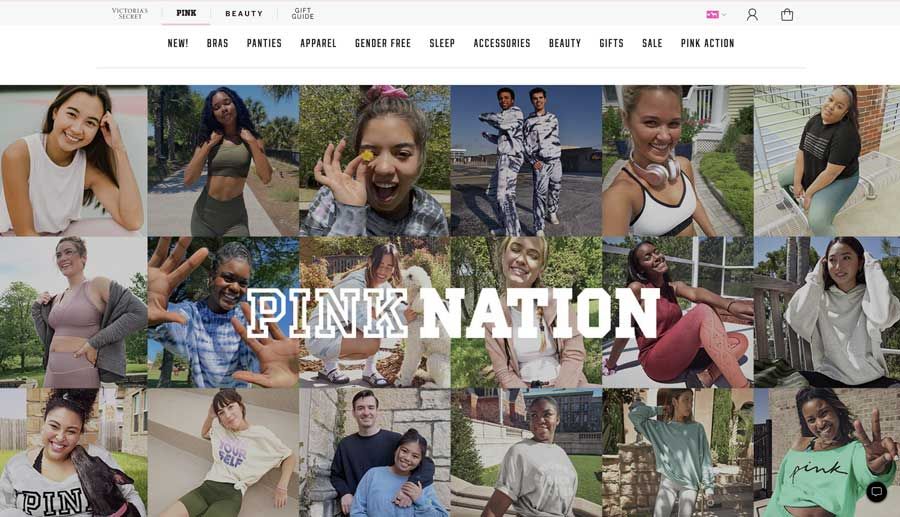
Clothing brand PINK runs one of the strongest peer-network ambassador programs out there.
What works:
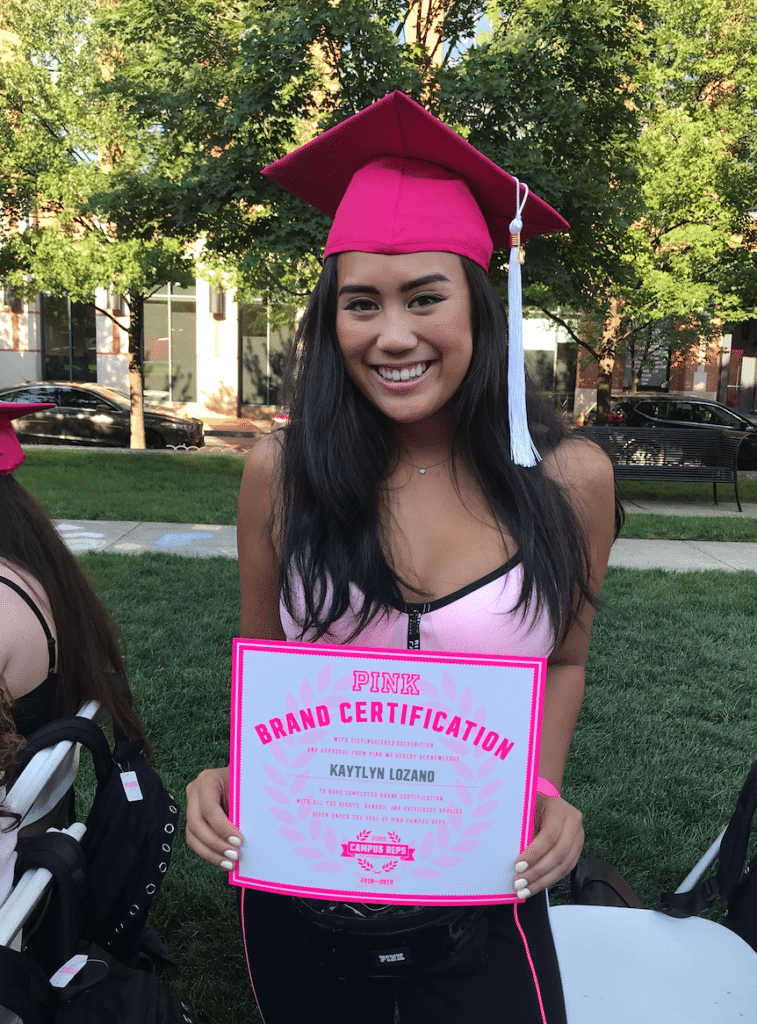
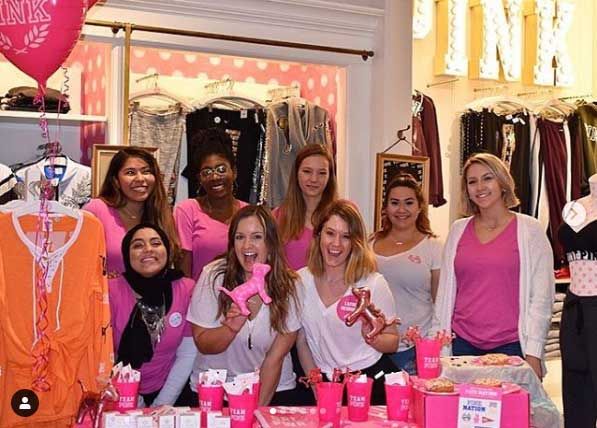
- Careful rep selection. PINK picks ambassadors with a record of on-campus involvement, online presence, and existing love for the brand.
- Real community. Reps chat daily with each other and supervisors through meetings and surveys. They influence future product lines and talk with company leadership.
- Event ownership. Reps plan and host events in PINK stores and on campus, collaborating with student organizations and store staff.
- Genuine perks. Free PINK products including exclusive items, plus access to deals and insider surprises.
2. Bumble Honeys
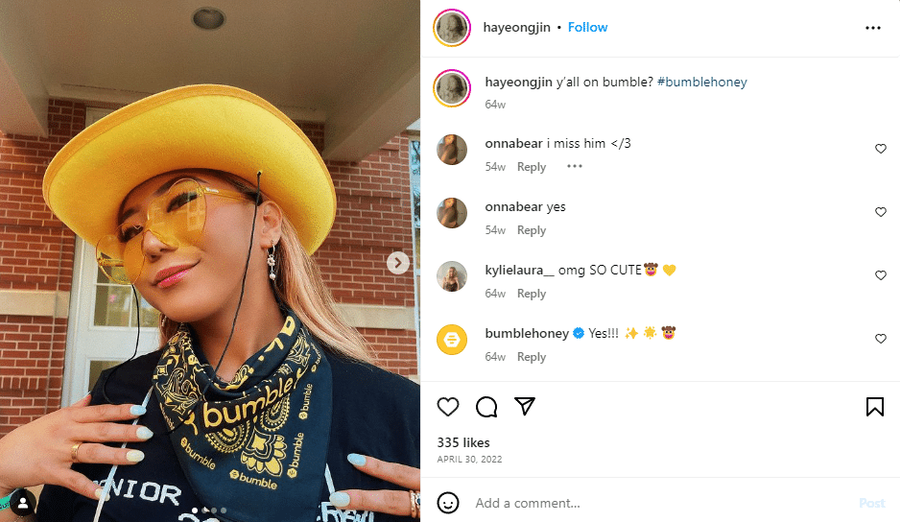
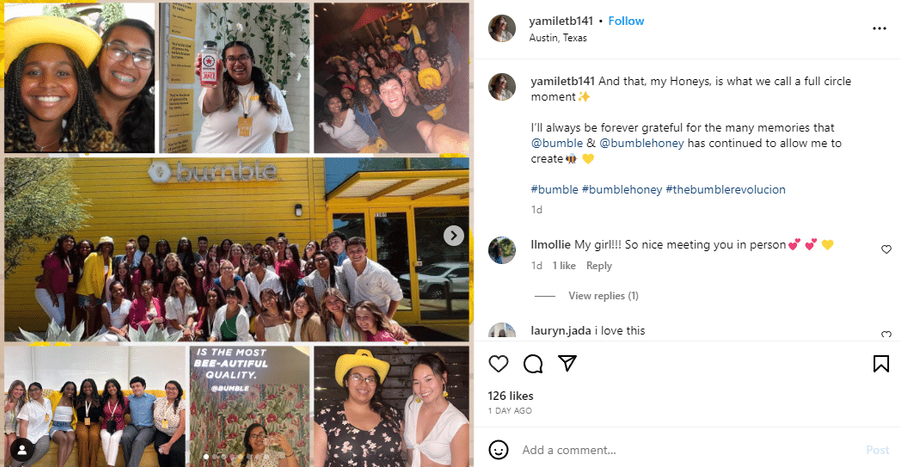
Bumble’s ambassador program — Bumble Honeys — is consistently rated one of the most engaging student ambassador programs.
What works:
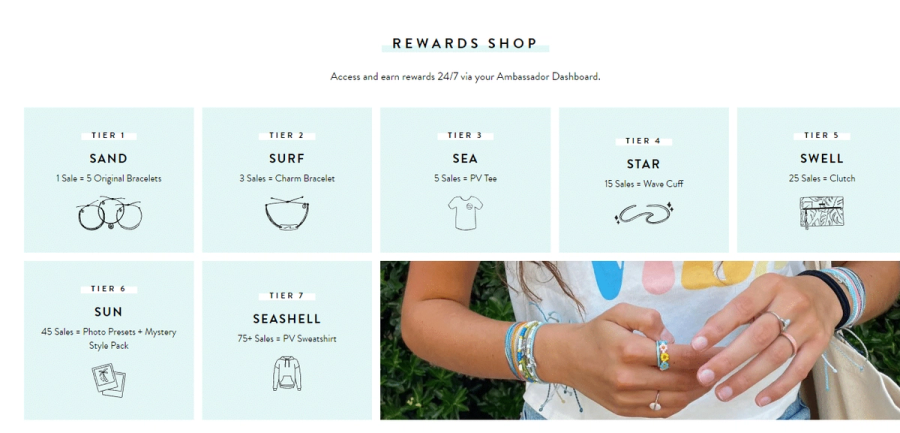
- Detailed application. Asks why applicants love Bumble, how they embody the brand values, and what leadership skills they already have. The bar is high.
- Clear job description. Bumble’s program page lays out exactly what skills are needed and what Honeys will be doing. No ambiguity.
- Ambassador autonomy. Honeys plan their own social content and events based on their audience and current trends. They’re trusted to run their patch.
- Networking access. Honeys talk with influencers and opinion leaders, not just Bumble HQ, so they get real resume-building exposure.
3. Red Bull Student Marketeers
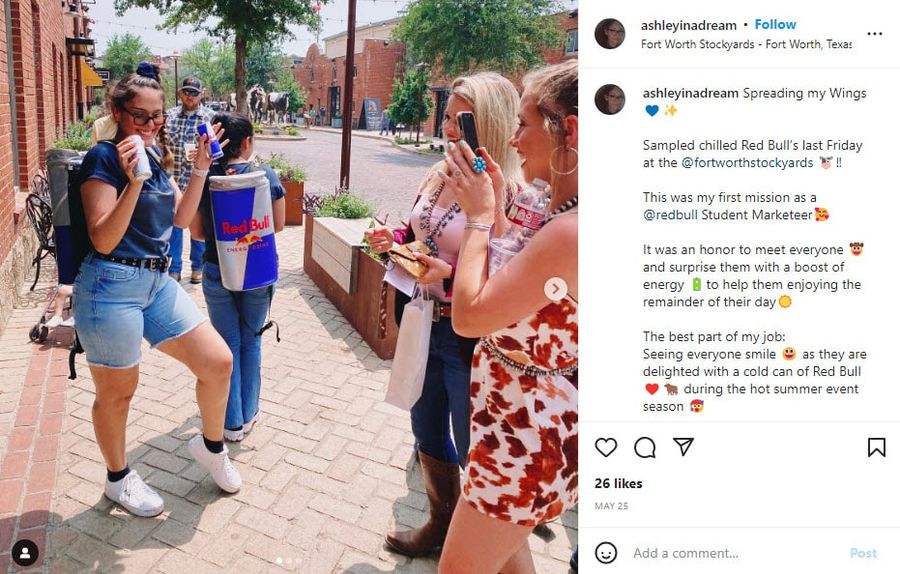
Red Bull’s Student Marketeer program has 4,000+ reps worldwide and is one of the longest-running and most professionalized student ambassador programs anywhere.
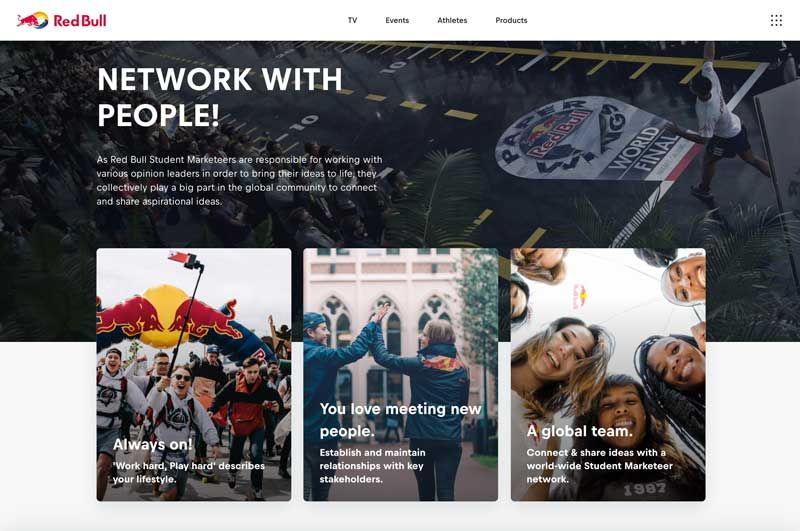
What works:
- Treated like a real job. Red Bull posts positions on job boards and pays in cash like any other role. It’s a serious launch pad for marketing, sales, or PR careers.
- Strategic autonomy. Marketeers become experts in Red Bull products, identify their own distribution opportunities, spot trends, and figure out how to share Red Bull online and through guerilla marketing.
- Access to influencers and athletes. Marketeers work with opinion leaders to bring ideas to life, and some interact with the public at Red Bull’s iconic events alongside sponsored athletes.
- Strong cohort community. Plenty of structured opportunities for Marketeers to interact, exchange ideas, and learn from each other.
Run it like a program, not a campaign
A well-run student ambassador program drives awareness, builds peer-level trust, and creates a recruiting pipeline of brand-aligned voices on campus. The brands that get this right don’t treat it like a one-semester push. They run cohorts, coach ambassadors on how to share, measure what’s working, and build the program into how they show up on campus year after year.
If you’re ready to operationalize your ambassador program, Referral Rock can help. Our brand ambassador solution gives you the tracking, automation, and reporting tools to run a program that actually rolls. Whether you’re running referral programs, affiliate programs, ambassador programs, or partnerships, we offer the flexibility and support you need. Schedule a demo to see how.
About the author
Referral Rock Editorial is the team behind Referral Rock's guides and templates on referral, affiliate, partner and brand ambassador programs. Today's team writes, reviews and updates them, building on work by former staff and freelance writers over the years.