
If you’re building a brand ambassador program, the people you pick will define whether it works. Ambassadors aren’t affiliates chasing commissions or customers casually mentioning you to a friend. They’re curated advocates who represent your brand publicly, online and in person. That means the skills they need are specific. Here are 10 to screen for when you’re recruiting.
Ambassadors vs. referral programs vs. affiliates
Before you start screening for skills, make sure an ambassador program is actually what you need. These three types of advocacy programs get conflated constantly, but they require different people, different structures, and different skills.
| Type | Who does it | What drives them | What they need |
|---|---|---|---|
| Brand ambassadors | Curated advocates with audience or community influence | Genuine love for the brand, often with a formal arrangement | Content skills, authority, public communication |
| Customer referral programs | Existing customers who recommend you to friends | A great experience they want to share | Nothing special. They just need it to be easy. |
| Affiliate/partner programs | Content creators, publishers, or resellers | Commission on sales they generate | Marketing reach, conversion optimization |
If your customers are already recommending you and you want to capture and scale that word of mouth, you’re looking at a referral program, not an ambassador program. Ambassadors are a bigger commitment on both sides. The skills below are what that commitment demands.
1. Genuine brand love and authenticity
First and foremost, brand ambassadors must genuinely love your brand and want to see it succeed. They should be so enthusiastic about your products that they post about you without being asked. Their enthusiasm pulls people in and makes them excited about the brand too.
But enthusiasm alone isn’t enough. It has to come across as real. Ambassadors must communicate their love for your brand naturally, in their own voice, without sounding like a sales pitch. They genuinely use your products and want to share true stories of why they love them, in hopes of benefiting others.
When screening, look for people who have already posted authentic love for your brand more than once, without prompting. That’s the signal. Authenticity can’t be trained. If someone already embodies your brand’s values before you formally recruit them, you’ve found the right person.
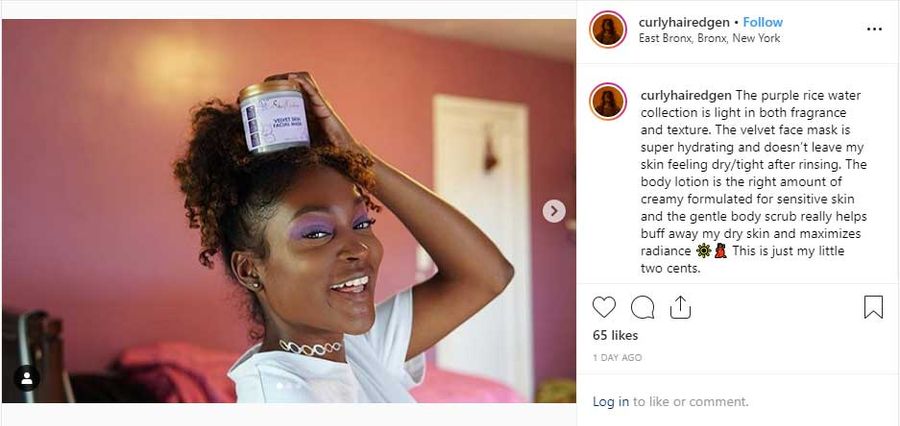
Shea Moisture ambassador Genesis (@curlyhairedgen) shares why she loves the brand’s purple rice water collection, in her own voice.
2. Marketing sense and strategic thinking
Brand ambassadors don’t need a marketing degree, but they need a basic grasp of how word of mouth works. They should understand their role: how genuine recommendations help with customer acquisition, and how advocates can promote a brand through authentic endorsements.
Beyond that, the best ambassadors think strategically. They know their target audience, figure out the best ways to connect with them (what messages, posts, and events will resonate, and where), and put plans into practice. Even their spontaneous-seeming guerrilla marketing moments are carefully planned. They also evaluate what works and what doesn’t, and apply those lessons going forward.
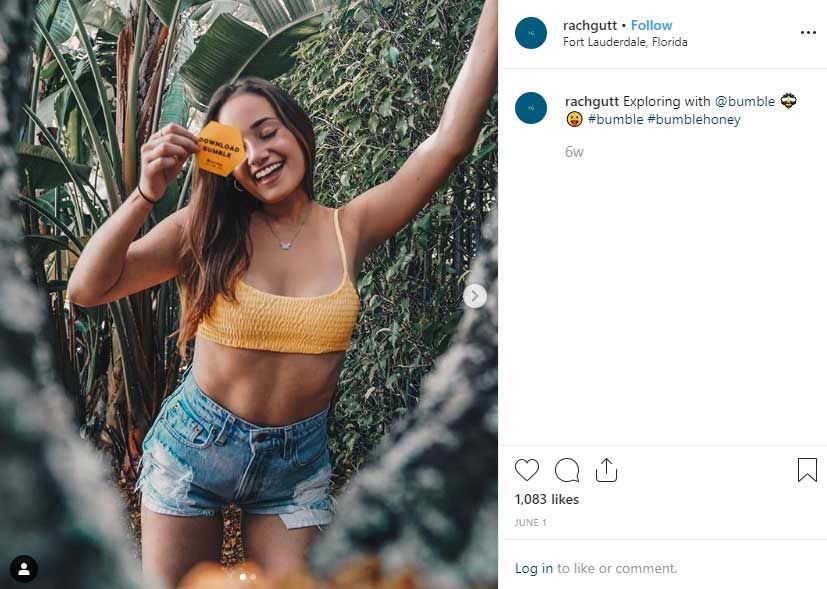
Rachel Guttman (@rachgutt) is a Bumble Honey, a member of the Bumble app’s student ambassador program.
3. Strong content/social presence
One of a brand ambassador’s main roles is maintaining a consistent social media or blog presence for your brand, from their own accounts. They need a clear niche, a consistent image, and posts that are always high-quality (not blurry or rushed).
That consistency requires creativity. Ambassadors share your brand multiple times, so they need to keep content fresh. That means finding new situations to showcase your product, new angles, new captions. They creatively adapt their message to resonate with each individual and each unique situation. And when challenges come up (especially out in the field), they find creative solutions rather than stalling out.
4. Authority in their niche
Ambassadors must hold high authority within a niche, among an audience, or both, built through a strong social media presence and/or solid offline connections. Their expertise makes prospective customers more likely to trust their recommendations.
Through that authority, ambassadors naturally connect with your brand’s target audience. An athletic shoe company might recruit a runner. A sunscreen brand might ask a dermatologist. A brand targeting college students might pick student ambassadors across campuses. The key: authority matters more than follower count. An ambassador who deeply knows their audience and consistently delivers what that audience wants will outperform one with a bigger but shallower following.
5. Confident communicators
Brand ambassadors represent your brand offline as well as online, at trade shows, events, and in everyday conversations. They must hold organic, one-on-one conversations tailored to each person they talk to, detailing why they love your products. No scripts. They’re always ready to strike up a dynamic, personal conversation, relate to whoever they meet, and explain how your products will benefit them individually.
Confidence is what makes this land. When people seek recommendations, they gravitate toward people who sound and look self-assured. In person, ambassadors can’t seem nervous or unsure. Online, their recommendations must be polished and clear. Confidence and conversational skill work together. One without the other falls flat.

Bumble ambassador Michelle (@michellekhajeh) holds a branded community-building event.
6. Talent for relationship-building
Brand ambassadors prioritize building strong, long-lasting relationships with customers and potential customers. They know how to connect with others on a personal level, and they understand that fostering deep connections around your brand matters far more than pushing sales. They work to build a community of loyal customers who are willing to share your brand with others.
Choose ambassadors who are skilled at making genuine connections. With those relationship-building skills, they’ll earn repeat customers through trust, not pressure.
7. Taking and giving feedback
The ambassador relationship is long-term. That means feedback has to flow in both directions.
Ambassadors must follow your rules and guidelines for promoting, and take feedback graciously on what they’re doing well and where they can improve. Willingness to take feedback shows they’re ready to grow.
But great ambassadors also give feedback. Because they’re committed to seeing your brand succeed, they’re ideal people to test new products, share what they like, and suggest improvements. They’ll pass along feedback from their followers and share ideas for how your brand can better connect with its audience. An ambassador who’s comfortable communicating concerns on a regular basis is more valuable than one who just follows instructions.
8. Leadership qualities
Even with guidelines, ambassadors carry out most of their work with little to no supervision. They need to take initiative, spot potential customers, and engage them without guidance from you. They should also be seen as leaders within your brand community, offering support to customers (including newer ambassadors) and answering questions.
9. Commitment
Ambassadors are committed to helping your brand succeed and reliably complete all tasks you assign them. In a formalized program, they’ll attend trainings and development sessions, and dedicate consistent time to promotion (a certain number of hours per week, posts per month, or events). Even in an informal relationship, they’ll commit the time and energy to make their promotions the best they can be.
10. High level of professionalism
Ambassadors must conduct themselves with professionalism online and in person. The way they present themselves while representing your company directly reflects on your brand.
Brand ambassadors are mindful that they represent you at all times, whether making a post, assisting at an event, or just walking down the street. They influence others’ perceptions of your brand through their actions, positively or negatively. The ambassadors you choose must not have a history of questionable, disrespectful, or insensitive posts or actions. Pick people with a strong conscience, both digitally and offline.
Not every advocate needs to be an ambassador
Ambassador programs are high-touch. You’re recruiting specific people, vetting them, giving them guidelines, and maintaining an ongoing relationship. That’s the right move when you need curated representation in a specific community or niche.
But many businesses don’t need that. If your customers are already talking about you and you want to make it easier for them to spread the word, a customer referral program is simpler, lower-maintenance, and often more effective. Referral programs don’t require you to find people with all 10 skills above. They just capture word of mouth that’s already happening and give it a system.
If you’re not sure which fits, ask: do I need a few hand-picked advocates with specific skills, or do I need a system that lets all my happy customers refer easily? The answer tells you whether you need ambassadors, a referral program, or both. Check out our top brand ambassador software picks or see how Referral Rock compares as an ambassador alternative.
Brand ambassador skills in practice: Lululemon
Lululemon was one of the first brands to use long-term ambassadors, and their program is still going strong. Their ambassadors are local yoga and fitness instructors and athletes, people who hold genuine authority in their communities. Rather than explicitly telling their network to buy Lululemon, ambassadors wear the products during everyday athletic activities so their community sees them in action. That’s authenticity in practice.
Ambassadors are tied to physical stores, where they offer free classes and assist at events. As Lululemon puts it, ambassadors are “not just in partnership with the brand, but an extension of the brand.” One of their three pillars of ambassadorship is dedication to “growth in your community, personally or professionally.” Ambassadors receive mentorship, provide product feedback, and top performers are invited to a multi-day summit.
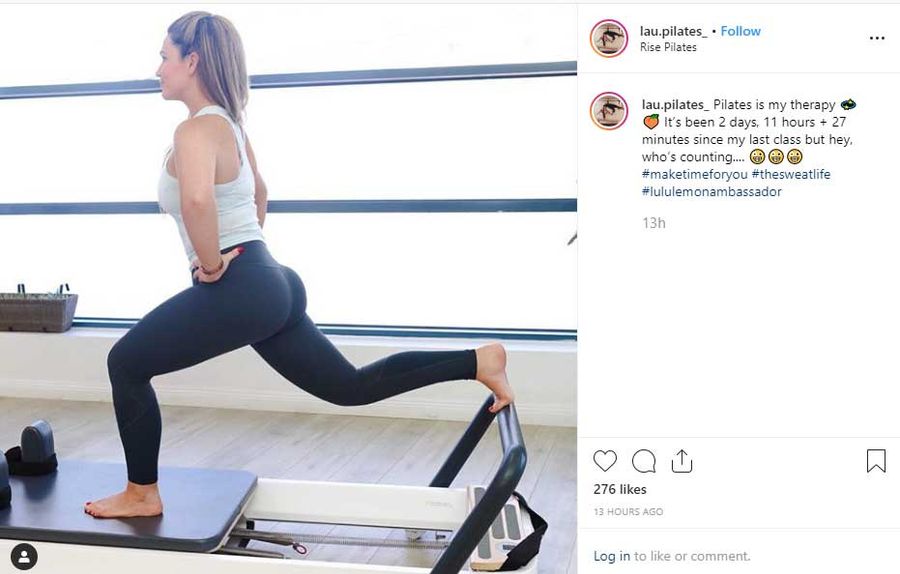
Ambassador Laura Saggers (@lau.pilates) wears Lululemon at the pilates studio where she is the director.
Brand ambassador skills in practice: PINK Reps
PINK Campus Reps show how ambassador skills play out in a student context. Reps must be current undergrads and members of PINK Nation (the loyalty program). They “Must. Love. PINK.” and embody the brand’s energy and excitement around college life.
The role demands a mix of skills from the list above:
- Planning events and guerrilla marketing (strategic thinking and creativity)
- Collaborating with local stores to drive traffic (confidence and conversational skills)
- Empowering other young women on campus (relationship-building and leadership)
- Communicating with PINK leadership through meetings and weekly surveys (two-way feedback)
Reps commit 8-10 hours per week for a full academic year, including a three-day Brand Certification session.
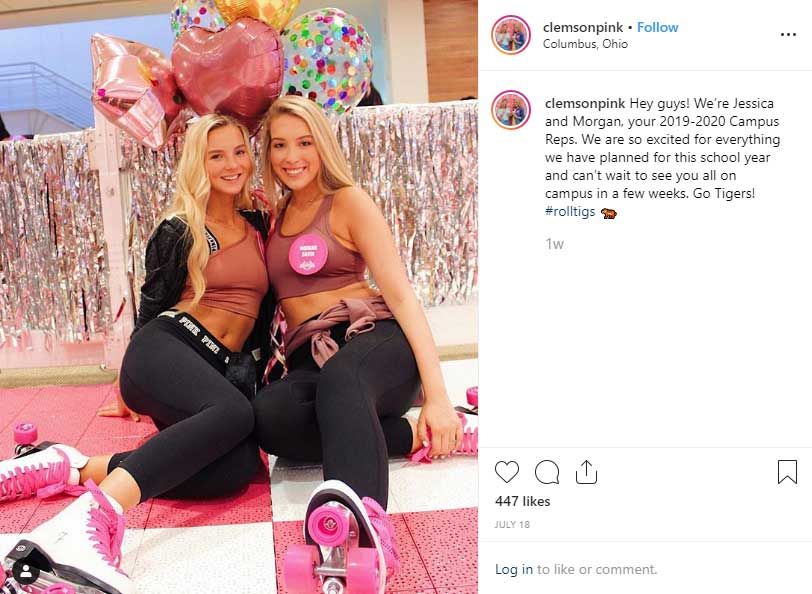
The 2019-2020 @clemsonpink Campus Reps.
Wrapping up
The skills above are what separate ambassadors who move the needle from ones who just wear the logo. But before you start recruiting, make sure an ambassador program is the right fit. If your customers are already recommending you informally and you want to make that easier and more trackable, a customer referral program might be the better starting point. If you’re ready for ambassadors, start a brand ambassador program with the right people and the skills above as your screening checklist.

About the author
Jessica Huhn is a content writer and strategist at Referral Rock. When she is not writing, there is a good chance that Jessica is singing, arranging songs, sharing and enjoying content on social media, or hanging out with her mini Goldendoodle. She believes that it's always important to cultivate gentle strength.