When done well, an email blast is a fast way to put one message in front of your whole list. A sale ending, a new feature, a milestone, an event. Done poorly, it gets deleted. Below are nine email blast examples from brands like Fitbit, Bath & Body Works, and Intercom, with a short breakdown of why each one works. Steal the patterns that fit, skip what doesn’t.
What is an email blast?
An email blast is a mass email sent to a targeted list, usually for a one-time purpose like a sale, a product launch, or an event. The term gets used interchangeably with email campaign, and it’s not the same thing as spam. A blast goes to people who opted in, not random addresses. It works well when you have one specific message the whole list needs to see at the same time.
Tools for sending an email blast
Most teams use a dedicated email marketing software platform to handle list management, design, and delivery. Common picks: MailChimp, Constant Contact, Sender, Kommo, and InfusionSoft. Any of them will get the job done. The choice usually comes down to price, design templates, and the integrations you need.
What every email blast needs
The strongest email marketing campaigns share four elements:
- A subject line that earns the open. Curious, funny, surprising, or specific. Not generic.
- A preheader that backs it up. A second hook that pulls people the rest of the way in.
- One clear message. Good email marketing doesn’t try to do five things at once. Pick one and commit to it.
- A CTA that matches the email’s purpose. Some blasts have one obvious next step (shop the sale). Others are just informational. Don’t force a CTA where one isn’t needed.
Email blast vs. an email program
A blast is a single send. A program is the cadence underneath. The difference matters because most marketers treat the blast as the strategy, then wonder why the spike fades. A single email can announce a launch or close a sale, but it doesn’t build word of mouth or sustain attention on its own.
The brands below all run a rhythm of touchpoints in the background. That cadence is what does the work of re-engaging inactive users and keeping a list warm. The example you’re looking at is just one beat from it.
9 email blast examples worth studying
These examples cover the most common reasons to send a blast: sales, milestones, product launches, events, and updates. Plenty of free email blast examples and templates exist if you want more. Below are the patterns worth studying first.
1. Intercom: A new product feature
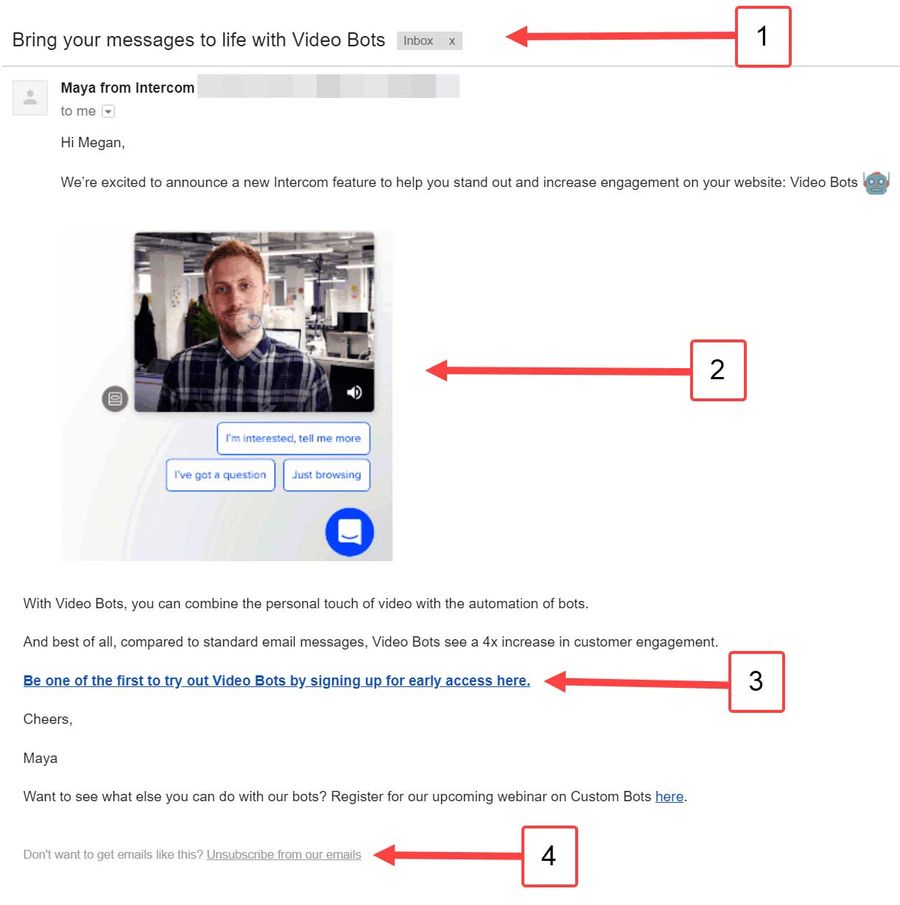
Intercom is a customer messaging platform. They send regular emails about new features and product updates.
Why Intercom’s email works
- The subject states exactly what the message is about. No hidden agenda, no setup.
- A short video clip does the work that body text can’t, demonstrating the new feature instead of describing it.
- The CTA is a hyperlinked phrase, not a button. Still impossible to miss.
- An obvious opt-out link respects readers who don’t want product update emails.
2. Quuu: A Twitter chat invite
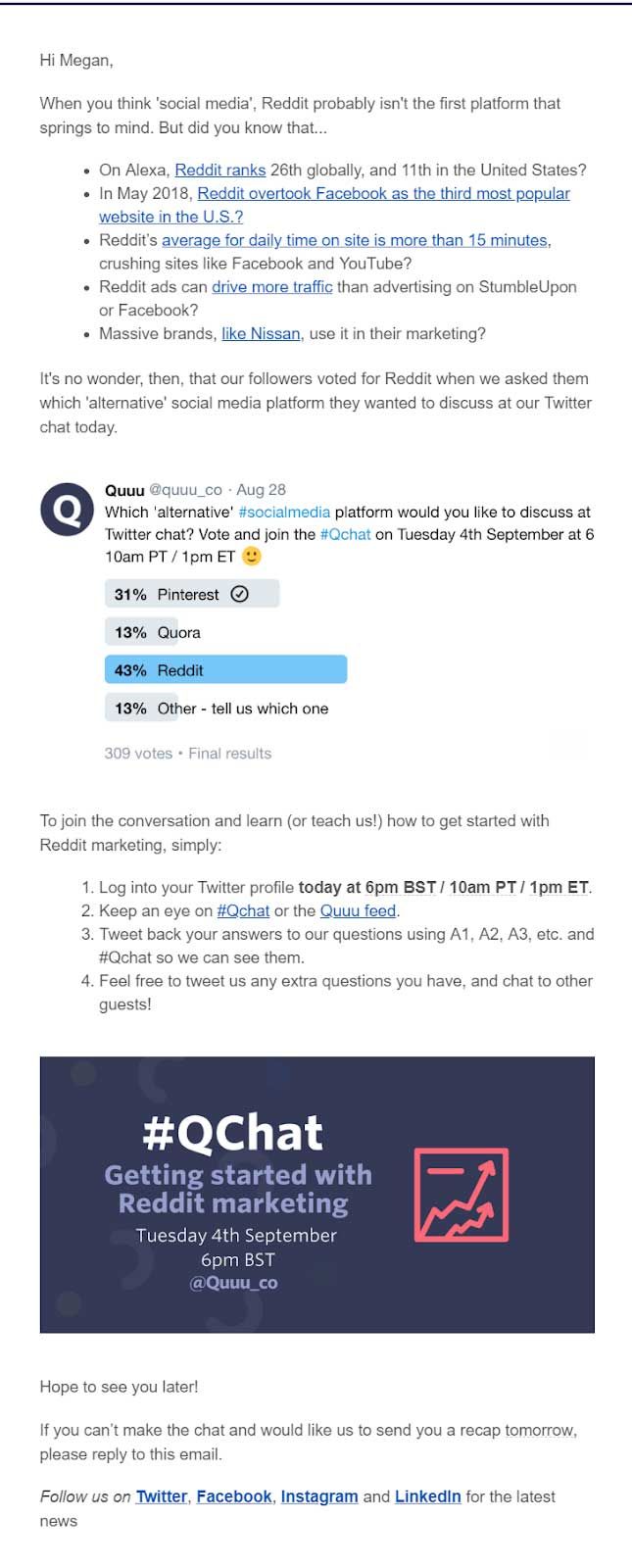
Quuu is a content curation and social media tool. Most of their emails cover product updates, weekly content, and sales. This one is a chat invite.
Why Quuu’s email works
- Bullet points break up what would have been a wall of text and link out to supporting evidence.
- A poll adds a quick visual and surfaces their own data without a big pitch.
- The banner near the end is bold enough that even a skimmer catches the main reason for the email.
- The closing line acknowledges that not everyone can show up live and offers a way to catch up later.
3. Bath & Body Works: An end-of-sale alert
Bath & Body Works is one of the largest bath and body chains around. Their list gets sale alerts, new product news, and seasonal coupons.
Why Bath & Body Works’ email works
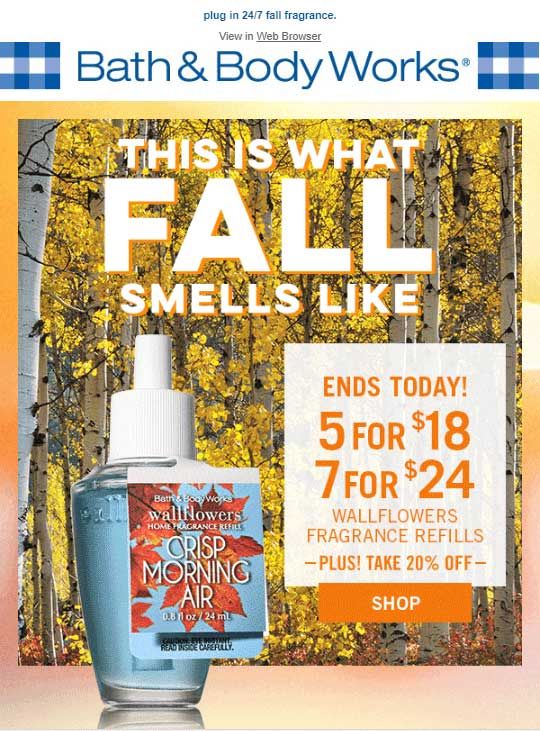
- The seasonal imagery sets a mood. Customers feel “fall” before they read a word.
- Mixed font sizes pull the eye to the right pieces, even with a busy background.
- “Ends today” creates urgency without being pushy. FOMO works.
- One CTA, no ambiguity. The email has one job and the button matches it.
4. Fitbit: New product introduction
Fitbit makes some of the most popular fitness trackers around. Their list skews tech-savvy, so a product launch lands well.
Why Fitbit’s email works
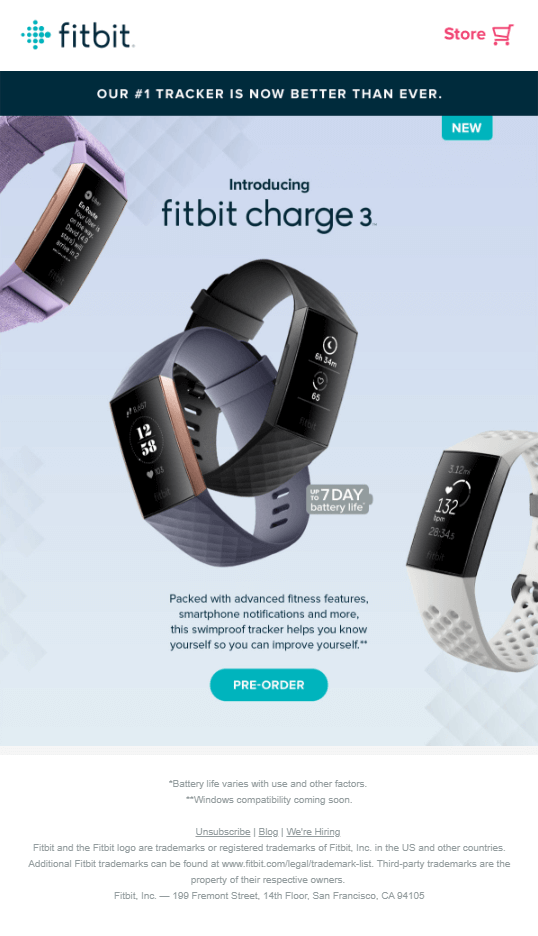
- The subject (“Our number 1 tracker is now better”) is enough to pull any owner in.
- A short intro, then the image carries it. Visual product, visual email.
- Two paths to shop (top link plus CTA) catch readers at different scroll points.
- “Pre-order” creates exclusivity. Tech buyers like getting it first.
5. Google Express: A special discount alert
Google Express is an online shopping service. Most of what they send is sales information and order confirmations.
Why Google Express’ email works
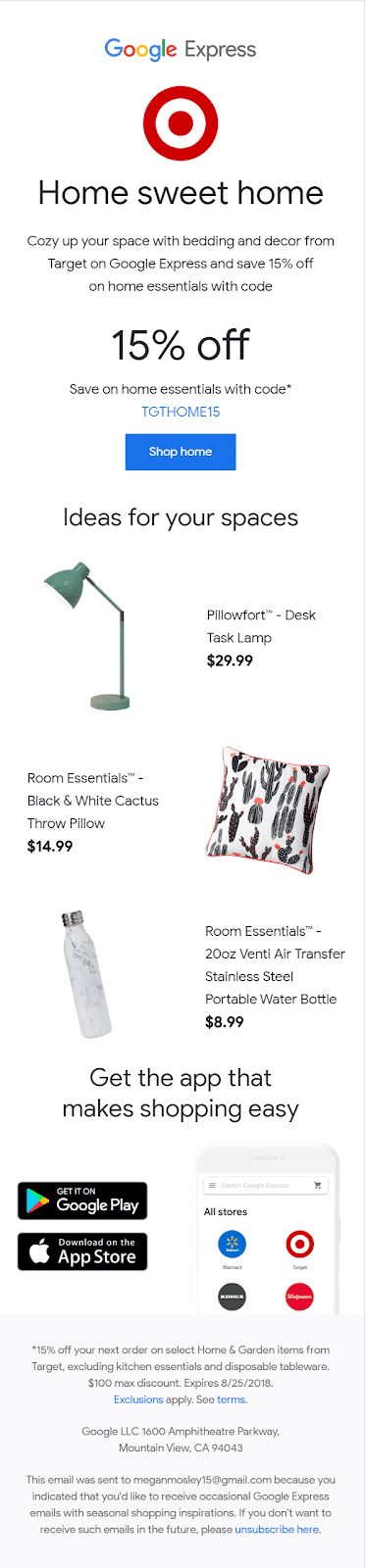
- It’s a long email, but it’s mostly imagery, so it scans fast.
- “15% off” sits at the top, big and bold. The reason for the email is clear before the reader scrolls.
- The image flow reads like a book, top to bottom, left to right. Easy to glance through.
- A second CTA points to the mobile app, removing friction for shoppers who’d rather buy from their phone.
6. Infogram: What’s new with us
Infogram lets users create digital charts, infographics, and maps without design or coding skills. Their emails lean educational: tips, tricks, and updates.
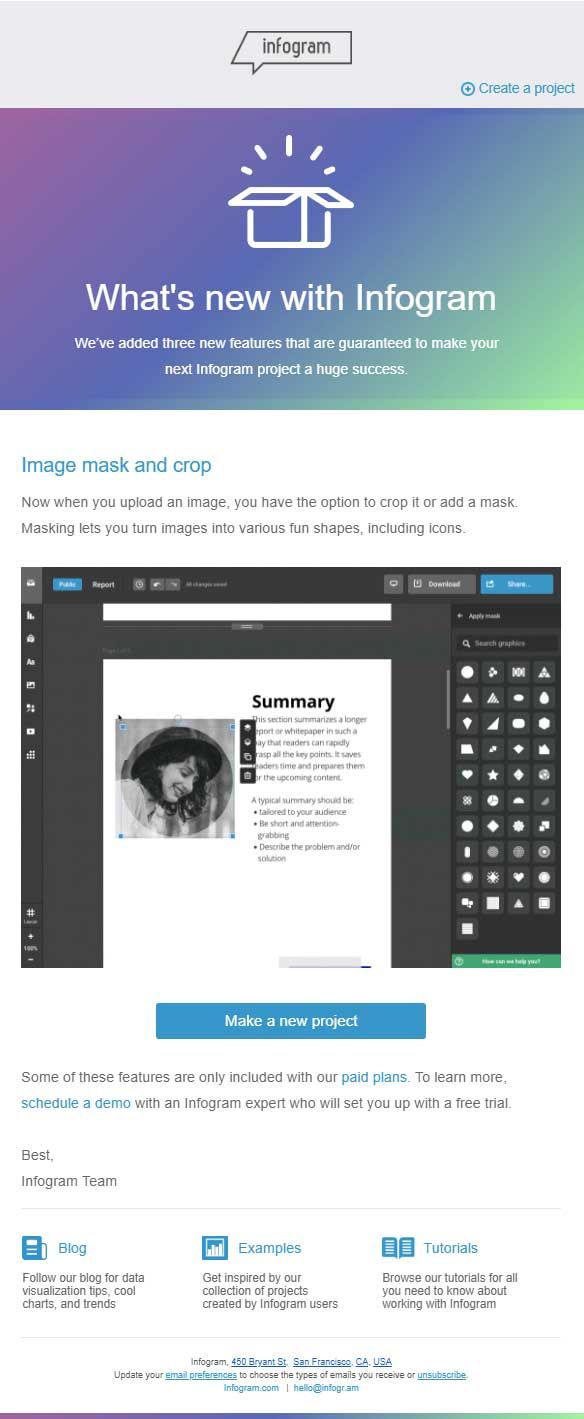
Why Infogram’s email works
- Each new feature gets an intro and an image. The images break up the text and double as the proof.
- Headers separate features cleanly, turning the email into a mini guide rather than a wall.
- The CTA pushes readers toward creating a project, which gets them logged in and using the new features immediately.
- The fine print mentions the features may not be on every plan. No surprises later.
7. Industrious: A big milestone
Industrious is a coworking space. The Bethesda location had just opened, so the email is a “come check it out” message.
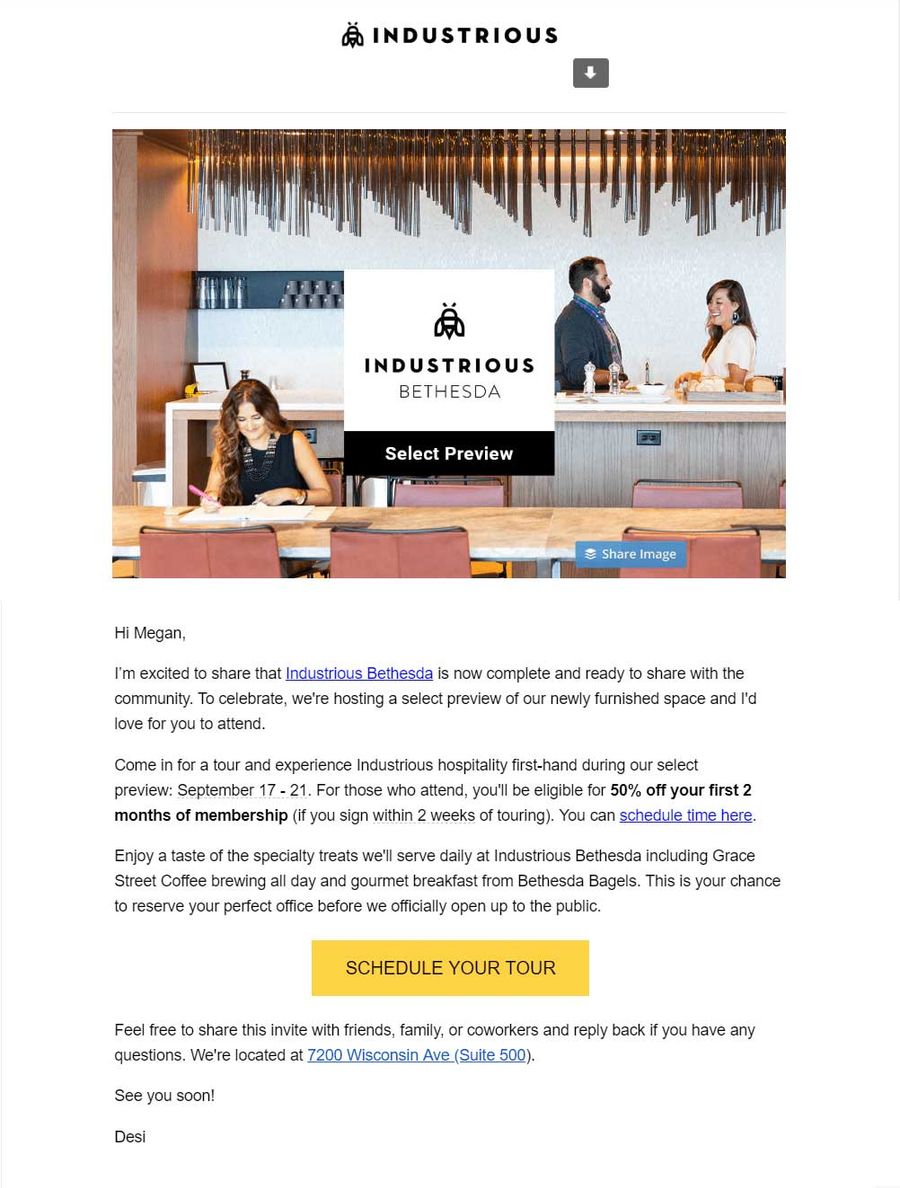
Why Industrious’ email works
- A bright header image makes the space feel inviting before any words land.
- Embedded text links give readers the option to skip the email and head straight to the site.
- A bolded discount line catches the eye even though it’s not the main message.
- The CTA (“Schedule your tour”) is soft. It doesn’t pressure a sign-up, just an introduction.
8. Scooters: A one-day event alert and coupon
Scooter’s is a Nebraska-native coffee chain. Most of their emails cover seasonal flavors and promotions.
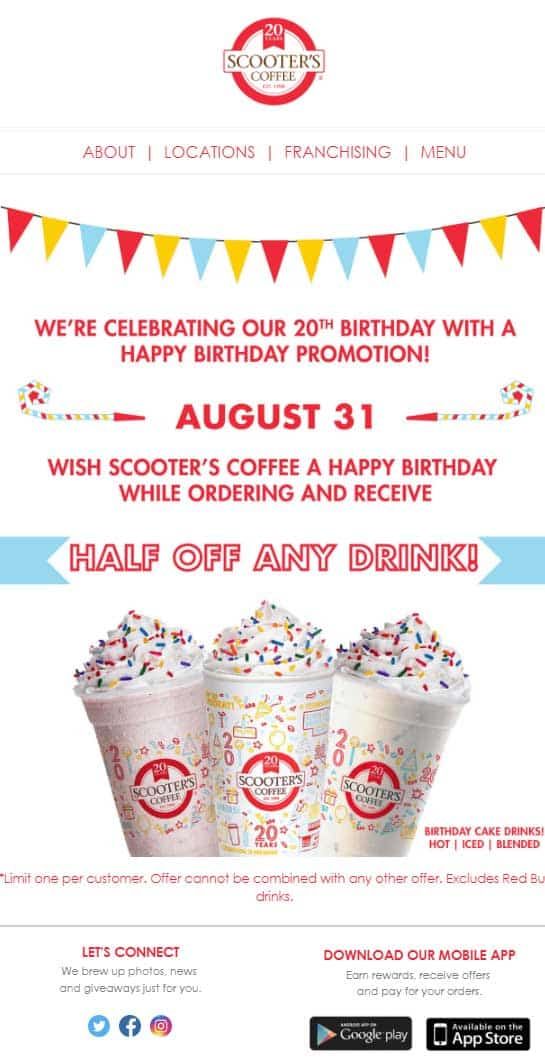
Why Scooter’s email works
- The banner reads “fun” before any text registers. Tone matches occasion.
- Bold red type pops. A brand color is fair game on a brand birthday.
- “Half off any drink” sits in a special font, framed in brackets. The point of the email is unmistakable.
- A drink image ties the visual to the day and gives the email a clear focal point.
9. All Modern: A holiday special
AllModern sells modern home furnishings. Their list gets sales emails and retargeting blasts.
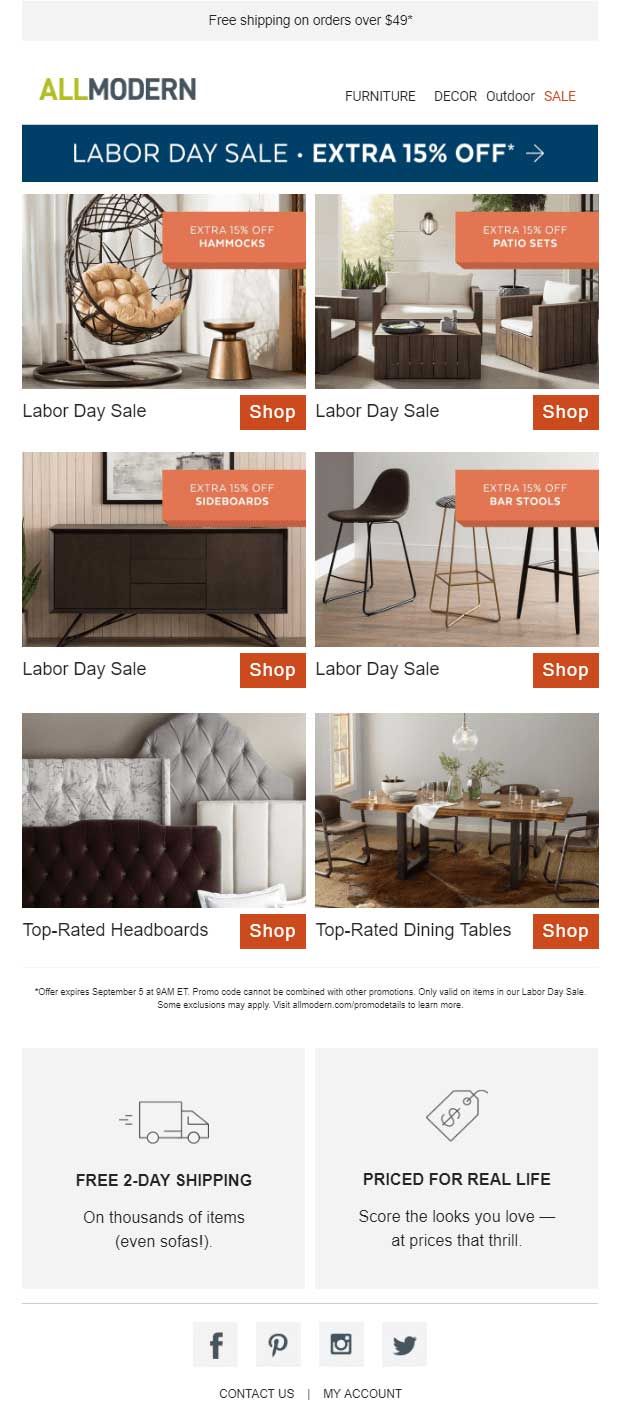
Why All Modern’s email works
- The sale headline sits above everything else. The reason for the email is obvious.
- Multiple images flow cleanly without feeling cluttered. Simple grid, easy to scan.
- Multiple CTAs work here because there are multiple departments to shop from. Saves readers a trip through the full site.
The takeaway
The patterns repeat across all nine examples: one purpose per send, a clear visual hook, and a CTA that matches the urgency. Pick the format that fits your message and skip the rest.
One more thing worth saying. A blast is a notification, not a strategy. The brands above don’t rely on a single send to drive growth. They have an ongoing cadence of touchpoints, and the blast is one beat inside it.
If you’re sending blasts to promote a referral program, the same rule applies. The launch email is the kickoff. The program is the cadence underneath. Start with an amazing referral email design for your kickoff send, then keep the touchpoints rolling.

About the author
Content Specialist (former)
Megan was with Referral Rock from 2016-2023 where she wrote many of the original referral and template guides. She also contributed to marketing videos, explainers, and mixed media for the product and support center.
![Email Drip Campaigns: Why They’re So Powerful [With Examples]](https://cdn.sanity.io/images/x9q04aql/production/84faf02b783395b39b080ecc6733c29b20d432f8-900x600.jpg?w=400&auto=format)