
Most businesses wait for referrals to happen. A referral network makes them systematic — not by manufacturing word of mouth, but by capturing and amplifying what’s already there. When customers, employees, and partners are already talking about you, a network gives them a way to do it consistently and makes sure every referral gets tracked, thanked, and followed up.
That’s the shift: from referrals as something you hope for to something you run. This guide covers what a referral network is, the four main types, and how to build one that keeps moving.
What is a referral network?
A referral network is a group of referral sources, or people who will constantly refer your company to interested leads. It can be made up of individual customers, business customers, business professionals, employees, or formalized referral partners. The goal of a referral network is to bring in new business by encouraging the people in the network to share your brand and products with their friends and colleagues. Essentially, the network members become your personal “influencers.”
Usually, a business referral network involves motivating the parties in the network using some sort of reward or incentive. For example, if an employee refers someone to your company, and that person ends up becoming a new client, you might give the referring employee a gift card, tech item, cash payout, or other perk.
Types of referral networks
You can structure your network in the way that works best for you — formal or informal, customers or partners or both. Here are the four main types:
1. Customer referral network
A customer referral network is a group of customers who share your business with interested family and friends and earn incentives for doing so. It’s informal — customers can refer as often as they want — but rewards give them a reason to refer more.
Common customer incentives include:
- Tangible rewards, such as free products or branded swag.
- Discounts
- Cash back
- Store credits that accumulate over time and that can be used towards future purchases.
- Drawing entries: Every referral earns a discount or credits, but also earns an entry into a drawing for a bigger prize.
2. Employee referral network
While most companies encourage employee referrals to some degree, many aren’t tapping the full potential. An employee referral network makes the sharing process official and offers rewards for employees who bring in new customers.
Rewards could be cash, gift cards, career development opportunities like paid conference costs, or experiential rewards like sporting event or concert tickets. By rewarding employees when their referrals convert, businesses tap into a powerful and often underused channel.
3. Referral partner network
Referral partners are businesses, customers, or industry professionals who sign a formal agreement to refer your company to interested leads. They refer to people or companies they already have connections with, and earn cash commissions on every successful referral.
Often, referral partners are also motivated because referring builds goodwill with their clients. By pointing peers toward businesses they know and trust, partners earn more credibility with their own networks.
Non-competing businesses make great referral sources. If you’re in home improvement, landscaping, HVAC, or other home services, for example, real estate agents are natural referral partners.
4. Cross-referral network
In a cross-referral (or reciprocal referral) network, your business and related but non-competing companies form a partnership. Each company agrees to refer a certain number of individuals or businesses to each other within a given timeframe. The reward for referring is getting referrals in return.
Cross-referral networks give partners access to potential customers they might not have reached otherwise and help them quickly build trust with new leads. Reciprocal partners are often companies with complementary products or services — a travel agent and a luggage company, for example.
Why referral networks work
Referral networks connect you to potential customers through the people they already trust — friends, family, and colleagues. When someone recommends your business, it carries more weight than any ad or marketing message.
The data backs this up: 84% of consumers trust referrals from friends and family above all other forms of advertising. Customers are four times more likely to purchase after being referred by a friend. And referral marketing is the most effective channel for generating quality leads, according to 78% of B2B businesses.
Beyond acquisition, referred customers tend to stick around. They’re more likely to become loyal customers after their first purchase, and more likely to refer others — creating a self-perpetuating cycle. A referral network makes this cycle predictable and reliable rather than random.
How to build a strong referral network
You can’t sit back and wait for referrals to come in. Here’s how to build a referral network that consistently delivers.
1. Build the foundation first: make sure you’re worth talking about
Before you ask anyone to refer you, make sure there’s something worth referring. A referral program doesn’t create word of mouth — it captures and amplifies what’s already there. If people aren’t talking about you yet, a network won’t fix that.
Word of mouth comes from four sources:
- Product — Does it solve a problem in a simpler or more intuitive way? Does it delight or remove pain? A product that exceeds expectations gets talked about.
- Service — How are customers treated? What happens when something goes wrong? Great service can turn a negative experience into your most loyal relationship.
- Value — What’s the return vs. the cost? Not just ROI math — the feeling that you got way more than you paid for.
- Story — The intangible feeling people have about your business: strong values, personality, a narrative that resonates. People know it when they see it.
You don’t need all four. Being exceptional at one or two is enough to get people talking.
The readiness signal: referrals are already happening informally. Customers are recommending you, but there’s no system to make it easy, track it, or thank them. That’s the moment a referral network pays off — it captures what’s already happening and makes it consistent.
2. Choose the right types of networks
Think about who is most likely to share your brand and what network structure fits your business goals. You can build a customer network, an employee network, a formal referral partnership, or all three at once. You don’t have to pick just one — multiple types running simultaneously is often more effective.
3. Use referral software to run the program (not just track it)
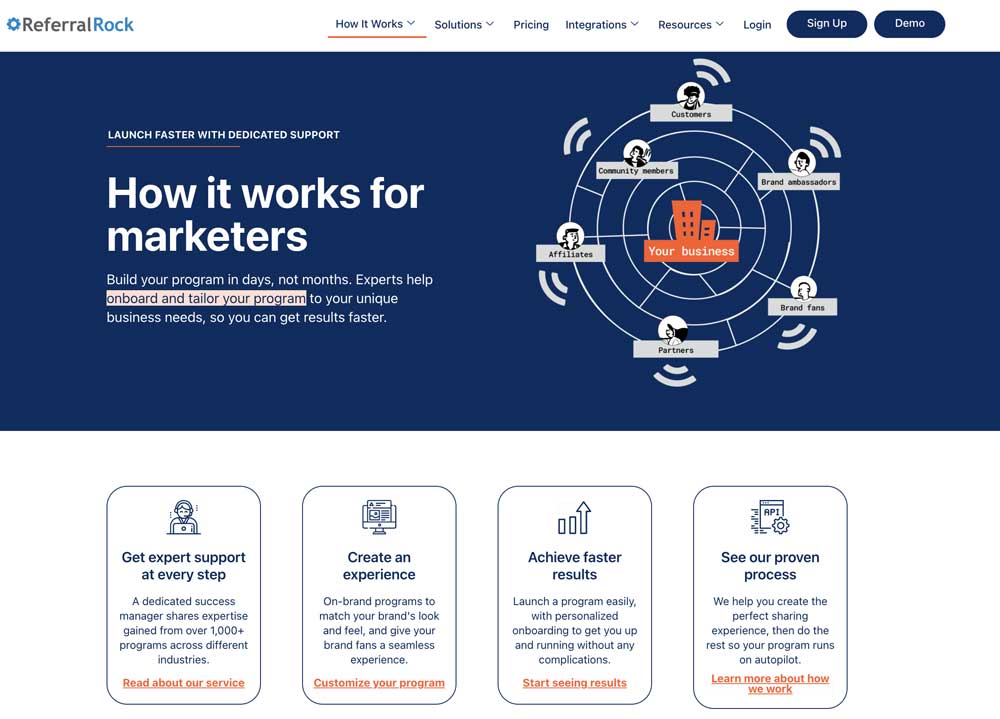
If you want to scale, Referral Rock referral program software is the most efficient way to do it. The software creates a centralized process for gathering and tracking referrals — participants can share via email, social media, or a unique referral link, and every referred lead is automatically attributed back to who sent them.
More importantly, it handles the operational jobs that make a network sustainable: automated reward fulfillment, fraud detection, referrer notifications, and integrations with your CRM and other tools. This is what turns a referral network from a manual effort into something that runs continuously alongside your business — no coding required.
4. Frame referrals as a gift, not a transaction
Most referral programs ask the wrong question: what does the referrer earn? But the best referral networks are built around a different frame — what gift can the sharer give their friend?
When you center the referral on what the friend receives, the whole dynamic shifts. The sharer isn’t making a sales pitch; they’re doing their friend a favor. That feels different, and it converts better too.
Think about the different kinds of referral rewards that might appeal to your audience: cash back, store credits, gift cards, or experiential rewards.
Rewards vary by network type — a customer referral program might offer store credits or discounts, while an employee referral program might offer career development opportunities. But in all cases, make sure the friend’s benefit is front and center — not just the referrer’s reward.
5. Find and nurture your best advocates
When it comes to referral networks, not all partners are created equal. You need to find and nurture your best advocates.
Your best advocates are the ones who keep bringing in the most customers for you. They’re also the ones bringing in the most valuable customers (the ones who stay longest and spend higher amounts).
Use referral software to track who makes it onto your VIP list of referrers. Recognizing these sharing professionals is crucial in motivating the most referrals, as outlined in the 80/20 rule – about 80% of results often come from the most active 20% of individuals.
Once you’ve found them, what’s the secret to keeping them on board as consistent referrers in your network? Give them extra, higher-tier rewards as thanks for referring the most valuable customers to your business. Also, ensure you spend the most time nurturing these top referrers, given the higher returns they’re bringing in.
Building a real relationship with your top advocates keeps the network strong over time. That could mean VIP training, insider access to new brand developments, or exclusive perks that signal their value to you. If they’re referring informally, consider formalizing the relationship with a partner agreement and an incentive that reflects their loyalty.
6. Thank network members for referrals
Beyond offering rewards, it is best practice to show personal appreciation for the referrals given to you. This is vital for maintaining strong referral partnerships or relationships, and helps in referral network growth. Network members are more likely to give referrals when they feel valued.
One of the best ways to keep your referral network strong is by sending thank-you cards to people who refer business to you. Don’t forget that your relationship with your network members is ongoing – a follow up thank-you will make them more likely to refer you in the future.
Send handwritten notes to your best informal referrers (and any partner who brings in a referral) and thank them for the new business. All it takes is a few minutes with a pen and paper (or your computer) and some sincere words of gratitude.

You can also personally thank people for referring your business during a one-on-one conversation, whether that’s via a phone call, a Zoom call, or in person.
Finally, be sure to acknowledge any successful referral from any source, whether you do so via email, social networks, or bulk printed cards.

Also, consider public spotlights on your website, social media, or blog to acknowledge your best advocates. This can be incredibly motivating for those who aren’t yet recognized to put in more effort.

7. Promote continuously — referrals don’t happen on their own
Growing your network isn’t a one-time push. It requires continuous promotion — building referral touchpoints into your everyday operations rather than treating them like a campaign.
A contact list goes stale in two to three months. If you blast once and wait, the network fades. Instead, build referral asks into your normal service touchpoints: after a completed job, in your email signature, on receipts, in newsletters, at your physical location. Keep the program visible and the invitation open.
A few practical ways to keep the network growing:
-
If you’re running a customer referral program, keep customers in the loop and personally invite referred customers to participate once they join.
-
If you’re running an employee referral program, promote it at all-hands meetings and showcase rewards to drive buy-in.
-
If you have informal referrers with strong track records, invite them to sign a formal agreement and become referral partners.
-
If you have reciprocal referral agreements, look for second-degree connections — businesses your partners know that you don’t — and reach out to expand the network.
Start building
A referral network is one of the most cost-effective ways to grow. You’re not buying reach — you’re capturing word of mouth that’s already happening and making it work harder.
The foundation is being worth talking about. The program makes it easy. The network makes it reliable.
Referral Rock is built to run any type of referral network — customer, employee, or partner — and manage multiple types at once. Launch in days, automate rewards, track referrals in detail, and integrate with your existing tools. Request a demo today to see how it works.