
Tax preparers live and die by referrals. Your best clients already recommend you to friends and family when tax season comes around. The question isn’t whether referrals work for tax services. It’s whether you have a system to capture them, track them, and make sure the people sending business your way feel appreciated.
That’s what a tax services referral program does. Not manufacture word of mouth out of thin air, but take what’s already happening and make it reliable. Here’s how to set one up right.
What is a tax services referral program?
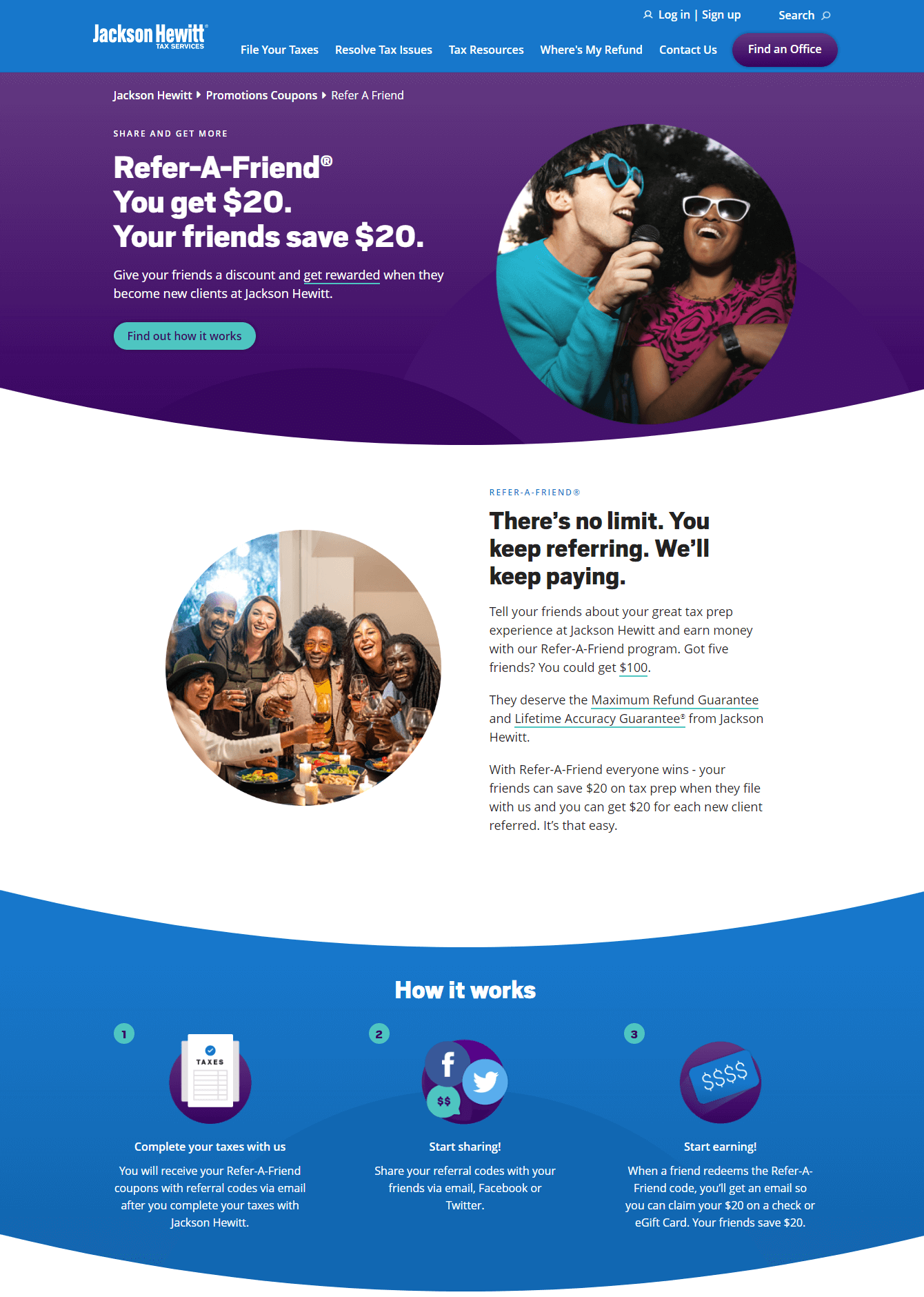
A tax services referral program encourages and rewards customers for recommending your tax filing service to people they know. When a current client refers a friend, both parties typically receive an incentive (a discount, credit, or cash back) once the referred person completes their first tax return with you. The program gives you a way to track who’s bringing in new clients so everyone gets rewarded promptly.
Referral software for tax services [Free Tools]
These referral tools for tax services are a free and easy way to help you start your referral program.
Free Tools + Services:
- Create your own referral codes - [Referral Code Generator]
- Track referrals manually - [Manual Referral Tracker - Spreadsheet]
- Build referral links - [Referral Link Generator]
- Get best practices and actionable guidance - [Referral Program Workbook]
- Readiness Assessment - [Free Consult]
- Online referral software - [Free Trial]
Want a automated referral system for your tax business? Uncover referrals in plain sight to smooth out business lulls, without losing focus on your real day to day work helping customers.
Check out our referral program software - done right.
Are you ready for a tax services referral program?
Not every tax practice is ready for a referral program. A program captures and amplifies word of mouth that’s already happening. It doesn’t create it from scratch. Before you invest time in setting one up, ask yourself whether the foundation is in place.
You’re ready if:
- Clients already refer you informally. People mention your name to friends, leave positive reviews, or tell you “I sent someone your way.” That’s the signal. A referral program takes that from random to reliable.
- You deliver consistently strong service. Scheduling is easy, follow-ups happen on time, nothing falls through the cracks. Consistency is what builds the reputation that makes people comfortable putting their name on the line for you.
- You can handle more clients. You have the capacity to serve new business without letting service quality slip.
- You know your clients. You understand what made them choose you, how they communicate with friends, and what would motivate them to share
You’re not ready if clients aren’t talking about you yet. No amount of incentives will manufacture word of mouth. If that’s where you are, focus on delivering the kind of experience people can’t help but mention. The program comes after.
How to run your tax services referral program
Unlike traditional word-of-mouth, a referral program isn’t something you leave to chance. Here’s how to design one that actually works.
Make rewards about the friend, not just the referrer
Most referral programs fixate on what the referrer earns. But the real magic is in flipping the frame: what gift can your client give their friend?
When the referral feels like a favor (not a sales pitch), people are more willing to share. Instead of “refer a friend and earn $50,” try “give a friend 20% off their first tax prep.” The referrer still gets rewarded, but the emphasis is on generosity, not transaction.
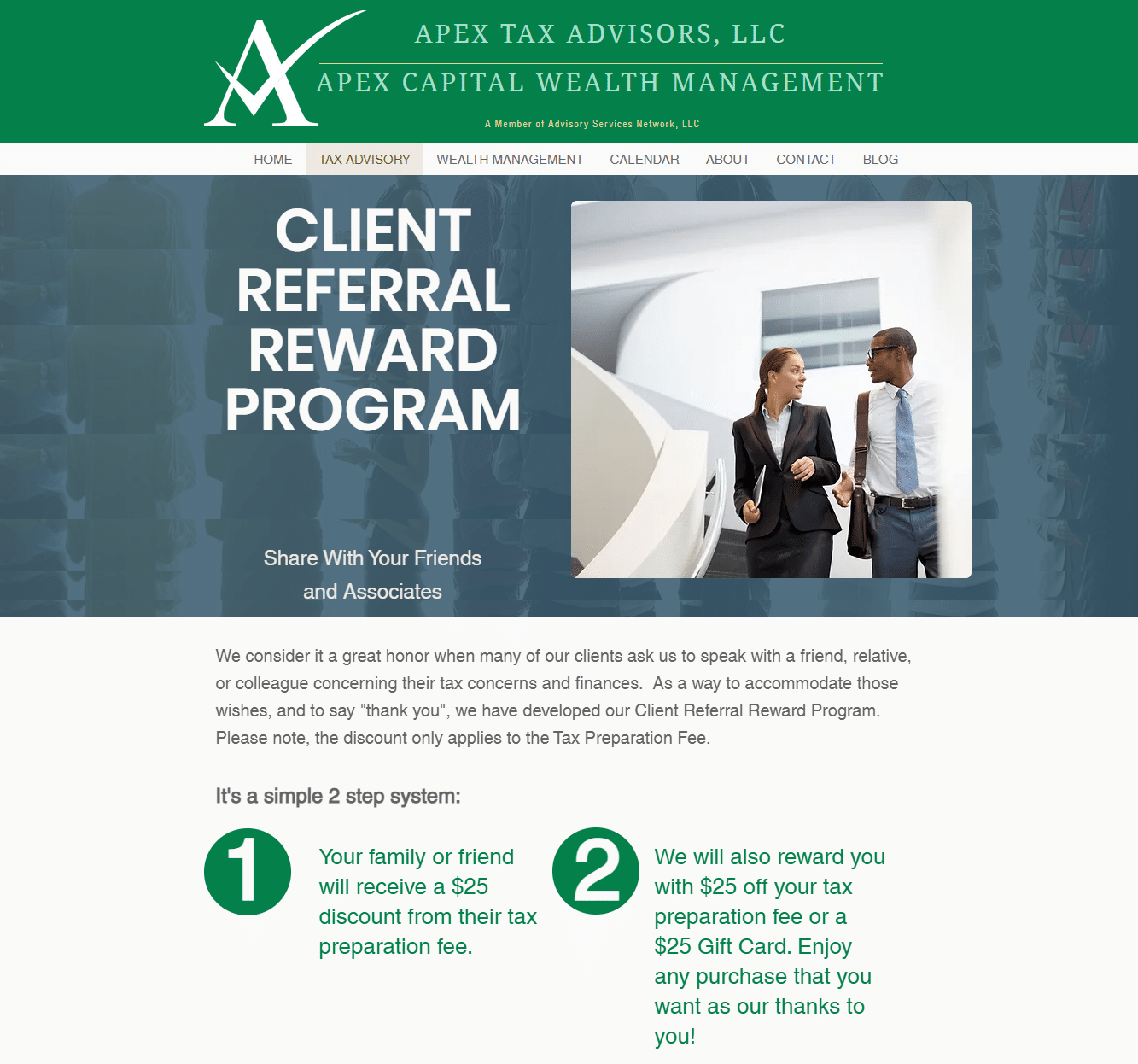
For the structure itself, reward both sides. A double-sided reward (something for the referrer and the friend) creates the right dynamic. Good options for tax services:
- Discounts or credits toward tax preparation fees, for both the referrer’s next appointment and the friend’s first one
- Cash back after tax season (both sides appreciate money back after filing)
- Gift cards to local stores for the referrer as a thank-you
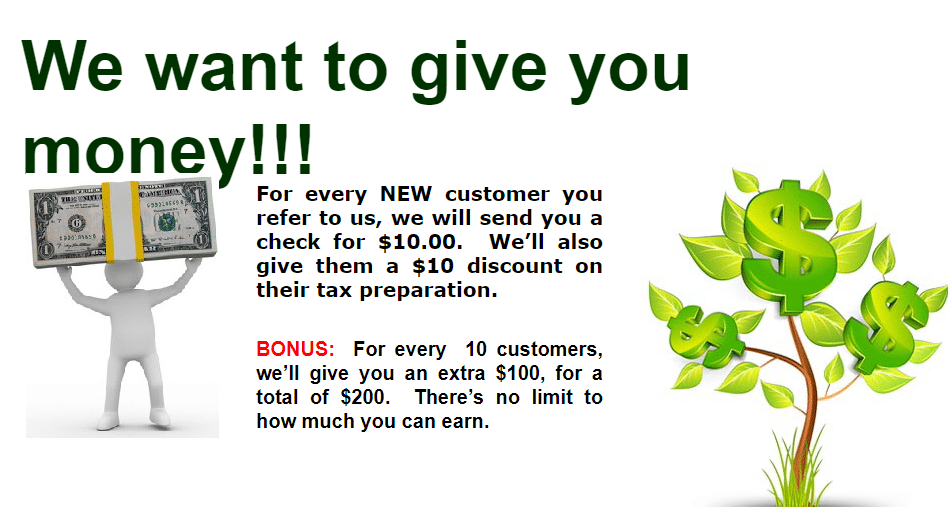
Keep rewards uncapped. Don’t set limits on how many successful referrals someone can make. You never know who your most enthusiastic promoters will be. You’ll know what’s reasonable to offer by calculating your average client Lifetime Value (LTV) and setting rewards proportional to it.
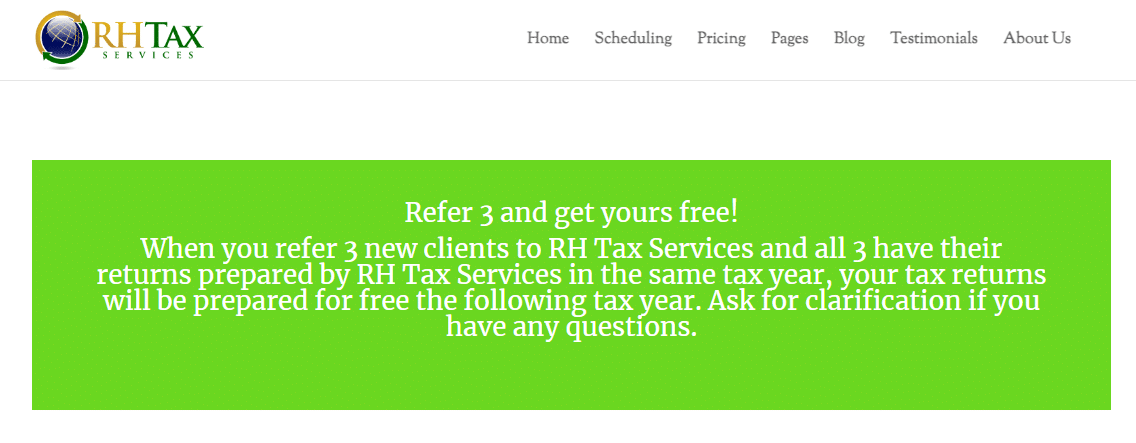
To maintain excitement, consider a tiered structure that increases rewards for multiple referrals in the same year. For example, a 20% discount for one referral, and free tax prep after three. This rewards your best advocates without overcomplicating things.
Use our referral reward calculator to determine the reward values you should offer the sharer and their friend, for the best ROI.
Track referrals with software
When running a referral program, you need to track who referred whom and whether rewards have been issued. Referral software handles this: it generates unique referral links for each client, tracks conversions, and automates reward fulfillment. Without it, managing referrals manually becomes a bottleneck fast, whether you’re a solo preparer or part of a larger firm.
Find out how Referral Rock referral software is designed for professional services like your tax prep business.
Promote continuously, not just at tax season
Some tax preparers run their referral program only during peak season. That’s treating it like a campaign, and campaigns fizzle. A referral program is operations, not a marketing event. It should run year-round, built into how your firm works.
Think about it this way: people look for reliable tax preparers outside of tax season too (small business owners, self-employed individuals, people planning ahead). If your program goes dark for nine months, you miss those opportunities.
The key is continuous promotion through three channels:
- Proactive invites. Send dedicated emails to clients introducing the program. Personal invitations to your best clients. Mention it during appointments.
- Discovery paths. Put the program where people naturally look: your website homepage, client portal, email signatures, office signage, business cards. If a client wants to refer you, the link should be findable in seconds.
- Your team as recruiters. Everyone who interacts with clients (preparers, front desk, account managers) should know the program exists and mention it naturally. Make it a team sport.
Don’t overthink timing. The instinct to find the “perfect moment” to ask for a referral leads to paralysis. The right time is all the time, across multiple touchpoints.
Turn your reps into program recruiters with Referral Rock. Give all your preparers a way to enroll customers in your referral program in seconds, right at key conversation moments. They’ll each get their own recruiter portal and link to sign members up under their name.
Keep access open and sharing easy
The biggest program killer is friction. If someone has to sign up, fill out a form, or create an account before they can refer a friend, you’ve already lost them.
The best referral programs have no join button. Every client is already a member. They get a unique referral link or code automatically. When they want to share, they can do it instantly through email, text, social media, or by copying a link.
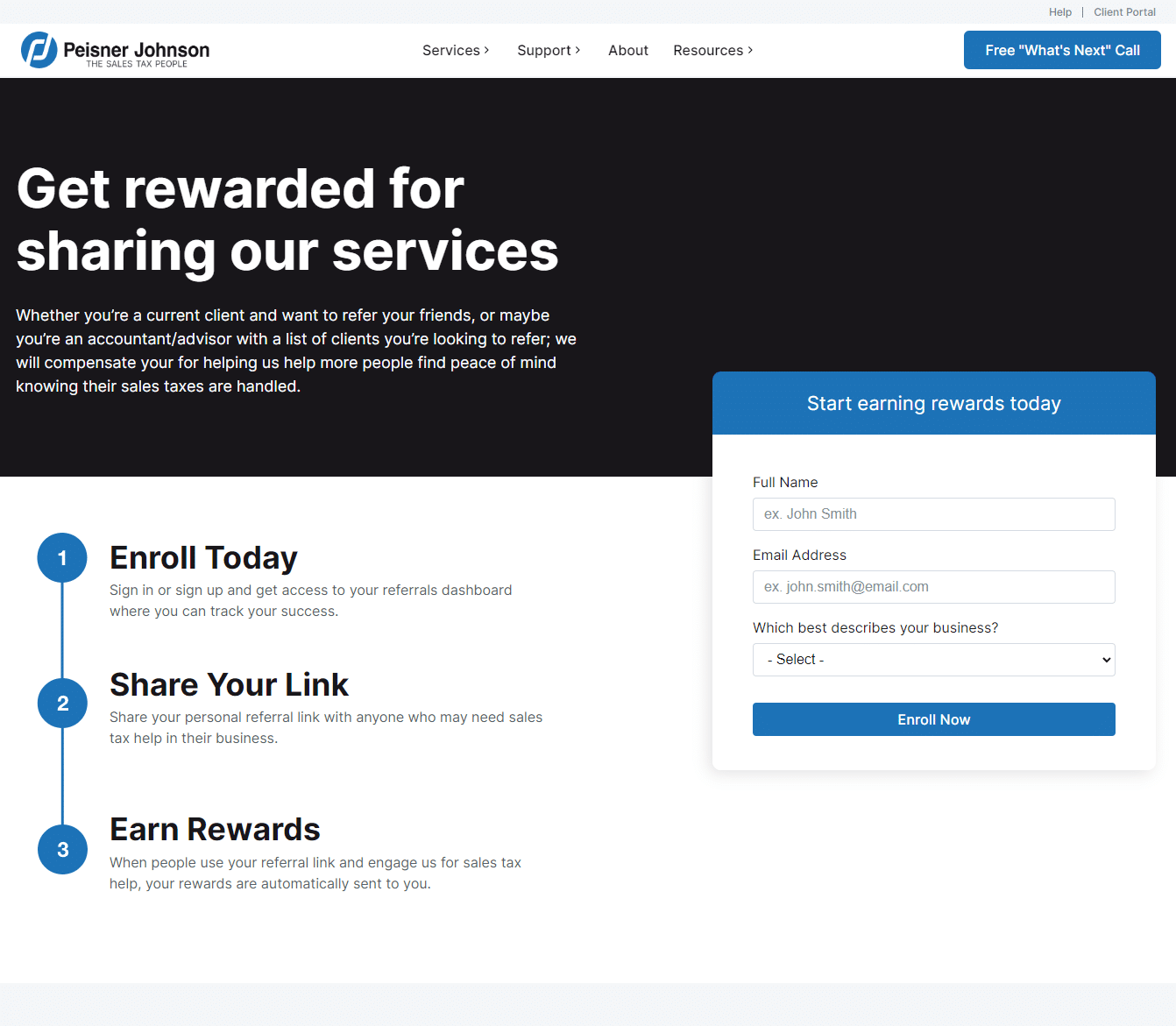
Keep the referral page simple and uncluttered. Don’t ask for more information than necessary. And make sure everything works on mobile, especially if you offer mobile tax services. Most people will share from their phone.
What about abuse? Assume good intent and handle exceptions as they come. A progressive approach to fraud prevention (flag suspicious activity, don’t gate the whole program) keeps things open for the 99% of honest clients while catching the rare bad actor.
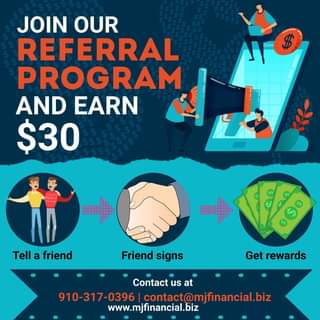
Promote across every client touchpoint
Unless you have time to personally invite every client, you need to promote your referral program across your channels:
- Post about the program on your business social media accounts
- Feature it on your website’s homepage
- Include a referral section in your client portal
- Place “refer a friend” options in website headers and footers
- Send program promotional emails and personal invitations to top clients
- Mention the program in newsletters, transactional emails, and invoice emails
- Direct clients to the program after they give high ratings on satisfaction surveys
If you have a local office, take advantage of physical materials too: referral brochures, banners, and business cards. Display them throughout your office and encourage clients to grab a few for their friends.
Promote most heavily right before and at the beginning of tax season, but keep it visible year-round.
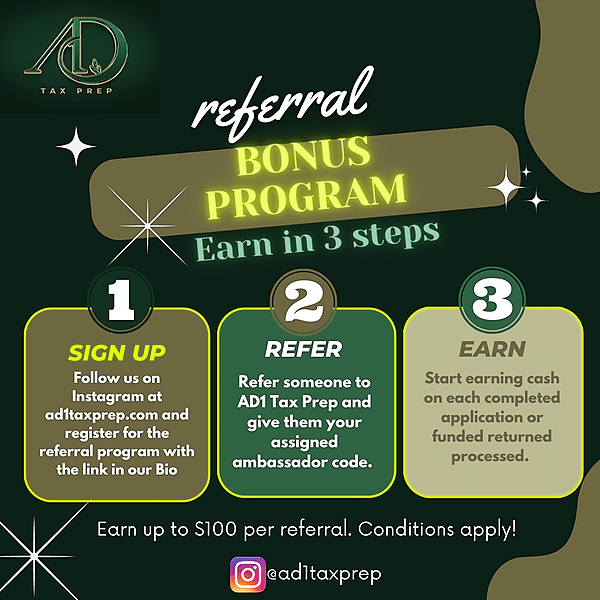
Thank referrers (and keep them in the loop)
Don’t forget to thank your clients for referring their friends. A simple thank-you after a successful referral goes a long way. But just as important: keep referrers updated on the status of their referrals. Did their friend sign up? Was the reward issued? Proactive communication keeps people engaged and referring again.
Bottom line
A tax services referral program isn’t a marketing campaign you launch and hope works. It’s an operational system that captures the trust your clients already place in you. Get the foundation right (strong service, happy clients, word of mouth worth capturing), then build the program into how your firm runs every day. The referrals will follow.