Telecom is a brutal market to stand out in. Phone, internet, cable… your services look interchangeable from the outside, and a lot of customers shop on price alone. But the providers who hold customers and grow steadily share something that doesn’t show up in the spec sheet: word of mouth. Real recommendations from people who’ve had a good experience with you.
A referral program doesn’t create that word of mouth. It captures it. It takes the conversations already happening — in group chats, at the dinner table, on the local community page — and gives them a path back to your business. Done right, it runs alongside your operations instead of bolted on top.
Here’s how to build one for telecom, and why most companies get it backward.
What is a telecom referral program?
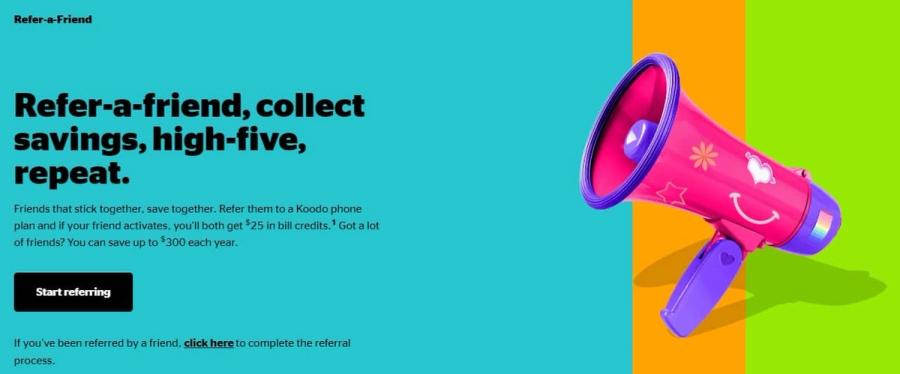
A telecom referral program is the system you use to track, reward, and amplify the recommendations existing customers make to friends, family, and colleagues. Customers share a link or code, you track who came from where, and the system handles the rewards. The program doesn’t make the recommendation happen. It makes the recommendation that’s already happening countable, repeatable, and worth doing again.
Telecom referral programs work well for:
- Mobile service providers
- Landline phone providers
- Internet/broadband services
- Television/Cable companies
- All-in-one telecommunications companies, that offer a combination of the above
Benefits of telecommunications referral programs
Here are some key advantages that referral marketing programs provide for telecom companies:
They utilize the power of trust to cut through the noise: Many consumers often seek recommendations from friends before deciding to change telecom providers. They trust these recommendations far more than they trust any ads that your telecom company can put out. When a potential customer hears positive feedback about your company from a trusted friend, they are much more likely to make the switch to you, and do so with confidence.
They help your company stand out: Marketing your telecom company can be challenging since most companies offer the same fundamental services. To consumers, everyone offers pretty much the same phone connectivity or the same internet service, no matter who someone chooses as a provider. But when customers advocate for your service, it differentiates you from competitors and can reduce the likelihood of customers shopping around.
They are more budget-friendly than traditional advertising: Telecom companies often face high customer acquisition costs. With the costs of paid ads and paid social on the rise, this is only climbing. Referral programs usually cost less than conventional advertising and tend to deliver better outcomes. This approach focuses on your current customers, making it a smart investment.
They foster customer loyalty: Since it’s getting easier and easier to compare prices, customers might choose a provider solely based on cost, and it’s a lot harder to retain customers over time. But referral programs are the secret sauce to customer retention, and create customers with a higher lifetime value. Thanks to social proof, friends who are referred to your telecom company are not only more likely to choose your services, but are also 18% more likely to make a long-term commitment to you, and remain loyal over time.
Are you ready for a referral program?
Most companies launch a program too early. They want the upside before they’ve earned it.
A referral program captures word of mouth. It doesn’t manufacture it. So before you build one, the honest question is whether your customers would recommend you in the first place. In telecom, where the product is largely a utility, the answer almost always comes down to service:
- Are you responsive? When a customer’s internet drops or their bill looks wrong, do they reach a human quickly?
- Do you follow through? Tickets close cleanly. Installs happen on time. Promised credits actually appear on the next bill.
- Do you recover well? Outages happen. The question is whether your team turns a bad day into a story the customer tells about how well you handled it.
If your customers are already mentioning you in local groups, sending neighbors your way, or telling their landlord which provider to go with, then you have word of mouth worth capturing. That’s the readiness signal.
If they’re not, a referral program won’t fix that. The fix is upstream: in the service, the responsiveness, the follow-through. Get those right and the program will work. Skip them and no incentive will save it.
A few practical readiness checks for telecom specifically:
- Customer satisfaction scores are healthy and trending the right way.
- Churn is reasonable for your category, and the customers you keep stay multiple billing cycles.
- You have a base of existing customers (the larger, the more compounding the program will produce).
- You know what makes you different, and your team can say it the same way (it’s almost always service quality, not price or speed).
If those line up, you’re ready. If not, work on the foundation first.
Referral software for telecom companies [Free Tools]
These referral tools for telecom companies are a free and easy way to help you start your referral program.
Want a automated referral system for your telecom business? Uncover referrals in plain sight to smooth out business lulls, without losing focus on your real day to day work helping customers.
Check out our referral program software - done right.
How to launch a telecom referral program
Once you’re ready, three things make the difference between a program that compounds and one that fizzles. Most telecom referral programs fail on the same three points: they treat the reward as a payout, they treat promotion as a campaign, and they put hoops in front of access. Flip these and you’ll build a program that lasts.
Make the reward a gift, not a payout
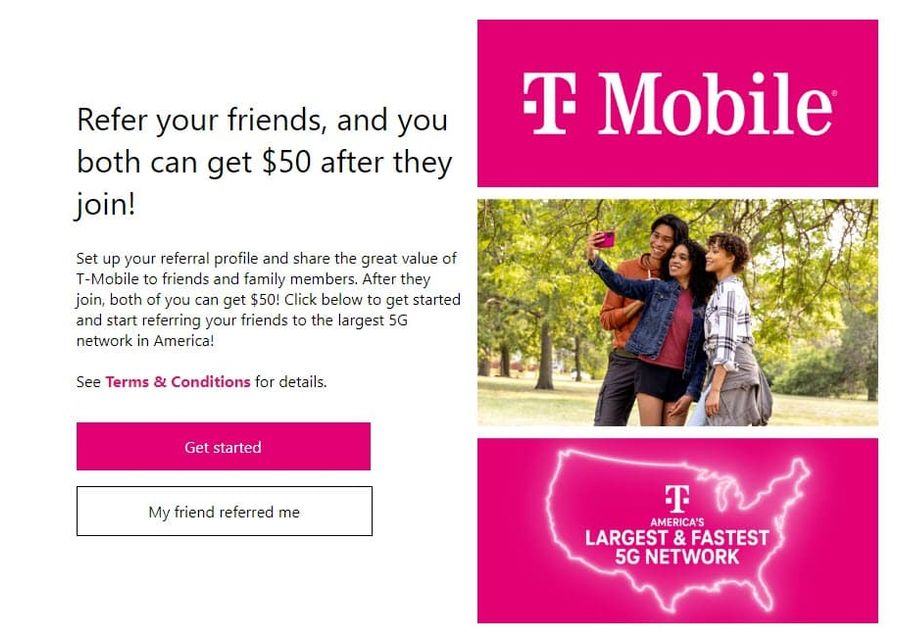
Most telecom programs default to: “Refer a friend, get $50.” It’s clear, it’s measurable, and it quietly turns sharing into selling. The customer feels like they’re working a side hustle instead of recommending something they actually like. People don’t want to feel like they’re monetizing their relationships with their friends.
Flip the frame. The reward is a gift the sharer is giving their friend, not a payment they’re earning. The customer isn’t selling internet service to their cousin. They’re saving their cousin a hassle and getting them a deal in the process.
A few ways this changes the design:
Make it double-sided, with the friend’s reward at the front. The friend gets something real (a credit on their first bill, a discount on installation, a gift card on signup). The sharer also gets a thank-you, but that’s a quieter part of the experience. The headline is what the friend gets.
Keep the sharer’s reward out of the friend-facing message. When a customer shares with a friend, the message and landing page should focus entirely on the friend: what they get, why they should switch, who sent them. The sharer’s reward belongs in their dashboard, their thank-you email, their side of the system. Even a single out-of-place line (“your friend will earn $50 when you sign up”) pulls the friend out of “I’m being sent a gift” mode and into “my friend is getting paid for this.”
Pick rewards that work no matter who’s paying the bill. Cash and gift cards are the most popular for telecom because they don’t depend on the referrer being the bill-payer. With Referral Rock and Tango, you can give people a choice of gift cards, which makes the gift feel more thoughtful. If you only serve individual consumers, account credits or service upgrades are also strong because they work like savings on the monthly bill.
Time the reward thoughtfully. You can pay it out as soon as the friend signs their contract and pays the first bill, or wait until they’ve stayed 30-60 days. Either works. The right answer depends on your churn pattern: if first-month churn is meaningful, the wait protects you.
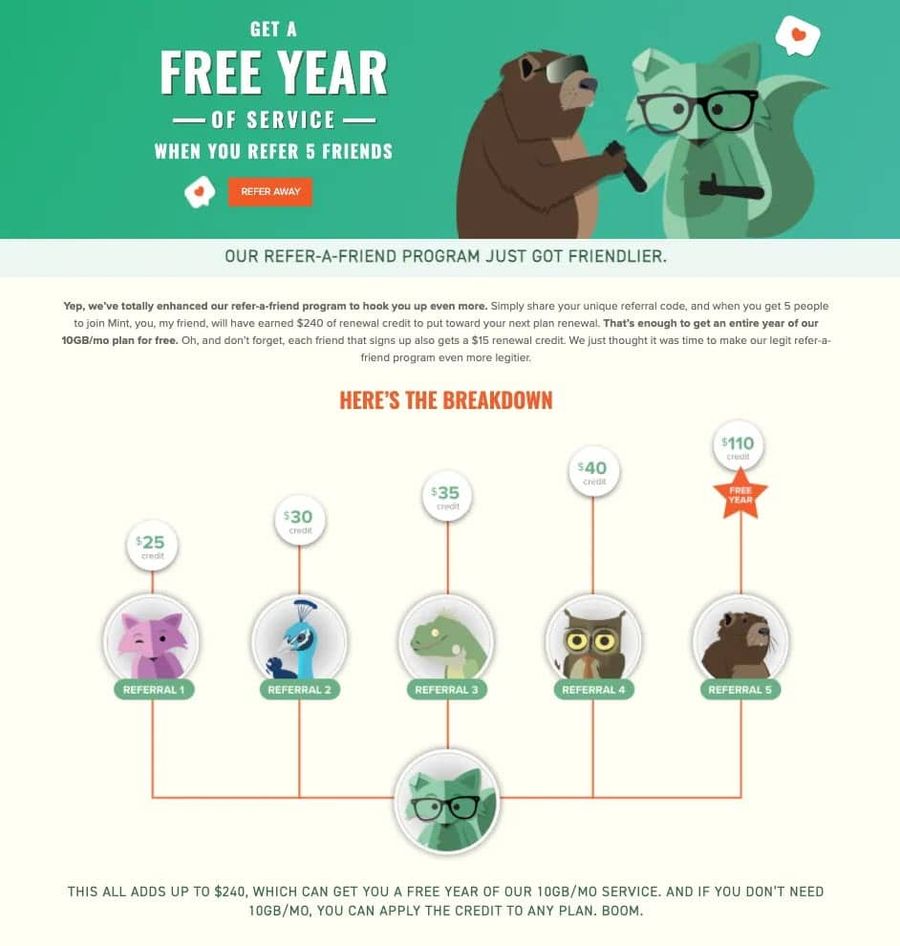
Tiered structures keep enthusiastic sharers engaged. Mint Mobile is the canonical example: $25 credit on the first referral, $30 on the second, $35 on the third, $40 on the fourth… and a jump to $110 on the fifth, enough to cover an annual bill. The escalation gives heavy referrers a reason to keep going. You can do the same with cash or gift cards. If you offer multiple services, you can also tier by what the friend signs up for ($50 for internet alone, $125 for internet + phone).
The framing matters more than the dollar amount. A $50 gift to a friend converts better than a $50 payout to the referrer.
Use our referral reward calculator to determine the reward values you should offer the sharer and their friend, for the best ROI.
If you’re setting a limit on the amount of rewards someone can earn in a year, be sure to state this on your referral page. You might want the rewards to stay under the required tax reporting level in your country (in the US, if you pay anyone $600 or more in referral rewards to a single person in a calendar year, you must send them a 1099-MISC, and this must be reported on their taxes).
Promote continuously, not in campaigns
Most telecom referral programs are launched, announced once, and forgotten. A blast email, a landing page, maybe a social post. Then the program slowly disappears from the customer’s mental real estate, and referrals dry up.
Don’t run a referral program like a campaign. Run it like an operation, with continuous promotion across three surfaces:
Proactive invites. Reach out to customers directly, on a cadence. Mass emails dedicated to the program, sent monthly to quarterly. Personalized referral emails to your most enthusiastic customers (the ones leaving 5-star reviews or mentioning you on social). Bulk import existing customers so they all already have a unique link the day you turn it on. Don’t make people opt in to be invited.
Discovery paths. Put the program where customers already are.
- On your website (a hero banner, plus buttons in top and bottom menus)
- In your customer portal and billing dashboard
- On the bill itself, every month
- In your app’s home screen and menu
- In service confirmation emails, billing notices, newsletters, and outage updates (not just emails dedicated to the program)
- On signage at your physical store, if you have one
- In transactional emails like installation confirmations and payment receipts
Program recruiters. Your field techs, CSRs, and account managers talk to satisfied customers every day. After a successful install, after an outage gets resolved, and after a customer mentions a positive experience are all moments your team should be empowered to mention the program. Each team member can have their own invite link tied to their account, which makes the recommendation personal and trackable. Recruiters are the highest-leverage promotion channel telecom has and the one almost no one uses.
Turn your reps into program recruiters with Referral Rock. Give all your reps a way to enroll customers in your referral program in seconds, right at key conversation moments. Sales reps, field teams, and location staff each get their own recruiter portal and link.
A note on timing: you’ll see a lot of advice about asking at “the right moment:” after a renewal, after a positive review, after a satisfied call. Those are fine moments. But don’t get paralyzed waiting for the perfect one. The right time is all the time, in multiple ways. Build it into the operation, and the moments take care of themselves.
Keep access open
The fastest way to kill a telecom referral program is to make customers sign up for it. Forms, opt-ins, account creation, password resets… every step between “I want to refer someone” and “here’s my link” is a step where you lose people.
Don’t gate it. Every existing customer is already a member. They already have an account with you. Give them a unique link or code by default, the day you launch. No join button. No sign-up form. No “create your referral account.”
Referral Rock handles this directly. Automated enrollment tools and One Click Access links let any customer start sharing without filling anything out. They just click and they’re in. Drop those links into every promotional email about the program (and into the non-promotional ones too: newsletters, billing notices, install confirmations). Customers who do want a portal to track their referrals can log in with Google or Facebook, no separate password to remember.
The mistake most operators make is gating “to control quality” or “prevent abuse.” It feels safe but it’s the wrong tradeoff. You don’t know who your most enthusiastic referrers will be until they refer. Gating preemptively means most of them will never start. The right move is to keep access open and handle abuse progressively. Flag exceptions, don’t block everyone. Referral Rock does this in the background so your team isn’t manually policing the program.
When the friend lands on the page, the same principle applies. The page should carry the referrer’s name (“Taylor sent you this”), match the message they got, and make the next step obvious: a single CTA, no form to fill out before they see the offer. Anywhere you add friction, you lose the click.
Choose software built for telecom’s subscription cycle
Telecom isn’t ecommerce. The lifecycle is longer, the conversion event isn’t a single purchase, and the customer relationship runs across multiple billing cycles. Software that fits this should handle:
- Long-window attribution and multi-step rewards: track from share to signup to first bill paid to 60-day retention, and trigger rewards at the right step.
- CRM and billing integration: connect to the system that already holds your customer data, so referrals flow into the same pipeline as the rest of your sales.
- Automated payouts and notifications: the operations team shouldn’t be running rewards manually or telling referrers their friend signed up.
Referral Rock is built for this. You can launch in a few days, integrate with over 50 tools including the CRMs telecom companies actually use, and customize the reward logic to match your billing cycle.
Check out how our referral software is designed for field services businesses like yours.
Capture the word of mouth your service is already earning
The hard part of telecom referrals isn’t the program. It’s the service that earns the word of mouth in the first place. If your customers already mention you to neighbors, recommend you in local groups, or send their kids to your store, then you have something worth capturing. A program turns that from random into reliable.
If they don’t, the program isn’t the problem. The service is. Fix that first, then come back. When you’re ready, Referral Rock handles the tracking, the rewards, and the sharing logistics so your team can stay focused on the work that earned the conversation in the first place.

About the author
Content Specialist & Referral Program Advisor
Jess has been with Referral Rock since 2019. She has been a critical part of our content team and has been responsible for writing, reviewing, and maintaining our content library as well as our product support documentation. She is meticulous in her research, writing, and review process. More recently she has helped review and draft referral program messaging for our customers. This has helped her create a unique feedback loop where she sees referral programs in action, helps launch them, and also contributes to our articles.