Most products fail because teams build what they assume customers want, not what customers actually want. Pragmatic marketing flips that. It’s a market-driven framework that puts customer feedback at the center of product development from the start.
Here’s what pragmatic marketing is, how the five-step framework works, real examples in action, and how it differs from agile development.
![]() Pragmatic marketing examples
Pragmatic marketing examples
Pragmatic marketing shows up in how companies build, launch, and refresh their products. Three patterns stand out.
Product life cycle iteration
Most companies launch a product, run a splash campaign, and move on. Pragmatic marketing keeps the loop running. Teams keep testing and revising through the product life cycle after launch, refining based on what users say. The result is a customer-centric product that gets better over time, not one that ships and stalls.
Multi-channel marketing
Apple is the textbook example. Weeks before any iPhone launch, the company has already built buzz across press leaks, keynotes, video teasers, and store displays. By the time the product ships, customers know what to expect and what to want. Pragmatic marketing leverages every channel where the audience pays attention, not just the cheapest one.
Positioning and messaging
Pragmatic marketing also shows up in how companies position a product before launch. When Apple released the original iPod, billboards and posters showed people listening and enjoying it, so buyers immediately understood what the product was for. Strong positioning answers the question “why should I care?” before the customer has to ask it.
The 5-step pragmatic marketing framework
The framework comes from the Pragmatic Institute, and it standardizes the activities required to bring a customer-driven product to market. Five steps, in order.
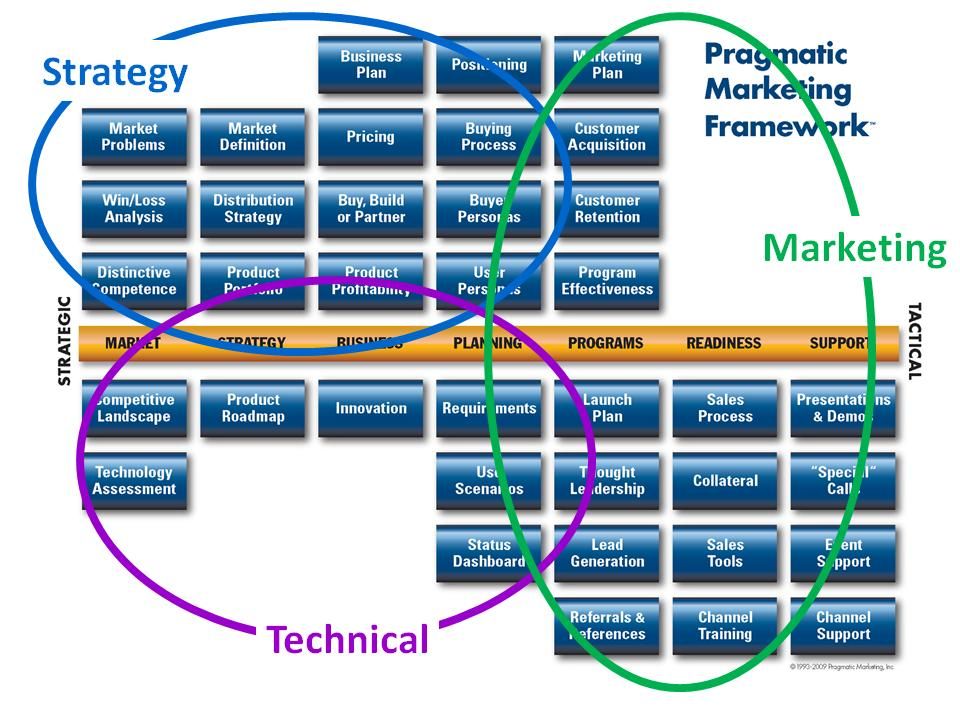
Step 1: Know your market problems
Interview customers, study recent evaluations, and talk to people who haven’t bought from you yet. Then prioritize the most urgent problems. You can’t fix what you haven’t named.
Step 2: Run win and loss analysis
Why did recent evaluators buy, and why did others walk away? Map their decision steps. The losses usually teach you more than the wins.
Step 3: Evaluate your distinctive competencies
Be clear about what your organization is genuinely good at. The strategy works best when it’s anchored to a real strength, not a wish.
Step 4: Map your competitive landscape
Identify the alternatives buyers are weighing. Compare your strengths and weaknesses against theirs, then choose where you’ll compete and where you won’t.
Step 5: Inventory your marketing assets
List everything you already have: blog content, email programs, social posts, sales decks, partner channels. Most teams underuse what they’ve built. The pragmatic move is to leverage existing assets before creating new ones.
Where pragmatic marketing focuses your efforts
The framework tells you what to do. The focus areas tell you where to spend your time. Pragmatic marketing prioritizes opportunities with the highest potential, not the most familiar ones.
Industry and market fit
Pick segments that can sustain you now and over the long run. A hot segment that can’t fund your operations isn’t a fit, no matter how exciting it looks.
Distribution strategy
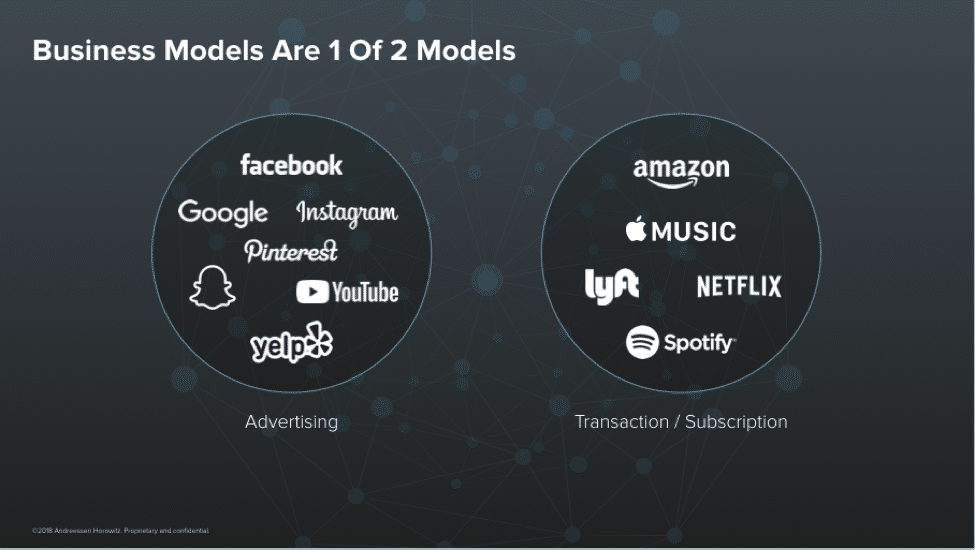
Match your channels to where your buyers actually are. Ben Horowitz’s Distribution Model breaks this down by buyer behavior, sales motion, and price point.
Product portfolio
Build out your portfolio around a market-driven marketing strategy, not internal preference. Positioning, requirements, and the buyer’s journey should all start from what the market needs.
5 principles of pragmatic marketing
Distilled from the broader pragmatic marketing playbook, these are the principles that matter most.
- Market problems decide what goes into the product. Your opinion isn’t the input. What the market actually needs is.
- Take an outside-in view. Most answers aren’t in your own building. Talk to customers, prospects, and the ones who didn’t buy.
- Position the product before you name it. Names without positioning create confusion. Positioning gives the name something to anchor to.
- Articulate your distinctive competence. Pick the one thing you do better than anyone else. Build the strategy around that, not around what’s easy to copy.
- Spend more time on foundations than tactics. Strategy compounds. Tactics expire. Most teams have the ratio backwards.
Pragmatic marketing vs. agile development
Pragmatic marketing and agile development get conflated, but they answer different questions.
Agile is about how you build software: rapid iteration, responsive to change, ship in cycles. It’s better than waterfall marketing because it lets you adjust based on what you learn during development.
Pragmatic marketing is about what you build, and for whom. It tells you the product the market wants. Then agile marketing helps you build it.
The two complement each other. Agile without pragmatic gets you software shipped fast that nobody wants. Pragmatic without agile gets you the right product, slowly. Run both and you ship the right product, fast.
The takeaway
Pragmatic marketing comes down to one rule: build what customers actually want, not what you assume they want. The framework gives you the structure, the principles keep you honest, and the examples show what it looks like in practice.
The real payoff isn’t just a product that sells. It’s a product worth talking about. When customers feel heard, they tell their friends, and that’s the kind of growth no ad budget can manufacture.