You’ve seen them before: the people who always choose Coke over Pepsi, and the ones so faithful to Macs, they’d never touch a Windows PC.
You wonder, “How can I foster that level of commitment to my own brand?” What strategies are used to foster brand loyalty? We answer all of these questions and more.
Aren’t loyal customers already showing loyalty to my brand?
People often think brand loyalty and customer loyalty are synonymous. Yes, these two concepts are closely related. However, brand loyalty is stronger than customer loyalty.
Both customer loyalty and brand loyalty are built because people love a brand’s products/services and customer service, and think that a brand is offering significant value.
Customer loyalty, though, is about monetary value. If the competition offers a similar product at a lower price (including through sales and discounts), offers a better monetary return on investments (such as through cash back and loyalty programs), or the competing product or service is more convenient for a customer, a customer’s loyalty will likely vanish, and they’ll buy from the competition.
Brand loyalty, though, is loyalty that lasts regardless of price. Customers who possess brand loyalty will always buy from your brand because they love the brand and think it’s set itself apart significantly. Even if a competitor offers a lower price, they still stick with your brand.
This is the phenomenon that comes into play when people insist on Coke or insist on Pepsi because they believe the two are significantly different, and that their favorite is so much better than the competition. Why does the Coke “loyalist” get highly disappointed if the restaurant they’re at only serves Pepsi products? It’s all because of brand loyalty.
Brand loyalty may be harder to foster than customer loyalty, but once it’s solidified, it’s far easier to maintain.
What is brand loyalty?
Brand loyalty is truly the holy grail level of customer retention. When you’ve built brand loyalty, you’ve built a lifetime customer. This MVP loves your products or services so much that there’s no going back. They’re rock-solid, and your competition can’t do anything to sway them. Their lifetime value keeps accumulating, which pays for the costs of acquiring them several times over.
- According to Small Business Trends, it’s 16 times as expensive to bring a new customer up to the level of one of these loyal customers.
- On average, loyal customers spend 31% more than new customers, and are 50% more likely to purchase your new products.
- Brand-loyal customers may not purchase as often as “monetary value-loyal” customers, but brand-loyal customers tend to make bigger purchases at once (and of course, their purchasing patterns are more consistent).
Even better, these ideal customers are confident in recommending your brand to their friends—with the enthusiasm they have for you, they’re your best advocates. And their recommendations are extremely powerful:
- Nielsen reports that referred customers are 4 times more likely to buy from you than non-referred customers.
- And according to Harvard Business Review, referred customers are 18% more loyal than other customers. So, loyal customers who refer their friends create other lasting customers!
Needless to say, you’ll want to have as many brand loyal customers on your side as possible!
Psychology of building this type of loyalty
To increase your chances of building brand loyalty, you’ll need to set up foundations that turn purchasing from you into a habit. Much of this involves building subconscious emotional connections through your branding.
Branding (also called brand marketing) includes your personality, colors, messaging, imagery, mission, and values—basically, what people immediately think of when they think of your company
So, how can you build the right connections with the right customers? It’s all about fostering appropriate emotional connections with your brand, consciously and unconsciously, that make purchasing from your brand a habit.
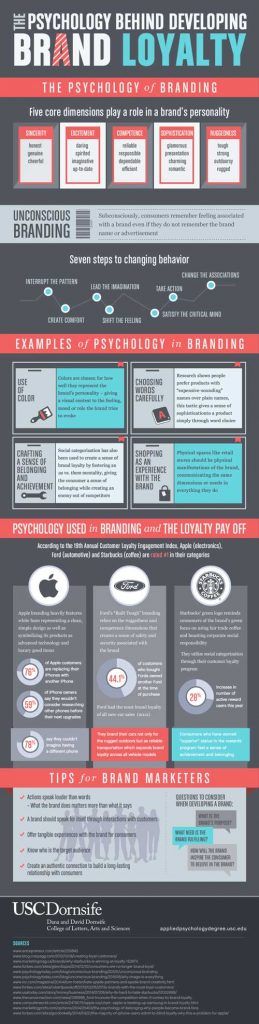
Source: USC Applied Psychology
Core dimensions of branding
The University of Southern California explains that building these emotional connections depends on crafting a solid brand personality, and centering all other brand efforts around this personality. (We’ve included their infographic with the full details behind this approach above.)
They’ve identified five main successful core dimensions of a brand’s personality:
- Sincerity: Honesty and genuineness
- Excitement: Daring, spirit, imagination, currency
- Competence: Reliability, dependability, efficiency, responsibility, trustworthiness
- Sophistication: Glamour, romance, charm, presentation
- Ruggedness: Toughness, strength, connection to the outdoors
Your brand should identify the most important core dimensions to their identity: out of the choices above, what do you want your customers to think of when they think of your brand?
Remember, though, these core dimensions aren’t meant to limit your thinking about the emotions you want people to associate with your brand. Rather, they’re tools and characteristics meant to focus your branding.
Your best approach is to define your unique personality first. Consider your company’s mission and values, and how you want to set your brand apart. Then, identify a list of the most important emotions you want your audience to associate with your brand. Next, figure out which core dimensions best bring out those emotions.
Brand colors
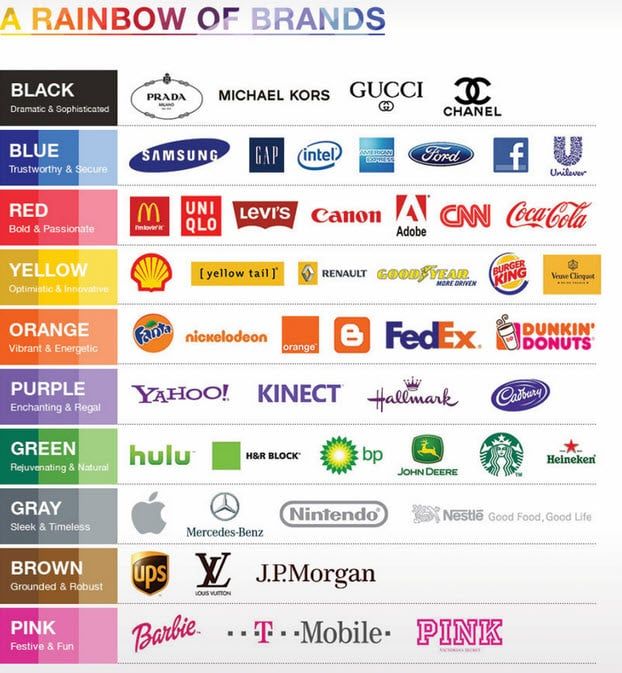
Then, make sure the colors you use in your branding align with these core dimensions, as well as other important emotions to your brand. After all, colors aren’t just for aesthetics—they have a powerful emotional impact.
For example, food chains like McDonald’s, Burger King and In-N-Out (plus countless others) all use the colors red and yellow. That’s no coincidence, as yellow evokes friendly exuberance, and red evokes pure excitement and passion (these two colors also make people hungry.)
Source: Vii Tech Solutions
At other points on the spectrum, green is associated with nature and the outdoors, and blue brings trustworthiness, calmness, and reliability to mind. (99Designs’ insightful guide provides even more assistance in choosing the right branding colors.)
Messaging
Also, ensure that your messaging—your slogans, tone, copy, and imagery—always centers on the emotions and “core dimensions” you’d like to evoke.
For example, Wendy’s wit and slightly snarky attitude (best known from their Twitter) is carefully crafted to entertain people, draw on currency and what’s “trending,” and bring the humor.
Heifer Project wants you to feel compassion for poorer families, and be inspired to help these people, by donating money towards animals that will provide food.
And Ford uses the slogans “Built Ford Tough” and “Built Ford Proud” as an appeal to their ruggedness, and frames their messaging around durability and dependability.
From the trailblazing copy, to the gruff voice and tone the narrator uses, to the rock music, to the shots of outdoor exploration, this Ford Explorer commercial is perfectly positioned to make you think “tough” and “rugged” when you think “Ford.”
Essential building blocks for building loyalty for a brand
The psychological triggers above are not enough for building brand loyalty, though, if you haven’t established these four important foundations of loyalty that every brand needs. Customers become, and stay, brand loyal because of these lasting factors.
Exceptional products/services: To build loyalty, you’ll need the best quality products and services you can offer, well over the competition. If what you have to offer is so innovative that it has no direct competition, that’s even better.
Sense of belonging: Build solid relationships with your customers so they feel like they belong with your brand. This “at-home” feeling is key to making sure they don’t leave you for your competitors. Belonging also makes your loyal customers excited to advocate for your brand and tell others about you—they’re on your team, and ready to be team players!
Top-notch customer service: Exceptional customer service, and a stellar customer experience, are key in fostering belonging. Follow these top customer service tips, so customers know they’re valued.
Consistency: Many people become loyal to brands because they’re consistent. This includes always offering the best products/services, customer experience, and environment of belonging. So, make sure your brand always delivers on what it promises, and never wavers. Also, make sure that all your actions align with your brand’s mission and values—people are paying attention. Actions speak louder than words!
Now that we’ve defined steps for increasing brand loyalty, let’s examine the two brand loyalty masters we mentioned at the beginning of the article—Apple and Coke—and why they’ve imprinted themselves in customers’ minds. Even though they’re giants, any brand can
Apple
Source: Statista
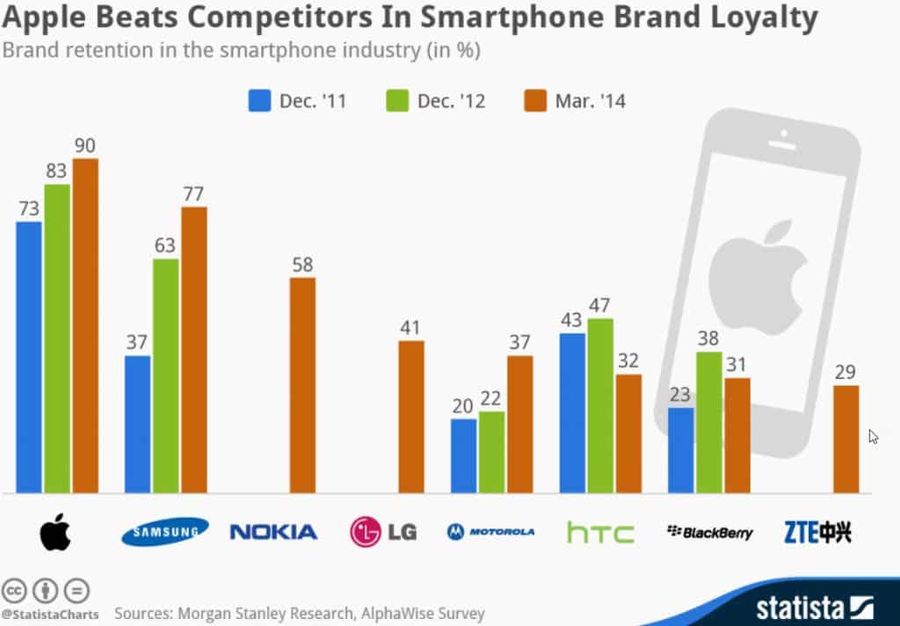
Apple rarely offers discounts on its products, and has never instituted a customer loyalty program. But, if you were trying to create the perfect example for a brand loyalty definition, Apple would be a great choice. Just ask the countless people who flock to get the latest iPhone, or who insist on the “cleaner, safer” Mac for their computing needs.
For Apple brand loyalists, it’s all about consistency, quality, innovation, and “must-have” currency – Apple knows how to keep itself associated with the dimensions of competence and sophistication, and to make the associated emotional connections.
Also, by listening to what customers want and building those features into their products, the brand takes even more steps to ensure people feel at home when using Apple tech. You can also foster brand loyalty by meeting customer needs and subconsciously connecting your brand with strong emotions.
Coca-Cola
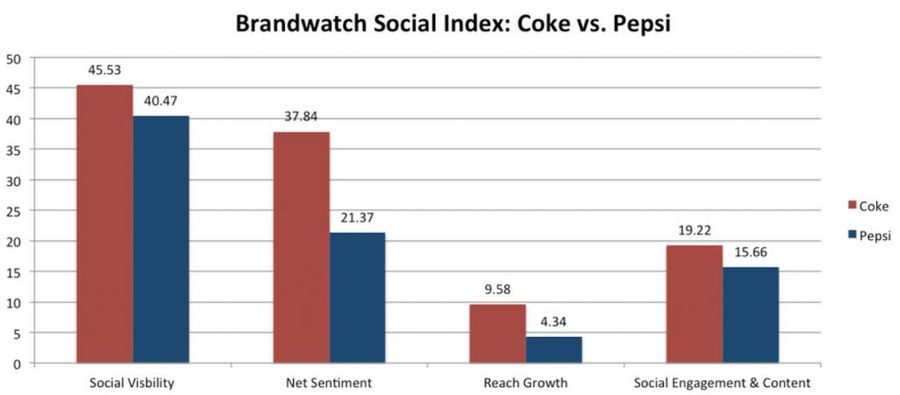
Source: Brandwatch
Coca-Cola has cultivated customer loyalty throughout its over 125 years of existence, by making sure customers’ love for its branding—including the red bottles and cans, polar bears, and Santa – is always emotionally linked with love for its products.
Regardless of how different Coke and its rival, Pepsi, taste from each other, Coke loyalists think Coke tastes better. In most cases, this is probably because of the experience and homeliness they associate with drinking Coke.
Coke has diversified its product range throughout the years to meet customers’ needs in a variety of ways (think the zero-calorie version, Coke Zero, for customers who are committing to healthier diets, but still want to drink a Coke.) But Coke has always stayed true to its classic roots, and has consistently framed itself as a dependable premium brand. Build the sense of belonging that Coke has built, along with a healthy dose of emotional connection, and you’re on your way to cultivating brand loyalty.
Key takeaways
What is brand loyalty? It’s something that should be every brand’s goal because brand-loyal customers are customers for life. Forging emotional connections through core dimensions, colors, and messaging, delivering consistently awesome products and customer service, and building a sense of belonging are all key elements of your brand strategy that can lead to brand loyalty. Taking steps to turn your brand into a habit will pay dividends.

About the author
Jessica Huhn is a content writer and strategist at Referral Rock. When she is not writing, there is a good chance that Jessica is singing, arranging songs, sharing and enjoying content on social media, or hanging out with her mini Goldendoodle. She believes that it's always important to cultivate gentle strength.