
Big budgets get attention. Creativity gets remembered.
Guerilla marketing is how small businesses win that trade. Instead of paying for reach, you create a moment people can’t help but talk about. Think a vending machine that gives away pizza, a fries-shaped crosswalk leading straight to the counter, or a billboard with real grass trimmed by a giant razor. The campaigns are cheap to run. The conversations they spark do the rest.
Below are 9 of the most memorable guerilla marketing campaigns ever pulled off, plus what each one actually teaches you about creating word of mouth on a small business budget. After the examples, we’ll get into the tips that keep these stunts from going sideways, and what to do after a campaign hits so the buzz doesn’t fade with the news cycle.
What is guerrilla marketing?
Guerilla marketing describes marketing tactics that use the element of surprise to generate publicity and drive word of mouth marketing (organic recommendations and buzz).
The term is credited to business author Jay Conrad Levinson, who envisioned this style of marketing as an unorthodox but effective way for small businesses to generate profits on a limited budget. That doesn’t mean big businesses can’t use it. Some of the best examples come from established brands that wanted the upside of feeling small and scrappy.
The “guerilla” reference is to guerilla warfare — small groups using unconventional tactics against larger forces. Translated to marketing, it means using the element of surprise to catch people’s attention and spread a message. Unlike actual guerilla warfare, though, these campaigns are usually planned in detail well in advance.
A few features show up in almost every guerilla campaign:
- Unconventional and memorable. It’s designed to stop the scroll, or in the case of out-of-home tactics, stop people in their tracks.
- Low investment. Guerilla marketing can work on a limited budget, which is why it’s a fit for small businesses.
- Buzz potential. The creativity is what creates shareability. A successful guerilla campaign often jumps from offline into social media on its own.
Most guerilla campaigns are deployed offline. Any online element typically rides off the offline moment, not the other way around.
Benefits of guerrilla marketing
Guerilla marketing can deliver outsized results without a big budget. The most important benefits:
It puts your message directly in front of people. In Guerilla Marketing for Dummies, Jonathan Margolis and Patrick Garrigan describe it as a chance to “talk to people as they walk to work, watch a movie, or make a stop at the restroom.” You decide where and when your message lands, and you reach people in the middle of their day instead of competing for attention in their feeds.
It generates rapid word of mouth, sometimes at viral scale. A creative campaign holds attention long enough for someone to pull out their phone, share it, and pass the moment along. That’s how a $6,000 stunt earns $1 million in coverage.
It’s accessible to budget-strapped businesses. You don’t need millions to run a guerilla campaign. You need an idea sharp enough that people will do the distribution for you.
Potential pitfalls of guerilla marketing
Guerilla marketing has real downsides that need to be accounted for before you green-light an idea.
- The potential for backlash. If you misread your audience, a campaign that was supposed to charm can offend, confuse, or actively turn people off your brand. Levinson, for what it’s worth, was skeptical of leaning on humor for this reason: humor wears thin fast — clever can outlast funny.
- Dependence on weather, foot traffic, and luck. Guerilla relies on direct, in-person interaction. Bad weather, low foot traffic, or a permit issue can flatten the whole thing. Check the legality of any public-space activation before you commit budget to it.
- Hit or miss. A guerilla campaign is one shot. The idea either lands or it doesn’t, and if it doesn’t, the budget is gone.
- Unpredictable ROI. Even with strong precedent, you can’t reliably model the returns. You’re betting on a moment, and moments don’t promise anything.
Types of guerrilla marketing
Guerilla marketing usually fits one of four buckets:
- Outdoor displays: visual installations in public spaces (walls, streets, plazas) that capture attention through surprise.
- Indoor displays: the same idea, transplanted into shopping malls, airports, or corporate lobbies.
- Event ambushes: inserting a brand into a live event (concert, sports event, conference) without official sponsorship.
- Branded experiences: immersive pop-ups, demonstrations, or installations where people interact with the brand directly.
9 guerrilla marketing examples worth studying
Below are nine real-world guerilla marketing campaigns and what each one teaches.
1. Coca-Cola’s Happiness Machine
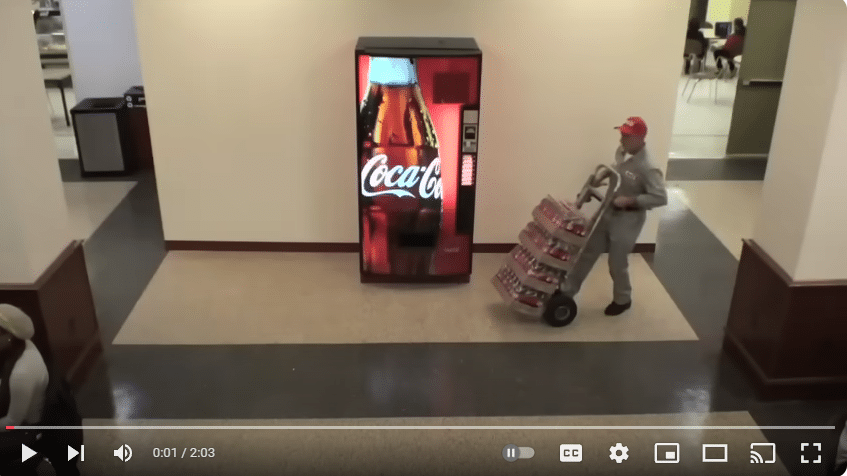
A seemingly ordinary Coca-Cola vending machine at the Queens NY campus of St. John’s University became an unexpected source of joy when it started dispensing more than just sodas.
Coca-Cola, in conjunction with marketing agency Definition 6, installed hidden cameras that captured genuine student reactions over two days as the “Happiness Machine” surprised them with everything from flowers and sunglasses to full pizzas and a massive hero sandwich.
The experiment brought Coke’s promise of happiness to life in the most delightful way, showing the power of creativity and surprise. The video shared on Coca-Cola’s YouTube channel has since racked up more than 11 million views.
Key takeaway: A single creative moment, captured on video, can outlive the campaign by years.
2. IKEA’s Apartment in a Box
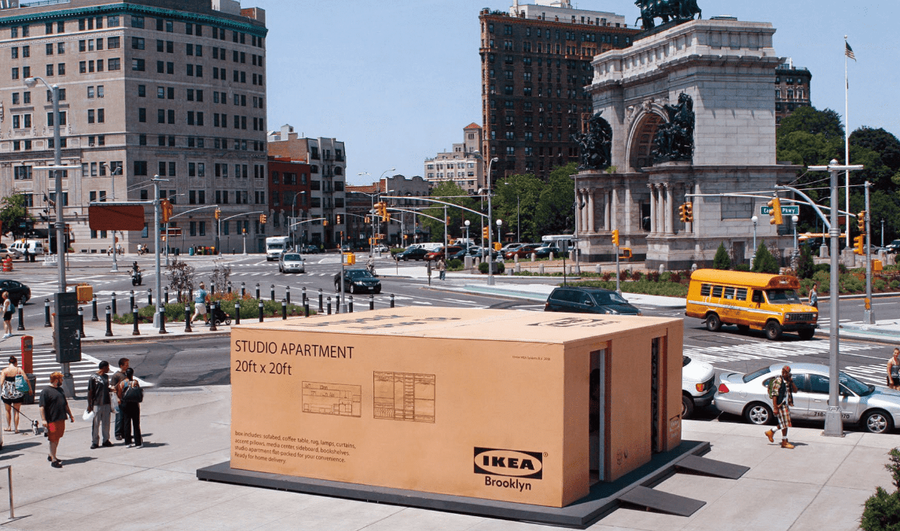
IKEA, together with TH Experiential, and Deutsch, brought small-apartment living to the streets — literally. A roaming 400-square-foot slice of Brooklyn life, fully furnished with 150 IKEA pieces, popped up overnight at iconic NYC spots like Union Square and the Brooklyn Public Library. It wasn’t a static display. It was a moving testament to small-space living, and New Yorkers followed it across Manhattan and Brooklyn.
When IKEA Brooklyn opened its doors four days later, more than 30,000 people showed up, driving over $1 million in sales.
Key takeaway: Take the campaign to where your audience already is, not where you wish they’d come. IKEA put their value proposition (multifunctional, space-saving furniture) in the exact context where it mattered.
3. McDonald’s McFries Pedestrian Crossing
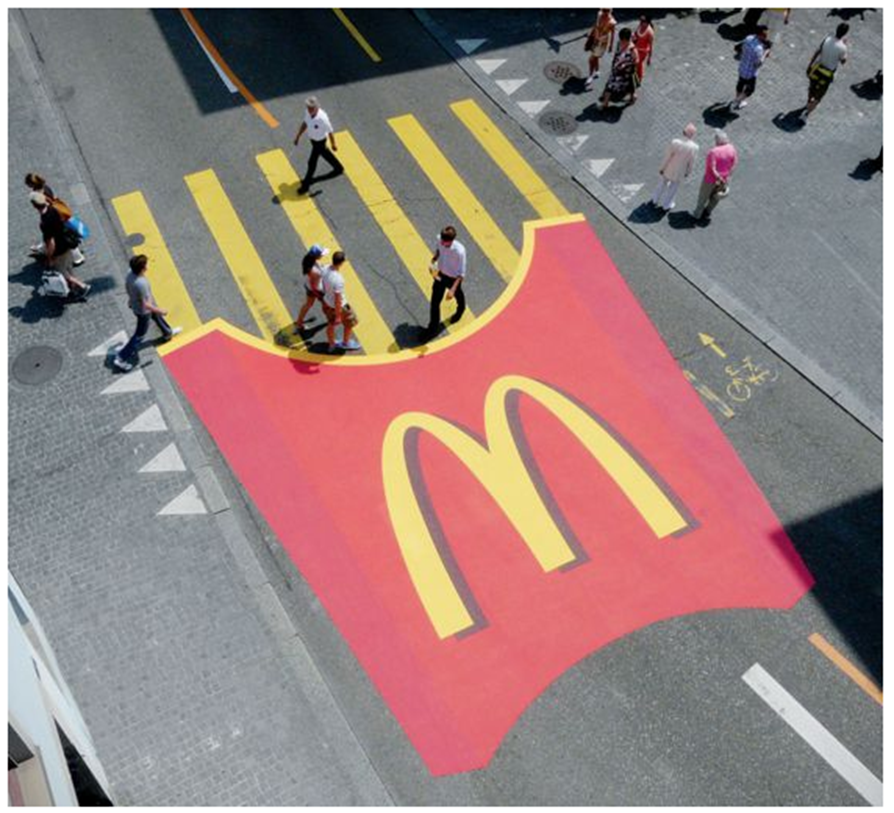
McDonald’s took a traditional Swiss zebra crossing and converted it into a temptation built around its iconic French fries.
During Zurichfest, when some of Zurich’s streets are opened up to pedestrians, one local McDonald’s painted their signature fries where the traditional street stripes should be, creating an edible-looking path leading straight to their door.
In the middle of a food festival packed with vendors fighting for attention, this simple idea pulled foot traffic to the nearest McDonald’s.
Key takeaway: Location and context are the campaign. Same idea, wrong location, no result.
4. Gold Toe’s Wall Street Takeover
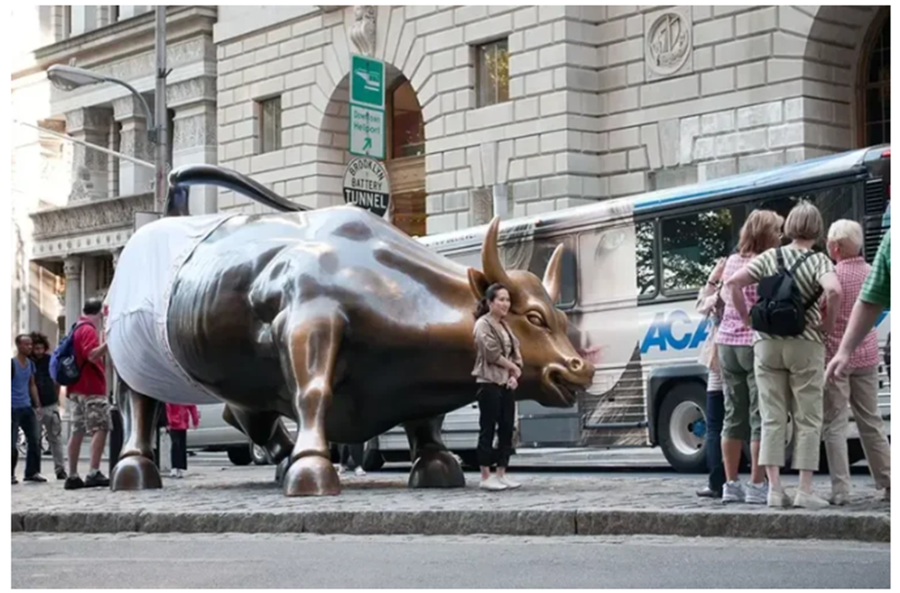
During New York Fashion Week, Gold Toe launched a new t-shirt and underwear line through a bold urban campaign that dressed iconic NYC statues — including the Wall Street Bull — in their products. They paired it with strategically placed underwear-shaped wild posters across Manhattan.
Gold Toe captured one of the busiest weeks of the year in the city without damaging any public property. The result was a wave of memorable photo ops (you can imagine the Wall Street Bull in tighty-whities making the rounds) and organic social buzz.
Key takeaway: Time the drop to a moment when attention is already concentrated in your target market.
5. BIC’s Grass Cutter Billboard
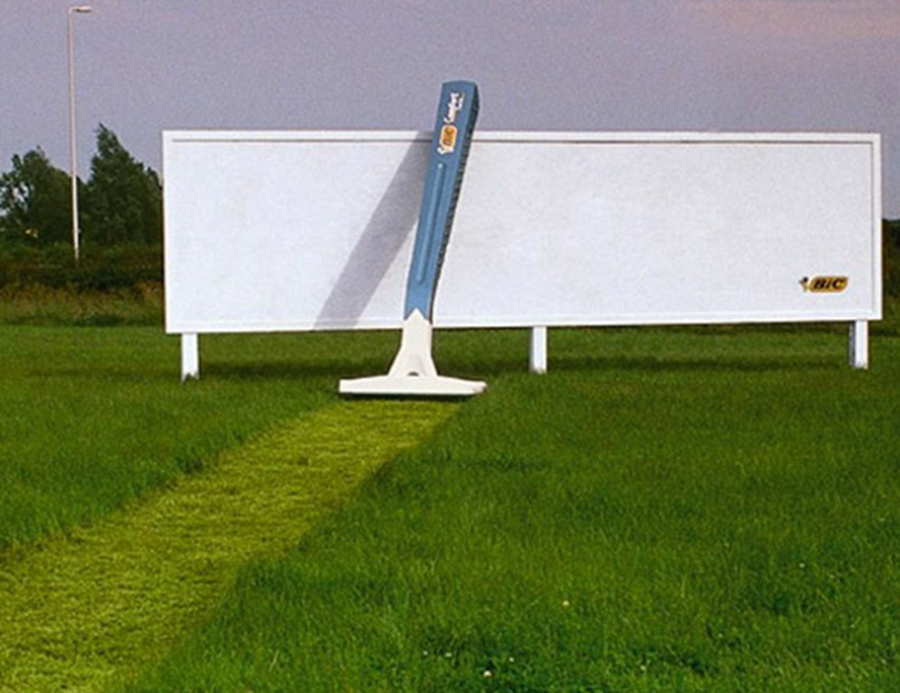
For a campaign in Japan, BIC ran a minimalist billboard with a precisely manicured strip of real grass leading up to a large 3D razor, with only a small BIC logo. The grass was maintained regularly to keep the message clean.
The campaign turned an ordinary billboard into a demonstration of the product’s effectiveness — minimal branding, maximum visual metaphor.
Key takeaway: The most powerful marketing messages show rather than tell. Demonstrate the product through unexpected real-world applications and the conversation writes itself.
6. Fiji Water’s Fiji Water Girl
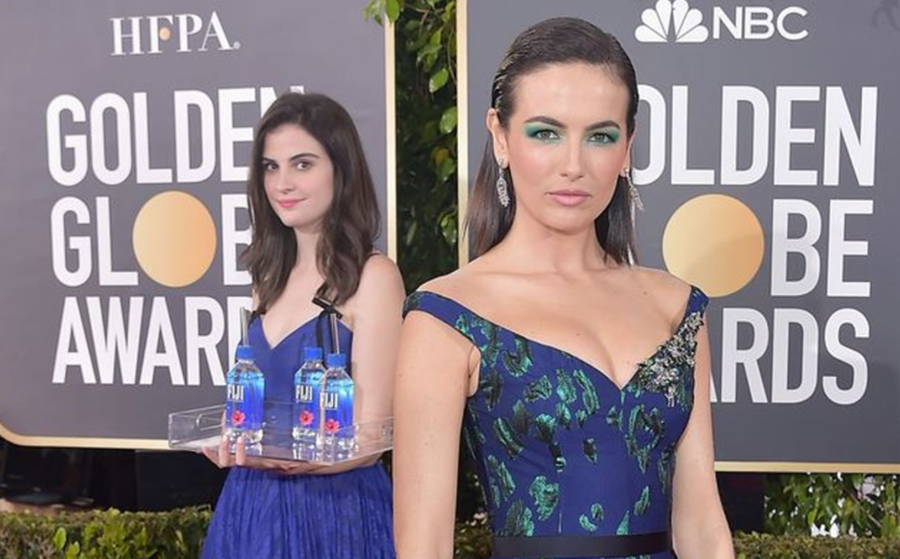
At the 2019 Golden Globes, Fiji Water — a partner brand for the event — sent models onto the red carpet to ensure their bottles got camera time. One model, Kelleth Cuthbert, positioned herself in the background of celebrity photos and became, almost by accident, the brand’s biggest moment of the night.
Her photobombs went viral. So did the bottles she was holding. Fiji moved fast to capitalize on the moment and put their brand in front of audiences they’d never have reached otherwise.
Key takeaway: Be ready to amplify the unexpected. The original plan was bottles on the red carpet. The actual win was a personality moment they hadn’t designed for.
7. 3M Security Glass
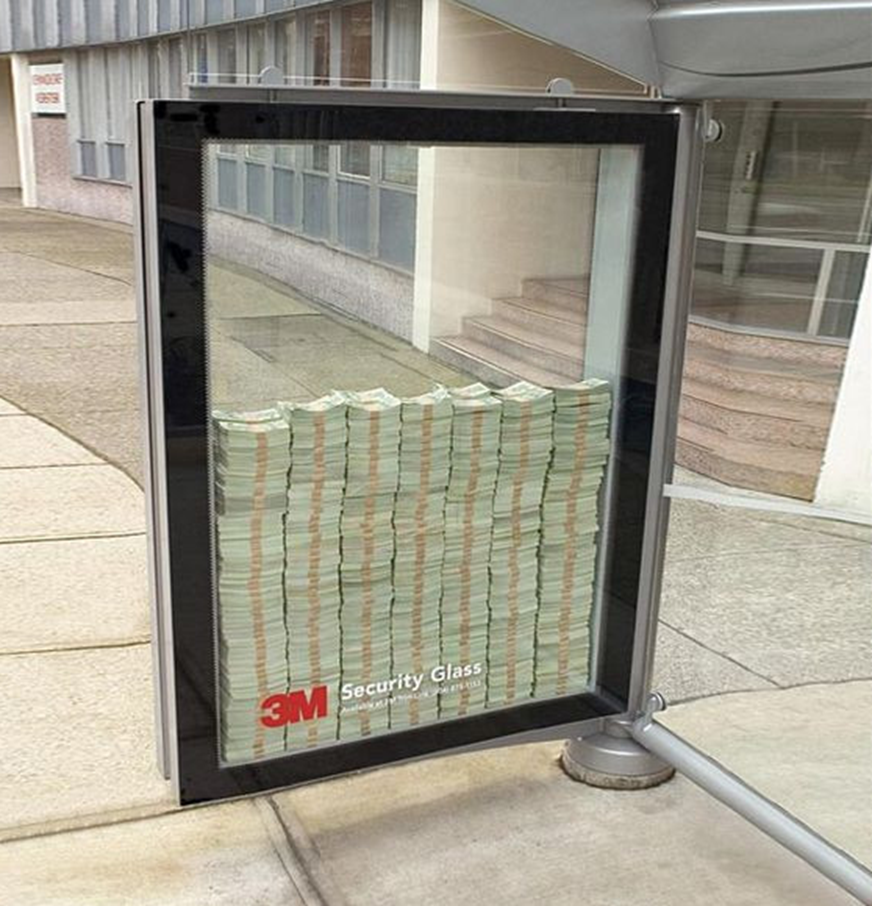
The 3M Security Glass campaign is the stuff of legends.
In 2005, 3M’s local dealer wanted to showcase a product called Scotchshield — a clear film application that strengthens glass. They encased $3 million in 3M’s bulletproof glass and invited members of the public to try to break the glass with their feet to claim the cash.
According to the Daily Hive, “It is estimated the 3M product received over $1 million in free publicity from all the organic local and national media coverage it earned at the time, and the cost of the stunt was just $6,000, including the cost of installing lights inside the case for the nighttime illumination of the cash.”
Key takeaway: You don’t need a big budget to execute a great guerilla campaign. $6,000 returned $1 million in media value because the idea was right.
8. UNICEF’s Dirty Water Drinking Challenge
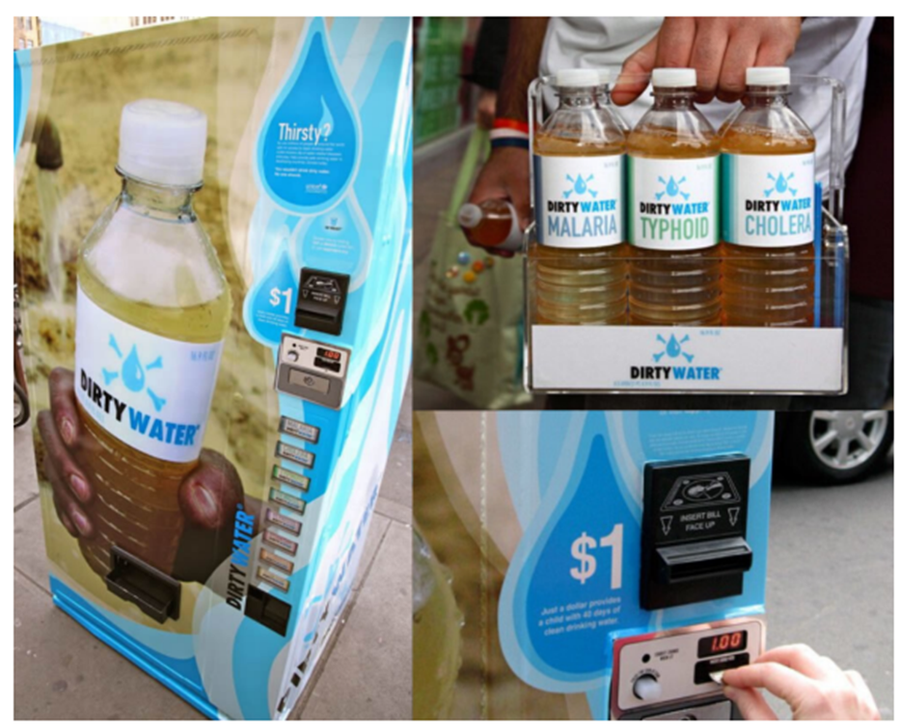
UNICEF placed vending machines on the streets of Manhattan that offered eight dirty and dangerous types of water — flavors included malaria, cholera, typhoid, dengue, hepatitis, dysentery, salmonella, and yellow fever.
The goal was to raise awareness about the millions of people who lack access to safe drinking water. For $1, people could buy a bottle of dirty water — and the dollar funded clean drinking water for a child for 40 days.
Key takeaway: Guerilla marketing works for social causes too. The point is to disrupt enough to drive awareness and prompt action.
9. Dunkin’ Donuts: You Look Hot Down There
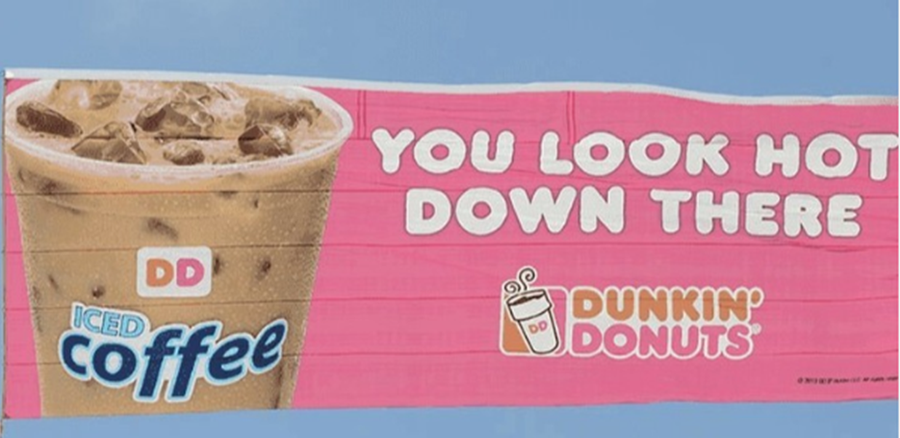
Dunkin’ Donuts went aerial, flying a banner reading “You Look Hot Down There” over busy local areas during the hottest days of the year. The playful reference to its iced coffee landed instantly.
Key takeaway: Combining humor with strategic placement is the cleanest way to get a smile, and a smile is the strongest currency in guerilla marketing.
Guerilla vs. viral marketing (and where buzz marketing fits)
Guerilla marketing is offline-first. It’s a creative real-world stunt that creates a localized buzz, and that buzz sometimes spills online. Flash mobs, street art, interactive billboards, unique installations.
Viral marketing is engineered to spread online from the start. It can also be low-cost, but the goal is shareable, emotionally engaging digital content. The ALS Ice Bucket Challenge and the Dollar Shave Club launch video are textbook examples.Buzz marketing overlaps with both, but its mechanism is different — it relies on identifying and activating influencers and thought leaders to start the conversation. Same destination, different starting point.
Guerilla marketing tips that actually work
A guerilla campaign is high-variance by design. These tips lower the variance enough that your idea has a fair shot.
Set goals (and measure what matters)
Define what success looks like before you build the campaign. Foot traffic. New customers. Social mentions. Press pickups. A goal you didn’t set in advance is a goal you can’t hit, and it’s also a goal you can’t measure after the fact. Track whatever metric maps to your goal, and be honest about whether the campaign moved it.
Know your audience (and pick the right location)
Audience drives location. If you understand your audience’s daily routines, pain points, and the places they actually spend time, the right location reveals itself. IKEA put a Brooklyn studio apartment on Brooklyn streets because that’s where the people who’d care about it lived. McDonald’s painted fries on a Zurich street where pedestrians had nowhere else to look. Both campaigns worked because the location was a natural extension of the audience.
The wrong location is the most common reason a clever idea falls flat.
Be original, surprising, and on brand
The campaign should stop people in their tracks while still feeling like something your brand would do. Coca-Cola’s Happiness Machine works because Coke is about happiness, and the surprise reinforces the brand promise. A campaign that’s surprising but off-brand confuses people. A campaign that’s on-brand but unsurprising gets ignored.
Add interactivity if you can
The more directly people can engage with the campaign, the more memorable it becomes. UNICEF’s vending machines weren’t a poster about clean water. They were an experience that made you choose. Interactive elements convert observers into participants, and participants are the ones who tell other people.
Test it with a focus group first
Run the concept past a small group before going public. They’ll catch the reading-the-audience-wrong problem, the unintended-implications problem, and the it’s-not-as-funny-as-we-thought problem before any of those problems become public. A short focus group is a cheap insurance policy on a campaign you can’t run twice.
After the spark: capture the word of mouth you create
Here’s the honest weakness of guerilla marketing, the one the “potential pitfalls” section above already hinted at: a campaign is a one-shot event. It either lands or it doesn’t, and if it lands, the spike of attention fades pretty quickly without something to catch it.
The brands on this list had something on the other side. Coca-Cola had global distribution. IKEA had a store opening four days later. UNICEF had a donation page. The campaign created a spike of word of mouth and the system underneath turned that spike into customers, donors, and traffic.
If you’re a small business, the equivalent system is a referral program. Here’s why the two pair so well:
- A guerilla campaign creates new word of mouth from strangers and onlookers. A referral program captures word of mouth that’s already happening between your existing customers and their friends. Different sources, both worth catching.
- A guerilla campaign is a one-shot spike. A referral program is the steady volume. It’s the cadence underneath the campaign.
- A guerilla campaign reaches people who don’t know you yet. A referral program turns people who already love you into a channel that brings more.
The mistake is treating the campaign as the whole strategy. The campaign is the moment. The system is what makes the moment worth running.
Wrap-up
Guerilla marketing creates the moment. What you do next decides whether it lives past the news cycle.
The best stunts on this list are great because they sparked conversations — and the brands behind them had something on the other side that turned those conversations into customers. Coke had distribution. IKEA had a store opening four days later. UNICEF had a donation page.
If you’re a small business, the equivalent is a referral program. The campaign brings new people through the door. The program gives the people who already love you an easy way to bring more. The first creates the spark. The second turns it into a fire.

About the author
Guest writer
Irene Lopez is a freelance writer and content strategist who creates strategically crafted content that helps businesses build a strong presence online. For Referral Rock, Irene has written guides on employee referral programs, affiliate and partner programs, brand ambassadors, and the software behind them.